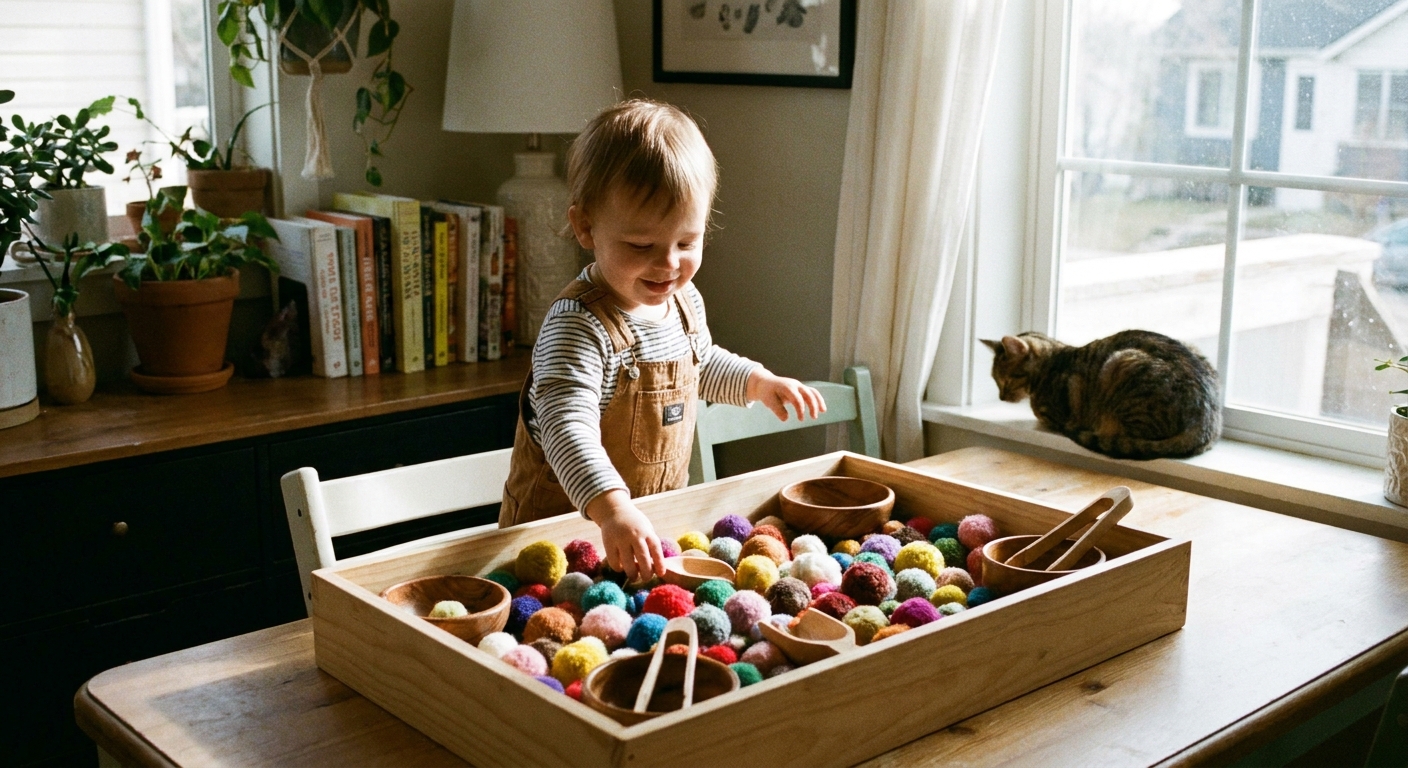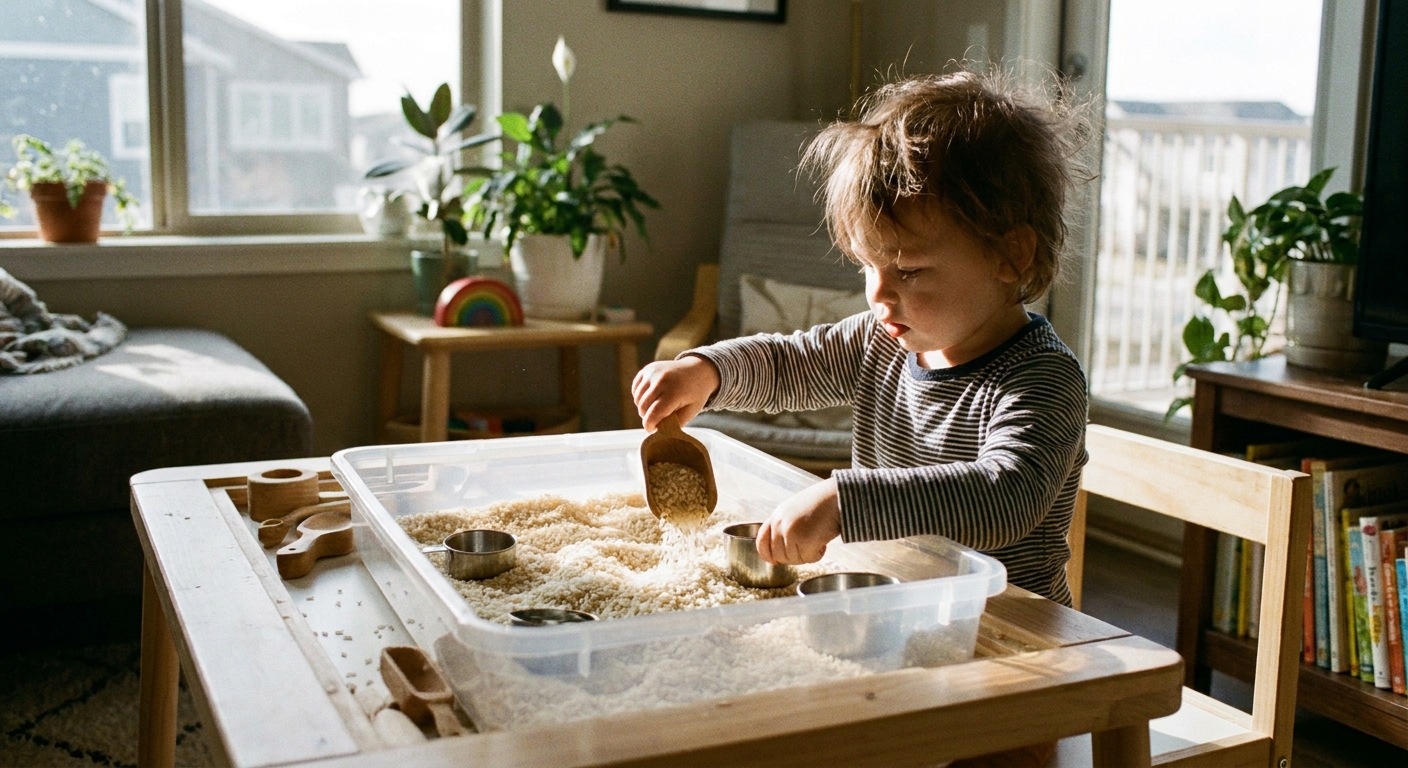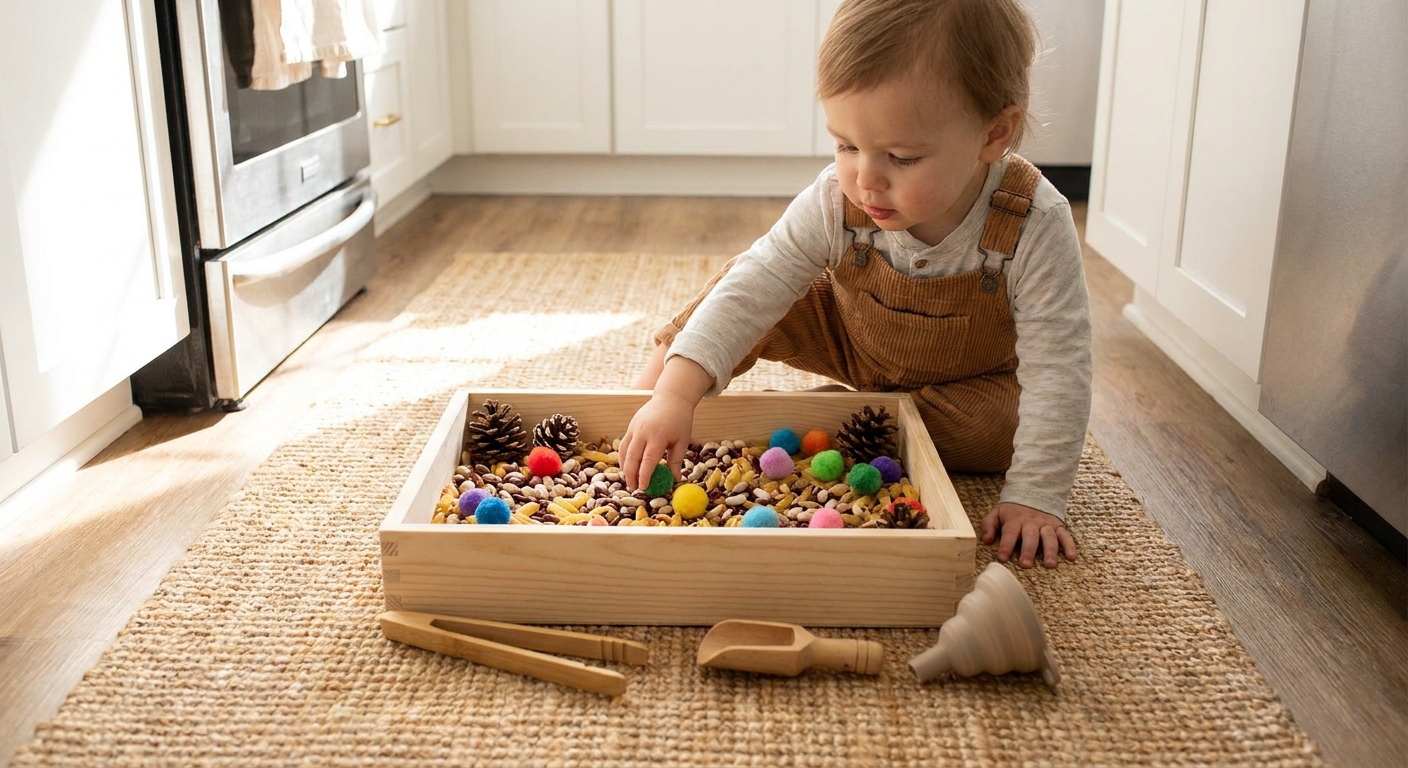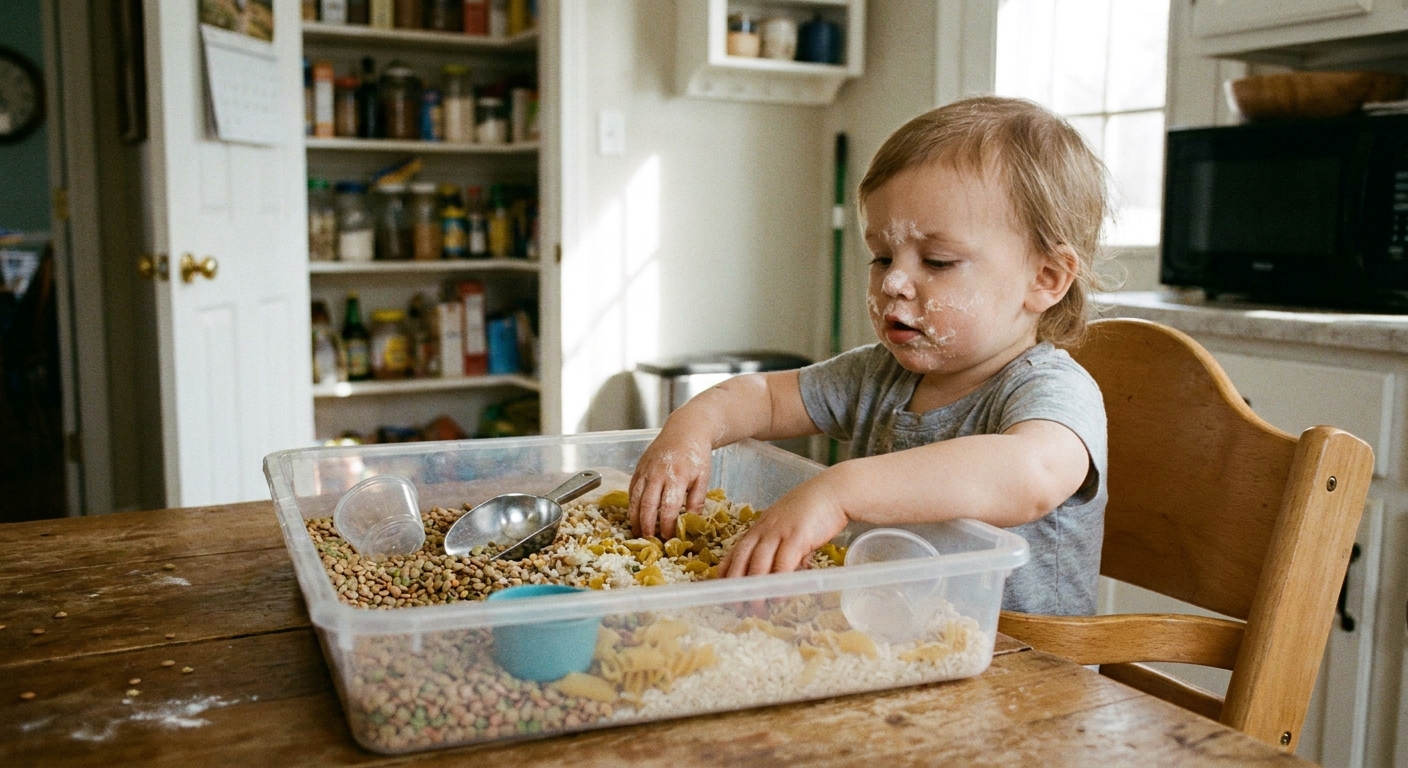
Let’s dive in and make a wonderful, happy mess together!
“Toy rescue missions” are tiny challenges where a little toy gets stuck, trapped, or hidden and your toddler becomes the helpful hero who figures out how to free it. The magic is that the goal is clear, the materials are simple, and the thinking is real. Your toddler gets to practice planning, trying, adjusting, and sticking with it.
Best age range: These are great for roughly 18 months to 3 years with close supervision. For younger toddlers (or enthusiastic mouthers), use bigger pieces, fewer steps, and stay right beside them.
Time: Most missions run 3 to 10 minutes. Setup is usually under 2 minutes, and cleanup is typically quick (often just tossing foil or putting a tin back in the drawer).
Why rescue missions support problem-solving
Rescue play looks like a game, but it can gently support important early learning muscles:
- Cause and effect: Pulling, twisting, and peeling shows what actions change the situation.
- Flexible thinking: If one approach does not work, toddlers get practice trying a new one.
- Patience and persistence: A small challenge invites “one more try” without feeling like a worksheet.
- Fine-motor strength: Pinching rubber bands, peeling foil, and popping items from muffin cups builds hand control.
- Language skills: You can model words like stuck, slippery, tight, loose, around, under, and through.
Keep missions short and winnable. The goal is a confident “I did it,” not a frustrated “I can’t.”
Quick safety notes
- Choose rescue-worthy toys: Bigger items are best for toddlers who still mouth objects. Avoid tiny pieces that could become choking hazards.
- Supervise closely: Rubber bands, foil, and small manipulatives are not for unattended play.
- Rubber bands: Watch for snap-back near eyes and faces. If your family avoids latex, choose latex-free bands.
- Aluminum foil: Foil can tear into little bits, which can become a mouthing risk for younger toddlers. Crumpled edges can also feel sharp, so keep foil pieces large, supervise, and toss torn bits quickly.
- Skip tape on hair and skin: If you use tape at all, keep it on toys or containers, not on your toddler.
- Watch for frustration signs: If whining ramps up fast, make the mission easier right away.
If your toddler is in a big throwing phase, it can help to keep the challenge inside a tray or bin. This pairs nicely with tips from Containing Sensory Bin Mess in a Small House.
Rescue Mission 1: Rubber Band toy jail
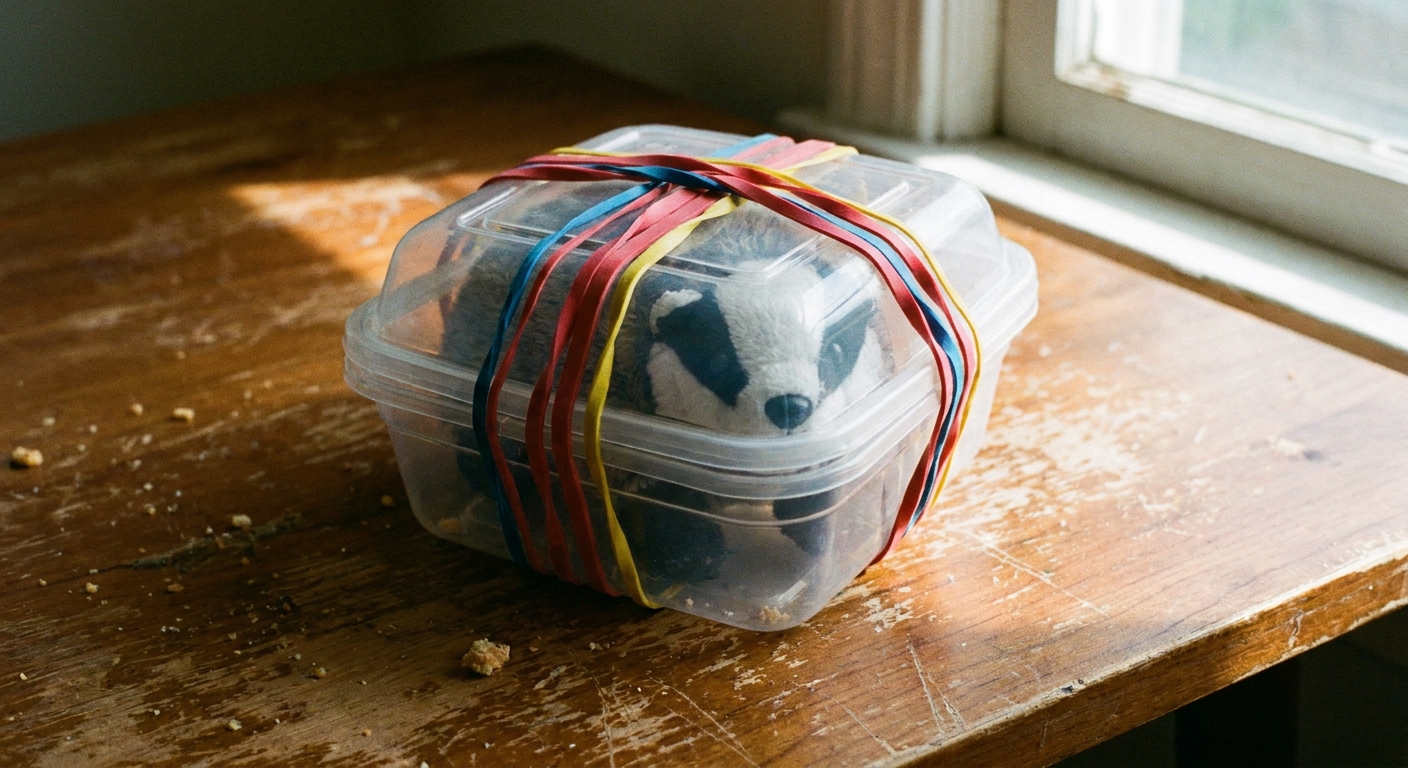
This is a simple, satisfying puzzle. The toy is visible, but the bands create a real barrier that takes planning to remove.
Time: 5 to 10 minutes
What you need
- A small plastic container or pencil cup
- Wide rubber bands (the thick ones are easier)
- One “rescue toy” like a chunky animal figure or small ball
How to set it up
- Put the toy inside the container.
- Stretch 2 to 6 rubber bands around the container in different directions.
- Hand it to your toddler and announce the mission: “Oh no, the toy is stuck!”
Make it easier or harder
- Easier: Use 1 to 2 bands, keep them parallel, and choose a wider container.
- Harder: Crisscross bands, add more bands, or use a slightly smaller opening.
What to say (simple coaching)
- “Which one looks loosest?”
- “Try pulling it up, then off.”
- “That band is tight. Want help starting it?”
Rescue Mission 2: Aluminum foil treasure wrap
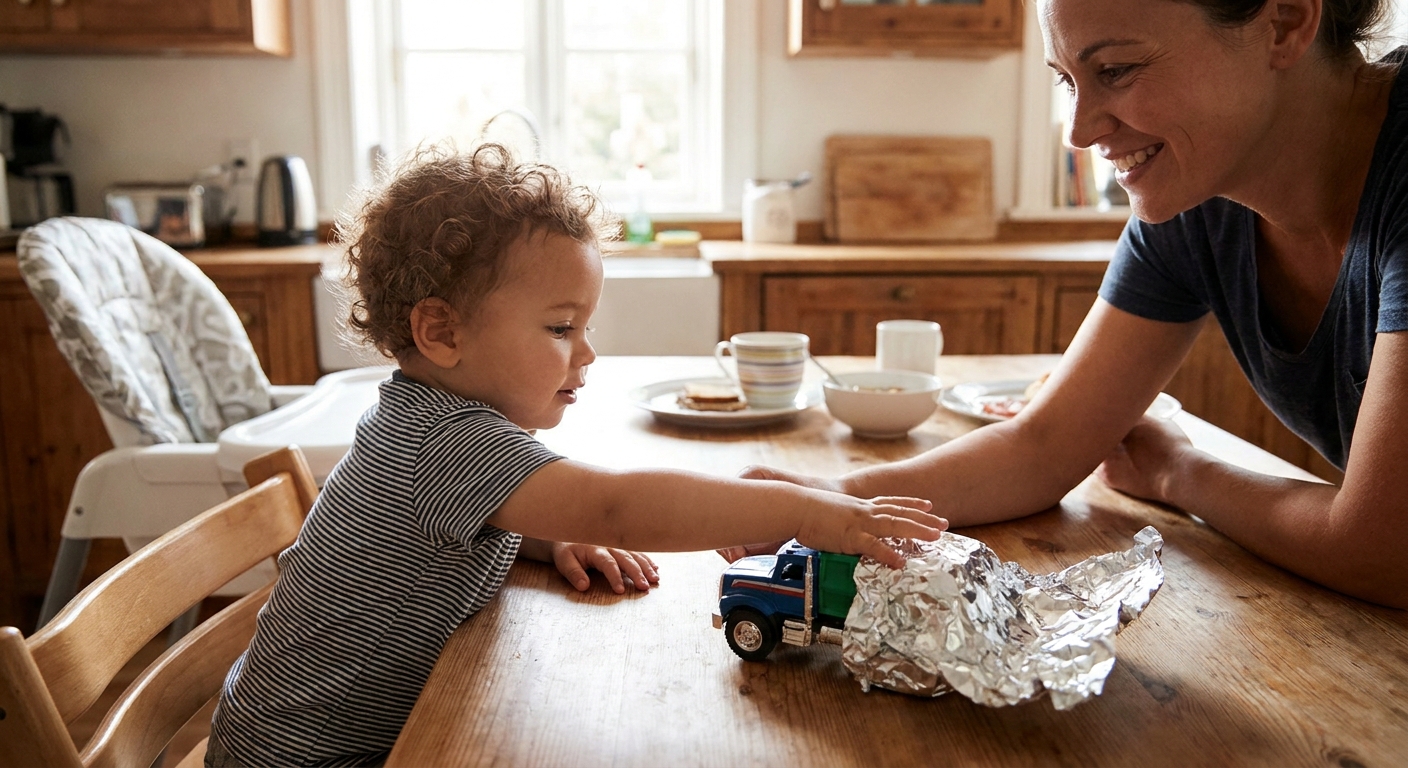
Aluminum foil is crinkly, slippery, and wonderfully peelable. It makes a great low-prep rescue that also gives sensory input through sound and texture.
Time: 3 to 8 minutes
What you need
- Aluminum foil
- A few small sturdy toys (chunky figures, toy cars, big blocks)
- Optional: a spoon for “tool rescue”
How to set it up
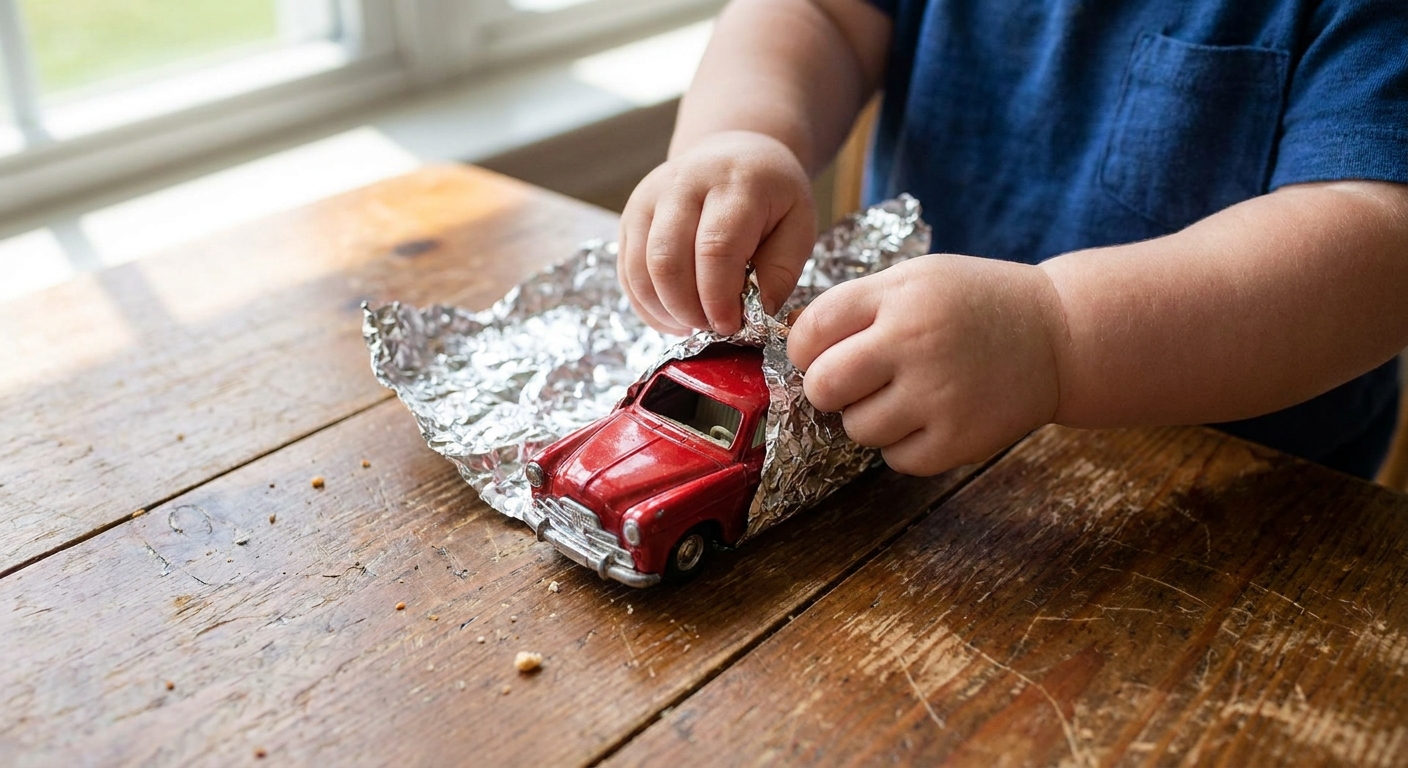
- Wrap one toy loosely in foil so there is a clear seam to grab.
- For the next level, press the foil a bit tighter around corners.
- Offer the wrapped toy and say: “Can you rescue what’s inside?”
Rescue variations
- Peel and reveal: Toddler unwraps to find the toy.
- Find the seam: Hide the seam underneath and encourage rotating the bundle.
- Tool time: Offer a spoon to help pry up an edge (with supervision).
If your toddler loves texture play, foil rescue can be a great bridge into sensory bins. For more easy starter ideas, visit Your First Toddler Sensory Bin.
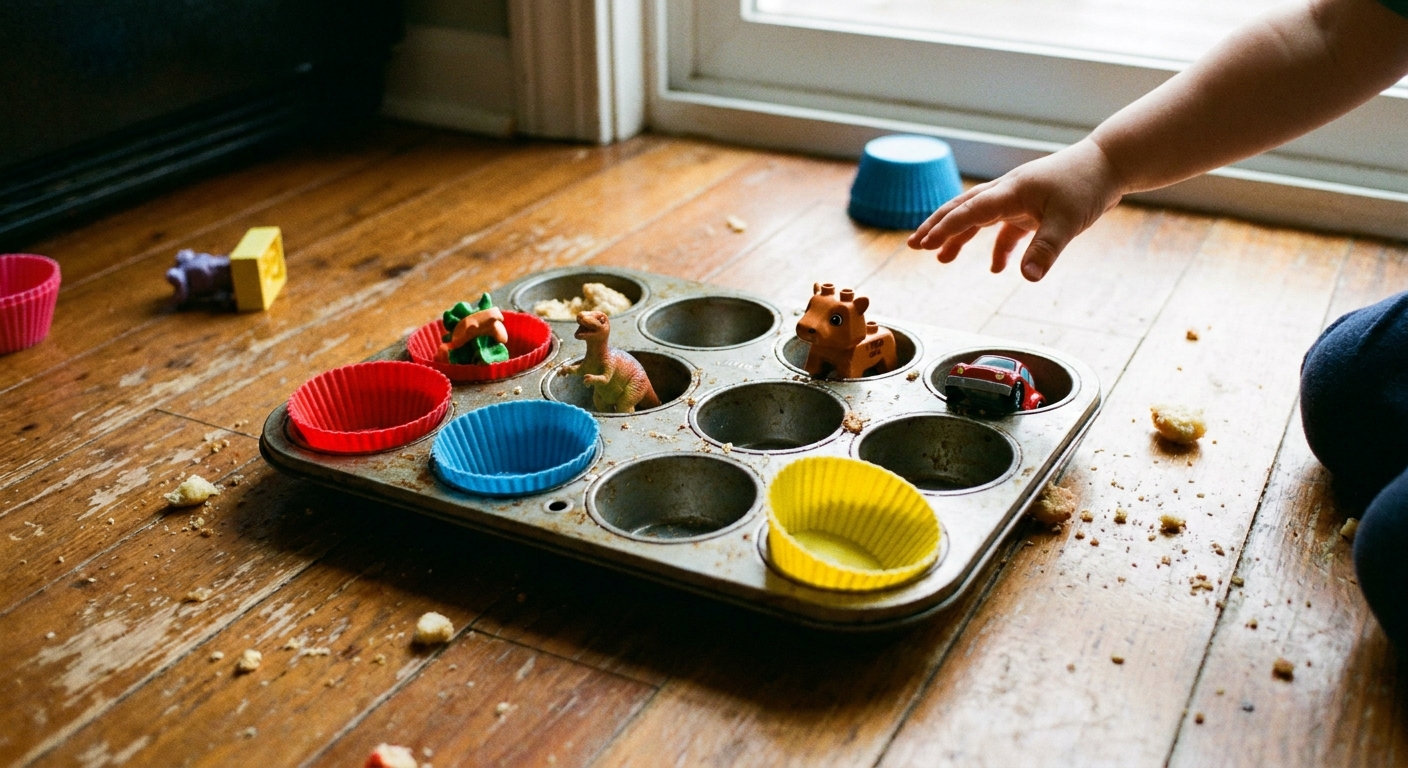
Rescue Mission 3: Muffin tin trap doors
A muffin tin creates neat little compartments that feel like tiny rooms. You can set up hiding, sorting, and logic challenges without any special toy.
Time: 5 to 10 minutes
What you need
- A muffin tin
- Small toys or safe household items (chunky blocks, big animal figures, or large balls)
- Optional covers: silicone cupcake liners, paper cups, or squares of foil
Note on small items: If your child still mouths, skip anything compressible or bite-sized (including pom poms) and stick with bigger, firmer pieces. Always supervise.
How to set it up
- Place a toy into a few muffin cups.
- Cover each cup with a liner or an upside-down paper cup.
- Ask your toddler to “rescue the toys” by lifting covers one at a time.
Level up with gentle reasoning
- Memory rescue: Let your toddler peek first, then cover and try to remember where each toy is.
- One clue rescue: “The bear is under a red liner.”
- Count the rescues: “How many did you save?”
Keep it just-right
Rescue missions work best when they are slightly tricky, not truly hard. Try these helpers:
Use “two tries then help”
Let your toddler attempt twice. If frustration spikes, help with the very first step only, then hand the mission right back.
Offer a choice of tools
Put out one or two simple tools and let your toddler decide:
- spoon
- tongs (with close supervision)
- child-safe tweezers
- paintbrush for nudging small items
Want more ideas for grabby, pinchy tools? See Sensory Bin Tools for Fine Motor Skills.
Narrate the thinking
Toddlers learn a lot from hearing the steps out loud. Keep it simple:
- “Look. Plan. Try.”
- “That didn’t work. New idea.”
- “You kept going!”
More missions for the week
- Stuffed animal rescue: Tuck a small stuffed animal inside a pillowcase and tie a loose knot for untying practice.
- Block cave rescue: Place a toy under a small block “cave” and remove blocks carefully to free it.
- Painter’s tape garage: Make a quick “parking spot” on the floor and tape a paper door over it for peeling. For more tape play, visit 10 Painter’s Tape Floor Games for Toddlers.
- Bin scoop rescue: Hide toys in a dry sensory bin and scoop them out using cups and spoons. If you need simple filler ideas, try 15 Last-Minute Sensory Bins From Pantry Staples.
Two gross motor rescues
- Stepping-stone rescue: Put a toy on one side of the room. Make “stones” with paper plates or pillows to step across to save it (close supervision, non-slip floor).
- Flashlight find-and-rescue: In a dim room, hide a larger toy and use a flashlight to “spot” it, then carry it back to “base.” If your toddler loves this, you will probably also enjoy Indoor Flashlight Play: 5 Easy Shadow Games.
Troubleshooting
“My toddler gets mad and quits.”
Make the rescue easier immediately and let your toddler finish with a win. Use fewer rubber bands, wrap foil looser, or leave one muffin cup uncovered as a starting clue.
“My toddler rips everything too fast.”
That is still problem-solving. Add one simple rule: “Slow hands” or “One band at a time.” You can also invite a tool like a spoon to encourage more controlled movement.
“My toddler throws the materials.”
Try setting the mission inside a shallow bin or tray, and keep the materials limited to just what is needed for one rescue. If throwing is a frequent struggle, the strategies in How to Stop Your Toddler From Throwing Sensory Bin Fillers can help with the same skill set.
“My toddler wants me to do it.”
Start the first tiny step, then pause and hand it back: “Your turn to finish the rescue.” This keeps the mission moving while still giving your toddler the victory.
A simple mission script
If you want to sprinkle in a little story without turning it into a big production, try this:
“Uh-oh. The toy is stuck. Let’s look closely. What could we try first? If it doesn’t work, we can try a new plan. Rescuers keep going!”
That’s it. Short, warm, and focused on thinking. Little rescues, big skills.