Let’s dive in and make a wonderful, happy mess together! Sensory bins are extra magical when you add the right tools. Not every utensil builds the same hand skills, though. Some strengthen a pincer grasp for future pencil control, while others build wrist rotation, hand strength, and two-handed coordination.
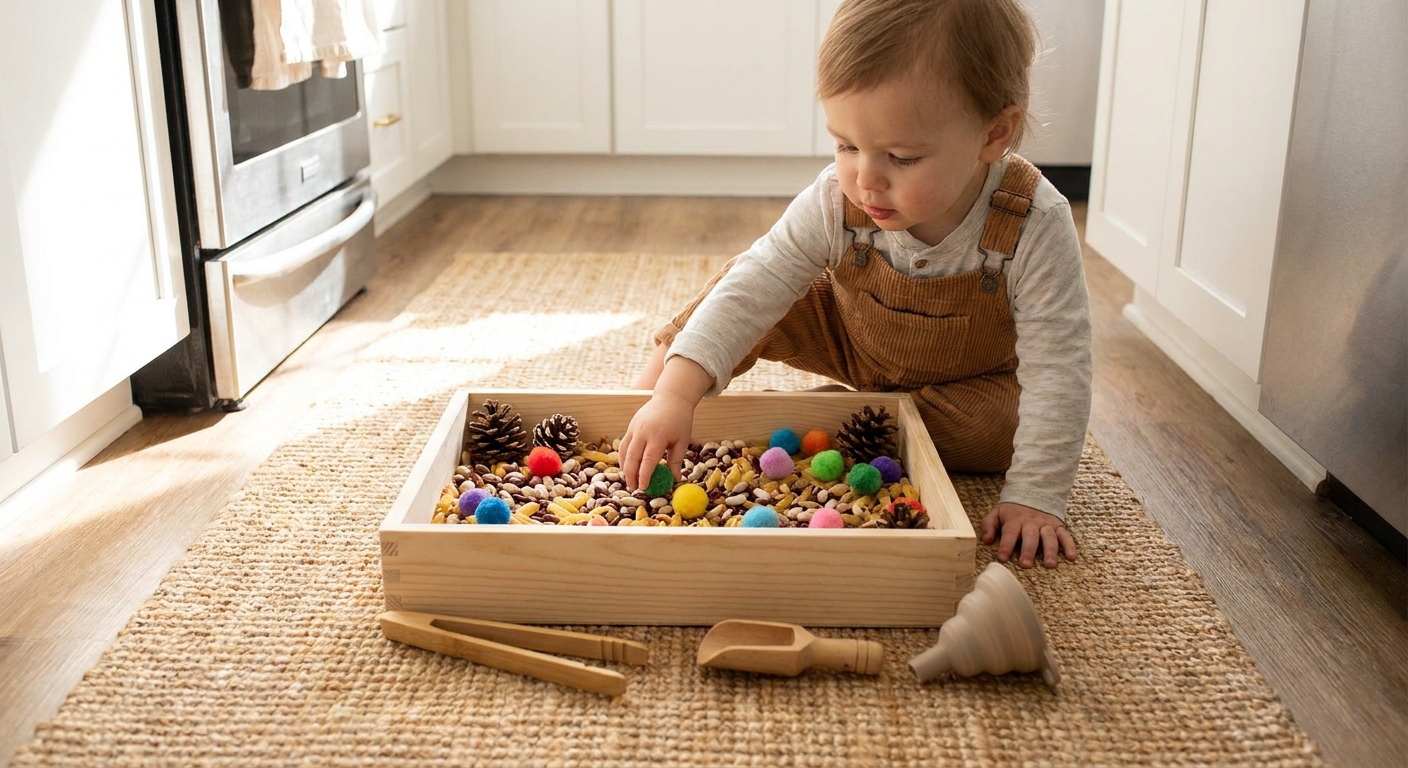
Below is a warm, clear comparison of four favorite tool types: tweezers, scoops, funnels, and everyday kitchen utensils. Mix and match them to meet your toddler where they are, then level up when those little fingers are ready.
What fine motor skills can tools build?
Fine motor skills are all the small hand and finger movements toddlers use to do big kid things later, like feeding themselves, turning pages, stacking blocks, and eventually drawing and writing. In a sensory bin, tools can support skills like:
- Pincer grasp: thumb and index finger pinch, used for picking up tiny items.
- Tripod-style grip foundations: the hand learns to stabilize while fingers do precise work.
- Hand strength: squeezing, pressing, and controlling resistance.
- Wrist rotation: turning the wrist to pour, scoop, and dump.
- Bilateral coordination: two hands working together, like holding a cup with one hand while pouring with the other.
- Hand-eye coordination: seeing a target and guiding the tool to it.
If you’re building your first setup, start with the basics here: Your First Toddler Sensory Bin. Then come back and pick tools with a purpose.
Quick comparison: which tool teaches what?
| Tool type | Best skill builders | Why it works | Watch for |
|---|---|---|---|
| Tweezers and tongs | Pincer grasp, hand strength, precision, hand-eye coordination | Requires controlled squeeze and careful placement | Frustration if too hard, pinching skin, small loose parts |
| Scoops and spoons | Wrist rotation, grasp strength, graded control, pouring practice | Big movements with a clear goal, easy success | Overfilling, fast dumping, slippery handles |
| Funnels | Two-handed coordination, visual tracking, controlled pouring | Encourages slower pouring to hit a smaller target | Clogs, impatience, big spills |
| Kitchen utensils (measuring cups, ladles, whisks) | Functional grasp, wrist rotation, forearm strength, role play | Real-world tools make practicing feel meaningful | Heavy items, sharp edges, tools not sized for small hands |
Tweezers and tongs: best for pincer grasp and precision
If the goal is fine finger work, tweezers are a superstar. They encourage thumb and finger isolation, controlled squeezing, and careful release. For many toddlers, they are one of the closest “bridge skills” to the small muscle control they will later use with crayons, markers, and fasteners.
What to choose
- Chunky, child-safe tweezers: wider body, easier squeeze, better for beginners.
- Spring-loaded tongs: often easier than stiff kitchen tongs, but still a workout.
- Small tweezers: save for older toddlers who already enjoy the challenge.
Skill building ideas
- Pick and place: move pom poms or foam shapes into a muffin tin.
- Rescue game: “save” toy bugs from dry rice and drop them into a cup.
- Color sort: grab colored balls and match them to colored bowls.
Make it toddler-friendly
- Start with larger, easy-to-grab items before moving to smaller pieces.
- Offer a “helper hand” option: one hand holds the container steady while the other operates the tweezers.
- If squeezing is hard, switch to finger pinching first (picking items up with fingers), then reintroduce tweezers later.
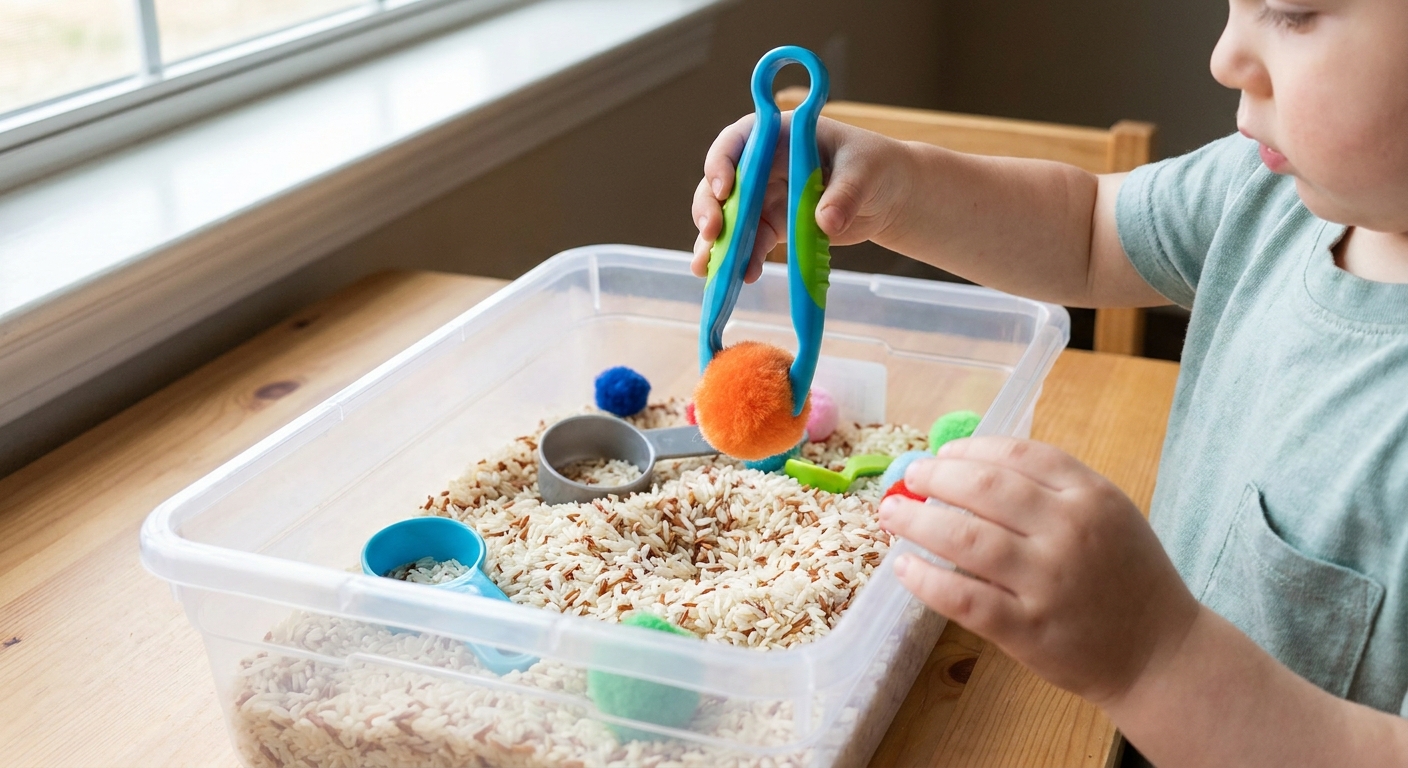
Fine motor win: Tweezers are often a top choice when you want more precision and finger strength, not just scooping fun.
Scoops and spoons: best for wrist rotation and early success
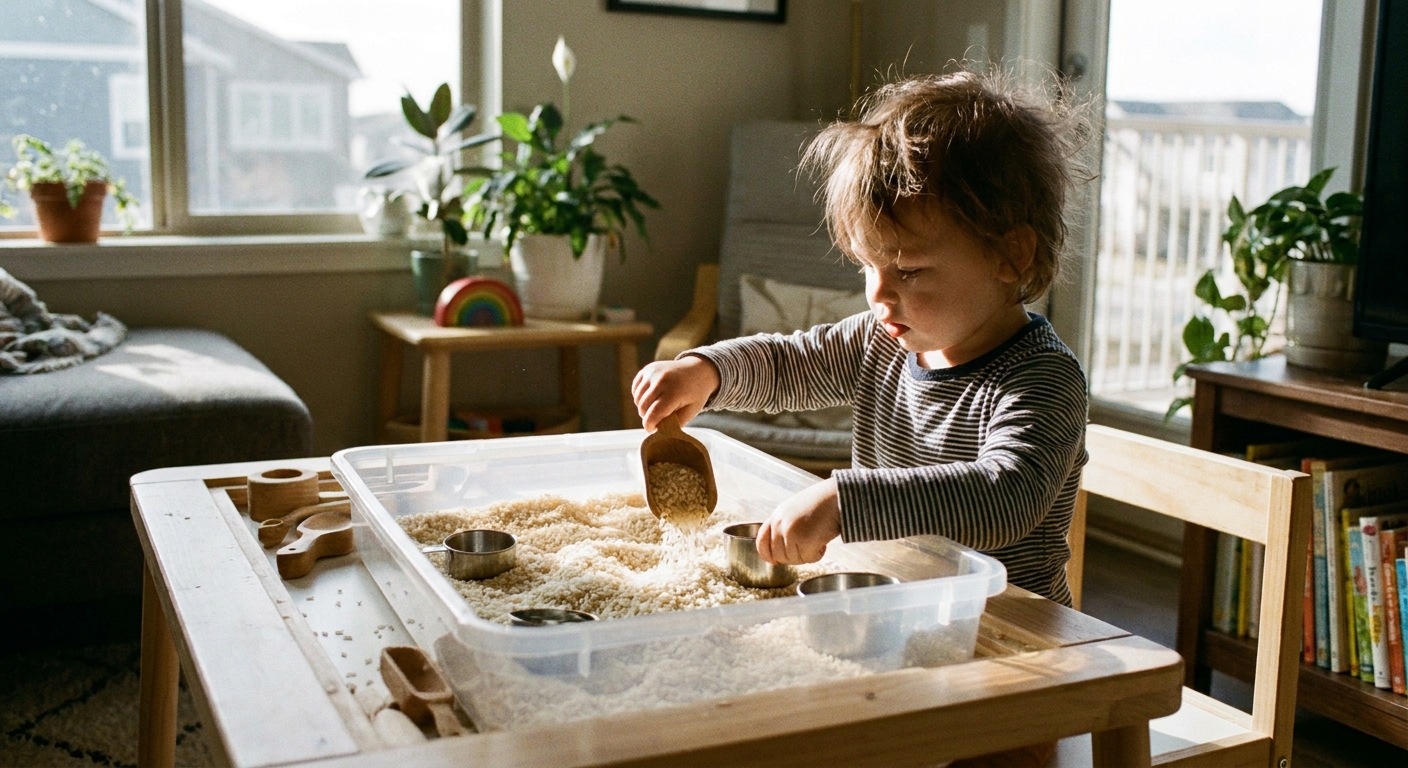
Scoops and spoons are the “yes you can!” tool. They build confidence while sneaking in lots of fine motor development. Toddlers practice grasping a handle, rotating the wrist to scoop, then controlling the dump.
What to choose
- Short-handled scoops: easier for small hands, less tipping.
- Deep spoons: often helpful for beginners because less falls out right away.
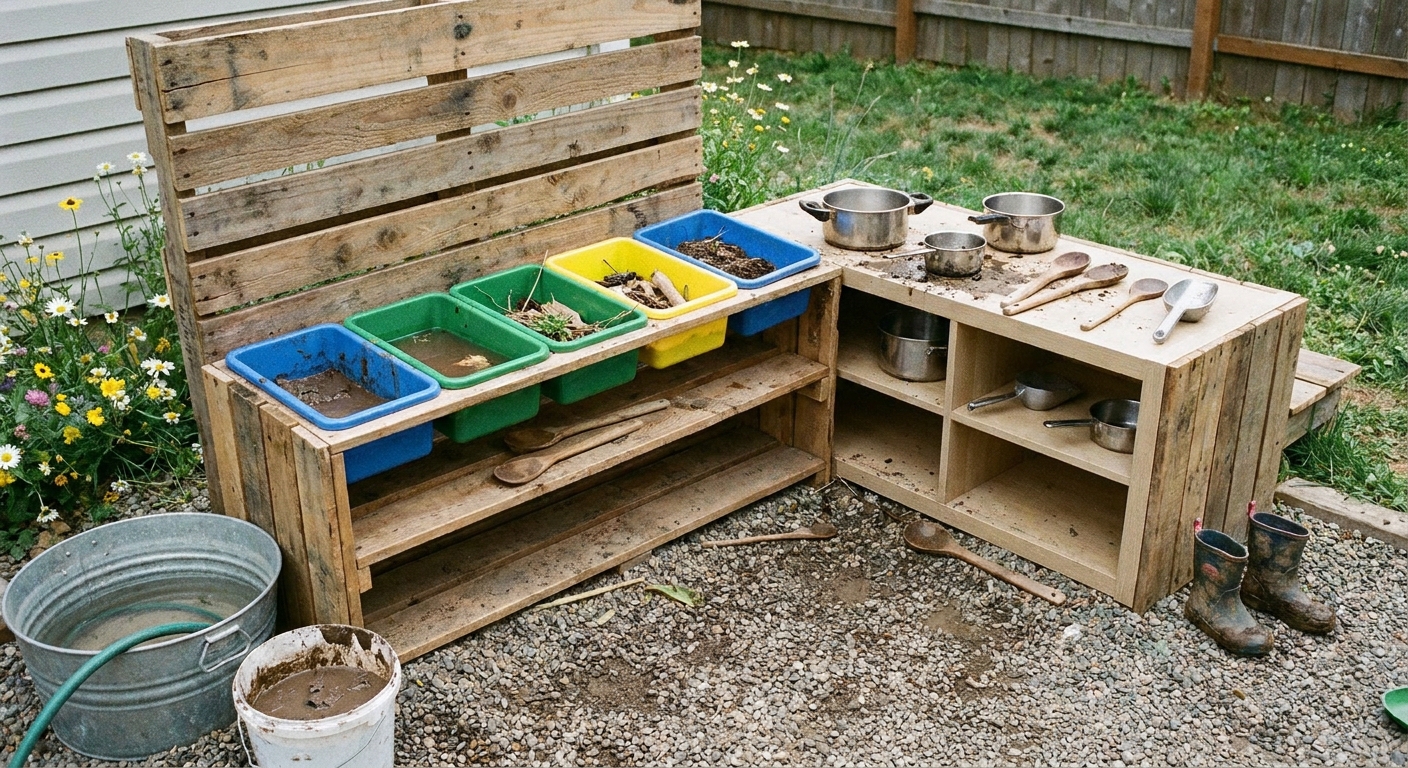
- Small shovels: great in sand, kinetic sand, or damp sensory bases.
Skill building ideas
- Scoop to fill: fill a cup to the brim.
- Scoop and transfer: move beans from one bowl to another across the bin.
- Treasure hunt: scoop to uncover hidden toys, then place them in a “treasure cup.”
Make it more fine-motor focused
- Use smaller cups or containers with narrow openings to slow the pour.
- Try stiffer bases (dried beans, pebble-like sensory rocks) for more resistance and strengthening.
Fine motor win: Scoops strengthen the whole hand and wrist and are ideal for toddlers who want big movement play without tricky squeezing.
Funnels: best for two-handed coordination and controlled pouring
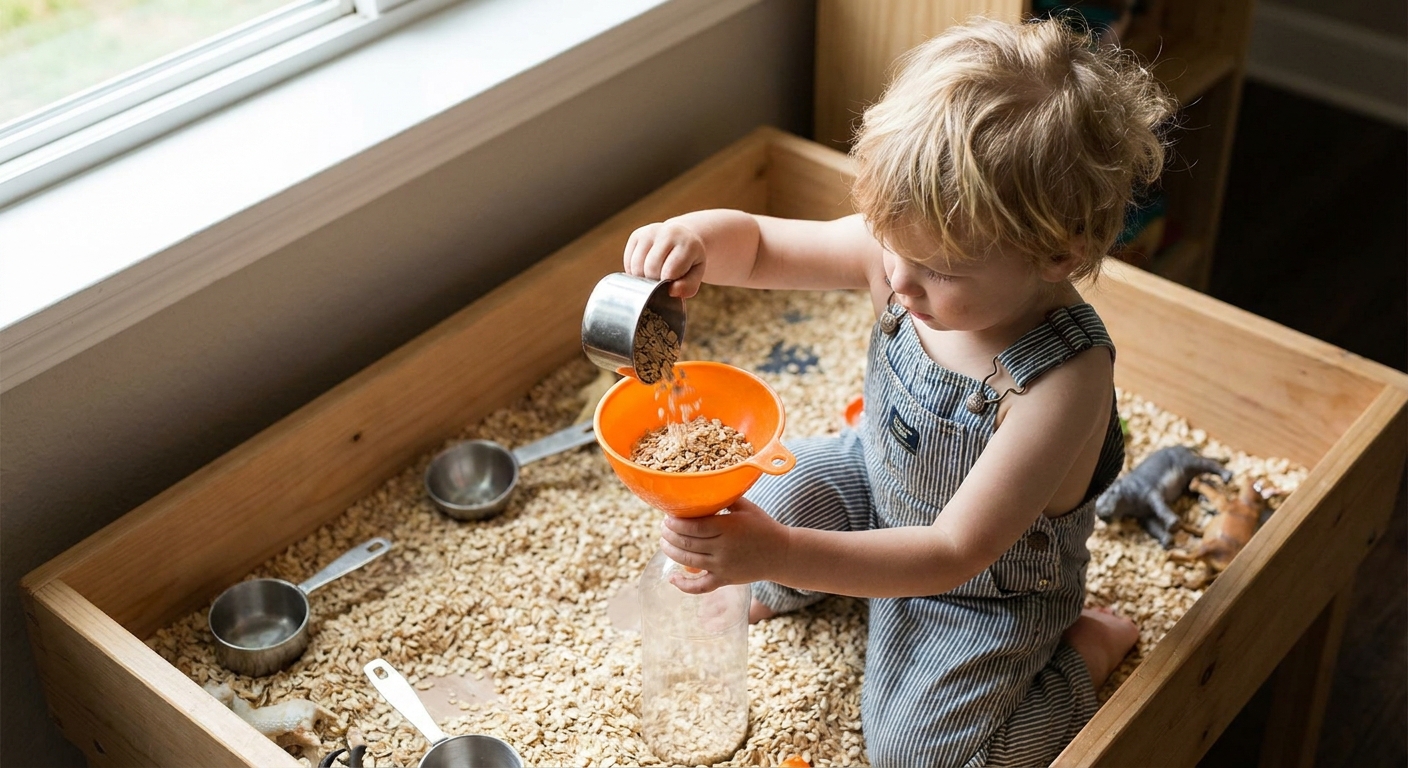
Funnels turn pouring into a slow-motion challenge, in a good way. One hand often steadies the funnel or bottle, while the other pours. That is a wonderful recipe for bilateral coordination and patience.
What to choose
- Wide-mouth funnels: fewer clogs, best for rice, oats, and larger grains.
- Narrow funnels: more challenge and control, best for older toddlers with supervision.
- Silicone funnels: flexible, often easier to grip.
Skill building ideas
- Pour station: cup of rice, funnel, and an empty bottle. Repeat, repeat, repeat.
- Sound play: pour lentils into a plastic container and listen to the rainstick sound.
- Stop and go: practice pausing pouring when you say “stop” to build control.
Prevent common funnel frustration
- Avoid sticky sensory bases in funnels (like wet sand) unless the funnel is very wide.
- Keep a small tray or towel under the bin for quick spill help, then return to play.
Fine motor win: Funnels shine when your goal is two hands working together, with careful aim and speed control.
Kitchen utensils: best for real-world hand skills
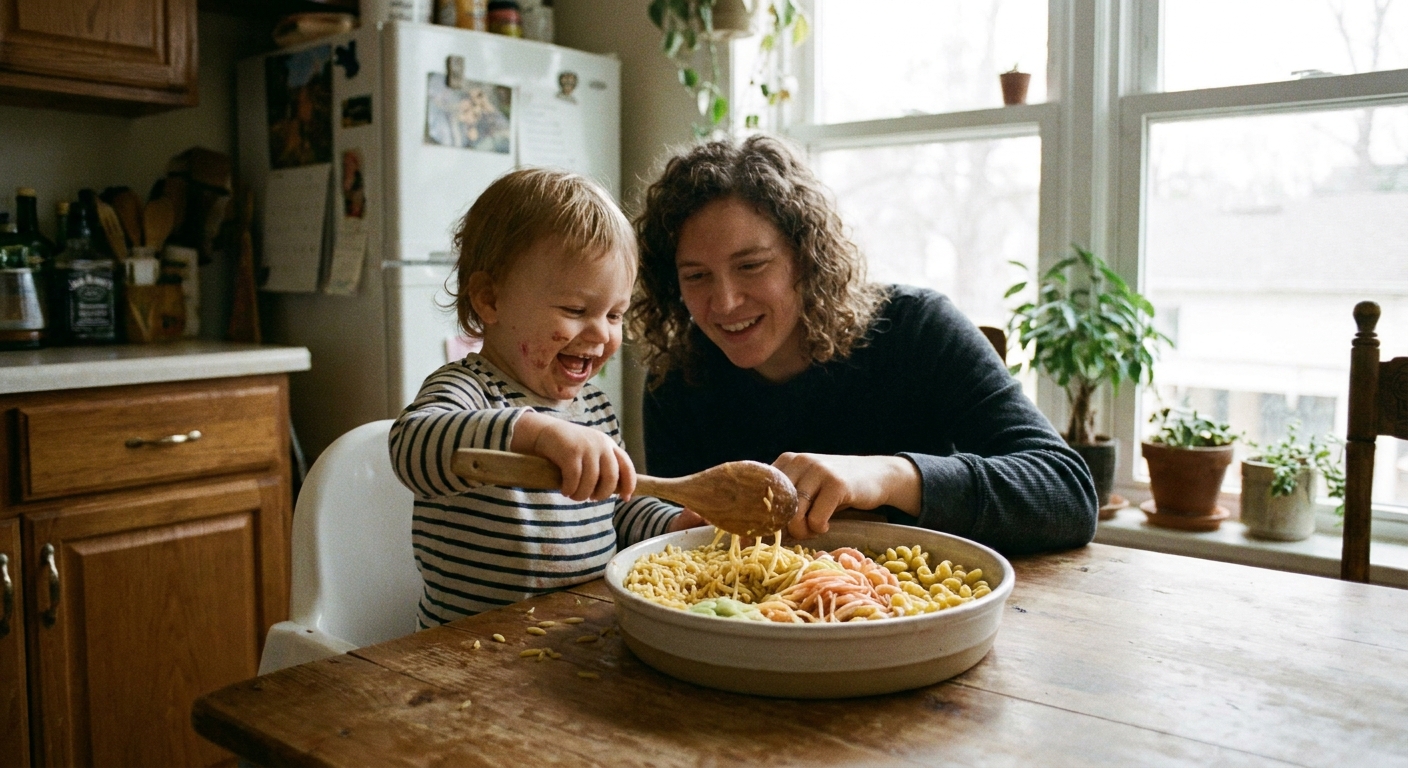
Kitchen tools are sneaky learning heroes because they feel purposeful. Toddlers love using “real tools,” and the variety of handle shapes builds flexible grasp patterns.
Great options
- Measuring cups: scoop, fill, dump, and nest them together.
- Measuring spoons: smaller targets and more precise scooping.
- Ladles: excellent for water bins or foam play, builds forearm strength.
- Whisks: fun in foam or soapy water, adds resistance and wrist action.
- Slotted spoons or small strainers: builds control as little pieces fall through, which encourages slower movements and careful aiming.
Choose safely
- Skip anything with sharp edges, cracks, or splinters.
- Prefer lightweight plastic or silicone over heavy metal for little hands.
- Match tool size to toddler size. Oversized tools can tire hands quickly.
Fine motor win: Kitchen utensils are excellent for functional grasp, wrist rotation, and practicing everyday motions toddlers will use for self-help skills.
How to introduce tools
If tools feel like they are mostly used for flinging, dumping, or dramatic floor-based “science,” you are not alone. A little setup helps.
- Model first: do two slow scoops or two slow squeezes, then hand the tool over.
- Keep it short: a 5 to 10 minute “tool moment” can be plenty, especially at the beginning.
- Offer hand-over-hand help: you guide the movement lightly, then fade your help as they get it.
- Use clear targets: muffin tins, ice cube trays, or small bowls give toddlers a “where” for all that energy.
- Rotate tools: fewer tools out at once usually means more focused practice.
Which tool is best by age and stage?
Toddlers develop at different speeds, so think in terms of stage, not a strict age rule. Here is a gentle guide.
Beginner stage (new to tools)
- Best picks: scoops, big spoons, measuring cups
- Why: easy success, lots of repetition, builds confidence
- Bin bases to try: dry oats, larger dried beans, water (with close supervision)
Building control stage (wants a challenge)
- Best picks: funnels, smaller cups, slotted spoons
- Why: requires aim, slowing down, and two-handed help
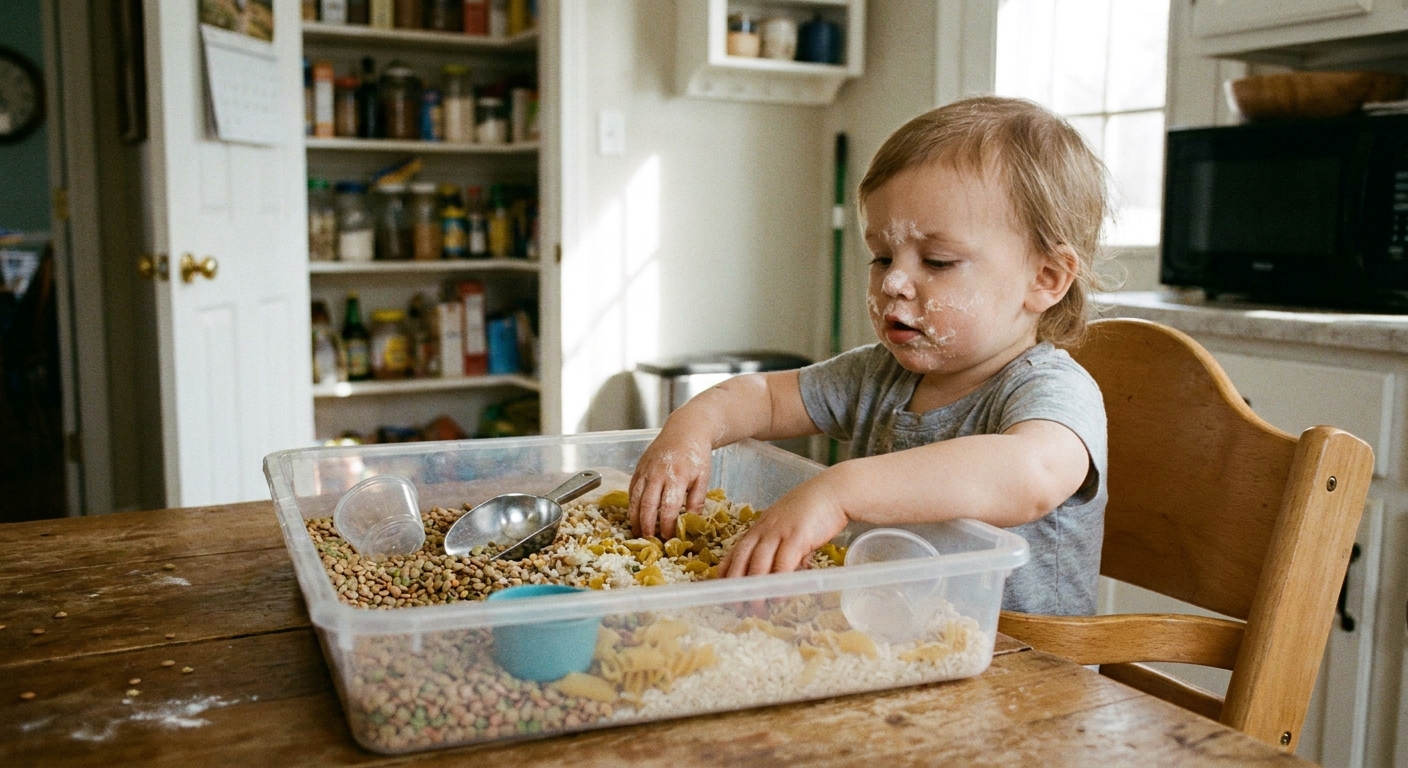
- Bin bases to try: rice, lentils, sensory pasta
Precision stage (ready for fine finger work)
- Best picks: child-safe tweezers, small tongs
- Why: strengthens pincer grasp and finger isolation
- Bin bases to try: medium pom poms, foam bits, larger chunky beads that cannot fit in a child’s mouth
Important: Many popular bin fillers and add-ins can be choking hazards for young children, especially under age 3 and for toddlers who still mouth items. If your child is in a mouthing stage, choose larger materials, avoid small loose add-ins, and supervise 1:1.
How to build a tool set that grows with your toddler
A sensory bin tool collection does not need to be big. A small, thoughtful set gives variety without overwhelm.
- Start with 2 tools: one scoop and one cup is plenty.
- Add 1 challenge tool: a funnel or tweezers, depending on your toddler’s readiness.
- Rotate, do not flood: fewer tools out at once means more focused practice.
- Use containers with purpose: muffin tins, ice cube trays, and small bowls create targets for precision.
For more sensory bin ideas and themes, waddle over to Sensory Play & Bins.
Safety notes for tool play
- Supervise closely with small parts, especially anything that could be a choking hazard.
- Be extra cautious under age 3: if your toddler mouths items, skip small fillers and tiny add-ins, and stick with bigger, easy-to-see materials.
- Check tool edges and avoid metal tongs with strong pinch points.
- Set a simple boundary: tools stay in the bin. If tools become throwing toys, pause and reset.
- Watch sensory allergies: food-based fillers like wheat flour or certain grains may not be right for every family.
If you want more learning-focused play ideas beyond bins, peek at Early Learning & Development.
FAQ
Are tweezers too hard for toddlers?
They can be, especially at first. Start with chunky, easy-squeeze tweezers and larger items like pom poms. If frustration shows up quickly, switch to scoops for a while and reintroduce tweezers later.
What tool is best for strengthening little hands?
Tweezers and tongs build squeezing strength, while scoops build whole-hand grasp strength. If you want both, pair tongs with a scoop-and-pour station.
What is the best all-around utensil if you only pick one?
A small scoop or sturdy spoon is the most versatile starter. It works in nearly every sensory base and gives toddlers quick success while still building wrist and grasp control.
How many tools should be in a sensory bin?
For toddlers, 2 to 4 tools is usually plenty. Too many options can turn into dumping everything out rather than practicing a skill.
My duckling pick: the best fine-motor combo
If the goal is fine motor growth without frustration, a simple three-tool lineup is a happy place to start:
- One scoop for easy transfers
- One funnel for two-handed pouring practice
- One set of child-safe tweezers for pincer grasp and precision
Then let your toddler lead the play. When they repeat an action again and again, that is their little brain and body saying, “This is the skill I am building today.”