Gloomy winter afternoons are perfect for a little indoor glow. Flashlight play feels like a tiny adventure, but it is really just simple science and giggly movement in disguise. Let’s dive in and make some cozy, no-mess magic together, using shadows, shapes, and a whole lot of “Whoa!”
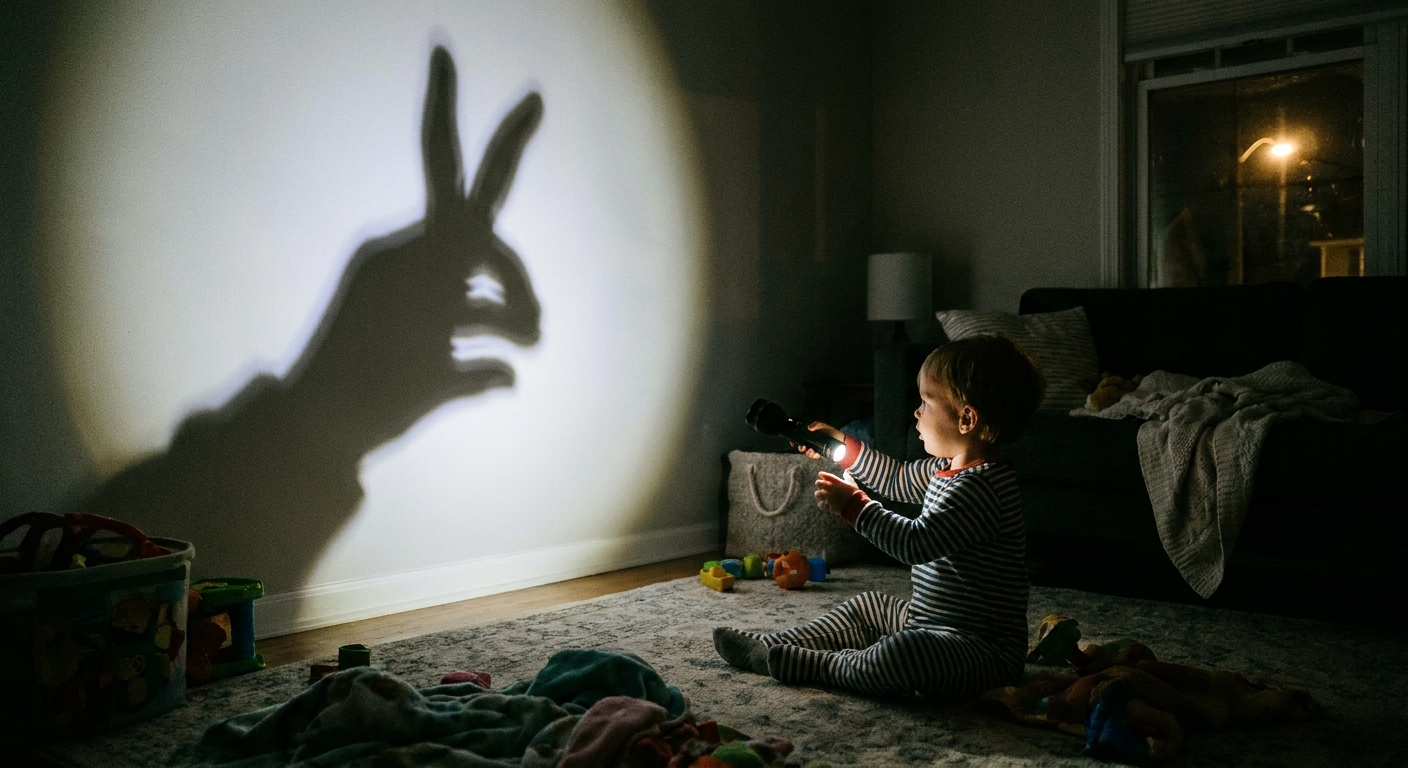
Quick setup and safety
Flashlight games are easy, but a few tiny tweaks make them toddler-friendly and frustration-free.
- Best ages: Great for about 18 months and up with close supervision. Younger toddlers can join in too, but you will want to do more of the holding and aiming.
- Pick the right light: A small LED flashlight or headlamp with a wide, gentle beam is easiest for little hands. Avoid very bright, high-powered beams.
- No laser pointers: Skip lasers entirely for toddler play.
- Eyes and faces: Practice one simple rule: flashlights point at the wall or floor, not at faces. Also, no one looks directly into the beam, even with small lights.
- Check the battery compartment: Make sure it is screwed shut or secured so curious fingers cannot pop it open.
- Make a “shadow screen”: A blank wall works great. A light-colored sheet hung over a doorway can also make shadows extra clear.
- Dim the room safely: Close curtains and turn off overhead lights, but keep a little ambient light if your toddler dislikes full darkness.
- Trip check: Clear floor clutter. Keep spare flashlights and extra supplies off the floor and away from walkways.
If your toddler loves to toss supplies when excited, the same calm boundaries used for sensory bins work here too. This guide on how to stop your toddler from throwing sensory bin fillers can help with simple, consistent language that transfers nicely to flashlight tools.
Game 1: Shadow Puppet Hello
This is the classic, and toddlers do not need fancy shapes to love it.
What you need
- Flashlight
- A wall or sheet “screen”
How to play
- Sit your toddler facing the wall.
- Hold the flashlight so it points at the wall from behind their shoulder.
- Start with easy shapes: open hand, fist, wiggly fingers.
- Take turns: “My turn to make a shadow. Your turn to make a shadow.”
Make it toddler-perfect
- Copycat round: You make a hand, they copy. Then swap.
- Feel and match: Say “big” and “small” while moving closer or farther from the wall.
- Animal guessing: Keep it simple. “Is that a bunny, or a duck?” is plenty.
Game 2: Shadow Chase
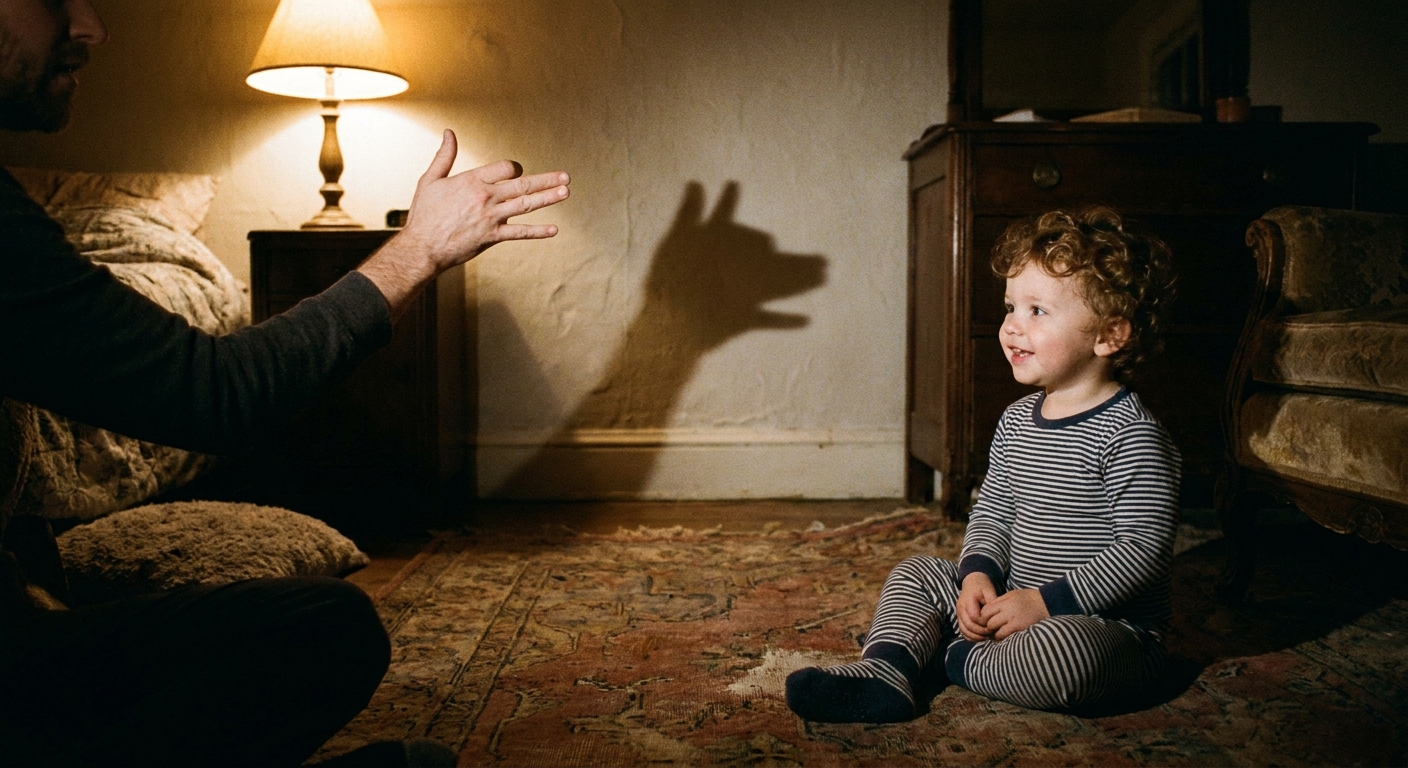
This one is perfect for toddlers who need to wiggle. It turns the wall into a target and the flashlight into a playful coaching tool.
What you need
- Flashlight
- Open wall space
How to play
- Make a shadow on the wall using your hand or your toddler’s hand.
- Slowly move the light so the shadow “walks” along the wall.
- Invite your toddler to chase the shadow with their hand: “Can you catch it?”
- Switch roles if they want to hold the flashlight, with gentle reminders to aim at the wall.
Fun variations
- Tiptoe shadow: Move the shadow up high and encourage reaching.
- Slow motion: Move extra slowly for younger toddlers.
- Freeze game: Say “Freeze!” and everyone holds still.
Need more indoor movement ideas for long afternoons? These indoor gross motor activities for rainy day toddler energy pair perfectly with flashlight play.
Game 3: Color-Mixing Flashlight
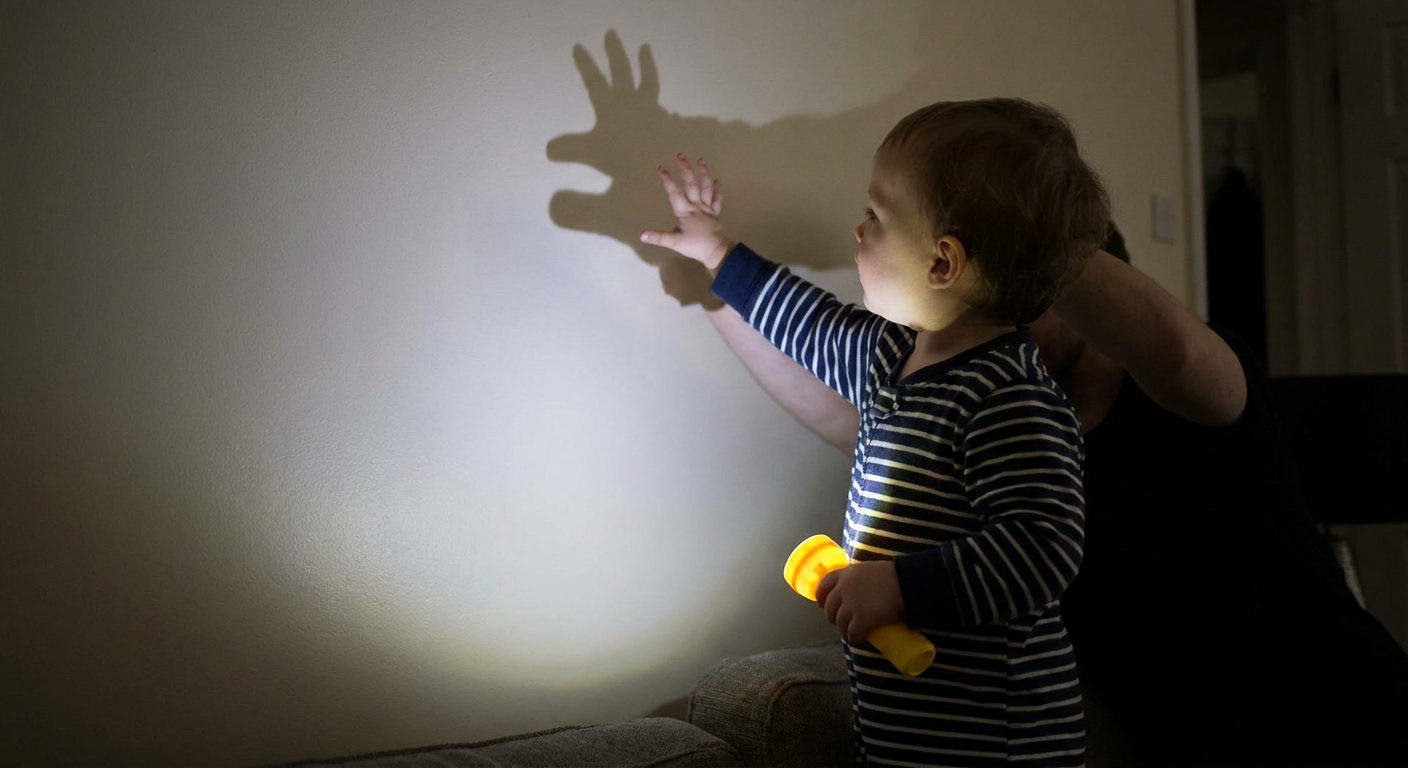
This is a cozy way to explore color without paint. Toddlers get that magical “new color!” moment fast.
What you need
- Flashlight
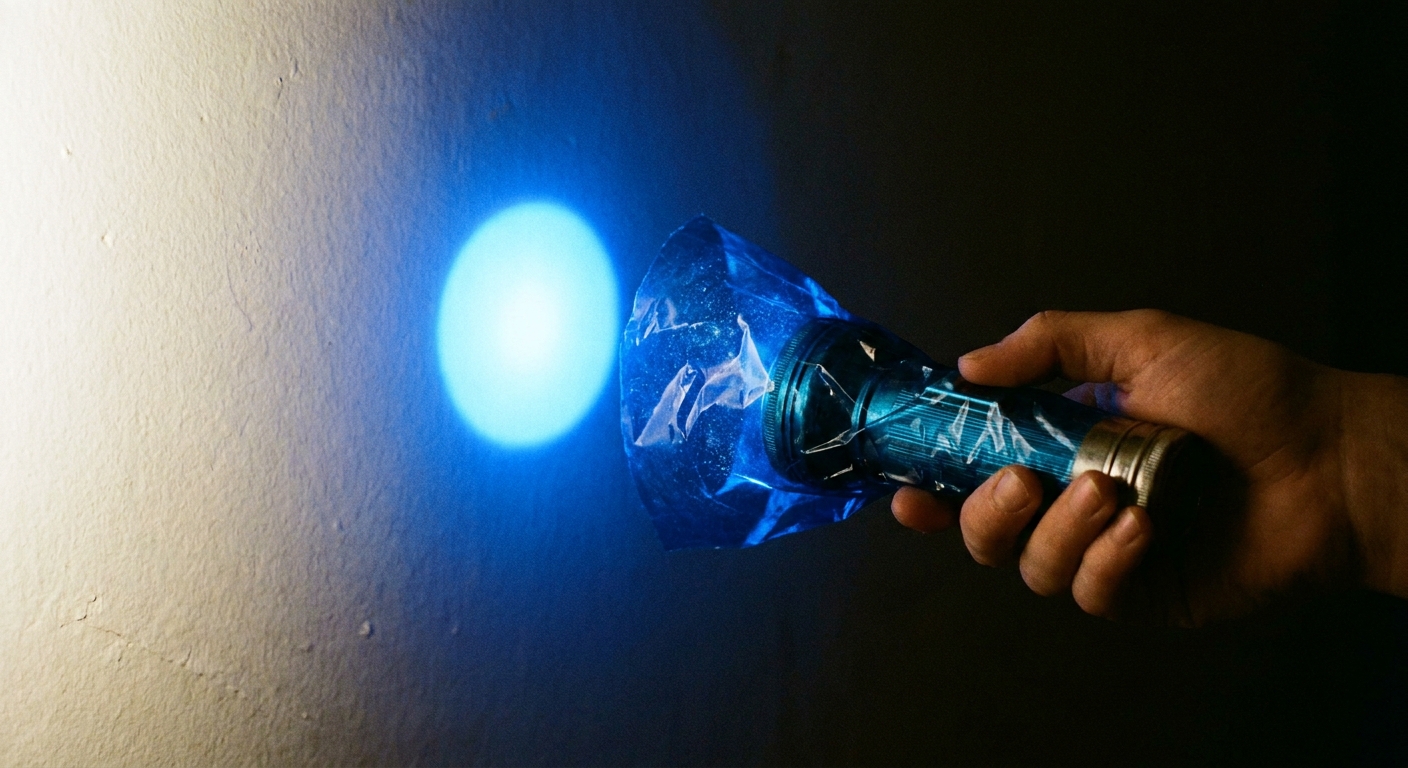
- Transparent colored items such as tissue paper, cellophane gift wrap, or translucent plastic folders
- Clear tape (adult use)
How to play
- Tape a small square of color over the flashlight lens, or hold it in front of the beam.
- Shine it on the wall and name the color.
- Add a second color by stacking two pieces together, then shine again.
- Try simple mixes: yellow + blue, red + yellow, blue + red. You will get different shades depending on your materials and how thick the layers are.
Toddler-friendly prompts
- “What happens if we add another color?”
- “Can you find something in the room that matches this color?”
- “Let’s make the color travel across the wall.”
If your toddler loves sorting and matching, you can connect this to simple early learning play. Try these sensory bins for color recognition and sorting on a brighter day.
Game 4: Toy Shadow Guessing
This game turns everyday toys into mystery visitors. It is a gentle way to practice observation and language.
What you need
- Flashlight
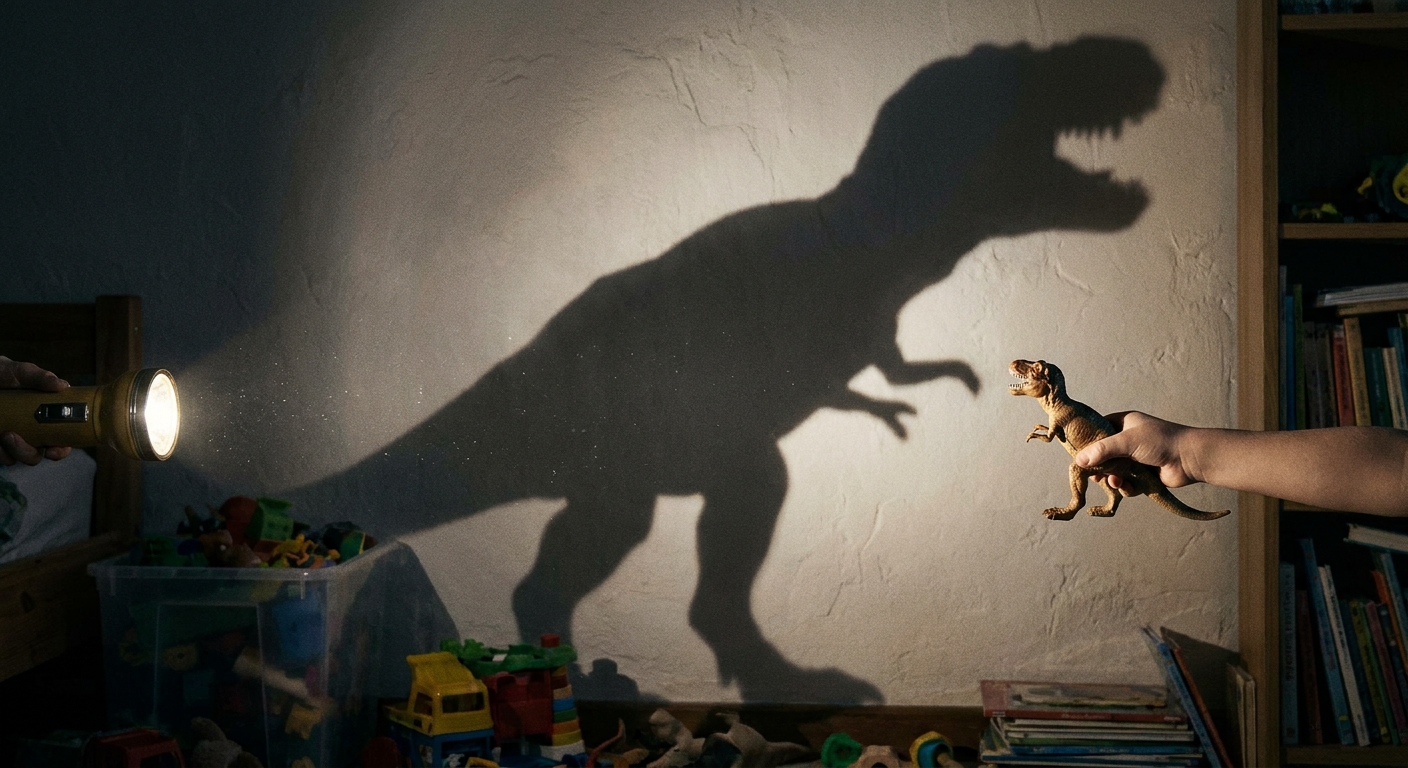
- A few simple toys with recognizable shapes (ball, spoon, dinosaur, block, toy car)
How to play
- Place the toy between the flashlight and the wall to cast a clear shadow.
- Keep the toy hidden in your hand while the shadow shows.
- Ask: “What do you think it is?”
- Reveal and celebrate. Then let your toddler choose the next object.
Make it easier or harder
- Easier: Use one toy at a time and keep it close to the wall for a sharper outline.
- Harder: Move the toy closer to the flashlight so the shadow grows and blurs a bit, then ask them to guess anyway.
Game 5: Shadow Trace Art
This blends flashlight play with low-mess art. The result can be a sweet keepsake, or just a quick scribble session.
What you need
- Flashlight
- Paper (taped to the wall or laid on the floor)
- Crayons or washable markers
- A simple object to trace (hand, toy, block)
How to play
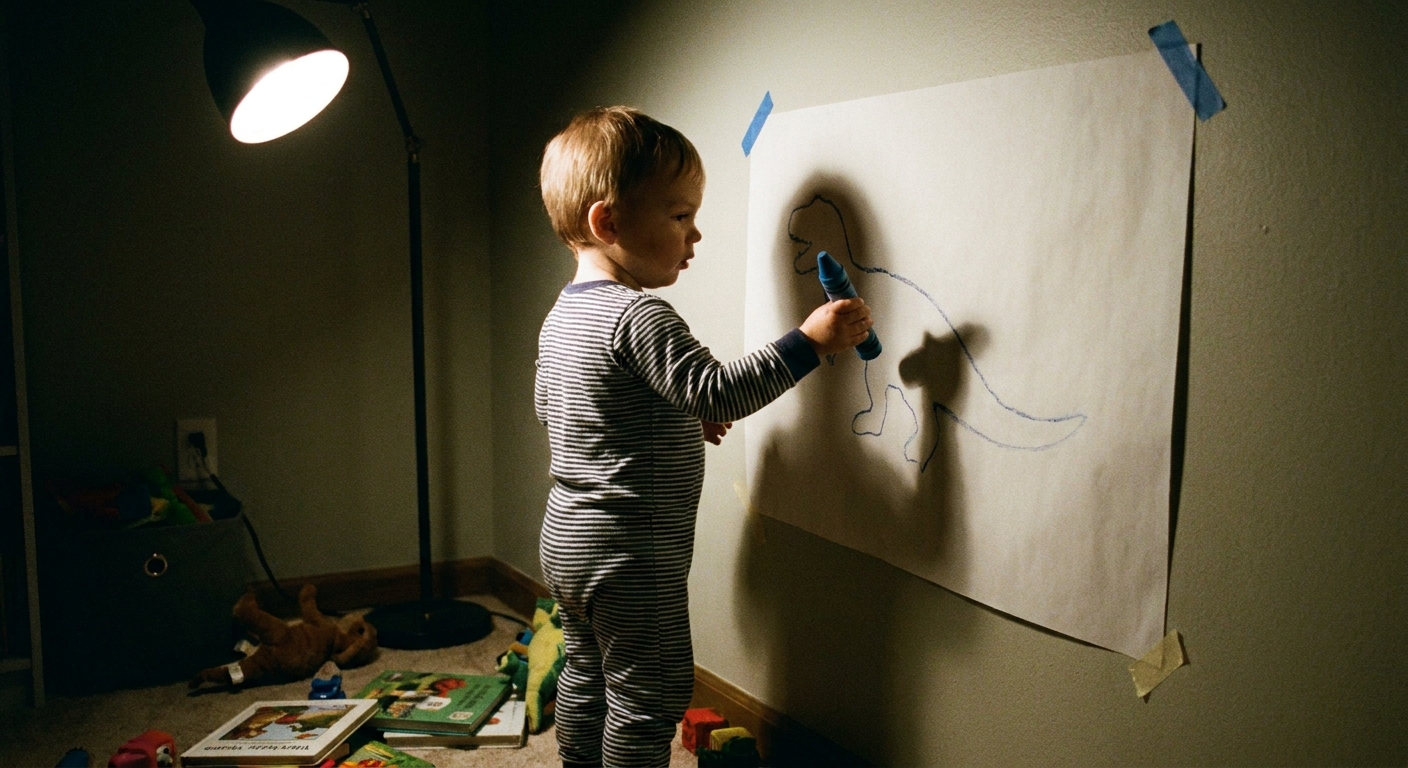
- Tape paper to the wall at toddler height, or place it on the floor near the wall. Painter’s tape is handy for easy removal.
- Cast a shadow onto the paper.
- Trace the shadow outline together. Adult help is totally fine.
- Color it in and give it a name: “Shadow Puppy,” “Big Block,” “Wiggly Hand.”
Keep it calm and easy
- Cap markers when you are not using them, and offer one color at a time if your toddler gets overwhelmed.
For extra sticky-wall fun
If your toddler loves working upright, a sticky wall is a wonderful companion activity. This contact paper sticky wall for toddler art idea pairs beautifully with tracing and decorating shadow shapes.
Little learning moments
Flashlight play can be pure giggles, or it can quietly build early skills. Here are easy concepts to name while playing, one at a time.
- Cause and effect: “When we move the light, the shadow moves.”
- Big and small: “Closer makes it bigger. Farther makes it smaller.”
- Position words: Up, down, behind, in front, near, far.
- Turn-taking: “My turn, your turn.”
- Color words: Especially during the color-mixing game.
For more play-based skill building, explore Early Learning & Development ideas that fit right into toddler days.
Troubleshooting
If your toddler keeps shining the light in eyes
- Switch to a rule that is easy to repeat: “Light stays low” or “Light on the wall.”
- Offer a target: put a stuffed animal on the floor and say, “Shine the light by the bear.”
- Use a headlamp on the adult so the beam stays predictable, and give your toddler a dimmer flashlight.
If your toddler is scared of shadows
- Keep some room light on and start with tiny shadows close to the wall.
- Use friendly shadows first: waving hand, heart shape, round ball.
- Let them control the light. Control often replaces fear with curiosity.
If your toddler loses interest fast
- Rotate games quickly. Two minutes per game can be perfect.
- Add a simple story: “The shadow is looking for a snack. Can you help?”
- Mix in movement with Shadow Chase, then return to calmer tracing.
More cozy indoor play
If you want to keep the indoor magic going after flashlight time, these Tot Sensory favorites are great for the same gloomy-day mood:
- Indoor & Rainy Day Play for more easy activity ideas
- No-mess sensory bags with household items when you want contained sensory fun
- Last-minute sensory bins from pantry staples for quick setup play
One flashlight, one wall, and a little winter dimness can turn into a whole afternoon of wonder. Off you go, little explorers.