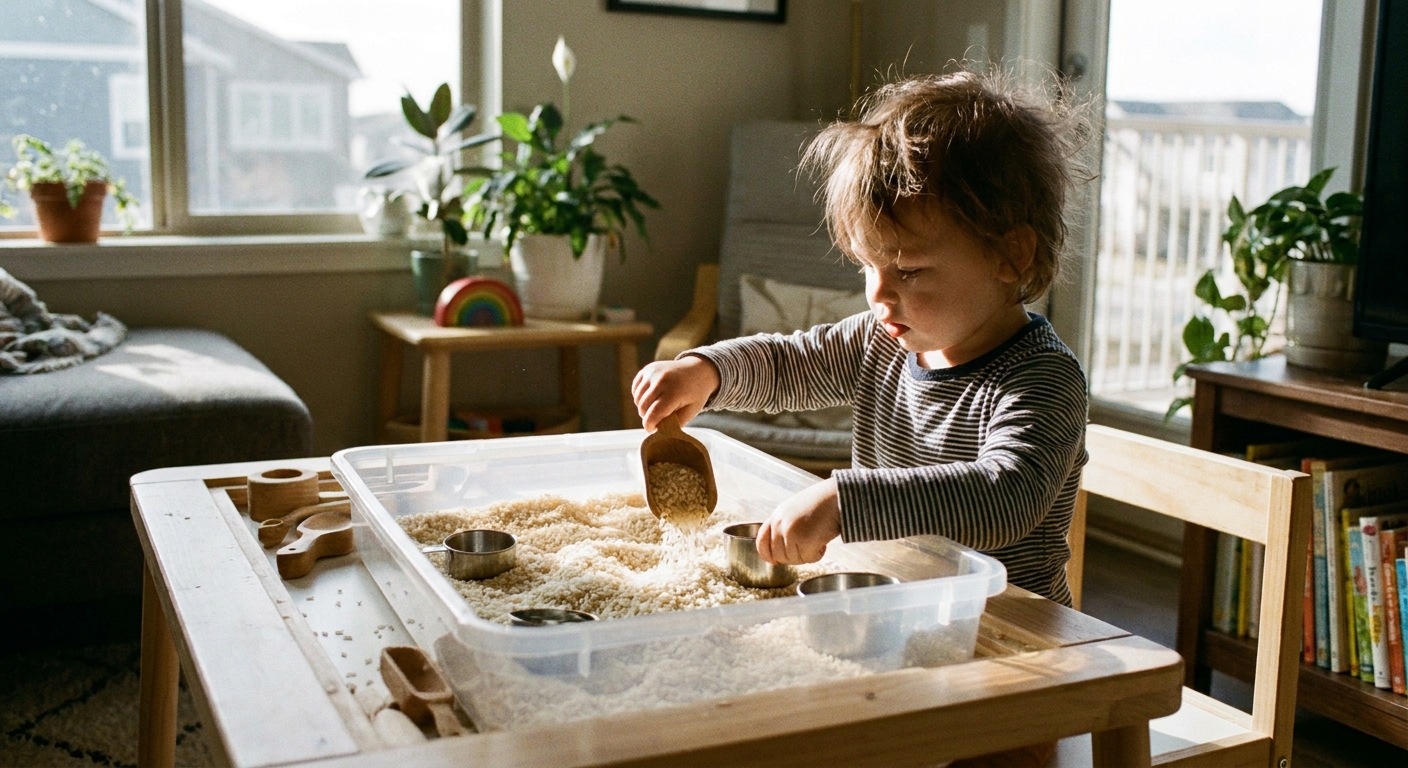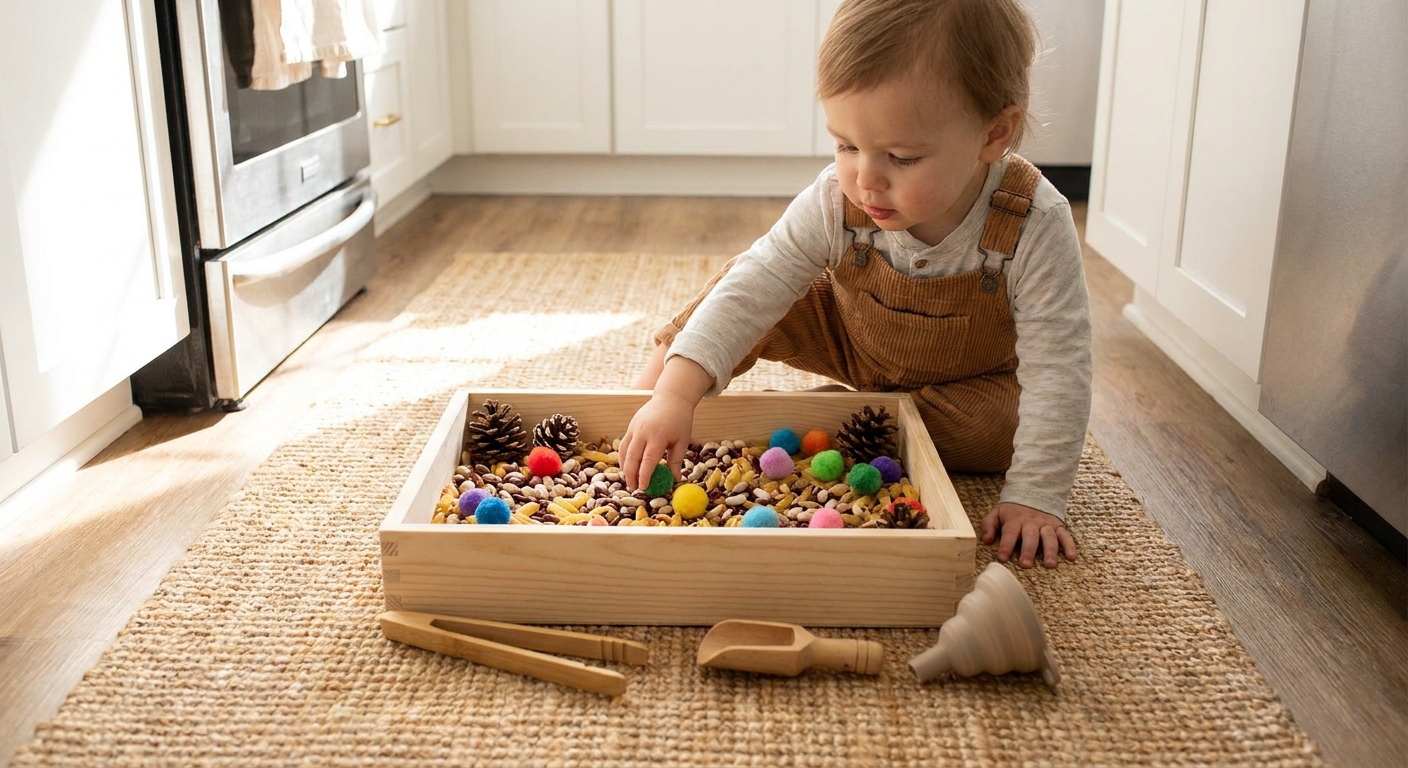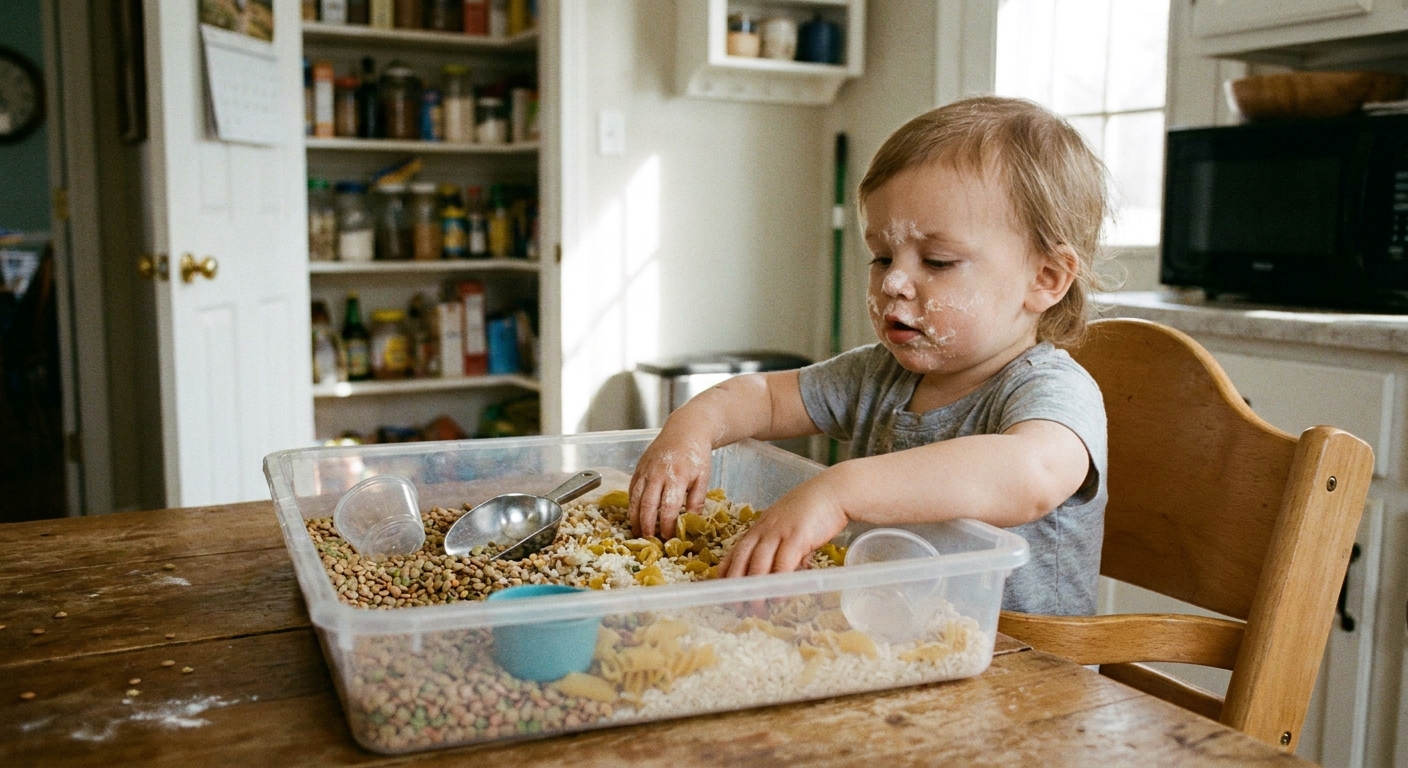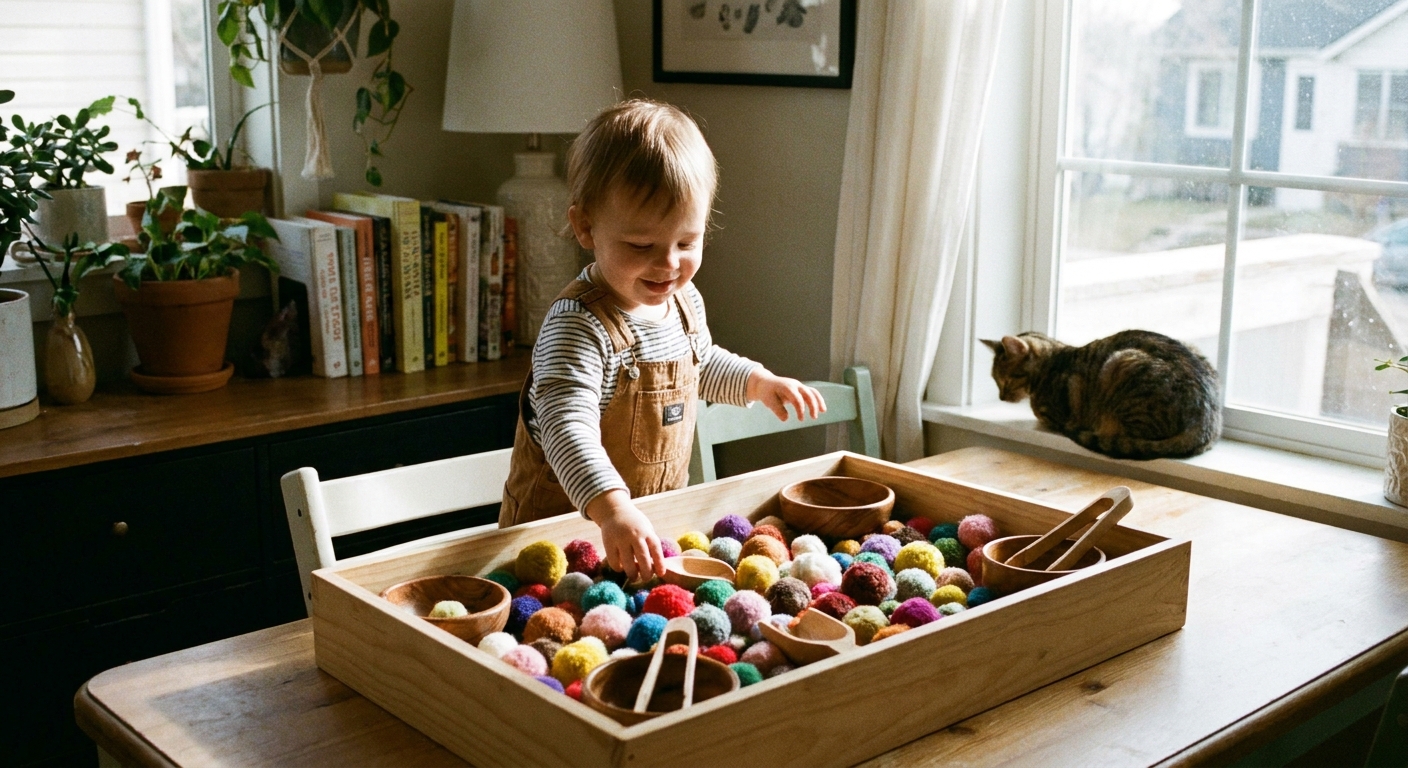
Let’s dive in and do some hands-on play together!
Toddler counting does not need flashcards or fancy toys. The best math starts with little hands moving real objects: scooping, stacking, lining up, dropping, and starting again. (And yes, sometimes that means a happy little mess.)
One quick expectation-setter: many toddlers can say numbers long before they can reliably count objects. That is normal. Below are 10 everyday household items you can repurpose into quick counting games, plus simple ways to level them up as your child grows.
Before you start: quick counting tips
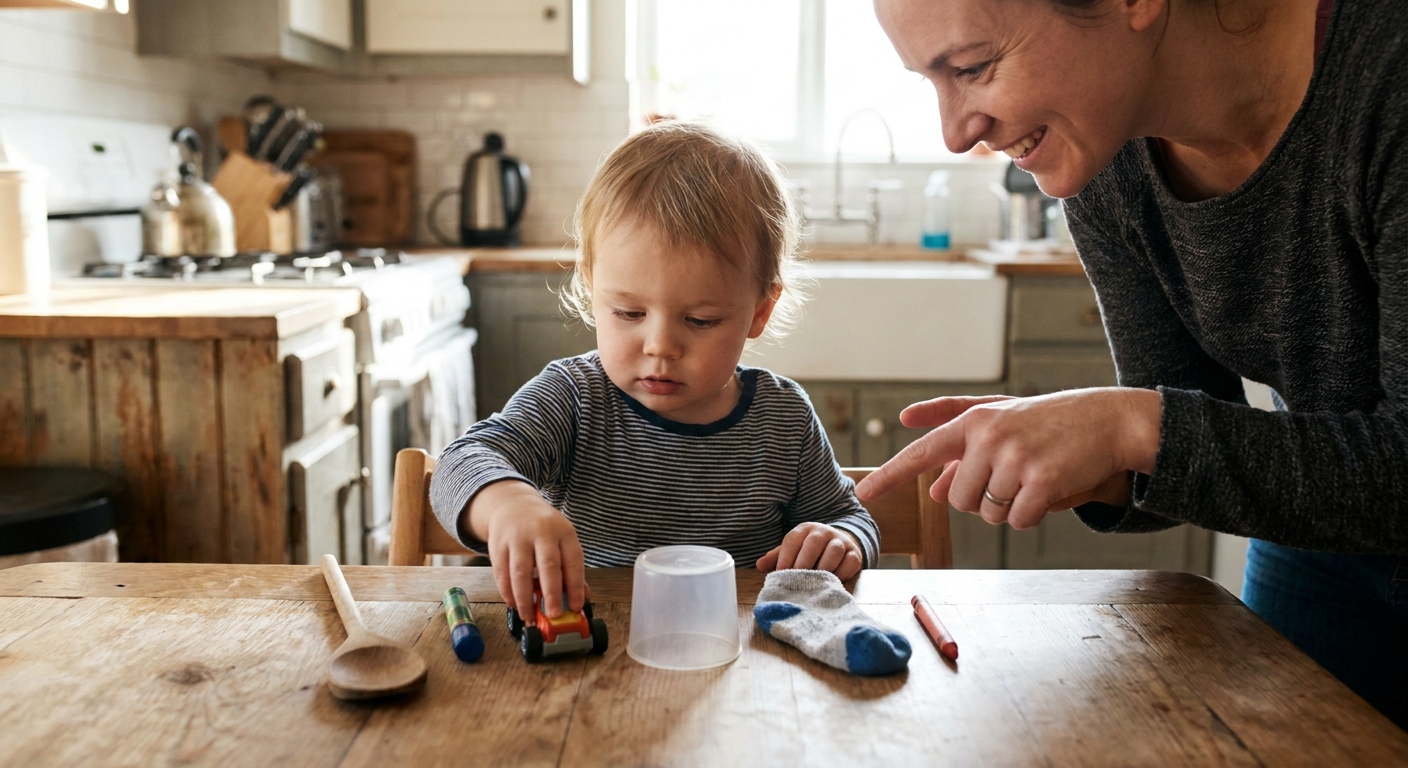
- Use real objects your toddler can touch and move. Counting is easier when they can see the amount.
- Count slowly and point to one item per number. One number, one object.
- Stop while it is still fun. Even 30 seconds of happy counting counts.
- Go small for safety. If your toddler mouths items, choose larger objects or keep small pieces fully supervised.
- Repeat, repeat, repeat. The same game tomorrow is a feature, not a bug.
If you want a gentle path from “What even is a sensory bin?” to “We can play and learn with this,” waddle over to Your First Toddler Sensory Bin.
1) Buttons (or big craft buttons)
Buttons are tiny treasures for counting, sorting, and making simple patterns.
Try this: Button Drop Count
- Set out a muffin tin or ice cube tray.
- Place 1 to 5 buttons in a small bowl.
- Your toddler drops buttons into one cup at a time while you count together.
Make it easier
- Start with 1 to 3 buttons total.
- Use a larger container so misses still feel like wins.
Level it up
- Say a number and have your toddler “make that many” in one cup.
- Sort and count by color: “How many red buttons?”
Safety note: Buttons are choking hazards. Use only with close supervision, or swap to larger items if your toddler mouths objects.
2) Building blocks (wood, plastic, or chunky Duplo-style)
Blocks are perfect because they show quantity clearly and invite repetition.
Try this: Count and Build a Tower
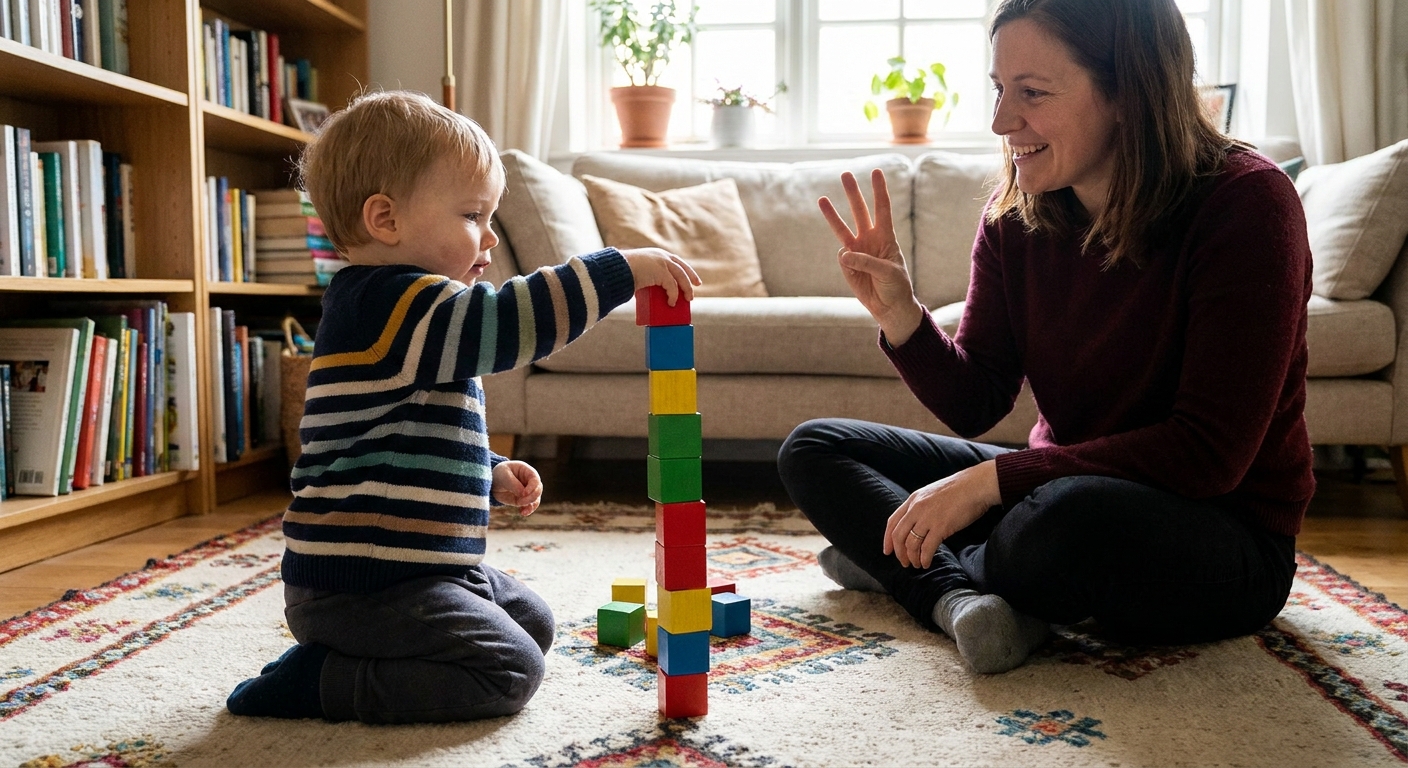
- Say, “Let’s build a 5-block tower!”
- Hand one block at a time and count out loud as your toddler stacks.
- Knock it down together and do it again with a new number.
Level it up
- Build two towers and compare: “Which has more?”
- Make simple addition stories: “3 blocks, then 1 more. How many now?”
3) Socks (clean socks from the laundry basket)
Socks are wonderfully toddler-friendly: big, soft, easy to grab, and great for one-to-one counting.
Try this: Sock Basket Count
- Put 4 to 8 socks on the floor.
- Count each sock as your toddler tosses it into a basket.
- Then find pairs and count: “We made 2 pairs!”
Make it easier
- Start with just 2 to 4 socks.
- Use only one type of sock (all the same) so the pairing step is simple.
Level it up
- Count by twos with pairs: “2, 4, 6…”
- Make a simple “sock line” and count forward and backward.
4) Plastic cups (or paper cups)
Cups make counting feel like a game of building and hiding.
Try this: Cup Line Count
- Set 3 to 5 cups in a row.
- Easy setup option: Put 1 small object in each cup, then count cups: “1 cup, 2 cups, 3 cups…”
- Next step: Put 1 object in the first cup, 2 in the next, and so on (or let your toddler do it).
- Count each cup together: “This cup has 1. This cup has 2…”
Make it easier
- Use only 2 to 3 cups.
- Keep the numbers low: 1, 2, 3.
Level it up
- Play “Which cup has 3?”
- Stack cups into a tower and count as you stack.
5) Muffin tin (or egg carton)
A muffin tin turns counting into tidy little “parking spots” for objects.
Try this: Fill the Tin
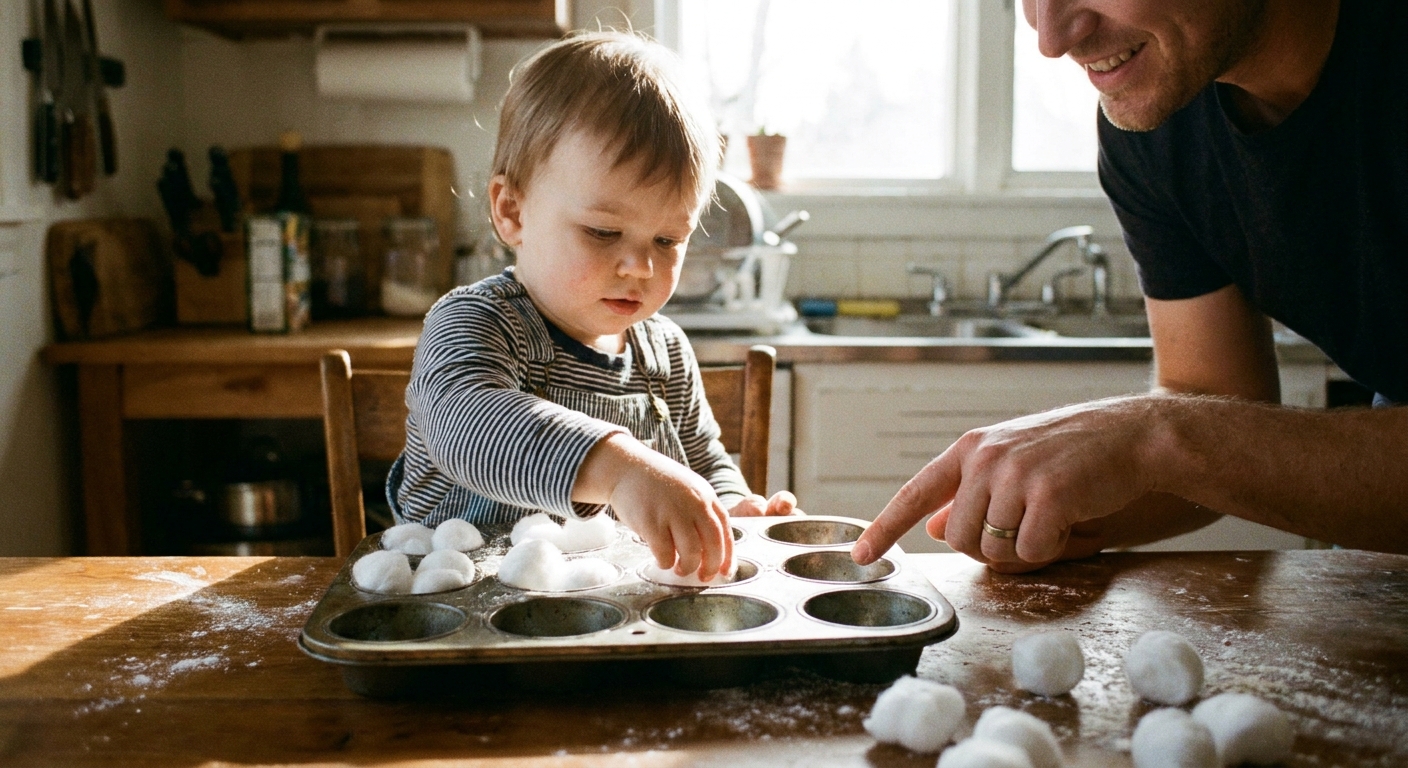
- Place a muffin tin on the table.
- Give your toddler a bowl of counters like cotton balls, large pom poms, or big paper wads.
- Challenge: “Let’s put 1 in each cup,” then count the filled cups.
Level it up
- Roll a die (or show fingers) and place that many items in a single cup.
- Make a pattern across the tin: 1, 2, 1, 2.
Safety note: Small items (including beads and dry pasta) can be choking hazards. If your toddler still mouths objects, choose larger counters and supervise closely.
6) Measuring spoons and cups
These are counting tools that also sneak in early size and comparison language: big, small, more, less.
Try this: Scoop-and-Count
- Fill a bowl with an edible, toddler-appropriate filler like dry oats or cereal.
- Hand your toddler a measuring spoon.
- Count scoops into a second bowl: “One scoop… two scoops…”
Food safety note: Stay close, have your toddler sit while eating, and choose foods that feel safe for your child’s current chewing skills. Watch for choking hazards and keep allergies in mind.
If your little one still mouths everything, choose fillers designed for that stage. This list can help: 10 Taste-Safe Sensory Bin Fillers for Toddlers Who Mouth Everything.
Level it up
- Say, “Can you do 4 scoops?” and let them count independently.
- Try a simple compare: “Which bowl has more scoops?”
7) Sponges (kitchen sponges or bath sponges)
Sponges are lightweight counters that also work for color sorting if you have more than one color.
Try this: Sponge Stack Count
- Put 3 to 8 sponges in a pile.
- Count as your toddler stacks them into a tower.
- Count again as you unstack and toss them into a bin.
Make it easier
- Start with 2 to 4 sponges.
- Stack together, hand-over-hand, and count slowly.
Level it up
- Sort by color, then count each group.
- Make a “sponge hop” path and count steps as you move along it.
8) Clothespins
Clothespins are fantastic for counting plus hand strength and coordination.
Try this: Clip-and-Count
- Draw 1 to 5 dots on a strip of paper (or just point to spots along the edge).
- Your toddler clips one clothespin per dot.
- Count the pins together when finished.
Make it easier
- Use larger toddler-friendly clips if you have them.
- Start with only 1 to 3 pins.
Level it up
- Clip pins around a container rim and count around the circle.
- Make quick number stories: “You clipped 3. Add 1 more. Now how many?”
Safety note: Clothespins can pinch. Keep it gentle and supervised.
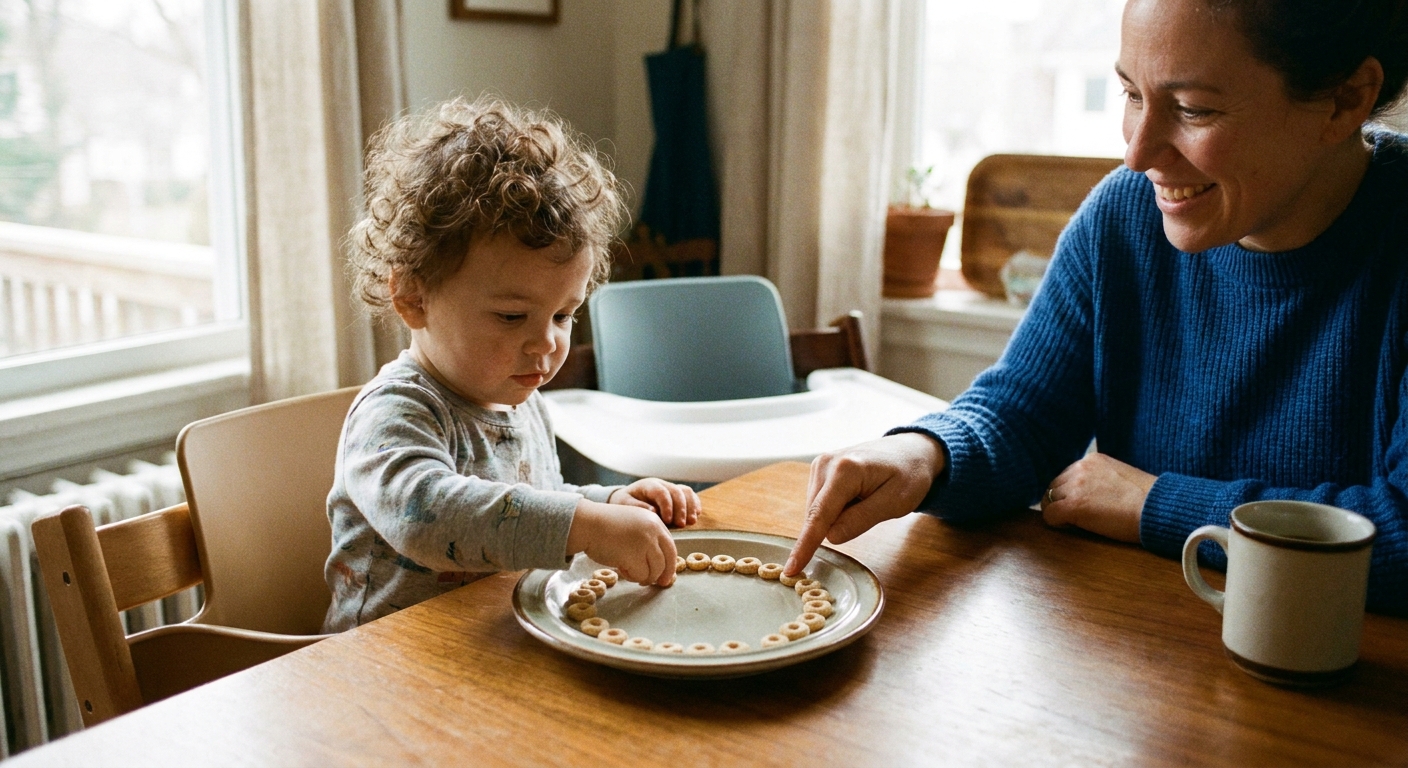
9) Snack foods (cereal, crackers, berries)
Counting with snacks is motivating and built-in repetitive practice.
Try this: Count-Then-Crunch
- Put 5 to 10 small snack pieces on a plate.
- Count each piece as your toddler moves it into a line.
- Then your toddler eats them one at a time, counting down: “Five… four… three…”
Make it easier
- Start with 3 to 5 pieces.
- Use bigger, easy-to-chew foods for younger toddlers.
Level it up
- Make two groups and compare: “Which plate has more?”
- Try simple addition: “You have 2 crackers. Here comes 1 more. How many?”
Food safety note: Sit while eating and stay within arm’s reach. Avoid hard, round foods for young toddlers, and cut foods (like grapes or larger berries) in a way that matches your child’s eating skills.
10) Toy cars (or any small vehicles)
Vehicles turn counting into a tiny story your toddler can act out.
Try this: Parking Lot Counting
- Use painter’s tape to make parking spots on the floor, or line up book spines as “garages.”
- Give your toddler 3 to 10 cars.
- Count each car as it parks: “Car 1 parks. Car 2 parks…”
Level it up
- Call a number: “Park 6 cars!”
- Make a quick “drive-thru” game: count cars as they pass through a cardboard box tunnel.
Want more tape-on-the-floor fun? This rainy-day favorite has lots of simple ideas: 10 Painter’s Tape Floor Games for Toddlers.
Mini games that work with any item
One-to-one counting line
Place objects in a row. Touch each item as you count. This is the big skill underneath counting words.
“Give me…”
Hold out your hand and say, “Can you give me 3?” If they hand a pile, count together and adjust: “That was 4. Let’s put one back.”
Count and sort
Sort by color, size, or type. Then count each group. Sorting makes quantities easier to see.
Count with movement
Count jumps, claps, tiptoes, or stomps. Toddlers often learn best with their whole bodies. If you need big-energy indoor ideas, visit 9 Indoor Gross Motor Activities for Rainy Day Toddler Energy.
Keeping it toddler-friendly (and not too messy)
- Use a tray or sheet pan under small items to catch rolling pieces.
- Offer a “finish bowl” where counted items go when the game is done.
- Try fewer items than you think. Tiny sets build confidence.
- Plan for tossing. If throwing is happening, choose bigger objects or play on the floor with a clear boundary.
If sensory materials get launched across the room, this can help you reset the game calmly: How to Stop Your Toddler From Throwing Sensory Bin Fillers. For general mess control in small spaces, see Containing Sensory Bin Mess in a Small House.
Counting milestones: what is “normal”?
Toddlers often learn counting in layers. They may:
- Say number words like a song without matching them to objects.
- Count a few objects correctly, then skip or repeat numbers.
- Know that the last number said tells “how many” (this usually comes later).
A helpful rule of thumb: younger toddlers often do best with 1 to 3, while older toddlers may enjoy stretching to 5 or 10. Either way, small sets are where accurate counting grows.
The goal is playful exposure: hearing number words, seeing small quantities, and practicing one-to-one matching. For more early skill building through play, explore Early Learning & Development.
Quick FAQ
How many should we count to?
Start with 1 to 3. Then grow to 5. Many toddlers enjoy going to 10, but they still benefit from lots of practice with small sets.
My toddler can recite numbers but cannot count objects. What now?
That is very common. Use a row of objects and touch one item per number. Slow down and keep quantities small.
What if my toddler mouths everything?
Skip small counters and use big items like socks, sponges, blocks, or large plastic lids. If you do use sensory fillers, choose edible or taste-safe options and supervise closely. This list is a helpful starting point: taste-safe sensory bin fillers.
What if my toddler gets frustrated?
Make the game easier and faster. Count just 1 or 2 items, celebrate, and end on a win. Counting skills build best when they feel like play, not a quiz.