Rainy days can make toddler energy feel extra bouncy. The good news is you do not need fancy gear to help little legs and arms get their wiggles out. With pillows, painter’s tape, a laundry basket, and a clear patch of floor, you can set up big-body play that feels fun and keeps it safe.
This is our go-to when the living room starts to feel like a trampoline. Let’s make a wonderful movement break together!
Before you start: quick safety setup
- Clear the runway: Move coffee tables, lamps, sharp decor, and slippery rugs.
- Pick a landing zone: Use a rug, play mat, or a few folded blankets where feet will land.
- Use stable props: Avoid stacking chairs or anything that can tip easily.
- Socks check: Bare feet or grippy socks are best for traction.
- Keep jumps small: Toddlers do great with tiny hops and step-overs rather than big leaps.
- Match your toddler: Early walkers may need wider “targets” and hand-holding. Older toddlers can handle a little more challenge. Stop if your child is tired or getting reckless.
- If siblings want in: Do one at a time on the path or “beam” to prevent collisions.
If your toddler is in a throwing phase, keep hard toys out of the play area. Soft items like pillows, stuffed animals, and foam blocks are perfect.
Quick surface note: Pillows and cushions grip best on carpet or a rug. On hardwood, use a rug or folded blanket underneath to reduce sliding.
9 indoor gross motor activities for toddlers
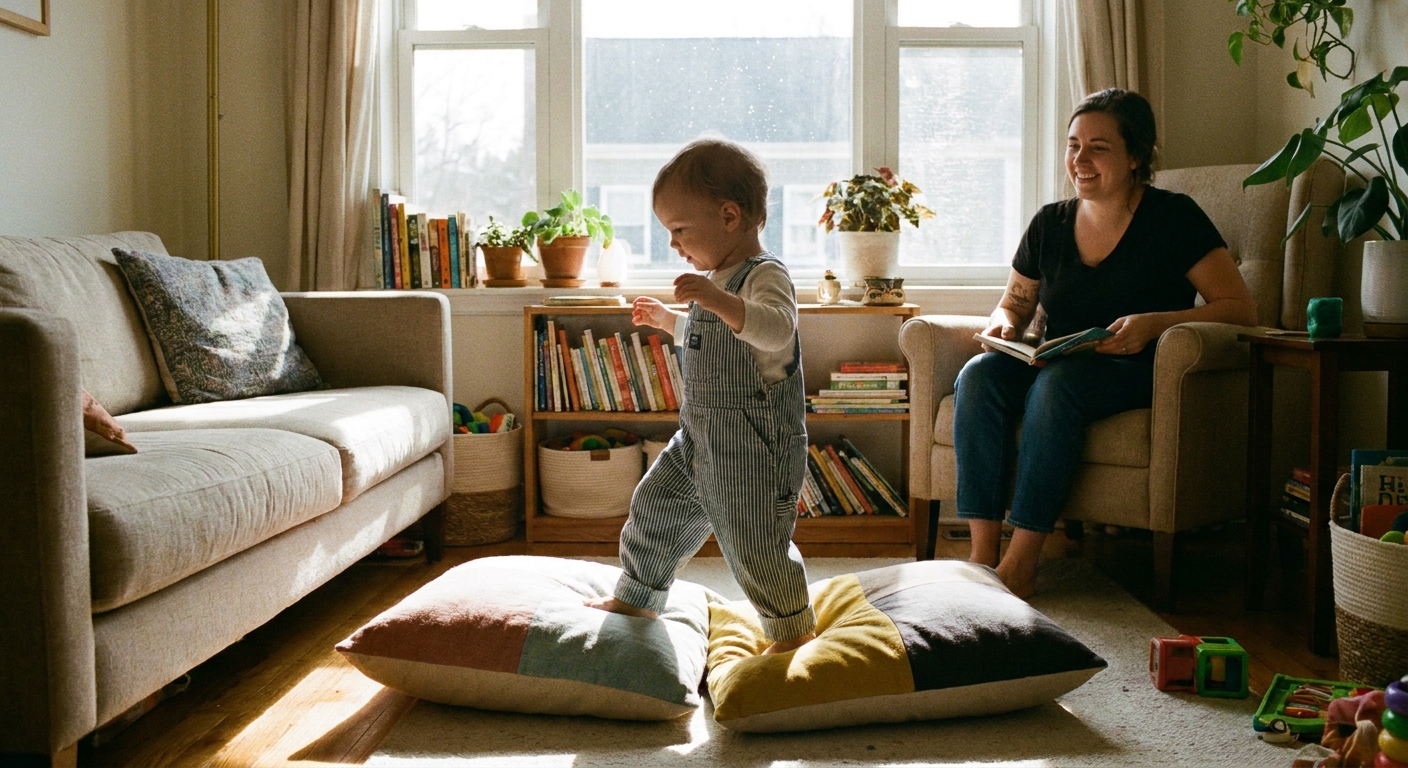
1) Pillow path obstacle course
Best for: balance, coordination, careful stepping
You need: couch pillows, floor pillows, folded blankets
- Lay pillows in a winding path across the room.
- Invite your toddler to step from pillow to pillow without touching the floor.
- Add a “turn around” spot halfway for extra practice.
Make it easier: Place pillows closer together and use bigger pillows.
Make it harder: Add one “squishy” pillow that sinks a little to challenge balance.
2) Painter’s tape balance line
Best for: body control, focus, walking a line
You need: painter’s tape
- Stick a long line of tape on the floor.
- Have your toddler walk along it like a tightrope.
- Add simple challenges: tiptoe, giant steps, tiny steps.
Safety tip: Painter’s tape is usually gentle, but it can still lift finish on some floors. Test a small spot first, do not leave it down for days, and remove it slowly.
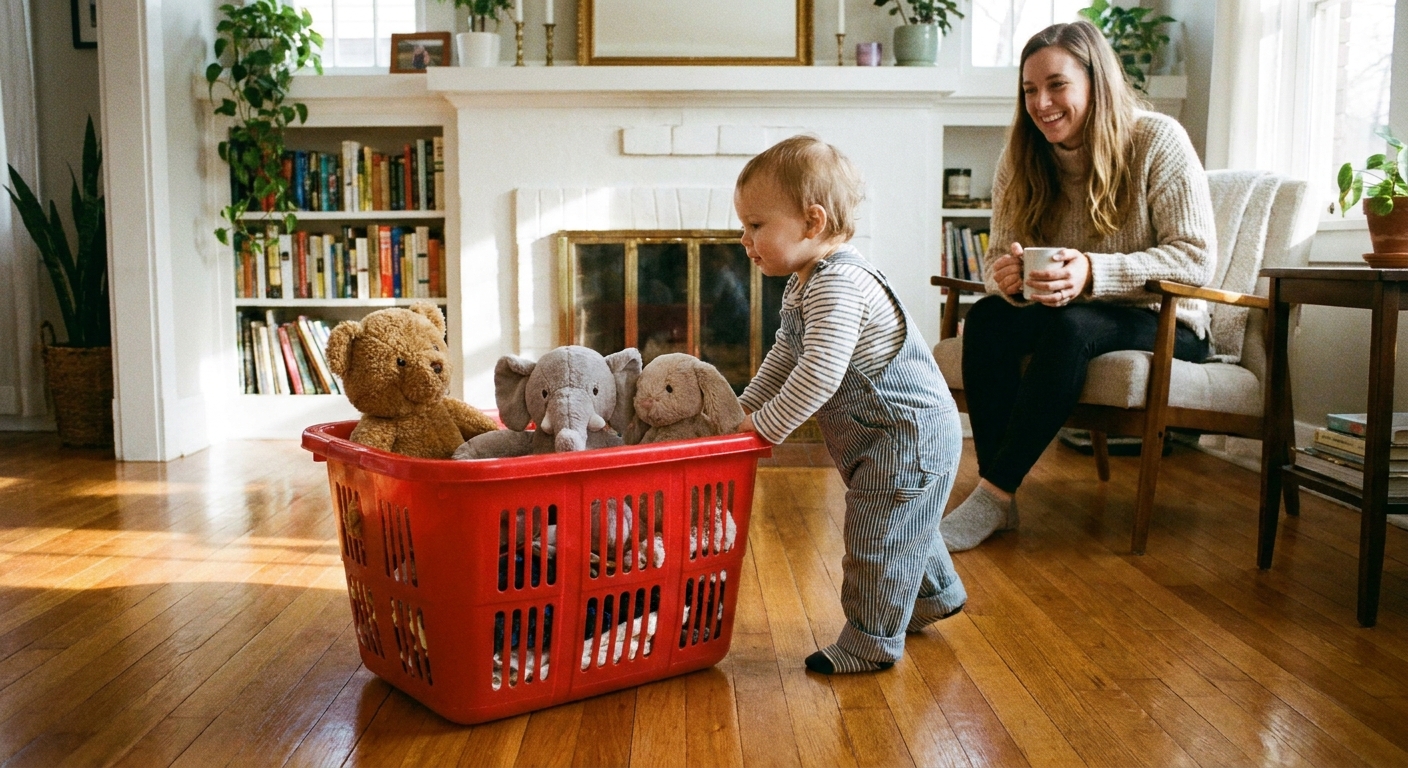
3) Laundry basket push and pull
Best for: leg strength, pushing, “heavy work” movement
You need: laundry basket, a few soft items (stuffed animals, rolled towels)
- Put a few light items in the basket.
- Let your toddler push it across the room like a mini shopping cart.
- Switch: pull the basket by holding the rim while taking a few backward steps.
Safety tip: Backward walking is a trip risk. Keep it very short, go slow, and stay close. Holding hands while you guide the basket can help.
Make it playful: Call it a delivery truck and “deliver” stuffed animals to different rooms.
4) Stuffed animal rescue hops
Best for: hopping, two-foot jumps, landing control
You need: stuffed animals, pillows or paper plates
- Place stuffed animals around the room.
- Make “lily pads” with pillows or plates.
- Hop from pad to pad to rescue one animal at a time and bring it back to “home base.”
Keep it toddler-sized: Hops can be tiny. The goal is moving and smiling, not distance.
5) Hallway bear crawl and crab walk
Best for: shoulder strength, core strength, coordination
You need: open hallway or clear floor space
- Bear crawl: hands and feet on the floor, hips up.
- Crab walk: hands and feet on the floor, belly up.
- Do a short “there and back” race with lots of cheering.
Make it fun: Pretend you are different animals. Stomp like a dinosaur, slither like a snake, waddle like a duckling.
6) Couch cushion mountain
Best for: climbing practice, strength, planning movement
You need: couch cushions, sturdy pillows
- Place cushions on the floor to make a low “mountain.”
- Invite your toddler to climb over, crawl through, and go around.
- Repeat in a loop for a simple indoor circuit.
Safety tip: Keep everything low and wide. Avoid building tall stacks.
7) Balloon keep-it-up game
Best for: hand-eye coordination, reaching, gentle jumping
You need: 1 balloon
- Tap the balloon up into the air and try to keep it from touching the floor.
- Encourage your toddler to reach high, squat low, and spin to find it.
- Count taps together for extra motivation.
Supervision note: Balloons require close adult supervision. Uninflated balloons and popped pieces are choking hazards. If a balloon pops, remove pieces right away and keep spares out of reach.
8) Paper plate ice skaters
Best for: sliding, leg strength, balance
You need: pick one option
- Option A (carpet): 2 paper plates or 2 small towels
- Option B (smooth floor): socks on a clear, non-slippery surface (go slow)
- Have your toddler stand with one foot on each plate or towel on carpet.
- Hold hands if needed and “skate” by sliding feet gently.
- Try slow forward slides, then backward slides.
Safety tip: Keep the speed slow and the area clear. This is a glide, not a sprint.
9) Indoor parade: march, stomp, freeze
Best for: cardio bursts, listening skills, starting and stopping safely
You need: open space, optional music
- March around the room with high knees.
- Add silly moves: stomps, tiptoes, giant steps.
- Call “freeze” and hold a statue pose for 3 seconds.
Make it gentler: Do slow-motion marching if your space is small or you have downstairs neighbors.
Easy rainy-day routine
If your toddler loves repetition, a simple routine can feel like magic. Try this 10 to 20 minute order:
- Warm-up: indoor parade for 2 minutes
- Obstacle work: pillow path and tape balance line
- Heavy work: laundry basket push and pull
- Finish: balloon keep-it-up or a calm stretch on the rug
Repeat the favorite activity. Toddlers learn through “again!”
Lower-noise movement ideas
Some rainy days call for movement that is a little quieter. These usually help:
- Bear crawl instead of jumping
- Tape balance line slow walks
- Balloon taps (gentle and floaty)
- Cushion mountain crawl-through instead of climb-up
Pair it with a sensory calm-down
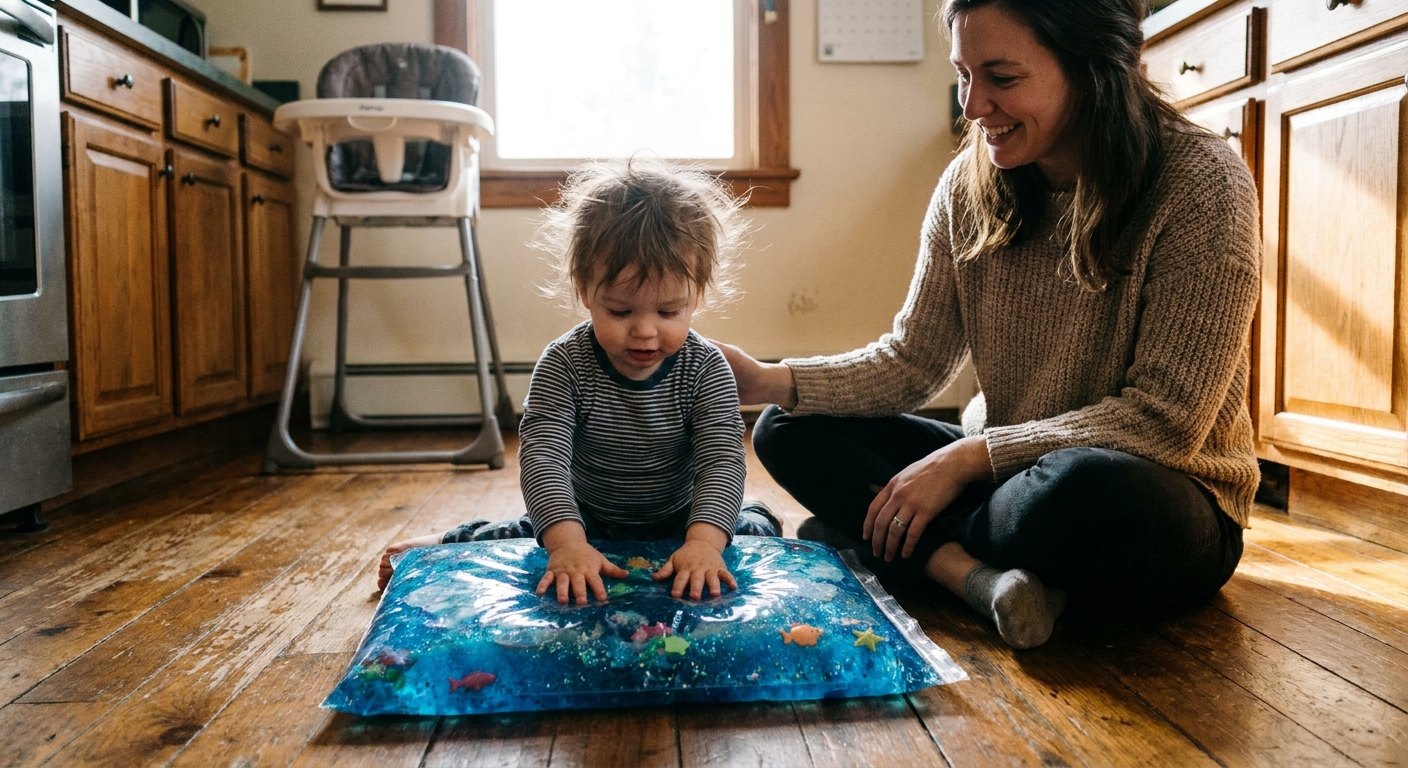
After big-body play, many toddlers do well with a quick sensory reset. If your little one still wants activity but you want less running, sensory play can be a cozy next step. Try one of these:
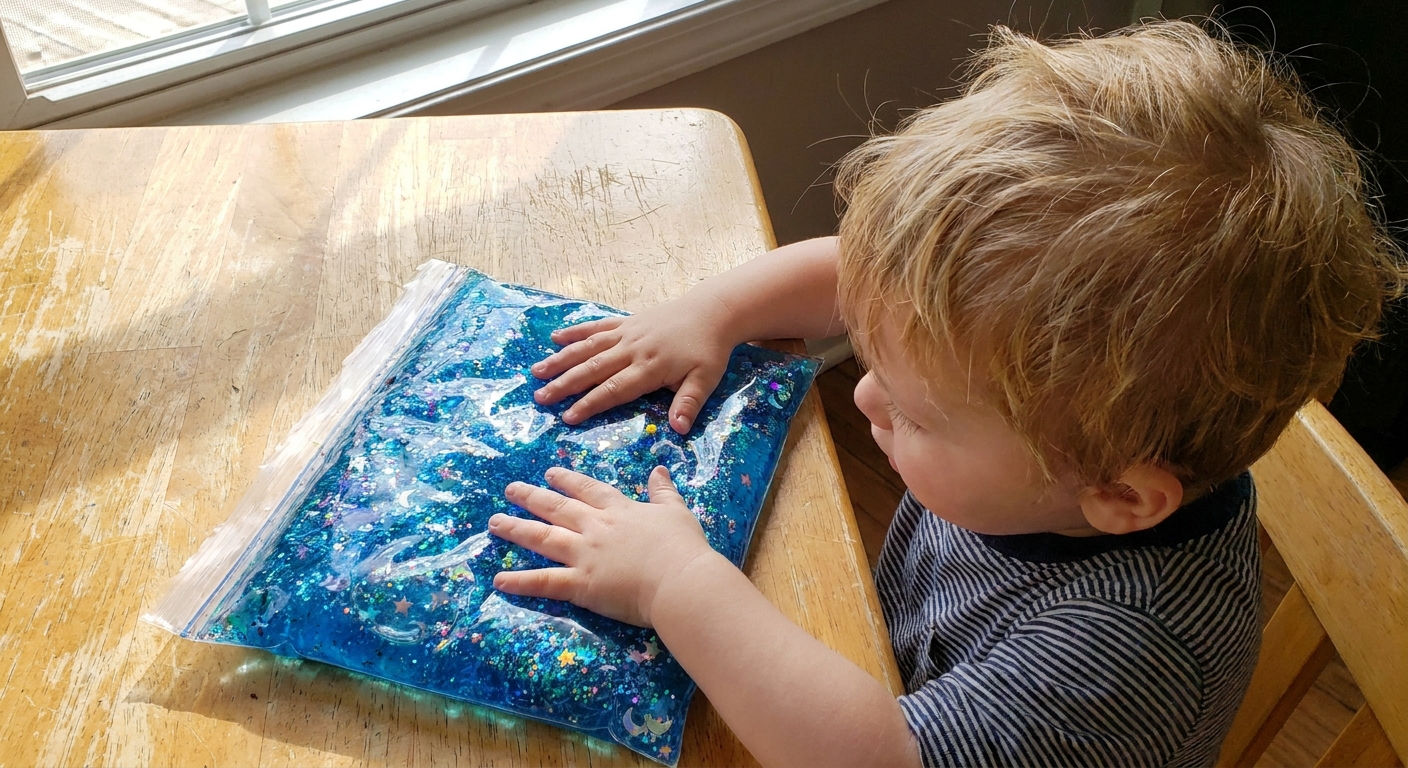
- No-mess sensory bags with household items for squishing and calming hands.
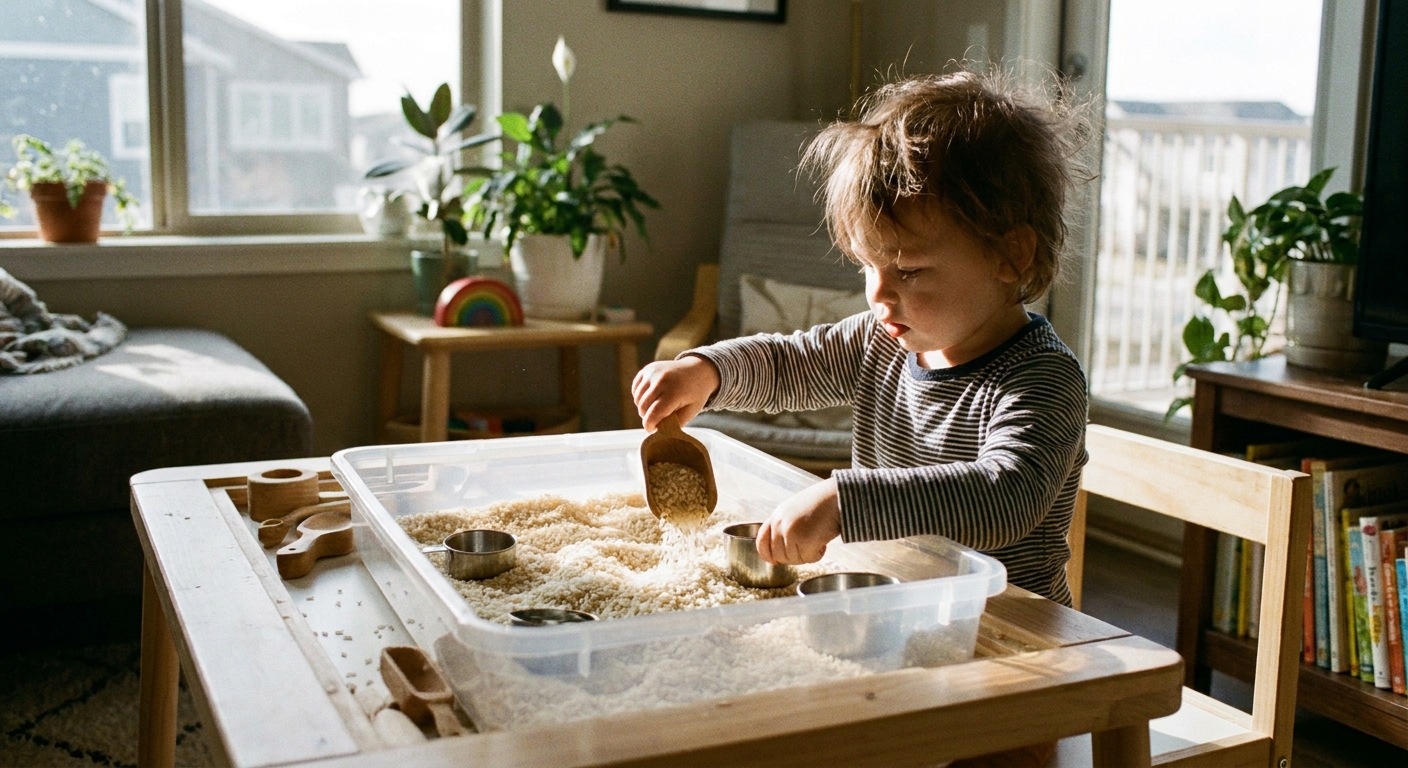
- Your first toddler sensory bin for a simple, contained setup.
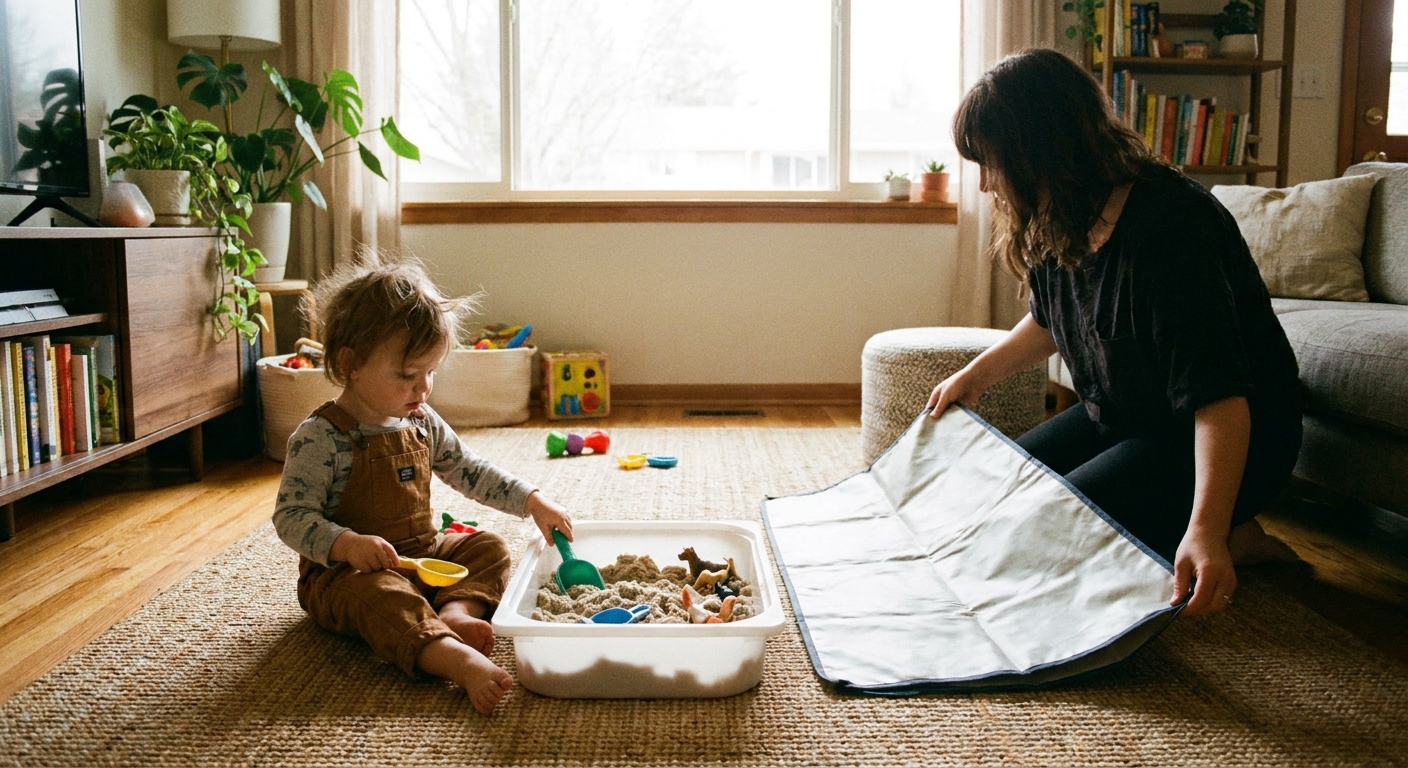
- Containing sensory bin mess in a small house if you want the fun with less cleanup.
FAQ
How much indoor gross motor play does a toddler need?
Many toddlers do best with multiple short movement bursts throughout the day. Even 5 to 10 minutes at a time can help. If energy is extra high, repeat a mini routine morning and afternoon.
What if I do not have much space?
Pick activities that move in place or use a straight line: tape balance line, balloon taps, hallway bear crawl, and freeze-and-march all work well in small rooms.
What are good indoor activities for toddlers who crash into everything?
Try heavy work options that give the body strong input in a controlled way: laundry basket pushing, crawling, and cushion mountain crawl-through. Keep jumping games small and supervised.