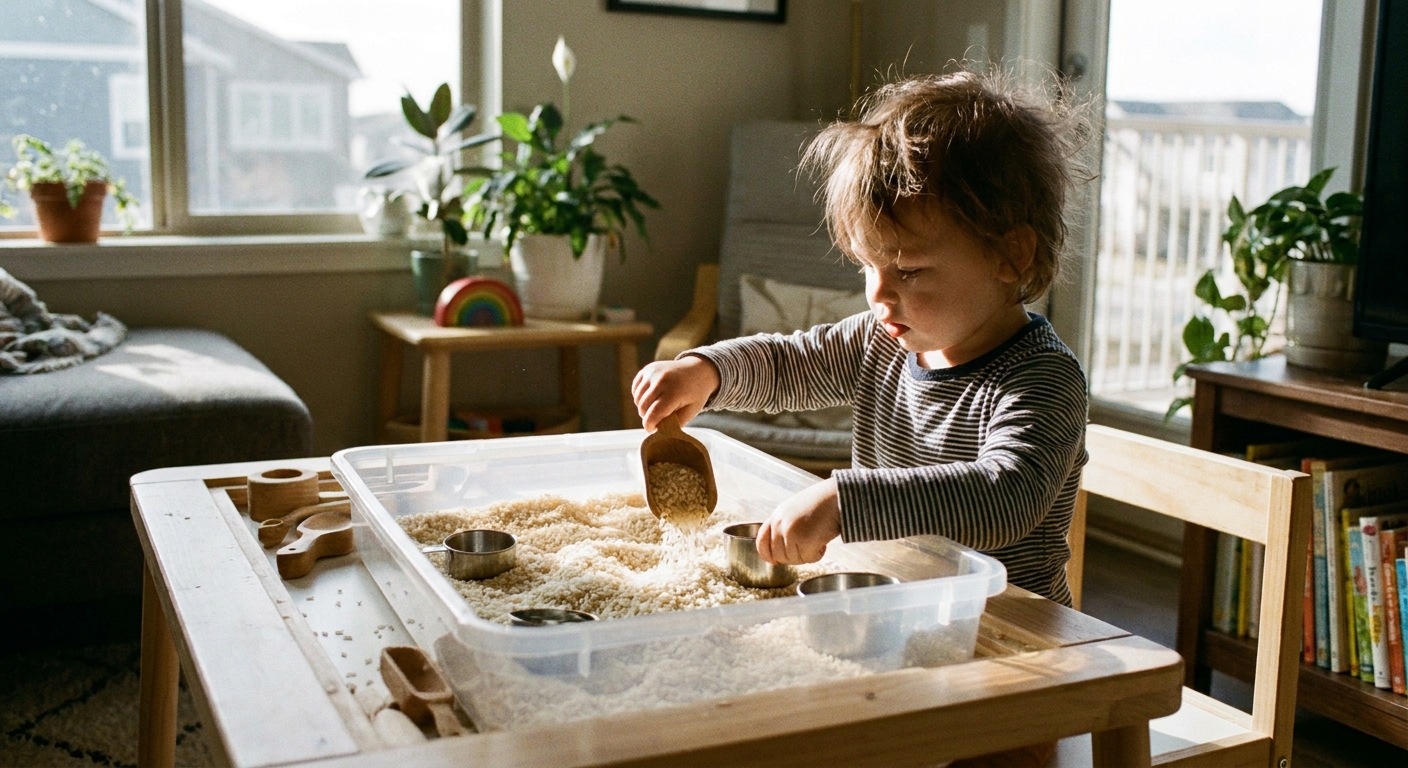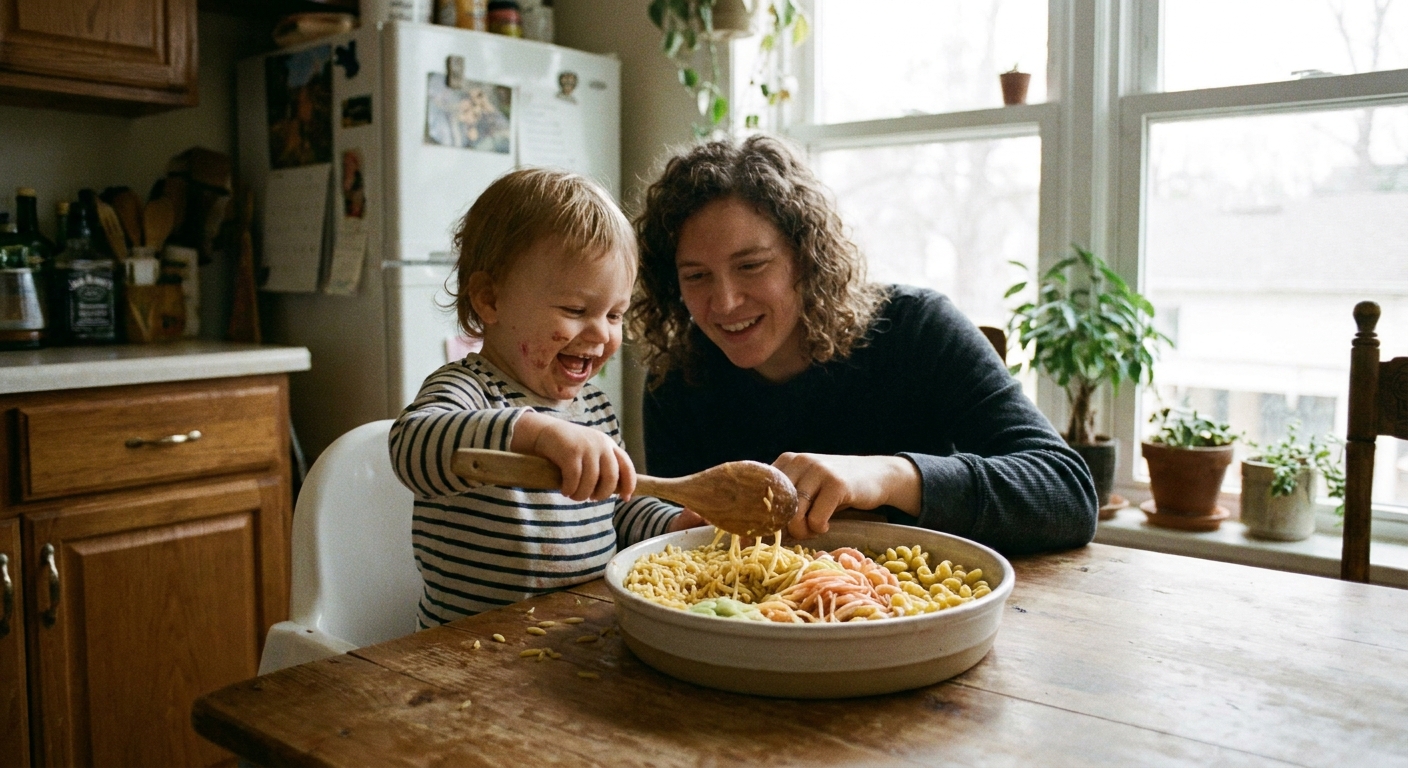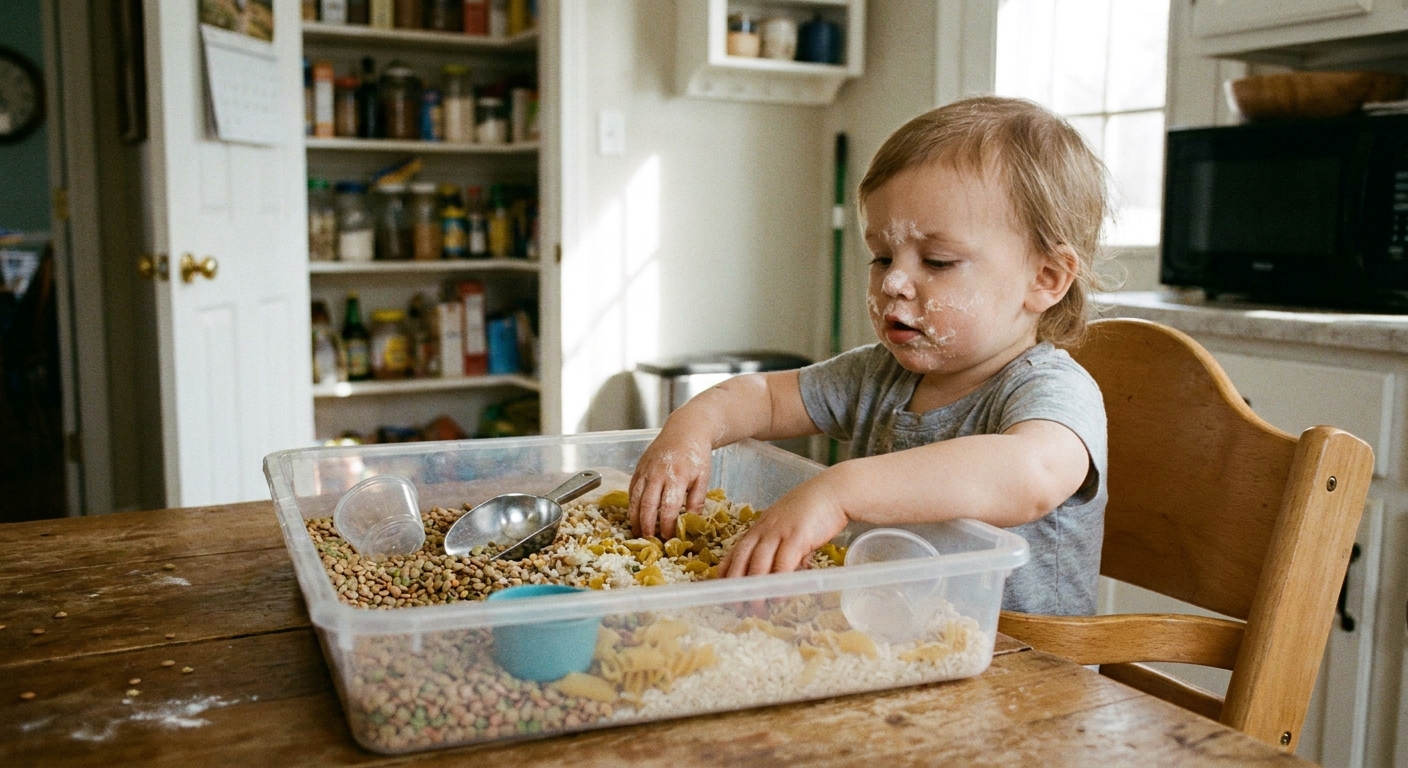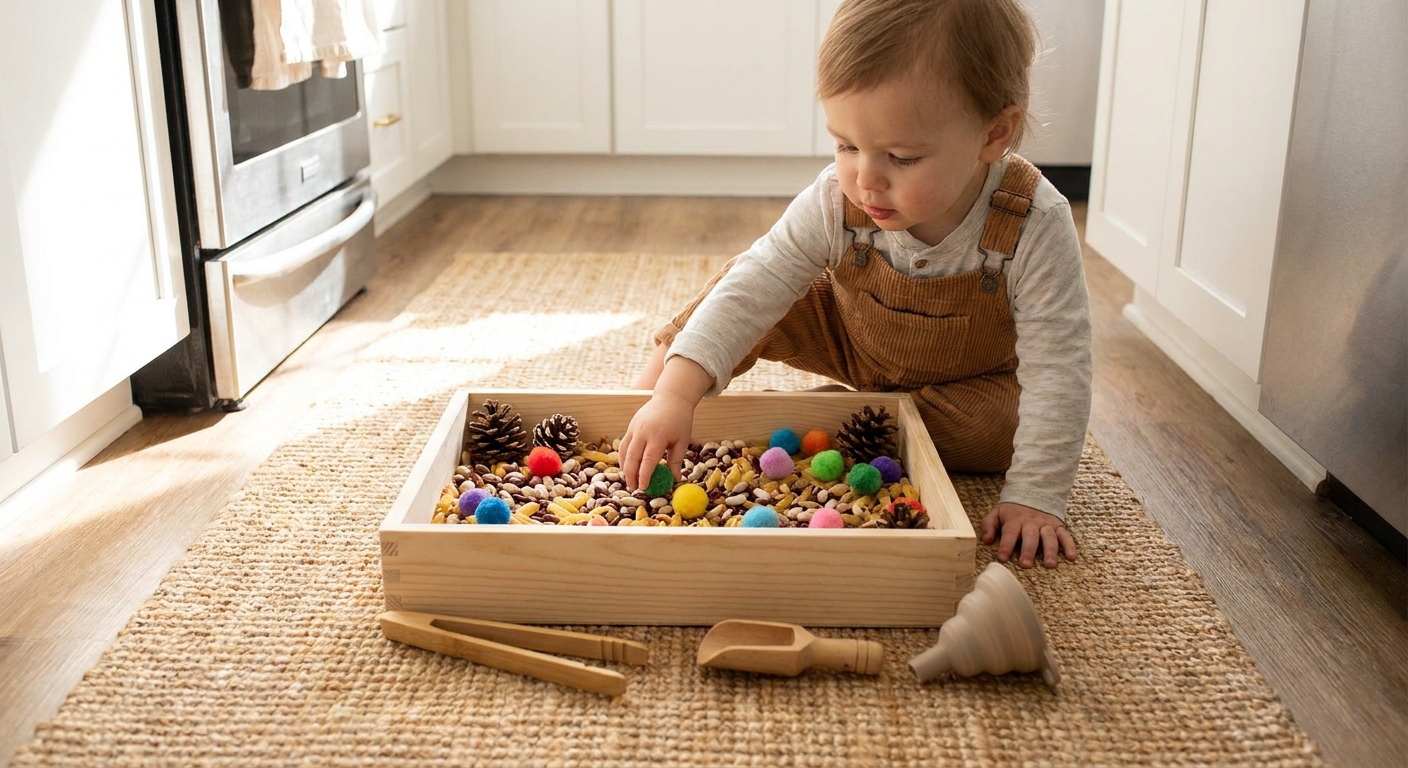
Waddle on over, tiny explorers. Color practice can be as simple as scoop, drop, and hooray. These sensory bins use bright bases, soft pom-poms, and easy “find and sort” surprises to help toddlers notice differences, match colors, and try early sorting skills through play.
Before you start: quick sensory bin basics
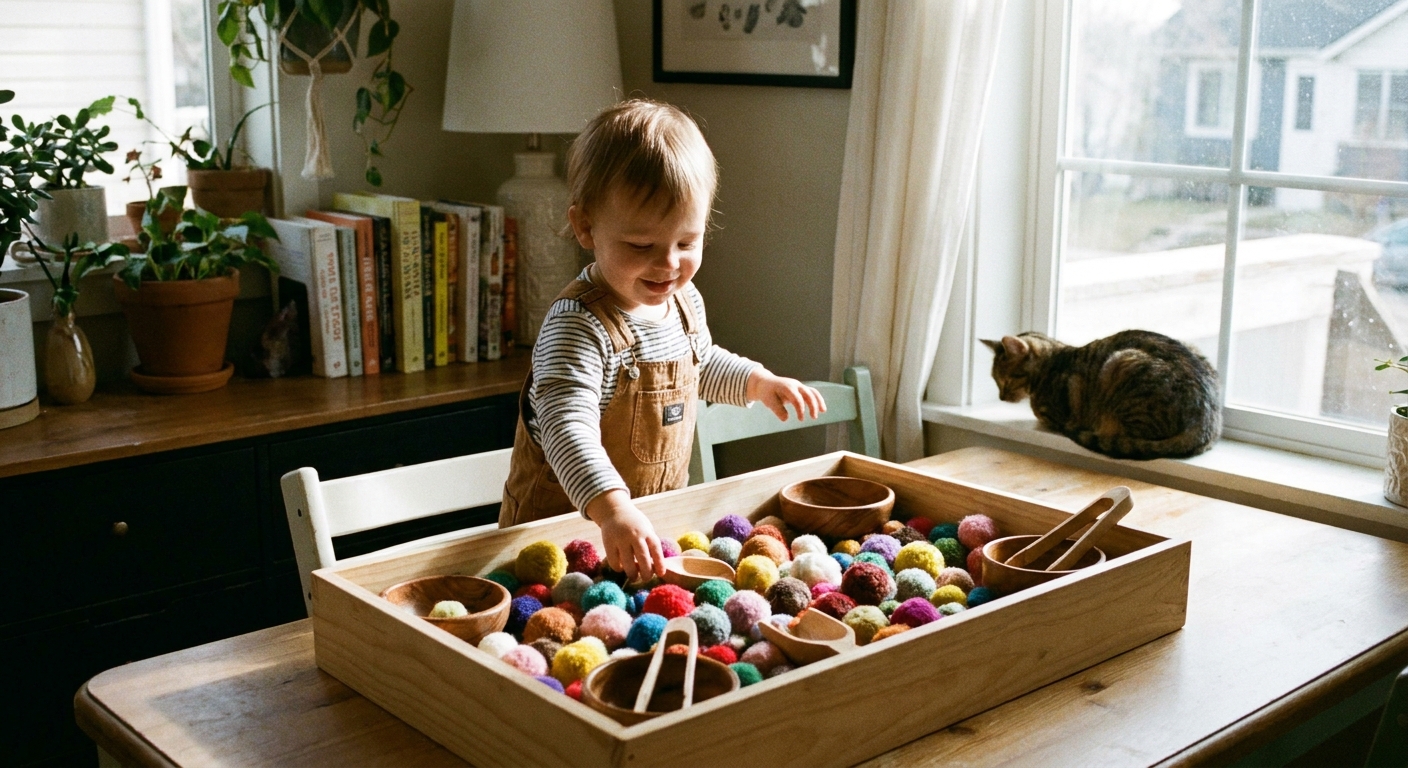
- Choose a bin: a shallow storage tub, roasting pan, or high-sided tray helps contain the tumble.
- Keep it simple: 2 to 4 colors is plenty for toddlers.
- Tools that work: measuring cups, muffin tins, ice cube trays, ladles, tongs, and small bowls.
- Supervision: many bin items are choking hazards, especially for children under 3. Stay close, and skip small loose parts for younger toddlers.
- Mouthing-friendly options: use taste-safe fillers when needed. This guide to safer fillers can help: 10 Taste Safe Sensory Bin Fillers for Toddlers Who Mouth Everything.
Quick safety sizing tip: When in doubt, choose pieces too large to fit fully in your toddler’s mouth. If it looks “snack-sized,” skip it.
New to sensory bins? Start here for the simplest setup steps: Your First Toddler Sensory Bin.
Bin 1: Rainbow Pom Pom Scoop and Sort
Best for: color matching, sorting by attribute, fine motor practice
What you need
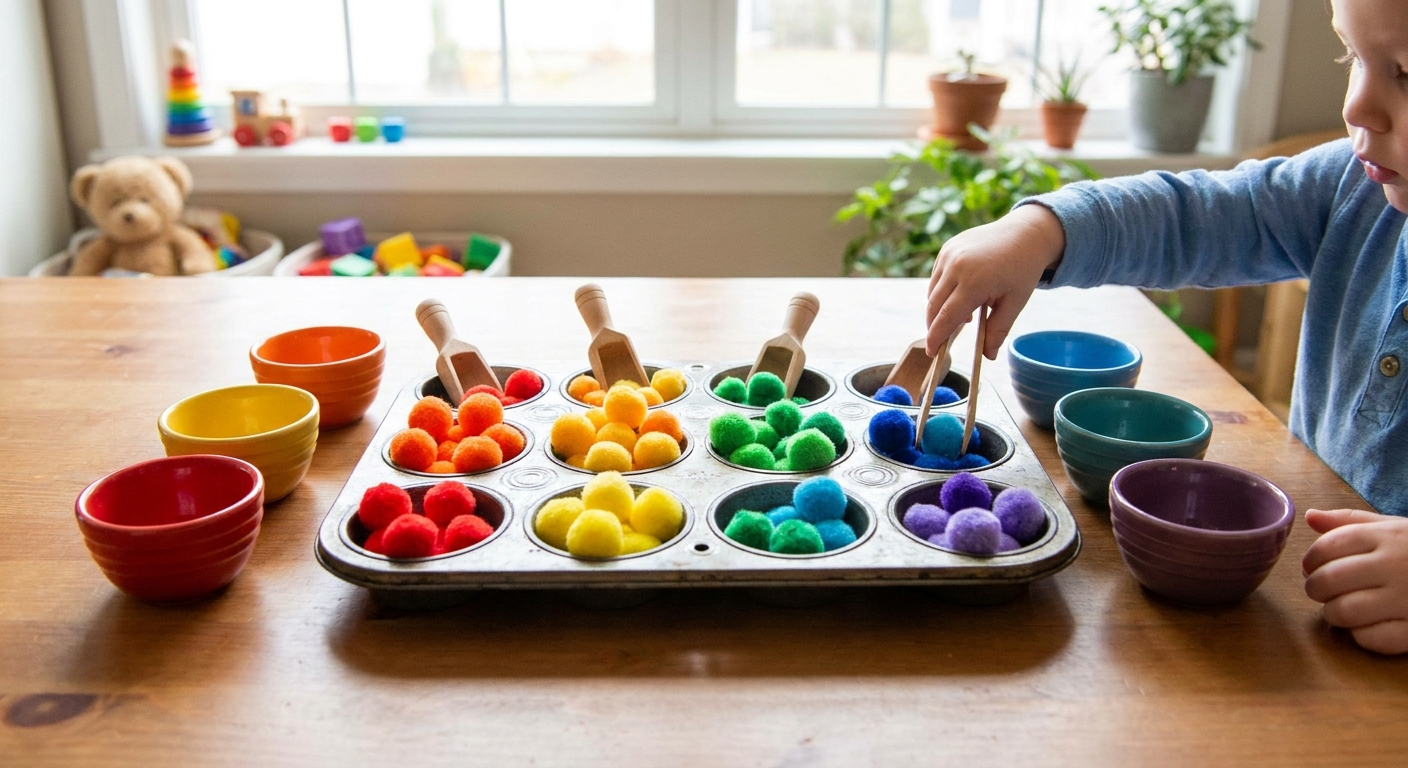
- Pom-poms in 2 to 4 colors (use jumbo pom-poms when possible)
- Muffin tin or ice cube tray
- Small bowls or cups (optional, ideally in matching colors)
- Scoop, spoon, or toddler-safe tongs
Set it up
- Pour pom-poms into the bin.
- Place the muffin tin beside the bin or inside it.
- If you have colored cups, assign one cup per color.
How to play and teach
- Start with two colors: “Red goes here. Blue goes here.”
- Use short prompts: “Find red.” “Now match.”
- Sort by more than color: if you have different sizes, try “big vs small” after color feels easy.
Make it easier or harder
- Easier: use only 2 colors and let your toddler use hands instead of tongs.
- Harder: add a “mystery cup” where anything that does not match goes, then re-sort together.
Safety note
Pom-poms can be a choking risk for many toddlers. Choose the largest size you can, supervise closely, and swap for larger fabric balls or felt pieces if your child still mouths toys.
Bin 2: Colored Rice Treasure Hunt
Best for: color recognition, visual scanning, early counting language
What you need
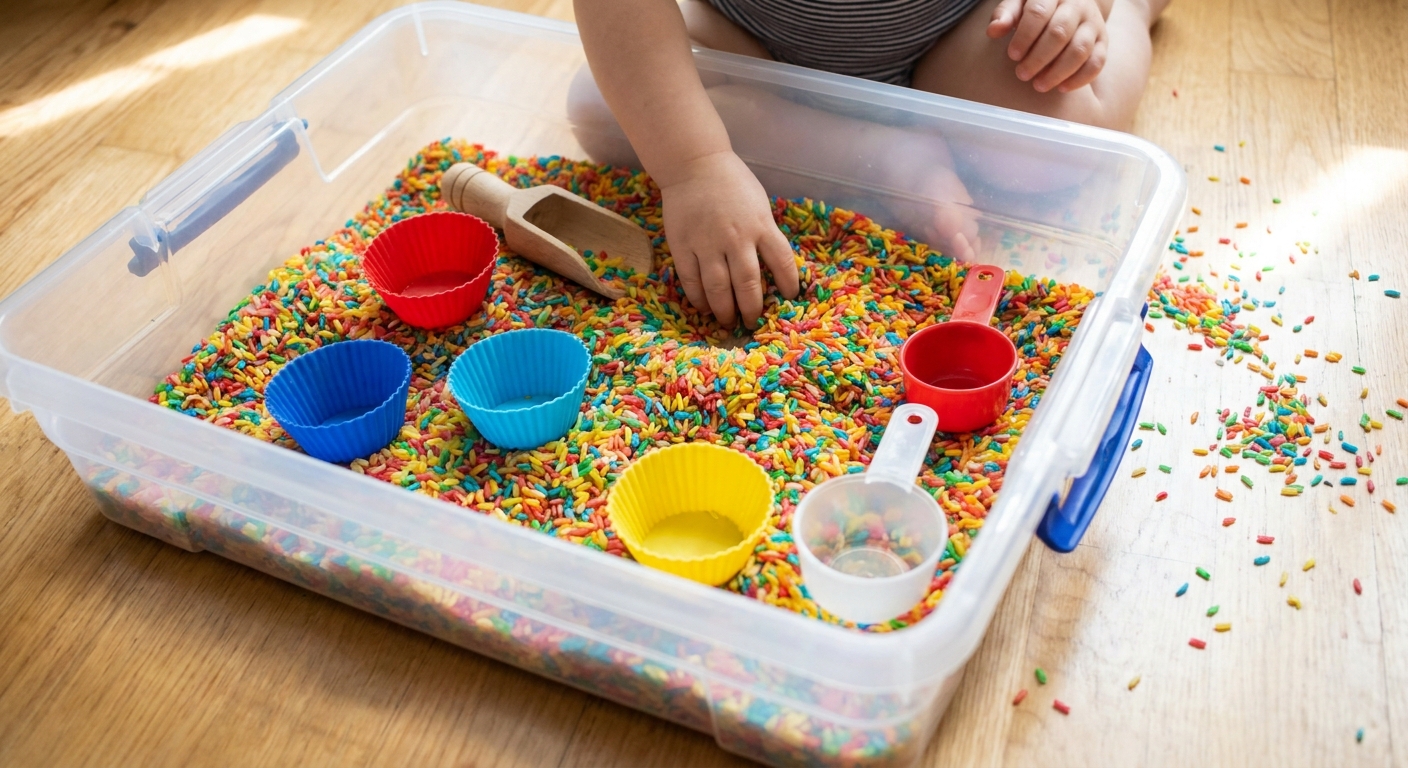
- Colored rice in 2 to 4 colors (or one color plus colored cups)
- Small cups or bowls in matching colors
- Measuring cup or scoop
- Hidden “treasures” in matching colors (toy blocks, chunky counters, or small cars in 2 to 4 colors)
Set it up
- Fill the bin with rice (about 1 to 2 inches deep).
- Hide the colored treasures under the surface.
- Set out the matching cups on the side of the bin.
How to play and teach
- Invite your toddler to scoop, pour, and search.
- When a treasure appears, name it: “You found a yellow one.”
- Guide the sort: “Let’s put the yellow one in the yellow cup.”
- Add gentle math talk: “One yellow, two yellow.”
Safety note
Rice is not taste-safe. If your toddler still mouths fillers, switch to a safer base from the taste-safe list linked above.
If you dye rice at home, let it dry completely before play. Treat it as a sensory material, not food.
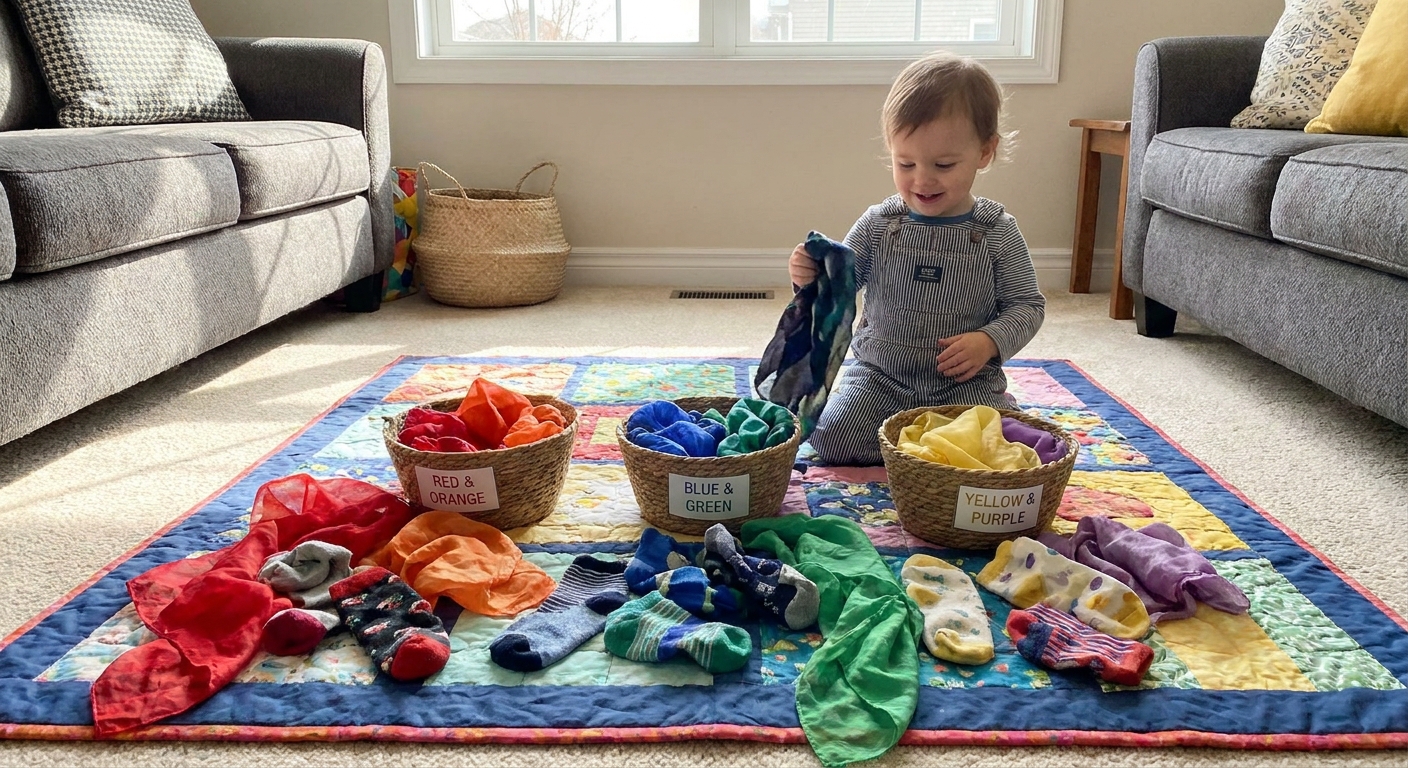
Bin 3: Color Sorting Laundry Day
Best for: matching, life skill play, big movements that still feel calm
What you need
- Colorful scarves, washcloths, or toddler socks in 3 to 4 colors
- 3 to 4 baskets or bowls
- Optional: clothespins or large toddler-safe clips
Set it up
- Make a “laundry pile” in a bin or on a mat.
- Line up baskets, one per color.
How to play and teach
- Hold up one item and name the color slowly.
- Invite your toddler to place it in the matching basket.
- If using clips, clip one scarf to the basket edge for extra fine motor practice.
Make it easier or harder
- Easier: start with just two baskets.
- Harder: add a rule like “only striped ones first” to practice sorting by a second attribute.
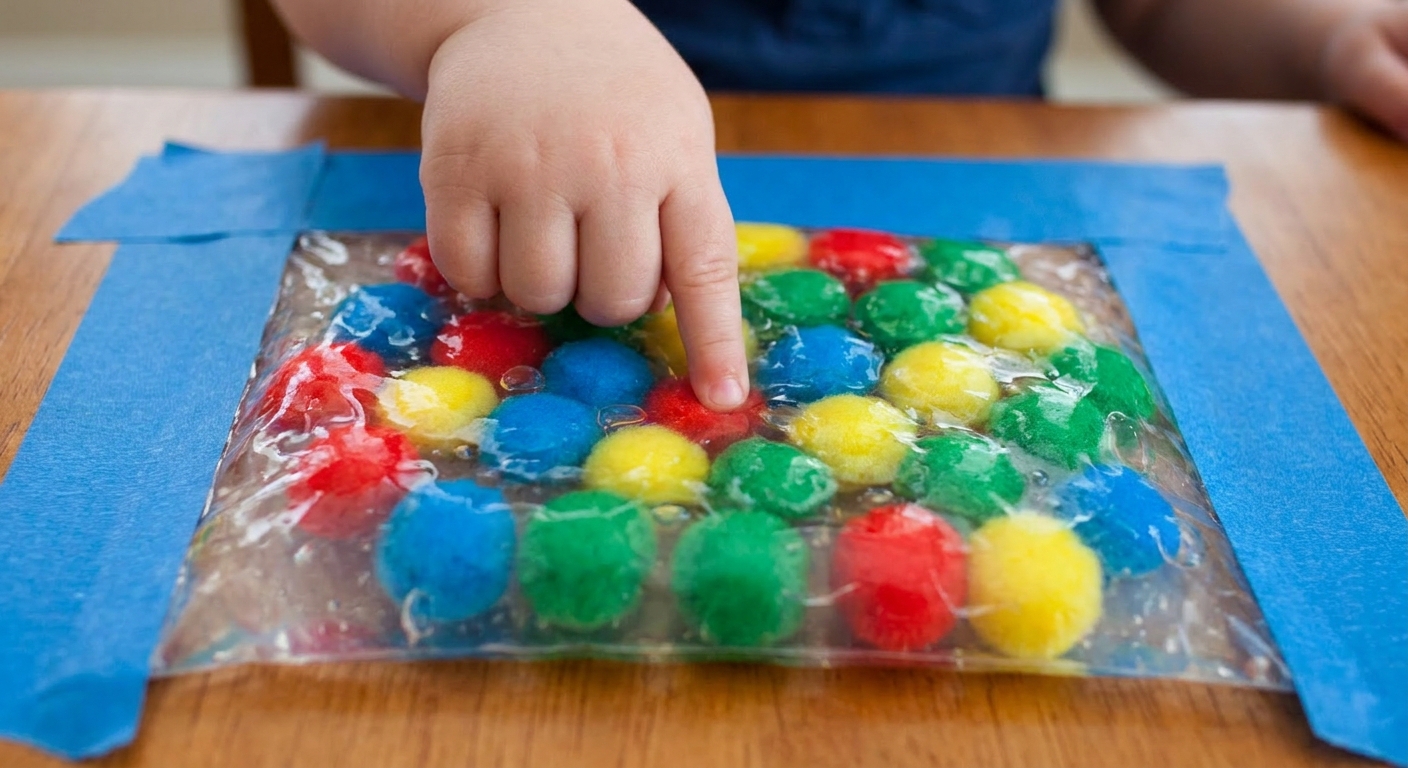
Bin 4: Color Gel Bag Sort
Best for: color words, pointing and matching, low mess sensory play
What you need
- A sturdy zip-top bag or reusable silicone bag
- Clear hair gel or clear hand soap (thick works best)
- Pom-poms or other soft items (choose large pieces that will not poke through)
- Painter’s tape
- Colored paper circles or colored cups for matching beside the bag
Set it up
- Add gel to the bag until it is about half full.
- Add pom-poms in 2 to 4 colors.
- Press out extra air and seal tightly.
- Safety step: double-bag it, then tape all edges down to a table.
- Place matching colored papers or cups next to the bag.
How to play and teach
- Ask your toddler to push a color to the matching spot: “Can you slide the blue pom-pom to blue?”
- Play “I spy”: “I spy something red. Can you find it?”
- Count as you match: “Two green ones together.”
Why it works
This is a wonderful choice when you want the sensory squish without loose fillers. It supports color matching and can help support hand strength through pressing and dragging.
Leak warning
Gel and soap are not safe to taste. Supervise closely, check the bag before each play, and toss it right away if it leaks or gets punctured.
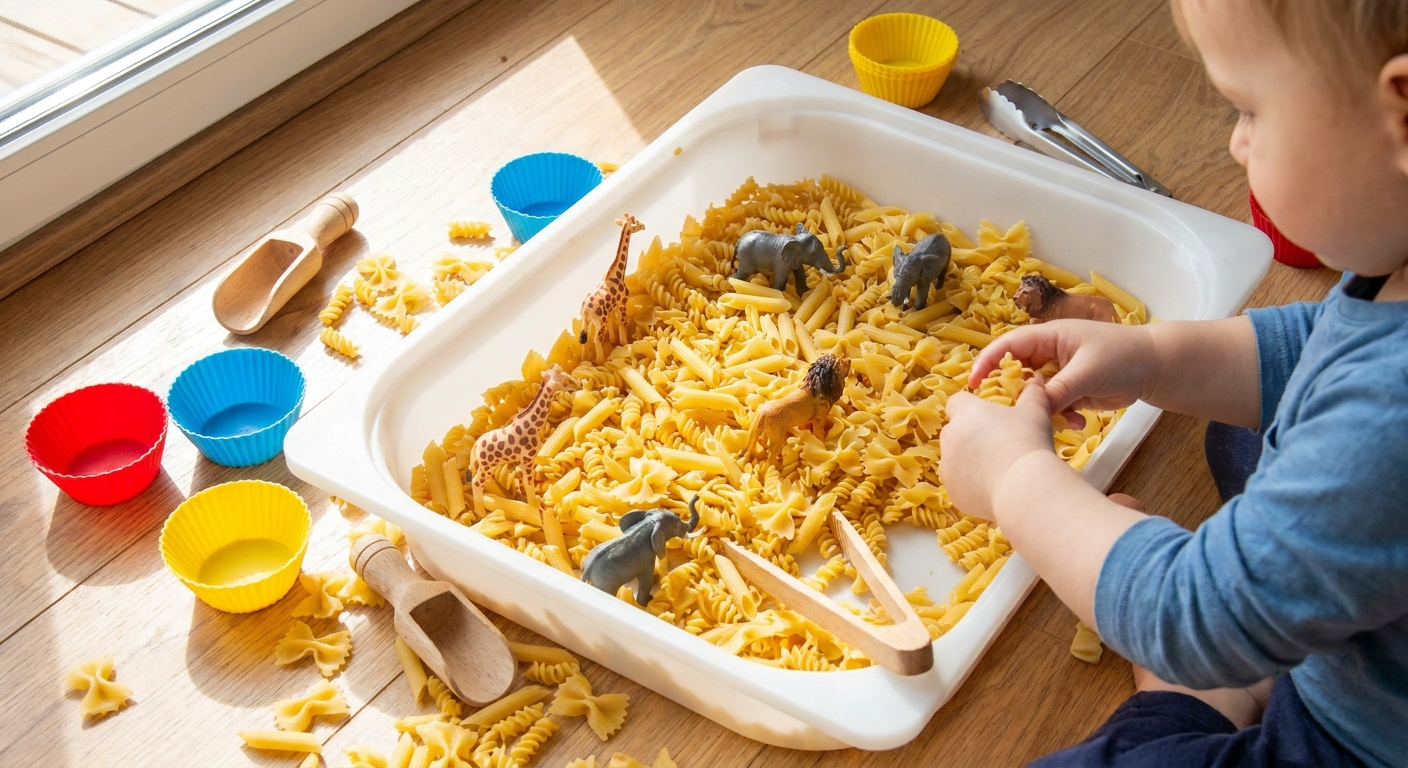
Bin 5: Hidden Toy Color Rescue
Best for: sorting, turn-taking language, early category skills
What you need
- A base filler (dry pasta, kinetic sand, shredded paper, or taste-safe option if needed)
- Small toys in 2 to 4 colors (cars, blocks, chunky animals)
- Matching colored cups
- Scoop or spoon
Set it up
- Fill the bin with your base.
- Hide the toys under the surface.
- Line up cups by color around the bin.
How to play and teach
- Invite your toddler to “rescue” toys by digging and scooping.
- Name and sort: “Green car goes in the green cup.”
- Add a simple challenge: “Can you rescue three red toys?”
Extra sorting ideas
- Sort by type first (cars vs animals), then by color.
- Sort by size if you have big and small versions.
Safety note
Dry pasta and small toys can be choking hazards. If your toddler mouths items, choose a taste-safe filler and larger toys, or do this as a together-at-the-table activity only.
Color teaching tips that feel playful
- Use real, quick language: “Red.” “Match.” “Same.” “Different.”
- Limit choices: two colors first, then add more when it clicks.
- Accept close enough: toddlers are learning. If orange becomes “red” today, that is still a great start.
- Repeat gently: instead of correcting, model: “You chose red. This one is orange. Orange goes here.”
- Keep rounds short: stop while it is still fun, then come back tomorrow.
- Color mix-ups are normal: blue and green, and red and orange, can look very similar to toddlers. Keep naming what you see and stay light about it.
Cleanup and storage
- Start with a catcher: put a towel, tray, or shower curtain under the bin for fast shake-and-dump cleanup.
- Store dry fillers: colored rice and pasta keep best in a lidded container. If it gets damp, clumpy, or smells off, toss it.
- Pom-poms: a small handheld vacuum or a sticky lint roller helps with the strays.
- Know when to call it: if a filler has been mouthed, sneezed into, or mixed with food, it is okay to throw it away. Fresh play is happy play.
FAQ
What age can toddlers start sorting colors?
Some toddlers start matching colors as early as the late toddler stage, and many continue building the skill through age 3 and beyond. The goal is playful exposure, not perfect naming.
My toddler mixes everything. Is that still learning?
Yes. Scooping, dumping, and mixing are important sensory and motor skills. Keep offering an easy “home” for each color, and join in with calm modeling.
How do I keep it from getting too messy?
- Use a tray or towel under the bin.
- Offer fewer materials at once.
- Try the gel bag activity for a no-spill option.
What if my toddler still mouths items?
Choose bigger tools and taste-safe fillers, and skip small loose parts like rice, pasta, or small pom-poms. This list is a helpful starting point: taste safe sensory bin fillers.
One last cheerful waddle
Pick just one bin, choose two colors, and start with a simple goal: notice, name, match. The sorting and early math ideas will flutter in naturally as your toddler plays. Let’s dive in and make a wonderful, happy mess together!
For more playful setups like these, peek at the Sensory Play & Bins hub.