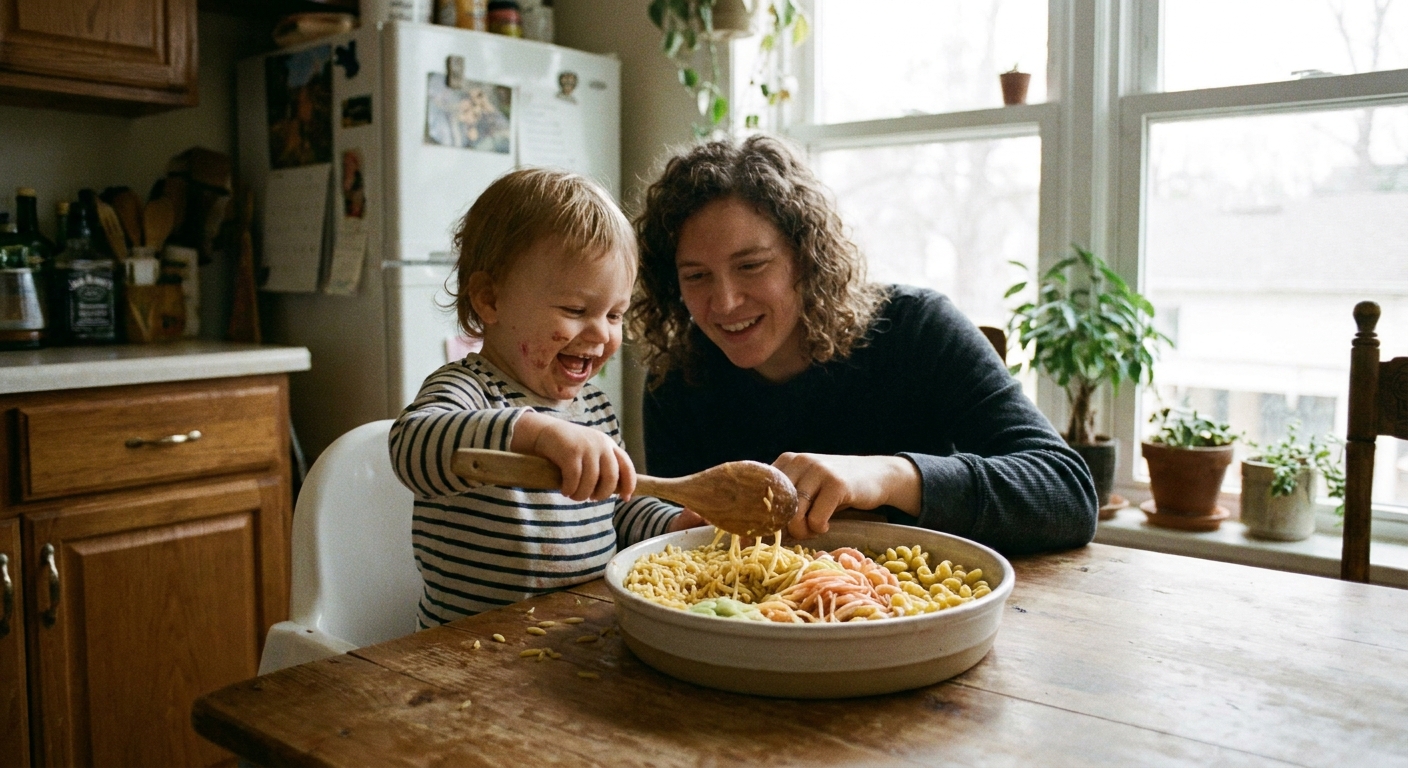
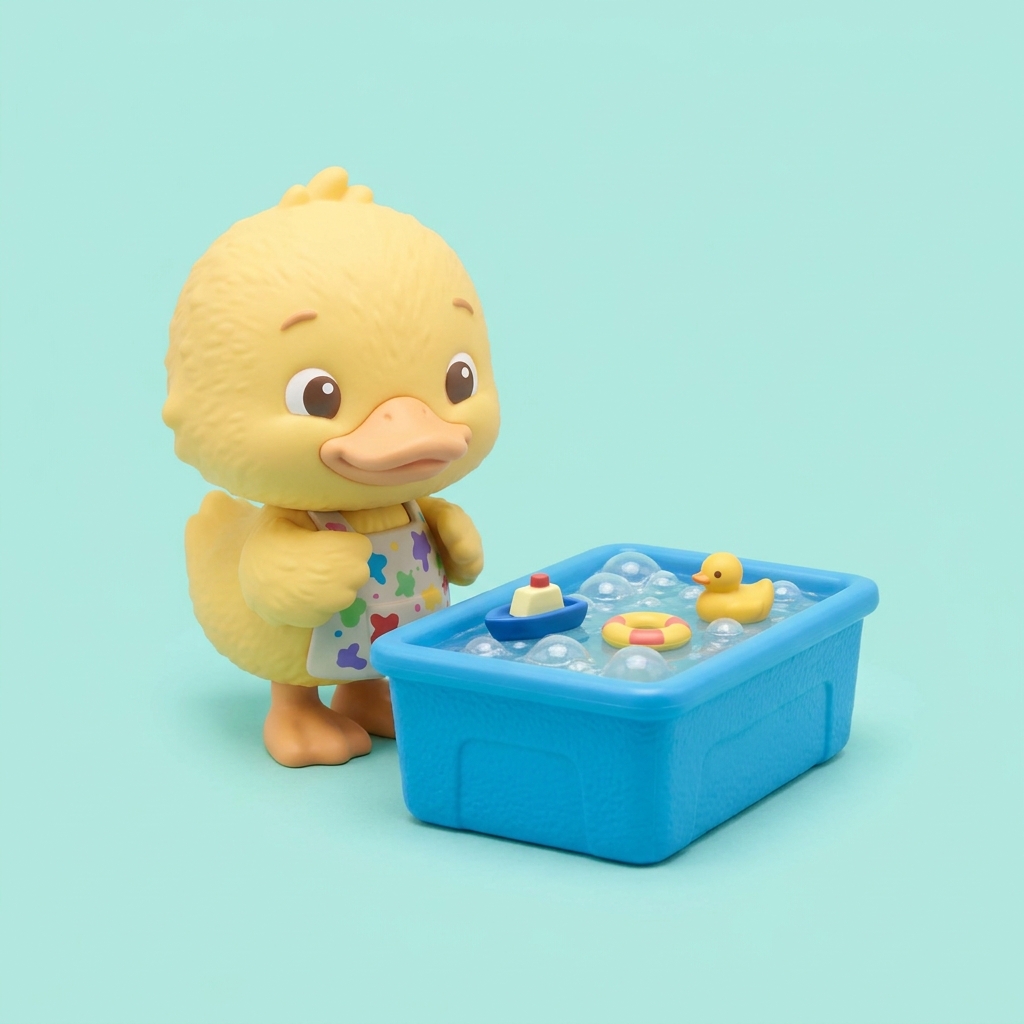
Let’s dive in and make a wonderful, happy mess together! And also, let’s keep the mess in the bin.
If your toddler is scooping and flinging rice, beans, or pasta like it’s a confetti cannon, you are not alone. Throwing is a very common toddler experiment. It often shows up as cause and effect, big feelings, and testing boundaries. The goal is not to “win” against throwing. The goal is to teach the boundary and still keep sensory play fun.
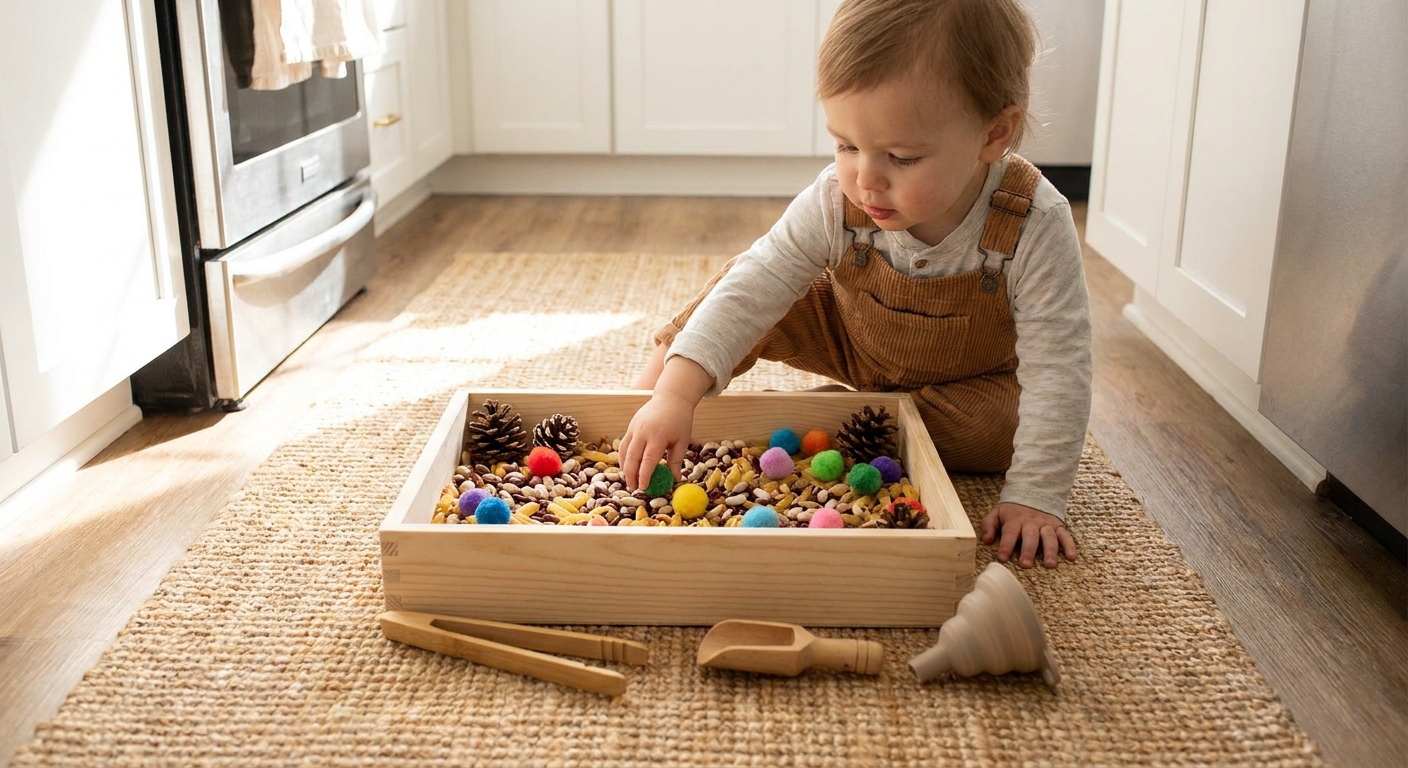
If your child still mouths items, skip small, hard fillers (like dry beans, rice, and pasta) and choose taste-safe options instead. It is not worth the stress.
Why toddlers throw fillers
Throwing usually happens for one of these reasons. When you have a good guess about the reason, the next step gets much easier.
- Science mode: “What happens when it falls?” Toddlers love the sound, scatter, and adult reaction.
- Big body energy: Some days need pushing, crashing, and tossing.
- Impulse plus excitement: Sensory materials feel amazing. Hands can get fast.
- Testing the rule: “Do we mean it this time?”
- Seeking connection: Any big reaction can feel like attention.
- Too hard to manage: Small pieces can feel overwhelming, especially if the bin is very full.
Throwing is information. Your toddler is showing you what they need help learning.
Set up for success
Before you correct behavior, make success easier. A few small setup changes can help reduce throwing for many toddlers.
Pick a better spot
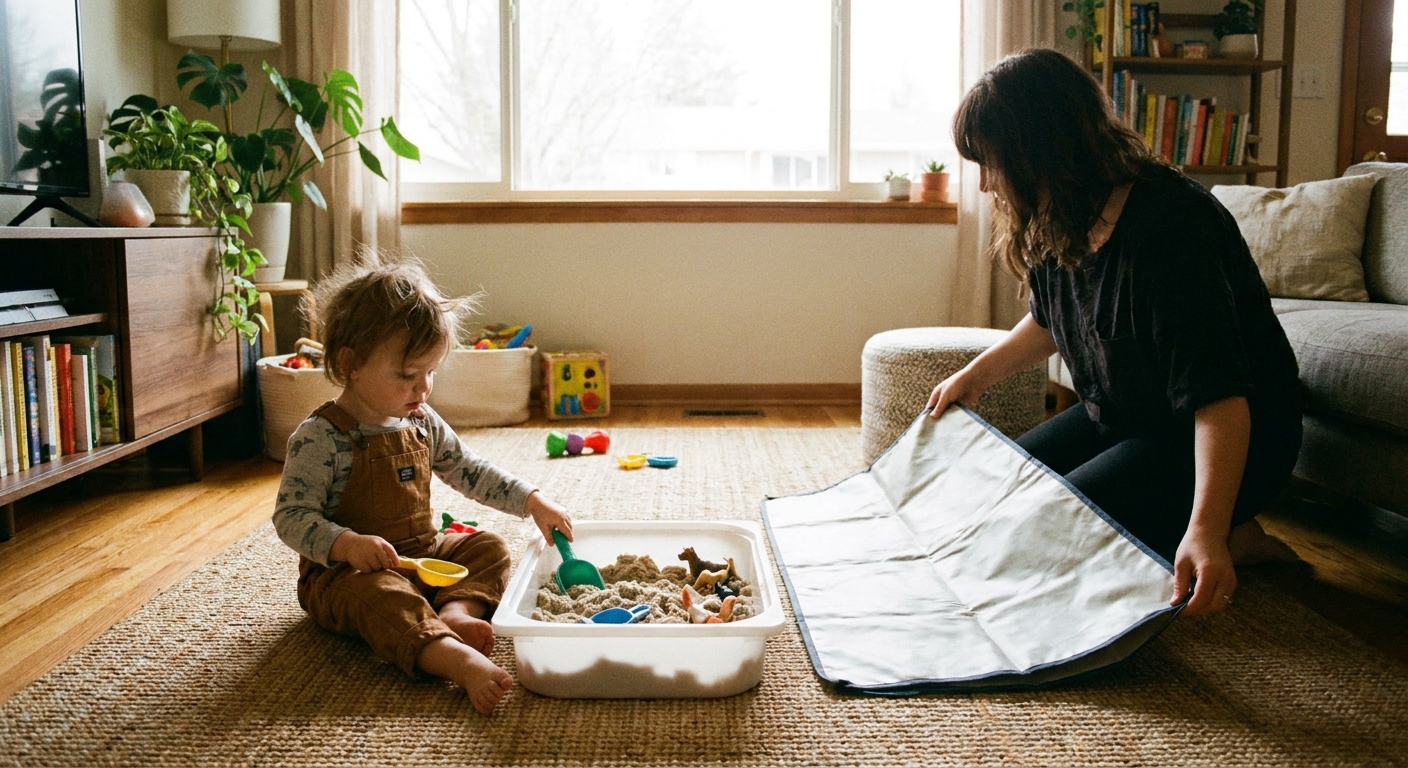
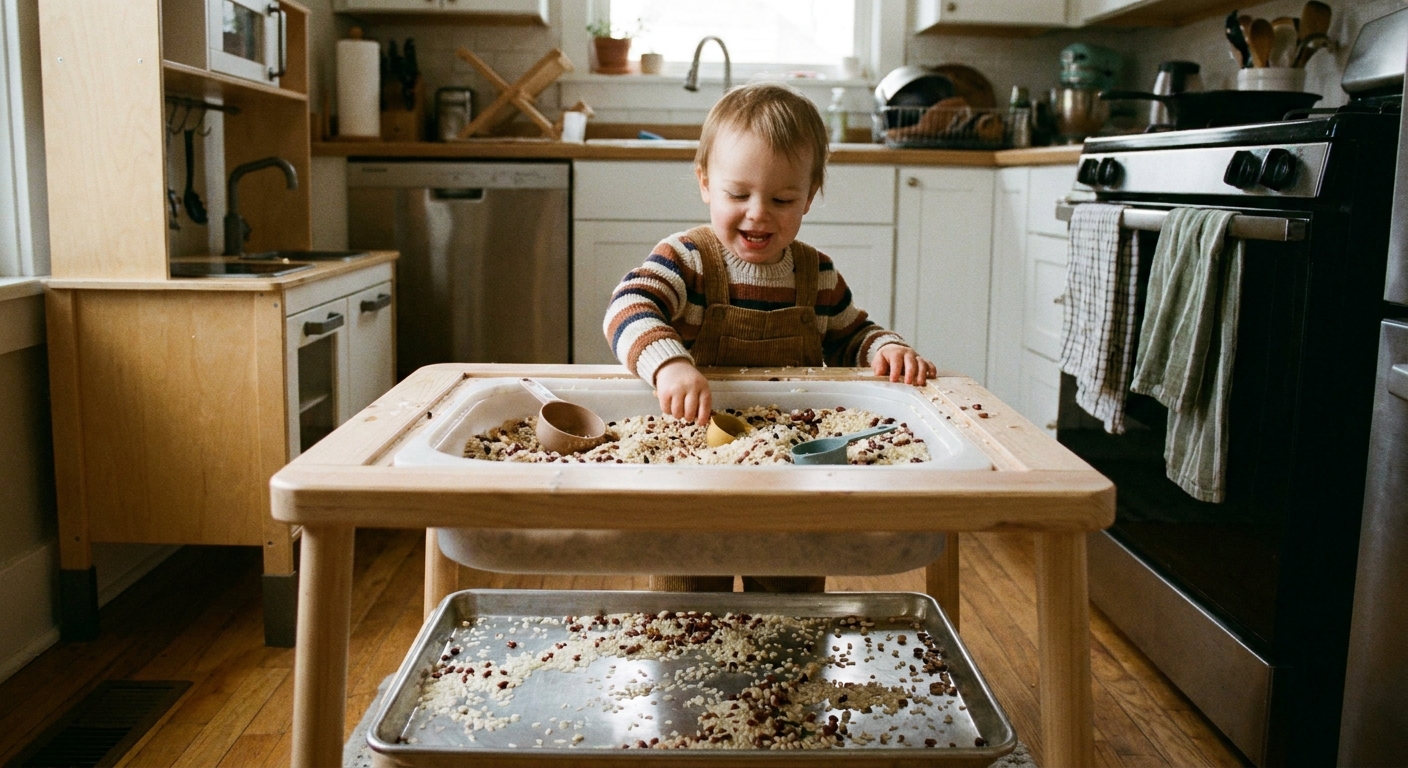
- Play on a mat or tray: A shower curtain liner, picnic blanket, or big baking sheet under the bin gives a clear “play zone.”
- Try the tub trick: Put the bin inside an empty bathtub or dry kiddie pool to contain flying fillers.
- Use a lower bin: A wide, shallow bin encourages scooping down instead of flinging up.
Use less filler than you think
A bin filled to the top can turn into a launching pad. Aim for a shallow layer at first, then add more as skills grow.
Model it first
Before you hand it over, do a 15-second demo: slow scoop, slow pour, hands staying low in the bin. Toddlers copy what they see, especially when the steps are simple.
Offer tools that slow hands down
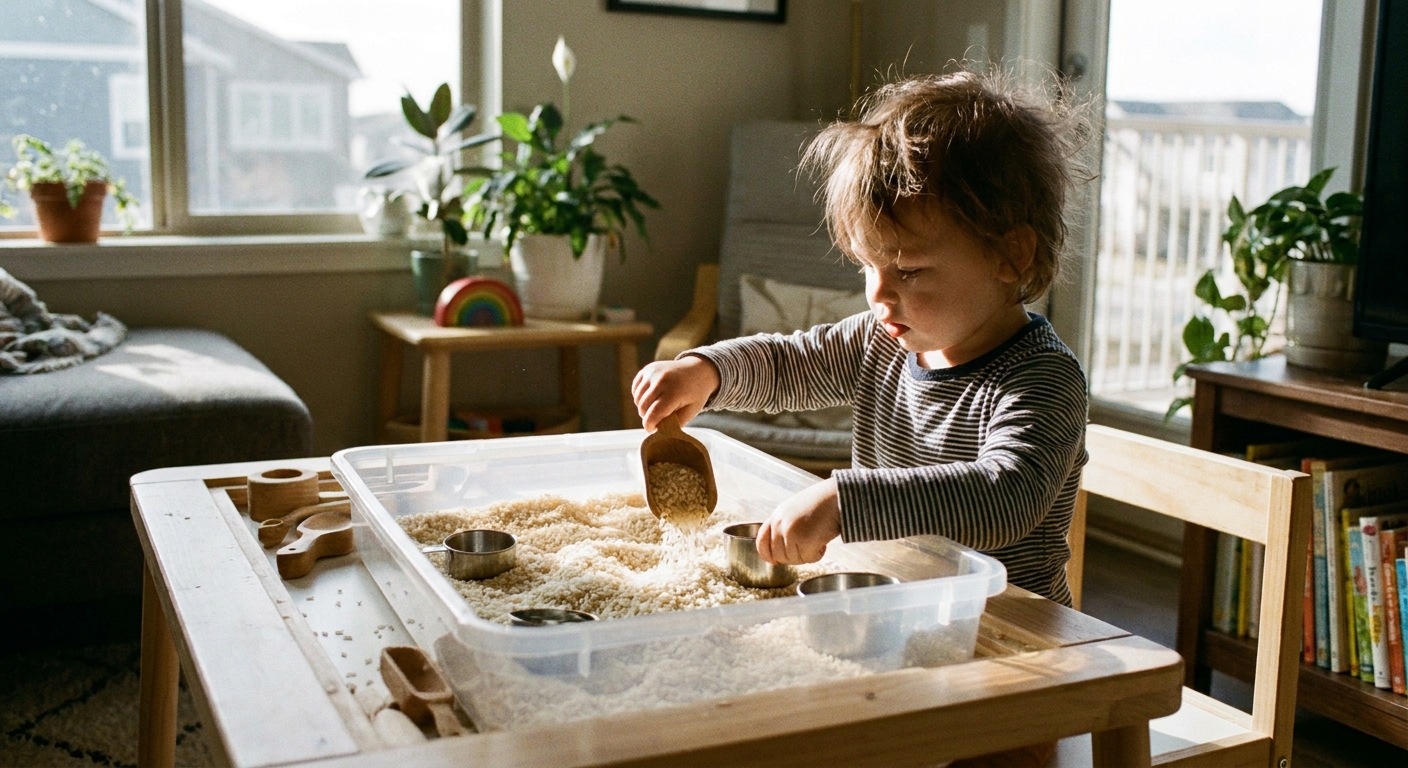
- Measuring cups
- Large spoons
- Ice cream scoops
- Tongs (often better for older toddlers)
- Small bowls for “pouring practice”
Tools give the hands a job, and jobs can reduce throwing.
Choose fillers that match your toddler
If your child mouths everything or you need extra peace of mind, stick to taste-safe options. This helps you intervene calmly instead of constantly saying “no.”
Helpful read: 10 Taste-Safe Sensory Bin Fillers for Toddlers Who Mouth Everything.
Teach one clear rule
Toddlers learn best with short, consistent phrases.
The core rule
“Filler stays in the bin.”
That’s it. Simple. Repeatable. Easy to remember when everyone is tired.
Add the “what to do” part
Instead of only saying what not to do, tell them what to do with their hands.
- “Scoop and pour into the bowl.”
- “Hands go in the bin.”
- “If you want to throw, you can throw soft balls in the basket.”
Gentle redirections
When throwing starts, go calm and quick. The longer the lecture, the more interesting the game can become.
Step 1: Block and label
Move your body closer, place your hand gently over theirs if needed, and say:
- “Oops. Filler stays in the bin.”
Step 2: Give an immediate alternative
- “You can pour it here.”
- “Try scooping into the cup.”
- “Let’s stir slowly.”
Step 3: Praise the exact behavior you want
Catch the moment they keep it contained, even for two seconds.
- “You kept the rice in the bin. That helps!”
- “Nice gentle hands.”
- “Great pouring into the bowl.”
This is how the new habit grows.
Scripts for common moments
Here are ready-to-use words. Pick one and stick with it so your toddler hears the same message every time.
When it’s the first toss
- “Uh oh. Filler stays in the bin. Try again.”
When it happens again right away
- “I won’t let you throw the filler. You can scoop, or we can take a break.”
When they laugh and watch your reaction
- “This isn’t for throwing. I’m going to move the bin back.”
Keep your face and voice neutral. Big reactions can turn throwing into a super fun attention button.
When they want the throwing feeling
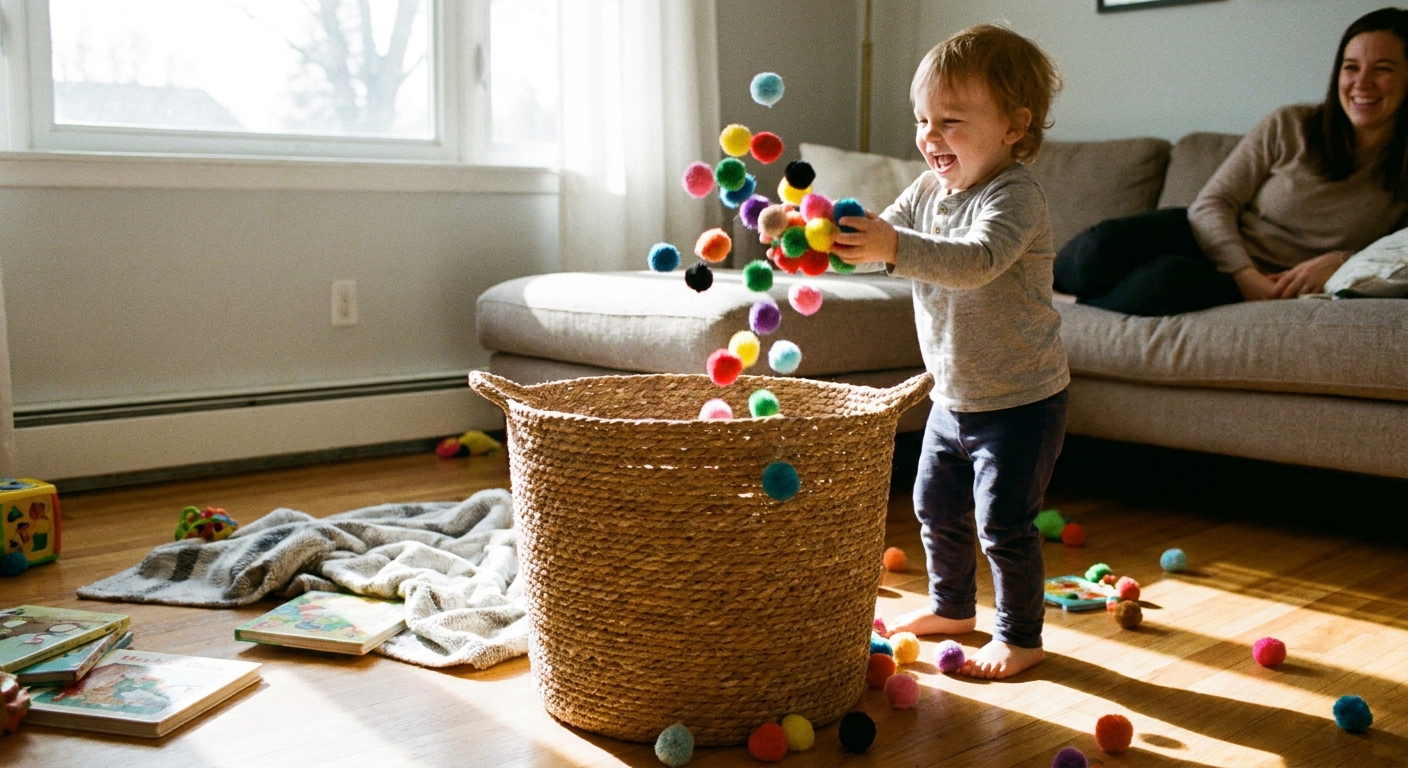
- “You want to throw. Let’s throw pom poms into a bowl.”
- “Let’s go throw balls into the laundry basket.”
When it’s turning into frustration
- “Your body looks wiggly. Let’s do three big jumps, then try the bin again.”
Use a kind boundary: Bin break
If throwing continues after a reminder and redirection, it is okay to end the activity briefly. This is not a punishment. It is a boundary that teaches, “Throwing makes the bin unavailable.”
How to do it
- State the rule and choice: “Filler stays in the bin. Scoop or we take a break.”
- If they throw again, calmly remove the bin: “You threw the filler. Bin is all done for now.”
- Offer a replacement activity that meets the same need: water play, playdough, a ball toss, or a no-mess sensory bag.
- Try again later when bodies are calmer.
Bin breaks work best when they are predictable and calm. For many toddlers, that consistency helps the rule click sooner.
Give throwing a safe “yes”
Sometimes the best way to reduce throwing in the bin is to give throwing its own proper place.
Throwing alternatives for toddlers
- Pom pom toss: Toss pom poms into a mixing bowl or laundry basket.
- Bean bag target: Throw bean bags at a pillow on the floor.
- Stuffed animal drop: With close supervision, let them drop stuffed animals into a box from a low, stable surface (skip step stools unless you are right there and it is truly safe for your child).
- Paper ball recycling: Crumple scrap paper and toss into a bin.
- Outdoor scoop and dump: If you can, move the “big throwing energy” outside with pinecones, leaves, or snowballs.
When toddlers get a safe “yes,” they are less likely to hunt for a “no.”
Try no-mess play on tough days
Some days are just not “tiny pieces everywhere” days. On those days, sensory bags can keep the exploration going without the flying fillers.
Helpful ideas: 7 No-Mess Sensory Bags With Household Items.
Make the bin more interesting
If throwing is the most exciting thing available, toddlers will choose it. Add a simple mission.
Easy jobs that keep hands busy
- Rescue game: Hide big plastic animals and “rescue” them with a scoop.
- Fill and empty: Provide three cups and practice filling each to the top.
- Color hunt: Toss in a few large colored items and ask, “Can you find the red one?”
- Sound play: Add a metal bowl for gentle pouring sounds, then model slow, quiet pours.
When attention has a target, throwing can lose its sparkle.
After the throw
Cleaning up can accidentally become part of the fun, especially if a toddler learns, “When I throw, we both scramble!”
Keep cleanup boring and brief
- Use a neutral voice: “That’s on the floor. We clean it up.”
- Hand them a small dustpan, cup, or their own little towel to help.
- Do not rush around dramatically.
If they refuse to help
That can be normal. You can still keep the boundary:
- “I will clean it up. The bin is all done for now.”
Safety notes
- Choking risk: Small fillers like dry beans, popcorn kernels, dry rice, and small pasta shapes are not safe for kids who still mouth items. Choose larger pieces or taste-safe fillers, and supervise closely.
- Eye safety: If a child is throwing toward faces, end the bin right away and switch activities.
- Pets and siblings: Keep tiny fillers away from babies and pets who may eat them.
If you want a steady starting point for setup and expectations, visit Your First Toddler Sensory Bin.
Quick troubleshooting
“My toddler throws only when I look away.”
That often means it’s a connection or boundary-testing moment. Stay close, keep bins short, and use one consistent phrase: “Filler stays in the bin.”
“They throw when they’re done, but they can’t say it yet.”
Teach an “all done” signal:
- “Show me all done.” (model hands up or signing all done)
- “Put the scoop in the bowl when you’re all done.”
“They throw when they’re excited.”
Try heavier work first: wall pushes, jumping, carrying books, or animal walks. Then return to the bin.
“They throw every single time.”
Reset with a tiny, easy bin and very short play sessions. For many toddlers, 3 to 5 minutes is plenty at first. One cup, one scoop, shallow filler, and you right next to them. End while it is still going well.
When to get extra support
If throwing is intense, frequent across many settings, or includes aggression toward people, it can help to talk with your pediatrician or a child development professional for personalized strategies. You deserve support, and your toddler deserves tools.
A calm mantra for grown-ups
Throwing can feel so loud and so personal, but it usually is not. It is learning in progress.
“My toddler is practicing. I am teaching.”
Keep the boundary steady, keep the redirection simple, and when needed, take a quick reset break. Sensory play will still be here when everyone is ready again.