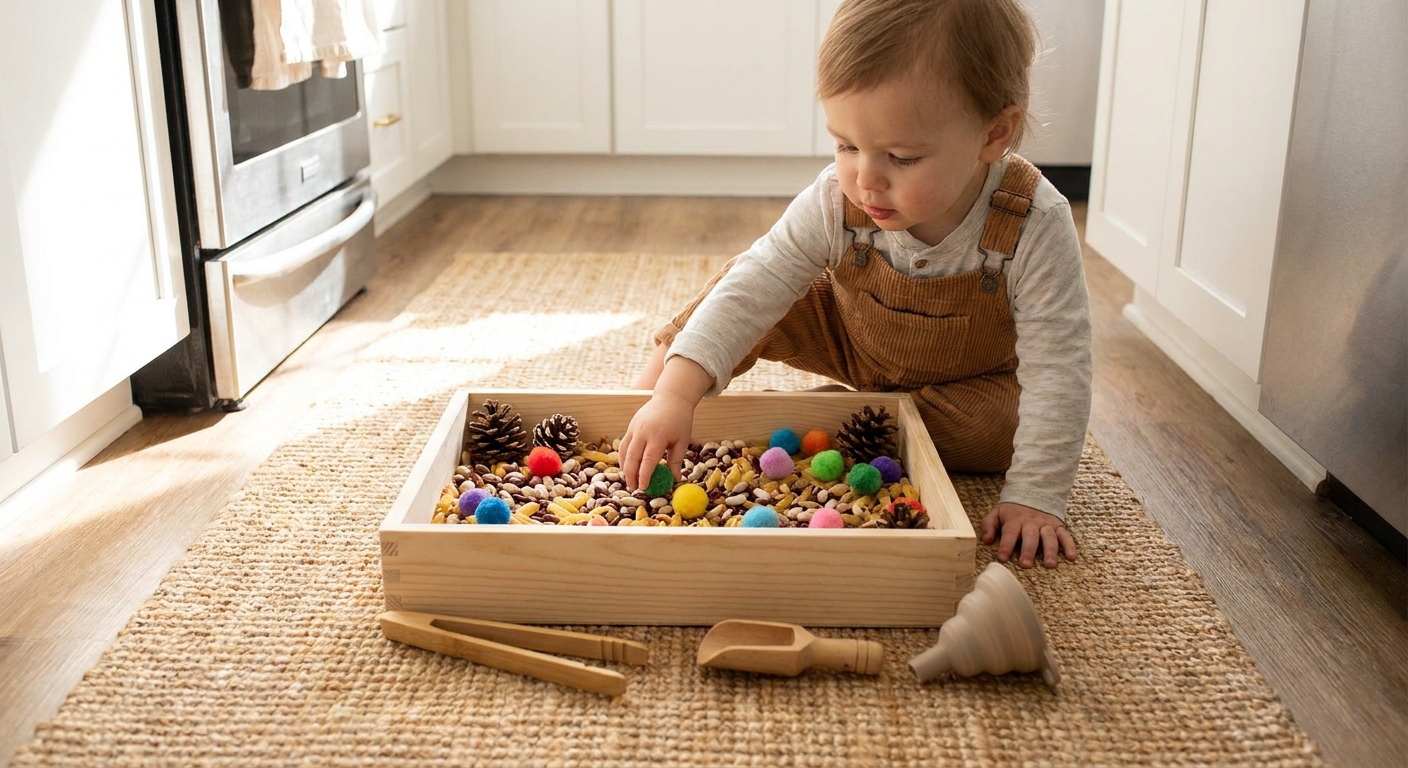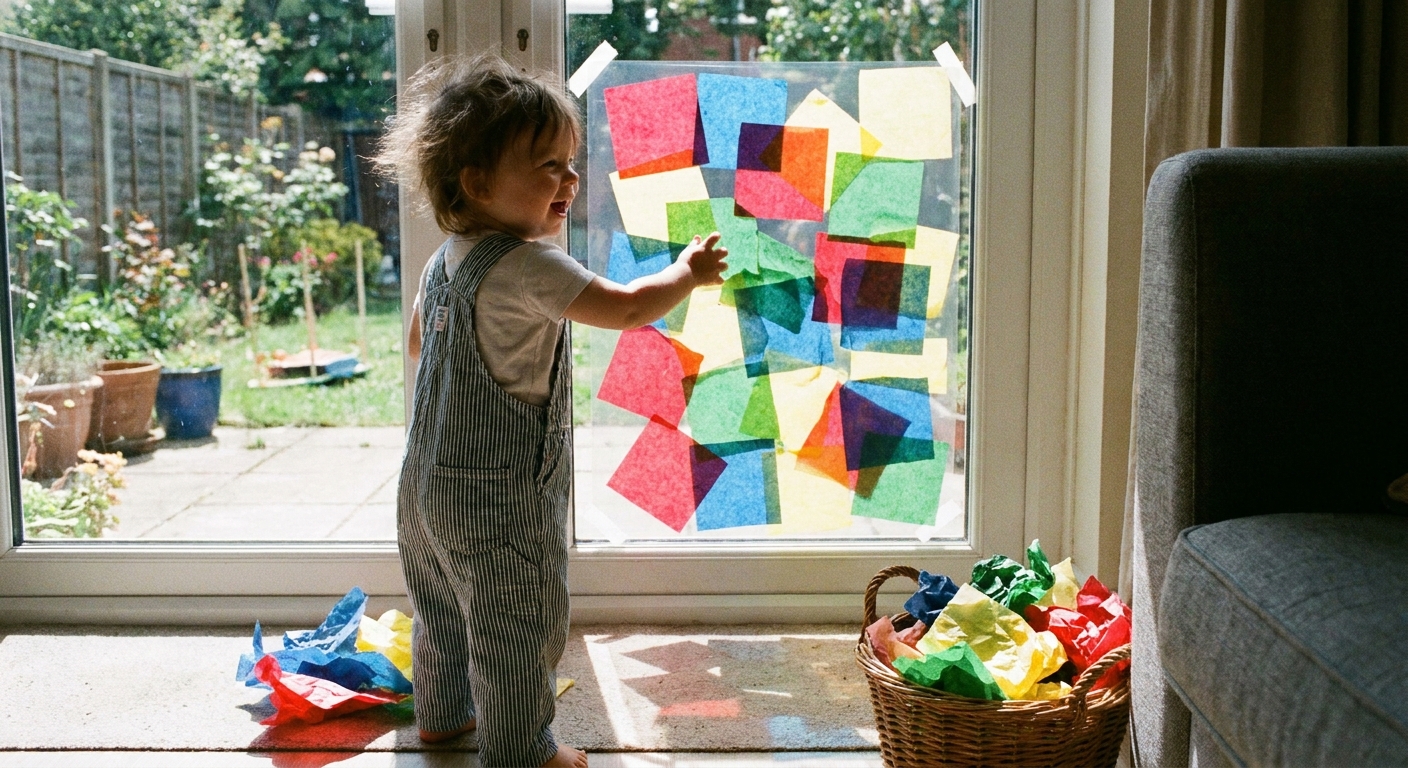
Let’s dive in and make a wonderful, happy little mess together! Stickers are a sneaky fine motor workout: peel, pinch, place, press. Each tiny move helps your toddler practice the pincer grasp, that thumb-and-index-finger pinch they will use later for crayons, buttons, and eventually handwriting tools.
And here is the best part for grown-ups: sticker play is usually a low-mess win, as long as you give them one clear place for the stickers to live.
What is a pincer grasp?
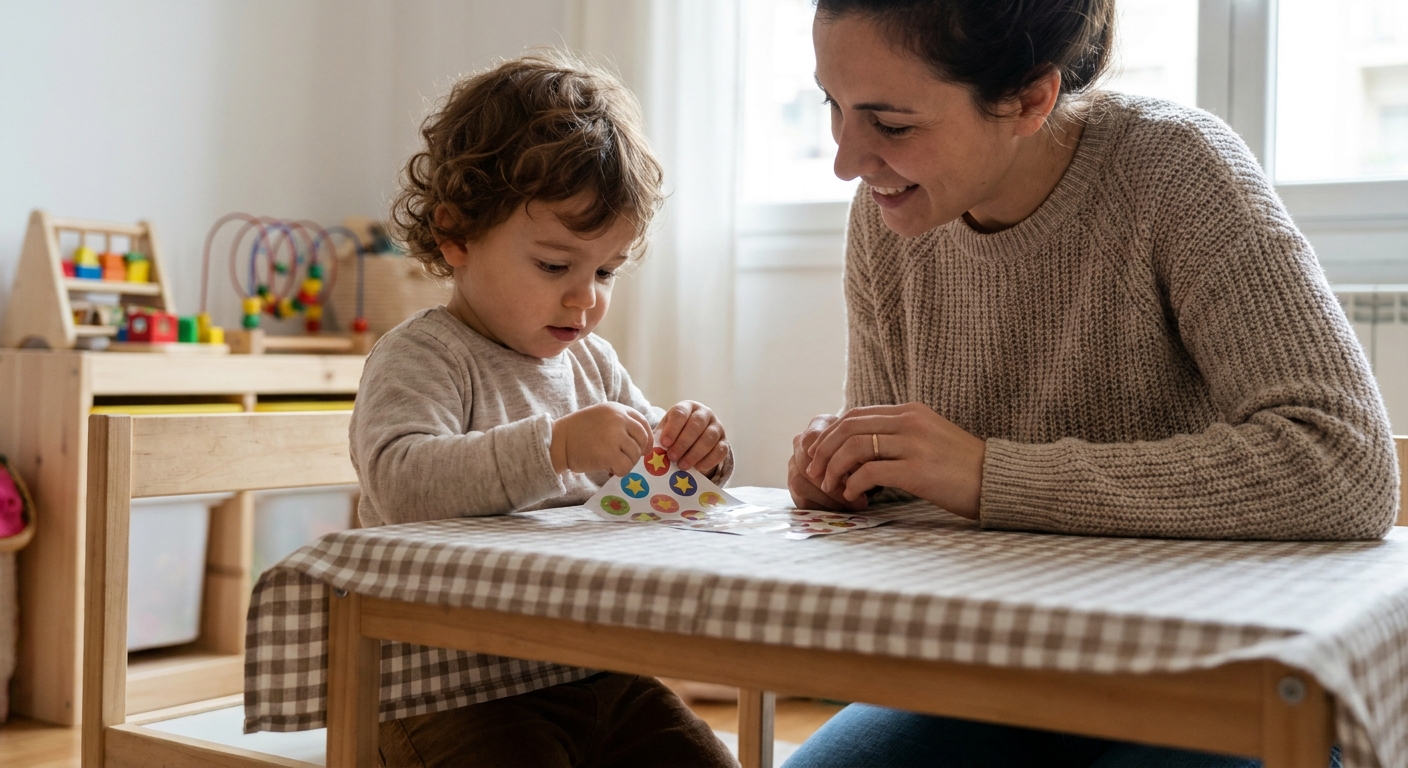
A pincer grasp is when your toddler uses the tip of the thumb and the tip of the index finger to pick up something small. Sticker play supports this because it naturally includes:
- Pinching to grab the sticker edge
- Pulling to peel without tearing
- Stabilizing with the other hand (great for hand coordination)
- Pressing to stick it down (finger strength)
It also builds patience and focus in tiny, manageable bursts, which is exactly toddler-sized learning.
Quick safety and setup
- Supervise closely. Stickers can be a choking hazard, especially with toddlers who mouth items.
- Go bigger at first. Start with larger stickers and move smaller as skills grow.
- If your child mouths items, be extra cautious. Keep tiny stickers out of reach and do a quick count before and after, so you know where they all ended up.
- Control the scene. If your toddler loves decorating furniture, set a clear “sticker goes here” spot and keep extra stickers out of reach until needed.
- Aim for short sessions. Two to five minutes is often a good starting point, then build up if your toddler is still enjoying it.
Supplies
- Stickers (start with larger, easy-peel)
- Paper, cardstock, or a paper plate
- Washable marker (optional)
- Tape (optional for stabilizing paper)
- Child-safe scissors (optional for making mini sticker strips)
If you want to pair sticker play with other fine-motor tools, take a peek at Sensory Bin Tools for Fine Motor Skills for more hand-strength ideas.
Best starting point
This tends to work best once toddlers are interested in picking up small things and trying to do it “all by myself.” If peeling is too tricky right now, you can start by handing your toddler a pre-peeled sticker and letting them do the placing and pressing first.
Some kids also find repositionable stickers or vinyl clings easier to handle at the beginning because they lift with less frustration.
How to teach peeling
Step 1: Make the edge easy
For many toddlers, the hardest part is finding an edge. Try one of these low-prep helpers:
- Fold-back method: On the sticker sheet, gently bend the backing paper right under one sticker to pop up a tiny edge.
- Sticker strip method: Cut the sticker sheet into small strips so your toddler is not wrestling a whole page.
- Pre-peeled starter: Lift just the very corner of one sticker so little fingers can pinch and pull.
Step 2: Coach the fingers
Use simple, playful words:
- “Pinch with your thumb and pointer finger.”
- “Tiny crab pinch!”
- “Pull slow, pull slow.”
Try not to peel it all the way for them. If needed, hold the sheet steady while they do the peeling work.
Step 3: Add a good press
After placing the sticker, encourage a firm press with the index finger. You can say, “Press, press, press,” and count to three.
7 sticker games
Pick one and keep it easy. Repetition is a feature, not a bug.
1) Sticker dot trail
Best for: beginner peelers, quick sessions
- Draw a simple path of dots or circles on paper.
- Use dot or round stickers that fit inside the circles.
- Invite your toddler to place one sticker on each dot.
Make it harder: smaller dots, smaller stickers, longer trail.
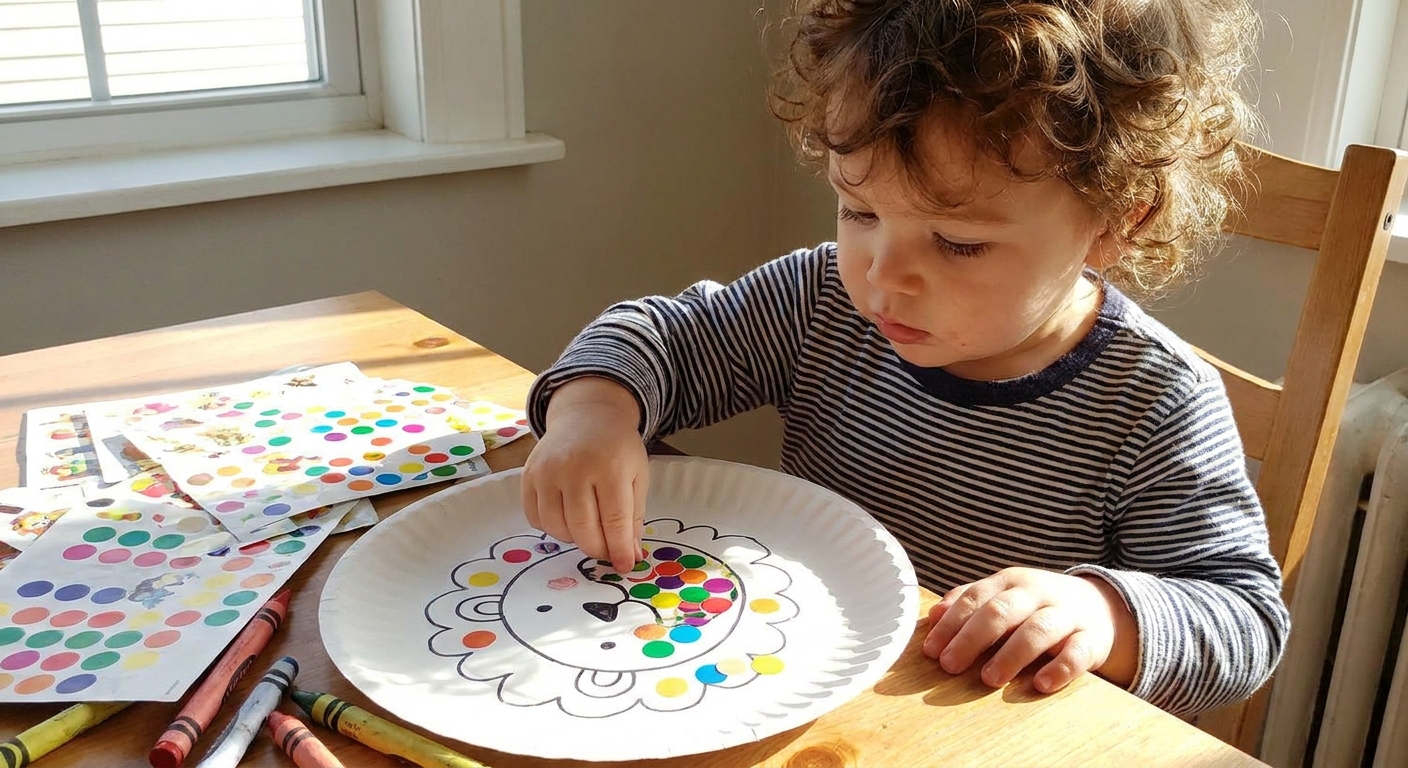
2) Feed the animal
Best for: toddlers who love pretend play
- Draw a big silly face on a paper plate (mouth open).
- Tell your toddler the animal is hungry for stickers.
- Peel and “feed” by sticking stickers inside the mouth area.
3) Color match sticker hunt
Best for: early sorting and attention
- Draw three to five large colored circles (or scribble color patches) on paper.
- Offer sticker colors that match.
- Your toddler peels and places each sticker on the matching color.
If your toddler enjoys color-based play, this pairs nicely with Toddler Indoor Color Scavenger Hunt.
4) Sticker parking lot
Best for: vehicle fans and tidy placement practice
- Draw a few simple boxes like parking spaces.
- Use round dot stickers as the “cars” (or park car stickers in the boxes).
- Park one sticker per space.
Make it harder: draw smaller parking spaces to encourage careful placement.
5) Vertical wall stickers
Best for: shoulder and arm stability, reaching practice, and endurance
- Tape paper to a wall at your toddler’s chest height.
- Put the sticker sheet on the table or hold it steady.
- Your toddler peels at the table, then reaches up to place on the wall paper.
Want more wall-based toddler art? Try Contact Paper Sticky Wall for Toddler Art on another day.
6) Sticker frames
Best for: controlled placement and hand endurance
- Draw a big square or rectangle frame on paper.
- Invite your toddler to place stickers along the line like a border.
- Count them together as you go.
Make it easier: draw chunky lines and use larger stickers.
7) One at a time surprise
Best for: toddlers who dump the whole sheet in 12 seconds
- Cover most of the sticker sheet with a piece of paper (hold it in place).
- Reveal only one sticker at a time.
- After it is placed, reveal the next.
This keeps sticker play calm and focused, with lots of pincer practice instead of a sticker blizzard.
Easy progressions
Move up when sticker peeling looks smoother and your toddler starts using fingertips instead of a whole-fist grab.
- Start: jumbo stickers, thick paper, pre-lifted edges
- Next: medium stickers, no pre-lift, sticker strips
- Later: small stickers (like dot stickers), small targets to hit (small circles), patterns to copy
- Challenge mode: place stickers with a simple rule (ABAB pattern, “two red then one blue”)
Keep the mood light. Strong hands grow from lots of tiny tries.
Troubleshooting
“My toddler can’t peel it.”
- Use the fold-back or pre-peeled corner method.
- Try a different brand or style. Some are much harder to lift.
- Stabilize the sheet with tape so it does not slide.
“My toddler tears it.”
- Encourage a slower pull and show “pinch closer to the edge.”
- Switch to thicker stickers (foam stickers can be easier to handle, but skip tiny ones if your child still mouths items).
- Offer smaller sessions. Tired hands tear more.
“Stickers go everywhere.”
- Use the one-at-a-time reveal.
- Give a clear landing zone: “Stickers live on this paper.”
- Try placing the target paper in a tray or shallow bin to define the workspace.
If throwing or dumping is a big part of play right now, the strategies in How to Stop Your Toddler From Throwing Sensory Bin Fillers often help with “all the pieces everywhere” moments too.
Handwriting helpers
Sticker play is not handwriting, but it builds some of the ingredients that make pencil skills easier later:
- Finger strength: pinch and press
- Hand separation: using fingertips while the rest of the hand stays steadier
- Bilateral coordination: one hand holds, one hand works
- Visual-motor control: aiming and placing on a target
- Attention: finishing a tiny “job” again and again
A simple 5-minute routine
Need something you can repeat without planning a whole production? Here is a quick routine:
- 1 minute: peel 3 to 5 stickers (use pre-lift if needed)
- 2 minutes: place on a dot trail or inside the “animal mouth”
- 1 minute: press each sticker firmly (count to three each time)
- 1 minute: cleanup together (stick leftover stickers onto a “sticker parking page” for next time)
Short, sweet, and very doable.
When to get support
Toddlers develop at different speeds, and sticker skills can vary a lot. If you notice consistent trouble using fingers to pick up small items, strong frustration with all fine-motor tasks, or concerns about hand use on one side, it can be helpful to discuss it with your child’s pediatrician or an occupational therapist.
More easy early learning
Sticker time pairs beautifully with other hands-on, low-prep activities. Here are a few Tot Sensory favorites to keep the learning rolling:
- Your First Toddler Sensory Bin
- 7 No-Mess Sensory Bags with Household Items
- Early Learning & Development
Now grab a sticker sheet, wiggle those tiny fingers, and let’s build that pincer grasp one happy peel at a time.