Let’s dive in and make a wonderful, happy mess together! A toddler-friendly indoor color scavenger hunt is one of my favorite rainy-day tricks because it turns ordinary household objects into a playful learning adventure. No special supplies needed, just a little waddly prep.
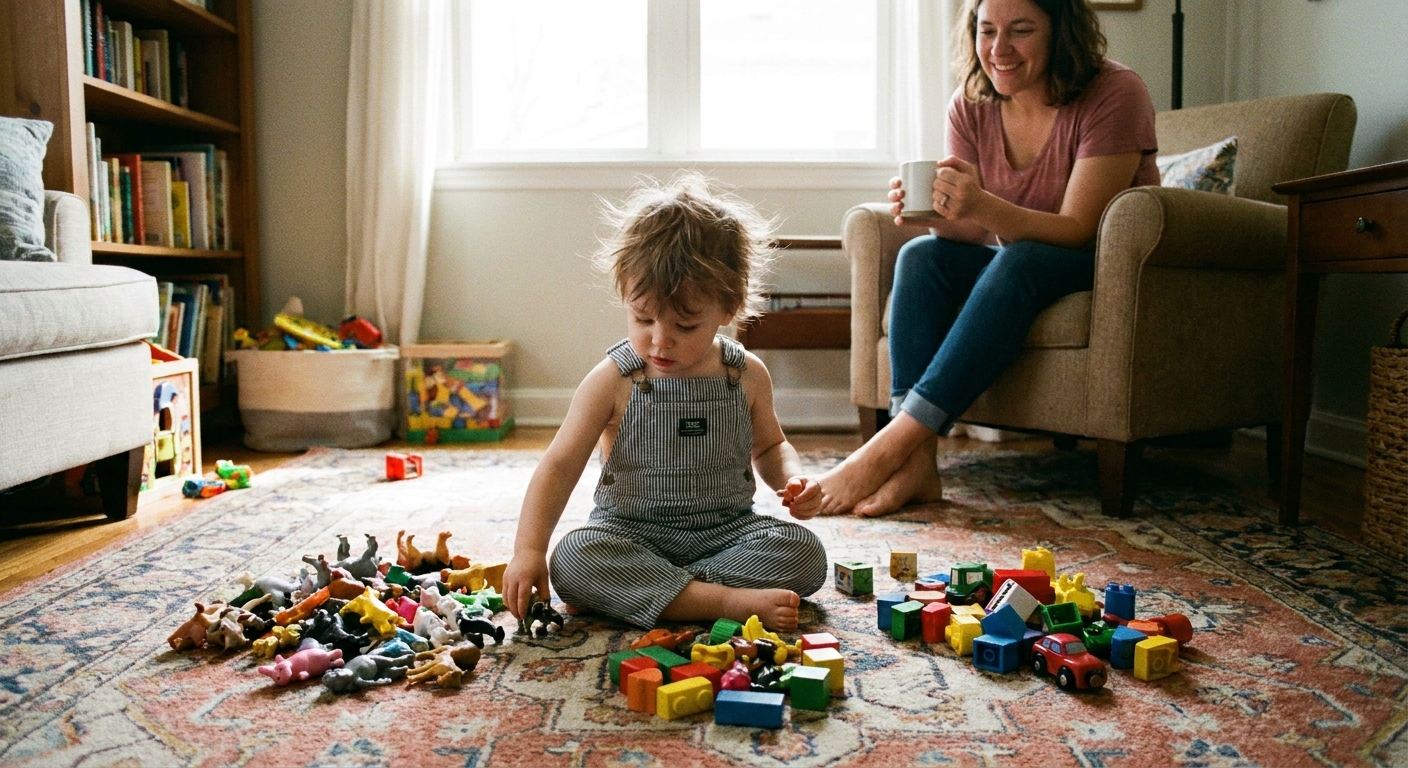
Why it works
This activity keeps things simple and meaningful for toddlers. They get to move their bodies, practice noticing differences, and build early sorting skills using real objects they already recognize.
- Color recognition: naming and matching colors in context
- Following directions: one-step prompts like “Find something red”
- Sorting and grouping: making piles or placing items into “color homes”
- Gross motor movement: walk, squat, reach, carry
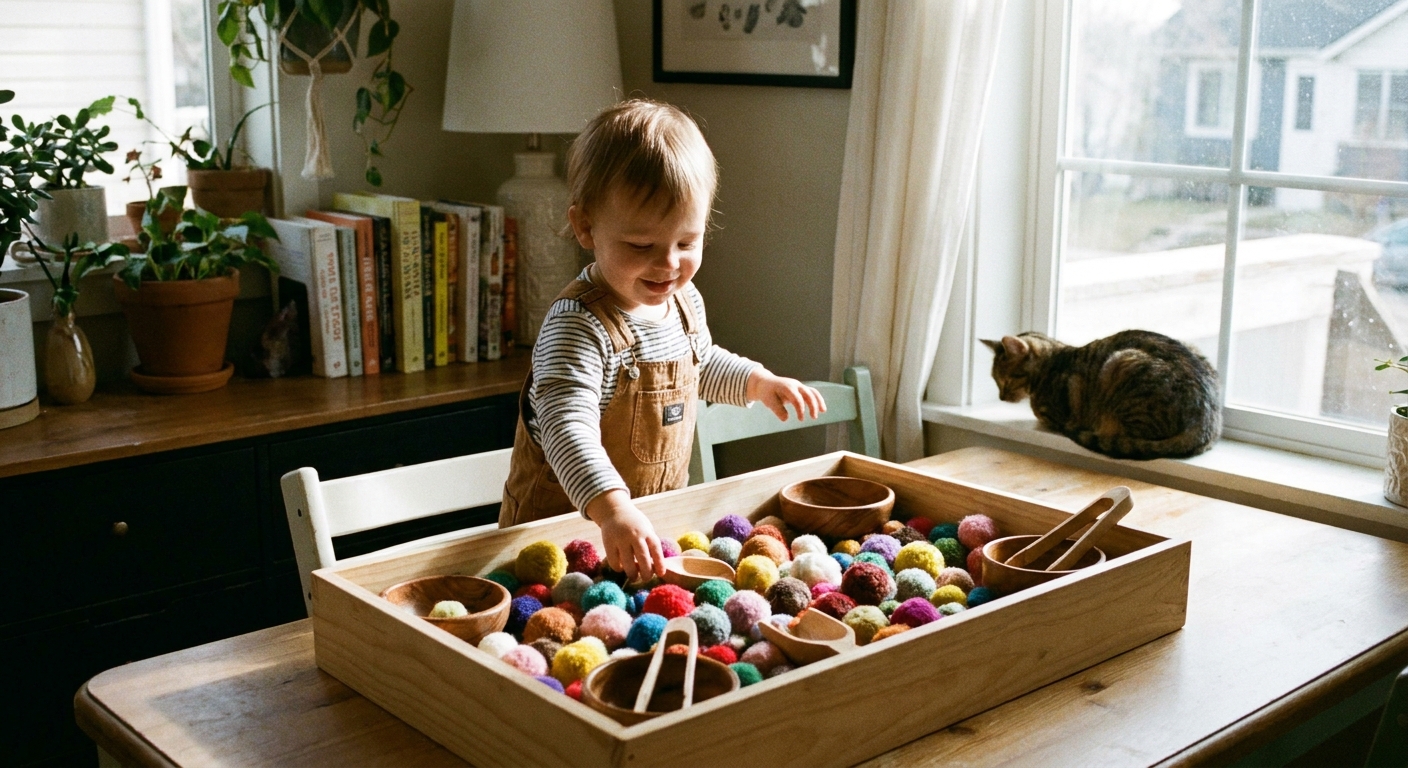
If you want more color-focused play ideas, peek at 5 simple sensory bins for color recognition and sorting.
Set up in about 5 minutes
Pick your play zone
Choose one main area like the living room, playroom, or hallway. A smaller space is often easier for toddlers because it reduces overwhelm and keeps the hunt quick.
Choose 4 to 6 colors
For younger toddlers, start with just 2 colors (like red and blue). For older toddlers, try 4 to 6. Great starter set:
- Red
- Blue
- Yellow
- Green
- Orange
- Purple
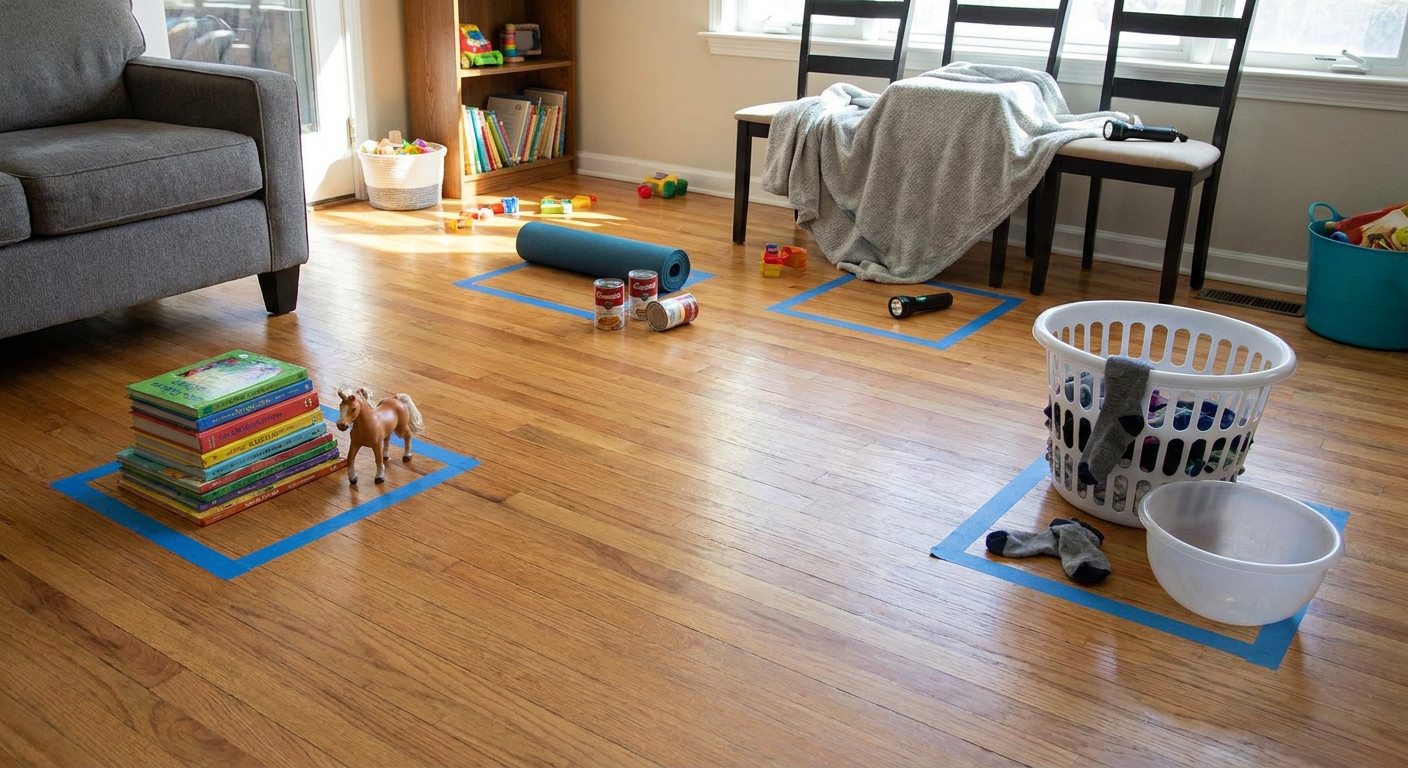
Create “color homes”
Make one spot per color where items will be placed. Keep it obvious and toddler-friendly.
- Paper method: place construction paper squares on the floor (one per color)
- Basket method: set out bowls, bins, or laundry baskets (one per color)
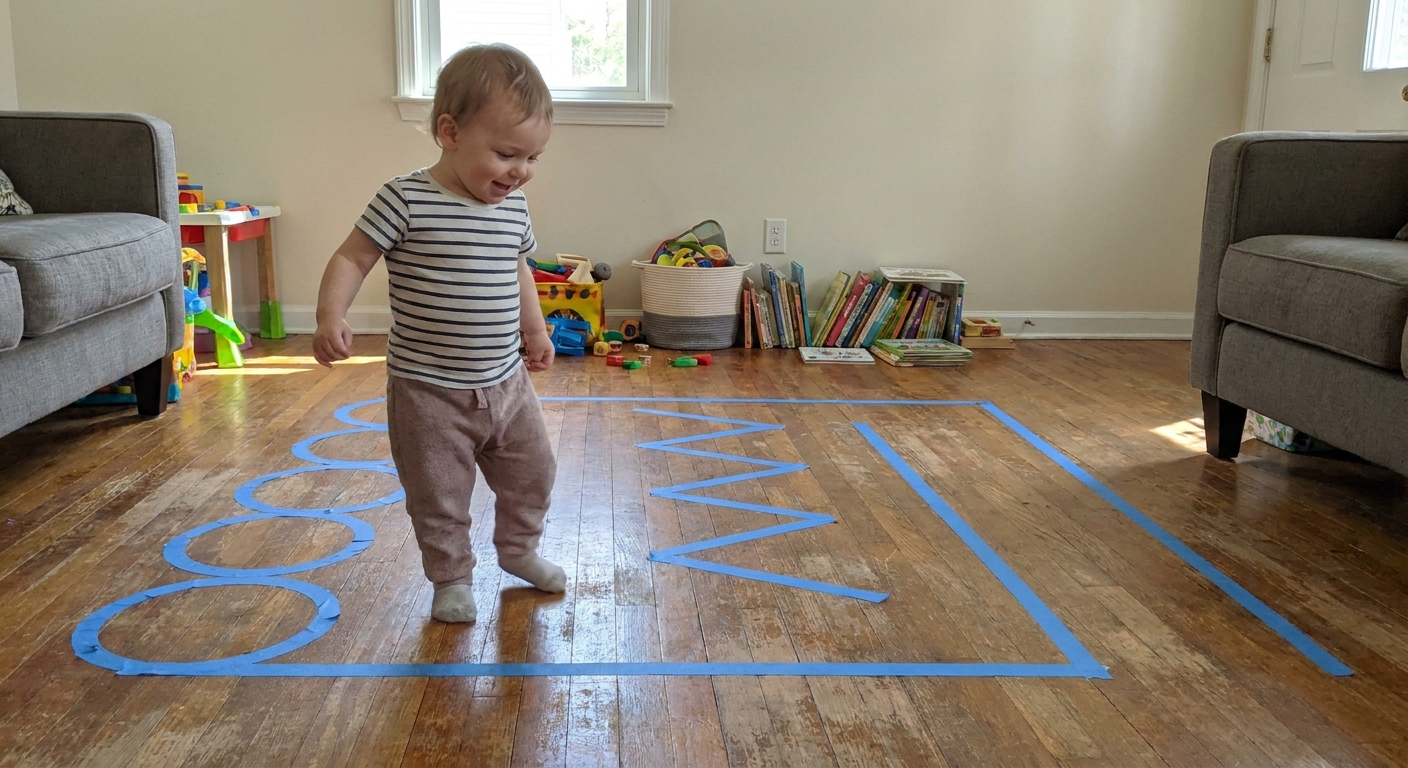
- Painter’s tape method: tape simple squares or circles on the floor for each color
Want a movement boost? Painter’s tape is perfect for defining stations and paths. You can also borrow ideas from 10 painter’s tape floor games for toddlers.
How to play
Step 1: Introduce the colors
Stand by the “color homes” and point to each one. Keep language short:
- “This is red.”
- “This is blue.”
- “Yellow goes here.”
Step 2: Start the hunt
Give one color prompt at a time:
- “Find something red!”
- “Bring it to the red home.”
When they return, celebrate the match and repeat with a new color. Keep rounds quick. Toddlers love fast wins.
Step 3: Sort together at the end
Once a few items are gathered, pause and admire the piles or baskets. Count items, name the colors again, and do quick comparisons:
- “Which pile has more?”
- “Do we have any tiny blue things?”
- “Let’s find one more yellow!”
What to hunt for
Choose safe, easy-to-carry objects. Aim for a mix of textures and everyday items.
Good items
- Blocks and toys
- Stuffed animals
- Plastic cups or plates
- Socks
- Board books (by cover color)
- Crayons (supervised)
- Small towels or washcloths
- Bath toys (dry ones for indoor play)
Items to skip
- Breakables like glass or heavy ceramic
- Very small pieces that could be a choking hazard
- Anything sharp, messy, or leaky
- Objects a child is likely to throw (unless you keep it to soft items only and stay close)
If tossing becomes the main event, the strategies in how to stop your toddler from throwing sensory bin fillers can also help for scavenger hunts.
Keep it easy
Use one-step directions
Try: “Find blue.” Then: “Put blue here.” Two tiny steps often work better than one big instruction.
Offer choices
If they freeze or wander, give two options:
- “Do you want to find red or yellow next?”
Keep it short
5 to 10 minutes can be plenty. You can always play again later with new colors.
Let “almost right” be okay
Toddlers may bring teal for blue or peach for orange. That is still wonderful learning. You can gently model:
“That one is light blue. Let’s put it with blue!”
Multi-colored items are fair game
If they bring something striped or rainbow, let them choose where it goes. You can say, “I see red and blue. Which home should it visit today?” Either answer is a win.
Fun variations
1) The “Color Train”
Line up items in a rainbow row on the floor. Name each color as it joins the train.
2) Color and size sorting
Once items are sorted by color, add a second step:
- “In the red pile, can you make a tiny pile and a big pile?”
3) Color plus texture
Ask for a color and a feel:
- “Find something yellow that is soft.”
- “Find something blue that is smooth.”
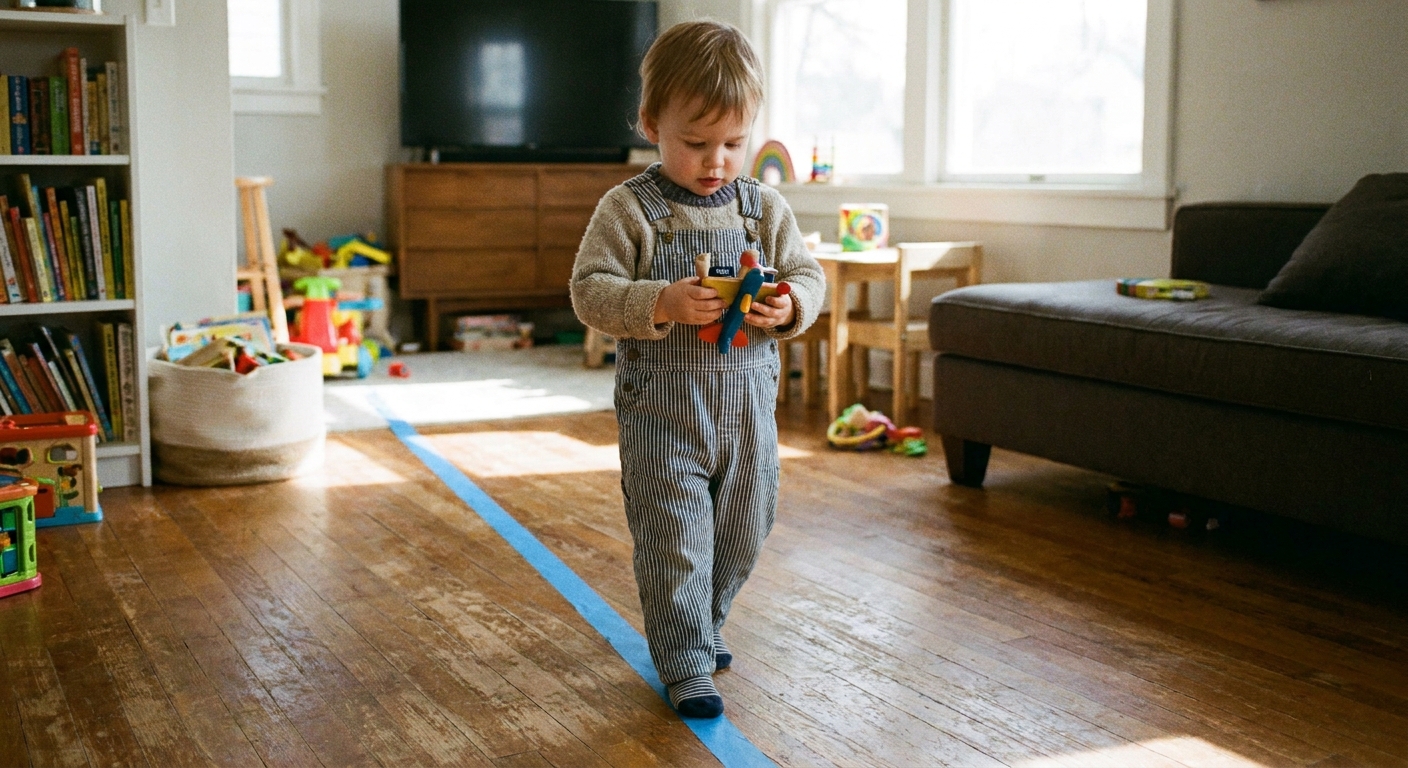
4) Tape path delivery
Create a simple tape path from the hunt area to the color homes. Toddlers love carrying an item while carefully walking the line.
Need more indoor movement ideas for energetic days? Try 9 indoor gross motor activities for rainy day toddler energy.
Siblings and groups
- Give each child a color: one hunts red, one hunts blue
- Take turns as the caller: one child says the next color
- Make a shared goal: “Let’s find 3 green things together”
- Use separate baskets: fewer mix-ups, fewer squabbles
Safety and cleanup
Safety basics
- Supervise closely, especially with small objects
- Clear tripping hazards before the hunt starts
- Keep the scavenger zone away from stairs and hard corners if possible
Easy cleanup idea
Cleanup can be part of the game. After sorting, do a “return parade”:
- “Red pile goes back in the toy bin!”
- “Blue pile goes back on the shelf!”
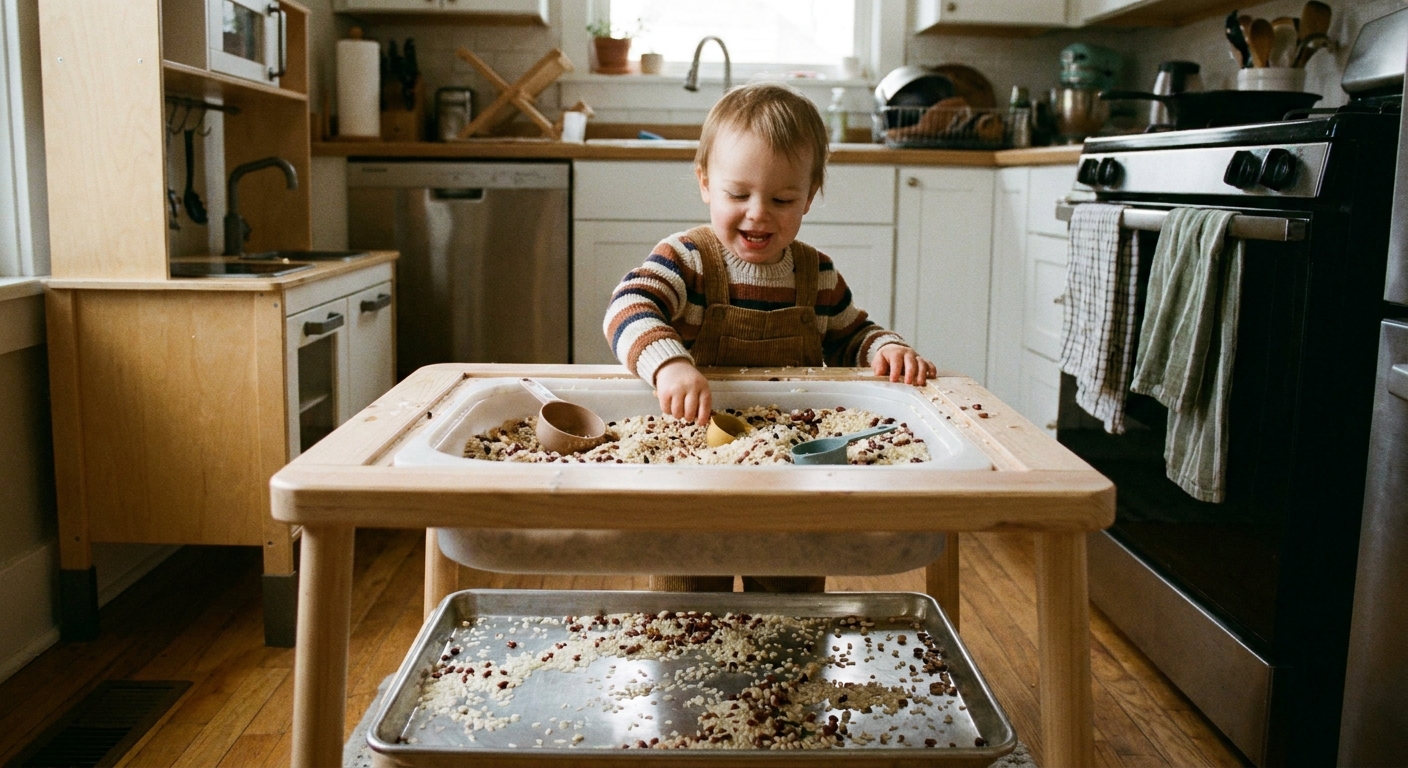
If your space is small and mess feels extra big, containing sensory bin mess in a small house has simple containment tricks that also work for toy sorting games.
FAQ
What age is this best for?
Many children can enjoy a version of this from around 18 months through preschool, but it really depends on your child. The key is adjusting the number of colors and how many items you ask for each round.
What if my toddler does not know color names yet?
No problem. Start with matching instead of naming. Hold up a colored paper “cue” and say, “Find one like this!” Over time, keep repeating the color word naturally.
What if my toddler is very young or has a language delay?
Make it even simpler: try one color only and one basket, or just practice “bring me one” and “put it in” with lots of modeling. You can build up to two colors when it feels easy.
How do I keep my toddler from getting distracted?
Use a small boundary (one room), choose only a few colors, and keep the pace peppy. If wandering starts, switch to a movement prompt like “Waddle to the red home!”
Can I do this with sensory play?
Yes. After the hunt, you can place the color piles into small bins for scooping and sorting. If your child still mouths items, stick to taste-safe options and read 10 taste-safe sensory bin fillers for toddlers who mouth everything for safer filler ideas.
Wrap-up
A toddler-friendly indoor color scavenger hunt is simple, flexible, and full of little learning wins. Start with just two colors, celebrate every match, and let the hunt be as short or as silly as it needs to be. Happy waddling, color explorers!