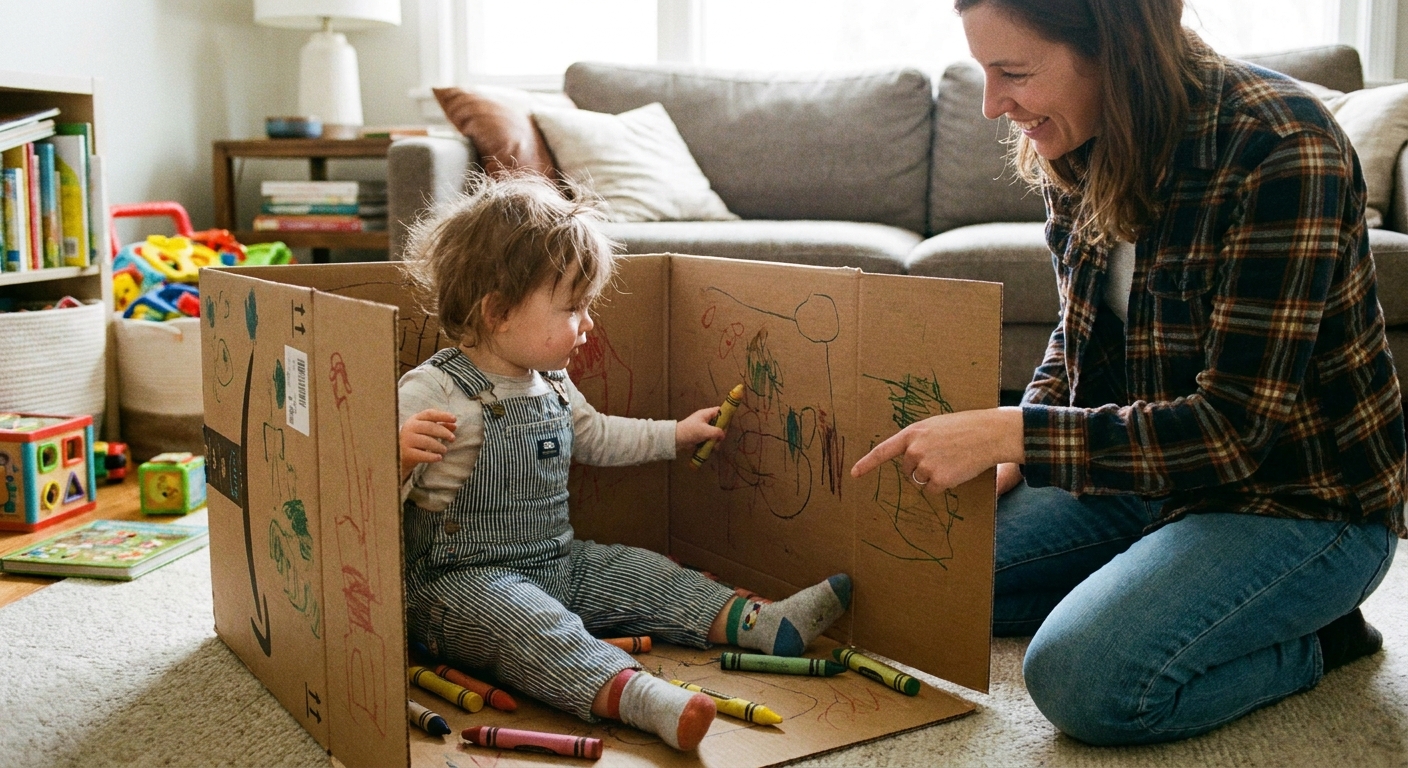

Rainy day? Perfect fort day. A toddler pillow fort can be a snuggly reading nook, a little hideout, and a calm-down corner all in one, as long as it is built low, anchored well, and kept simple. Let’s dive in and make a wonderful, happy mess together!
First, the safety rules
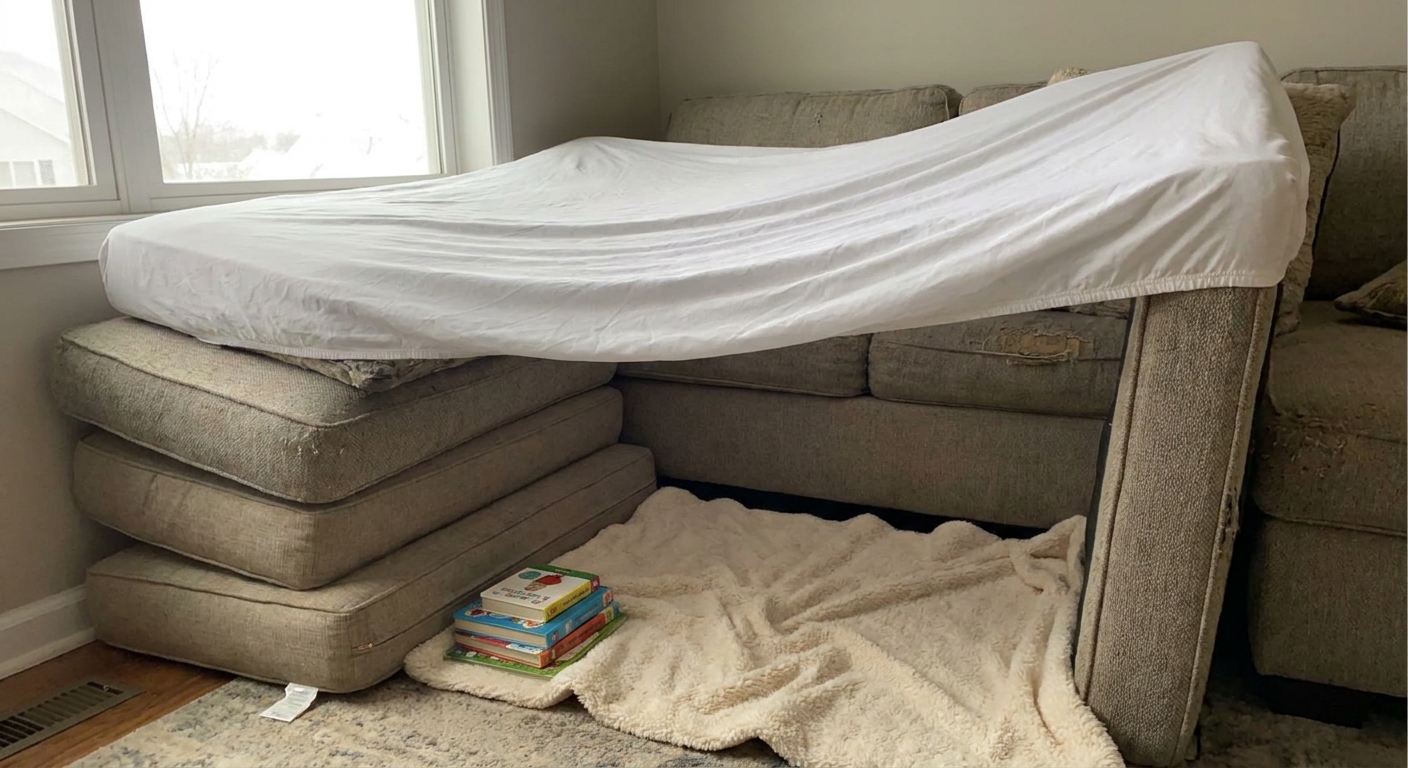
Big kid forts can be tall and dramatic. Toddler forts should be low, stable, and supervised. These basics help keep a cozy nook from turning into a tumble.
- Keep it low. Aim for roughly couch-seat height. If it falls, it should be a small, soft fall.
- Best for toddlers who are not climbing the couch. This kind of fort works best for about 18 months and up with close supervision. If your child is in a big climbing phase, skip the roof and make a floor-only nook instead.
- Anchor to heavy furniture, never to a toddler. Use a couch, a sturdy armchair, or a heavy coffee table as the “backbone.” Do not tie or wrap sheets around a child’s body or neck area.
- No cords, strings, or ties. Skip anything that can loop or tighten, including robe ties and long ribbon.
- Mind airflow and faces. Do not seal the fort fully. Leave an opening so air moves easily, and never cover a child’s face or head with blankets or pillows.
- If your child falls asleep, remove the roof. A sleepy toddler can wiggle into odd positions, so keep naps out of forts.
- Choose soft, breathable materials. Light blankets and cotton sheets are best. Avoid plastic tarps and anything stiff that can poke.
- Stay in the same room. Fort play works best with an adult nearby, especially for toddlers who climb.
- Do a quick hazard sweep. Keep lamps, hot drinks, candles, small items, and breakables out of the fort zone.
If your little one loves climbing or crashing, pair fort time with movement first, then settle into the cozy nook after. This roundup of indoor gross motor activities for rainy day toddler energy can help get the wiggles out.
What you need
This fort style is built around a couch so it stays stable without fancy gear.
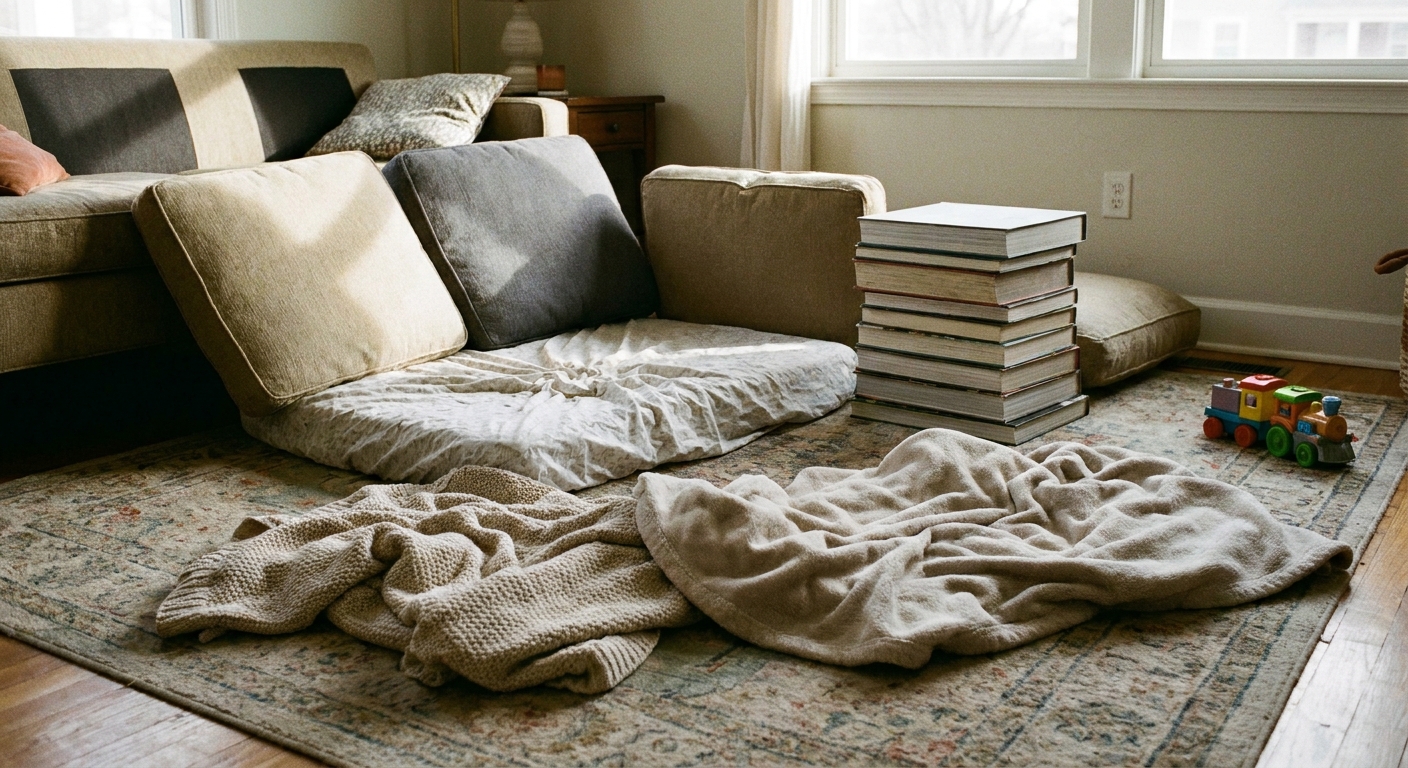
- 2 to 4 couch cushions (seat or back cushions work)
- 1 fitted sheet (twin or full is easiest to stretch)
- 1 to 2 blankets for padding and warmth
- Optional anchors: the fitted sheet tucked under couch cushions is often enough. If you need extra grip, use heavy books only on the floor and well out of reach (never overhead and never on couch arms or table edges).
- Optional: pillows, a stuffed animal buddy, board books
- Optional lighting: a battery LED night light placed outside the fort opening (avoid cords inside)
Step-by-step: A sturdier couch fort
Step 1: Pick the best spot
Choose a flat area on carpet or on a rug. If you are on hardwood, put a rug or a blanket down first to reduce slipping.
- Back the fort against a couch so one side is already stable.
- Leave a clear walking path around it so no one trips.
- Keep it away from stairs and sharp corners.
Step 2: Make a soft, non-slip base
Lay a blanket or thick quilt on the floor where the fort will sit. This adds comfort and helps cushions grip instead of scooting.
Step 3: Build short walls with cushions
Place two couch cushions upright like a little “V” or “U” shape, with their bottoms tucked slightly under the couch edge if possible. Keep the wall height low and wide.
- Best wall shape: wide and slightly angled, not straight up.
- Avoid: stacking cushions on top of each other for height.
Step 4: Add the roof with a fitted sheet
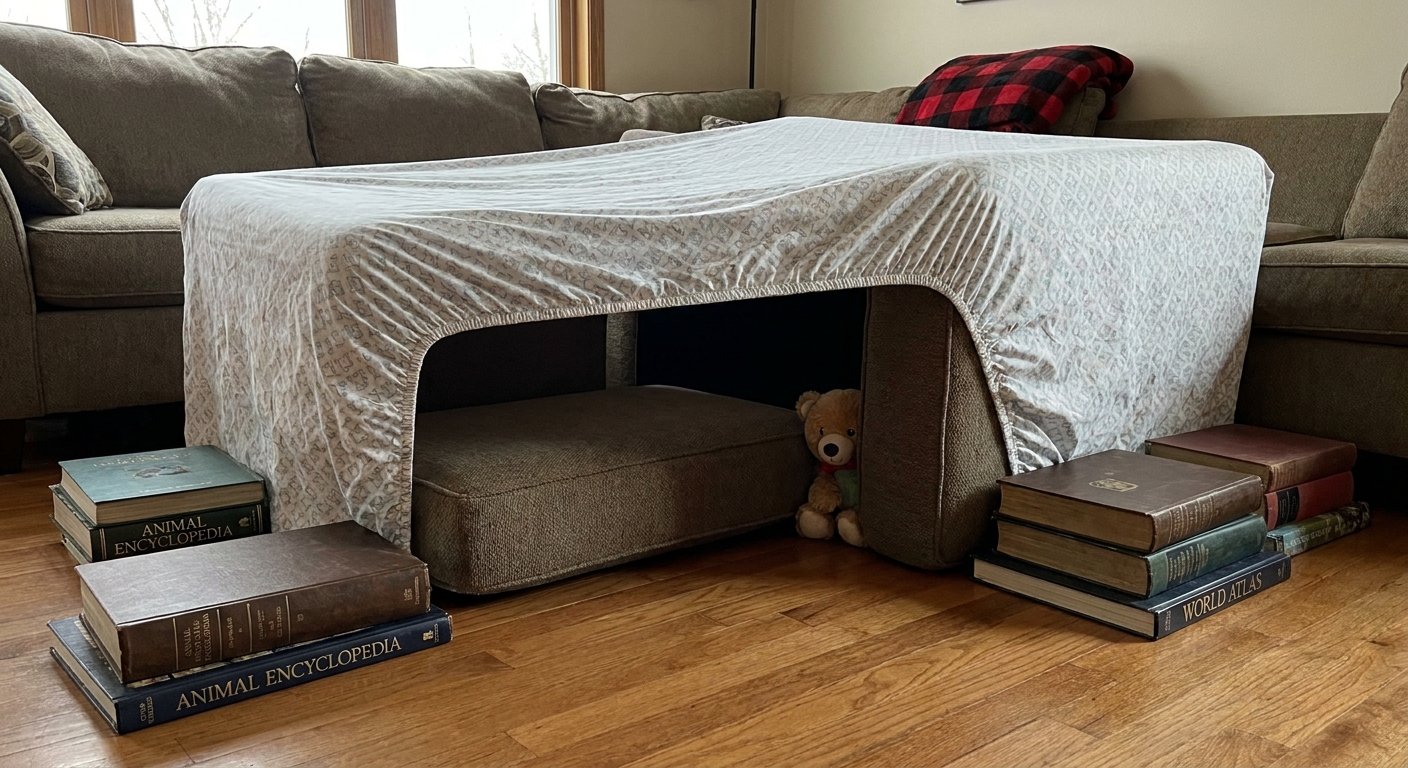
Pull a fitted sheet over the top so it stretches tight. Use the elastic to tuck the sheet corners under couch seat cushions, or tuck the edges behind the couch legs without wrapping, looping, or tying anything.
- The goal is snug, not droopy.
- If the sheet sags, your fort will sag.
Step 5: Anchor the sheet safely (if needed)
Often, a fitted sheet tucked under the couch cushions is plenty. If your sheet keeps slipping, you have two toddler-safe options:
- Better first choice: re-tuck the elastic deeper under the couch cushions so it grabs.
- Extra help: place a few heavy books on the floor on top of the sheet edge outside the fort, pushed far back near the couch base so a toddler cannot reach them. Never place weights above a child’s head.
Step 6: Make a wide door and a peek window
Toddlers do best with an easy entry. Fold one side of the sheet back to create a door flap, and leave a small gap on another side for a “window.” That helps airflow and reduces the urge to rip the roof off.
Step 7: Finish the inside like a reading nook
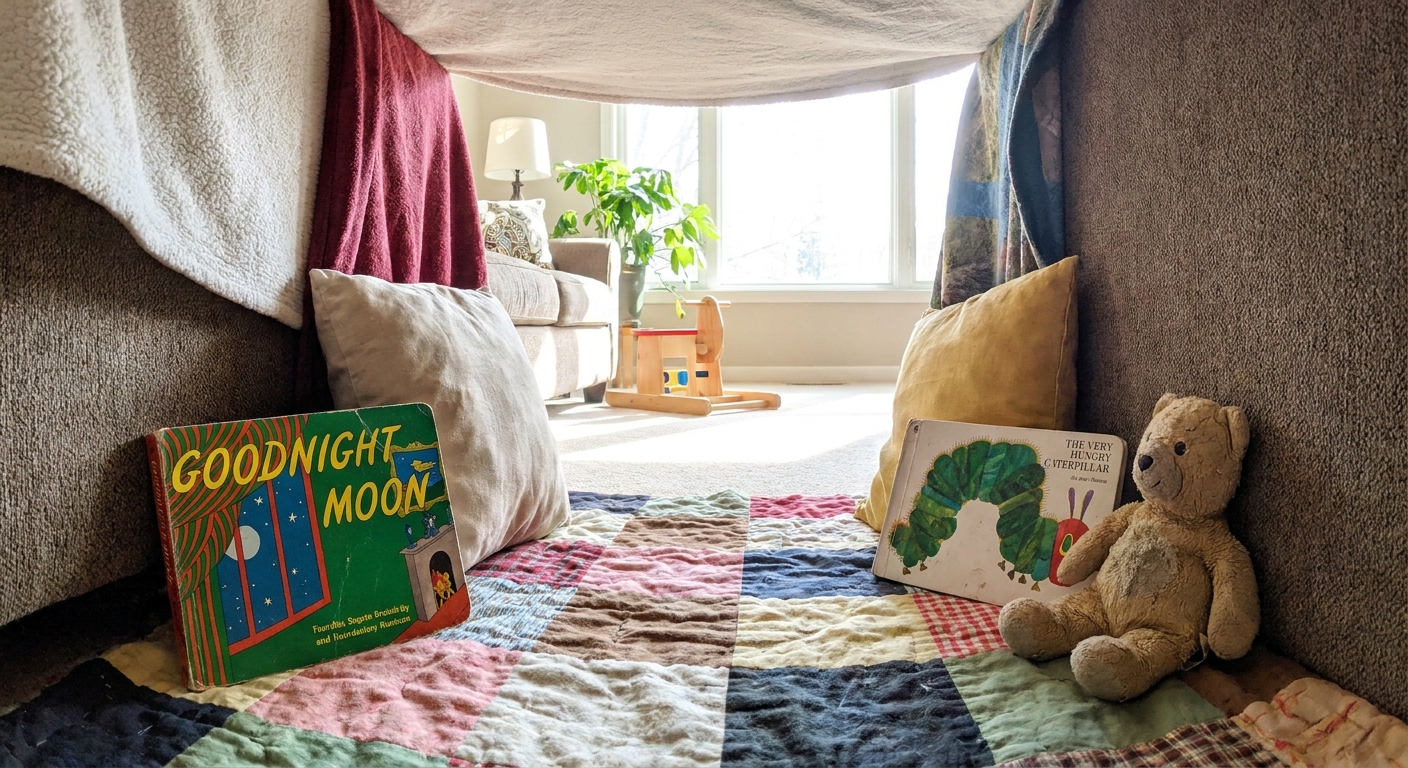
Add one soft blanket for the floor, a pillow, and just a few books. Fewer items means fewer trips and tangles.
- Cozy picks: board books, a stuffed animal, a small pillow.
- Skip: snack bowls, cups, and anything with tiny pieces.
Stability upgrades
Use the triangle trick
Structures stay stable when they form triangles. You can do this with cushions by angling them and bracing the bottom edges with rolled blankets.
- Roll a blanket into a firm “log.”
- Place it at the base of the cushion wall on the outside.
- This stops the cushion from sliding outward.
Double the grab edge
If your toddler loves tugging, fold the fitted sheet edge over itself before tucking it under the couch cushions. A thicker edge grips better and is harder to yank loose.
Slope the roof
A roof that slopes down toward the floor is less tempting to climb than a flat top. Simply pull the sheet tighter on one side so it creates a gentle slope.
Make it easy to reset
Instead of one giant fort, build a small nook that can be rebuilt in one minute. Toddlers learn fast, and quick resets keep the mood happy.
Comfort and sensory touches
This is where the fort becomes a true hideout. Keep it simple and soothing.
- Texture mix: one fuzzy blanket plus one smooth cotton blanket.
- Sound: whisper voices, or quiet page turning to make the nook feel special.
- Lighting: soft room light is plenty. If using a small battery light, place it near the opening and out of reach.
- Scent: avoid scented sprays. Fresh air and clean blankets are best.
If your toddler prefers contained activities, sensory play can feel similar to fort play because it creates a defined “zone.” Try a tidy option like no-mess sensory bags while you keep the fort up as a quiet corner.
Fort rules toddlers get
A few simple rules make the fort last longer and keep bodies safer. Keep the wording short and repeat it the same way each time.
- Feet stay on the floor.
- Hands are gentle with the roof.
- No climbing the couch.
- One friend at a time (or “two friends” if your fort is roomy and calm).
- Door stays open.
If your child loves tossing materials, the same calm boundary-setting that helps in sensory play can help here too. This guide on how to stop your toddler from throwing sensory bin fillers has language that translates nicely to fort play.
Troubleshooting
The roof keeps sliding off
- Use a fitted sheet, not a flat one.
- Tuck the elastic deeper under the couch cushions so it grabs.
- If you use weights, place them on the floor, outside the fort, and out of reach.
The walls fall inward
- Angle cushions outward slightly like a wide “A” shape.
- Brace the bottom with rolled blankets on the outside.
- Reduce height by using only one cushion per wall.
The whole fort scoots across the floor
- Build on carpet or add a rug.
- Place a blanket under the base cushions for grip.
- Tuck cushion bottoms slightly under the couch edge if possible.
Toddler wants to climb on top
- Stop and switch gears: remove the roof and turn it into a floor-only nook.
- Keep the fort small and cozy, not big and exciting.
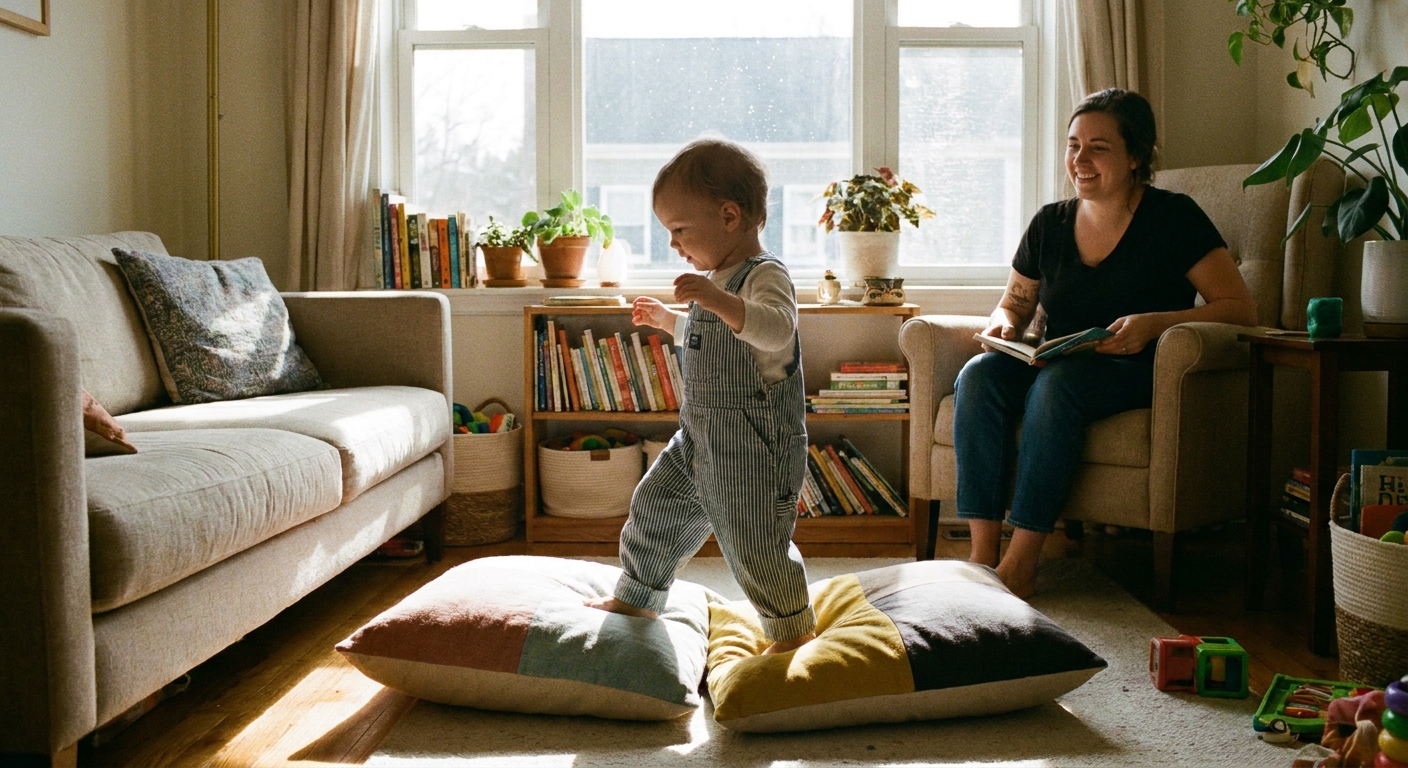
- Offer a safe climbing alternative nearby like couch cushions on the floor for supervised jumping, then return to the nook for calming.
Easy fort variations
The Book Cave
Keep it tiny, add three board books, and rotate the selection. A small fort often lasts longer because it feels manageable for toddlers.
The Stuffie Vet
Add a blanket “exam table” and a few plush animals. Keep pretend tools large and soft, and skip tiny accessories.
The Listening Nook
Sit together at the entrance and tell a short story, sing quiet songs, or do simple animal sounds. It is still play, just calmer.
For more rainy-day ideas that stay indoors, visit Indoor & Rainy Day Play.
Reset and clean-up
When you are done, do a quick reset so next time is easy: shake crumbs out of the sheet and blankets, stack cushions back on the couch, and put books straight back on the shelf.
Quick safety checklist
- Fort is low and wide
- No cords, ties, or strings
- Nothing heavy is above a child’s head
- At least one opening for airflow
- Clear floor around the fort
- Adult staying nearby
Cozy fort goal: stable enough to stay up, soft enough to be safe, and simple enough to rebuild with one cheerful waddle.
Now scoot those cushions into place, fluff up that blanket floor, and enjoy your tiny indoor hideout together.