Rainy days can feel extra long when everyone is stuck inside. This is where an “emergency” rainy day bin shines: a small stash of quiet, high-interest, mostly independent activities that only comes out when you really need a steady chunk of calm.
Let’s waddle through how to build one that feels brand new every time, without needing a giant toy closet.
What makes an “emergency” bin work
The magic is not fancy supplies. It is the rules you build around the bin so it stays special.
- It is rare. This bin only comes out for rainy days, sick days, phone calls, cooking dinner, or when you need a reset.
- It is self-contained. Everything needed is inside, including paper, a tray, a small towel, or a tiny container for pieces.
- It is low-mess by design. No loose slime. No glitter. No 200 tiny beads.
- It is “just hard enough.” Easy win items plus one or two challenge items keep attention longer.
- It is rotated. A few items swap out every couple of weeks so it stays novel.
Pick the right container and setup
Choose a container your toddler can understand and manage.
Container options
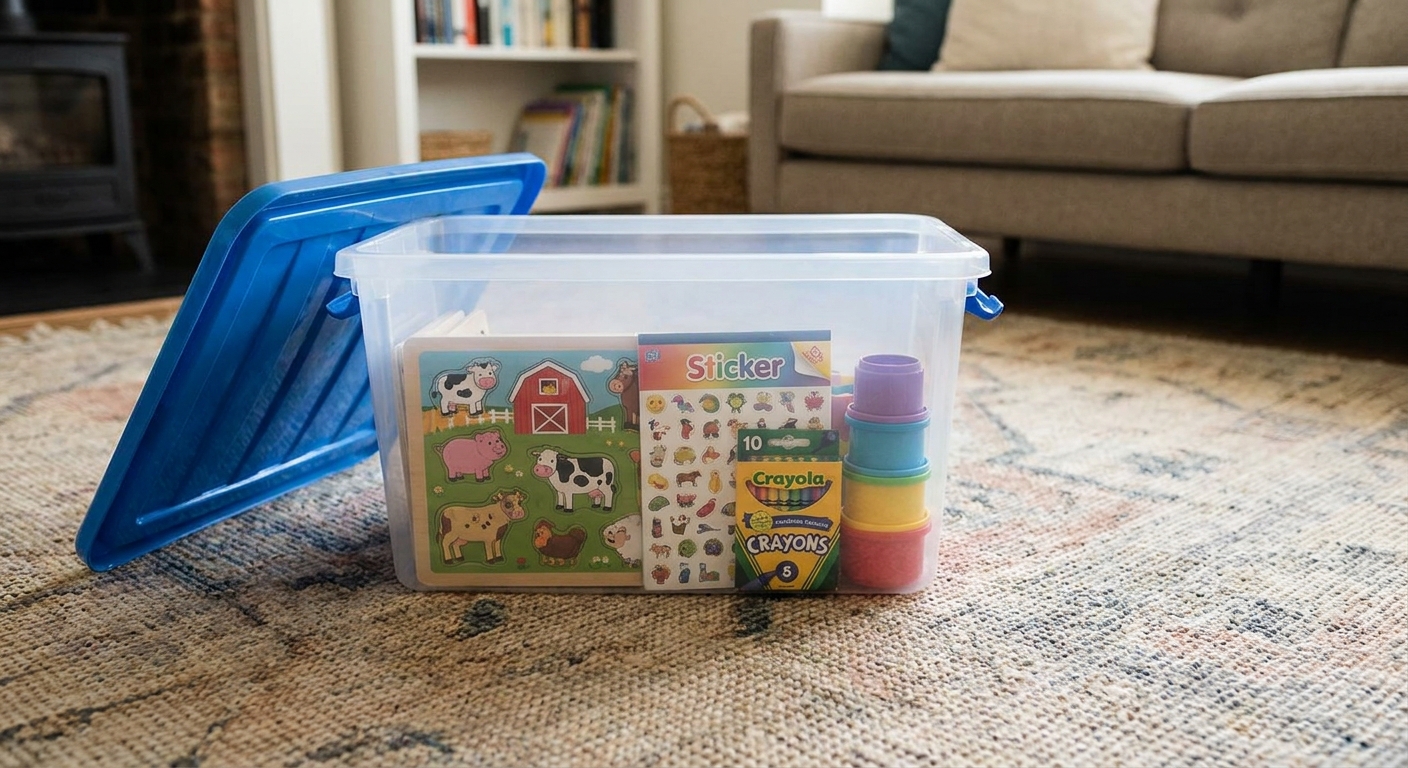
- Clear lidded bin: best for “everything in one place” and quick cleanup.
- Handled tote or basket: best if you want to carry it room to room.
- Small dish tub: great as an “activity tray” inside a larger bin.
Where it lives
Keep it out of sight so it stays exciting. A high closet shelf, a top pantry shelf, or a closed cabinet works well. If the bin includes any small parts meant for supervised play only, store it up high or behind a child lock.
Include a play boundary
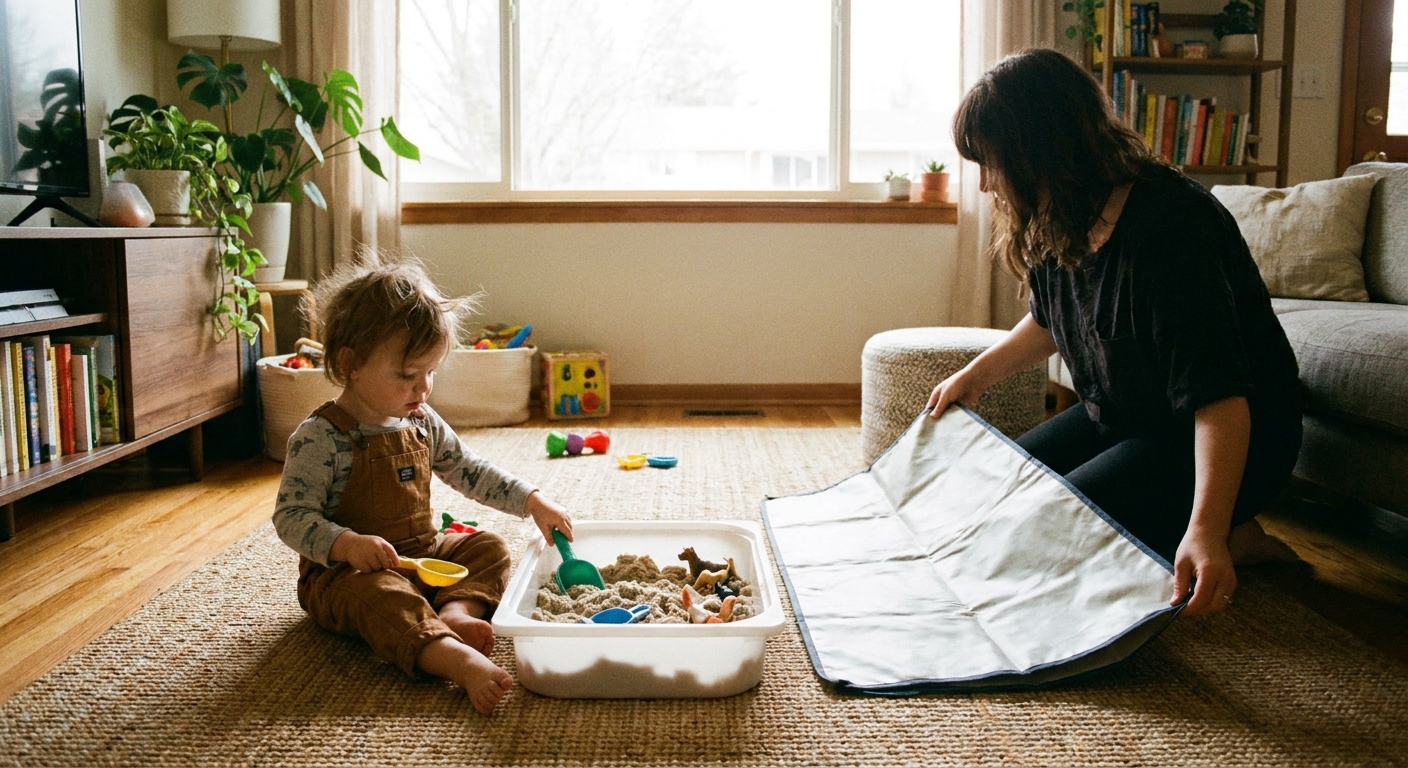
Toddlers do better with a clear workspace. Add one of these right inside the bin:
- a cookie sheet
- a cafeteria tray
- a silicone mat
- a small towel
That boundary helps pieces stay together and makes cleanup quicker. For more ways to keep the chaos contained, visit Containing Sensory Bin Mess in a Small House.
The core formula: 6 items for a calm stretch
A strong emergency bin often has 5 to 8 total activities. Too many choices can turn into dumping and scattering.
Use this simple mix:
- 2 easy wins: quick success, calming, repetitive
- 2 focus builders: require hands and eyes to stay busy
- 1 novel surprise: something they do not see often
- 1 reset tool: helps regulate when frustration hits
Easy win ideas
- chunky board book
- reusable sticker pad
- lacing cards with a thick shoelace
- pop-up toy (simple, not noisy)
Focus builder ideas
- chunky puzzle (4 to 8 pieces)
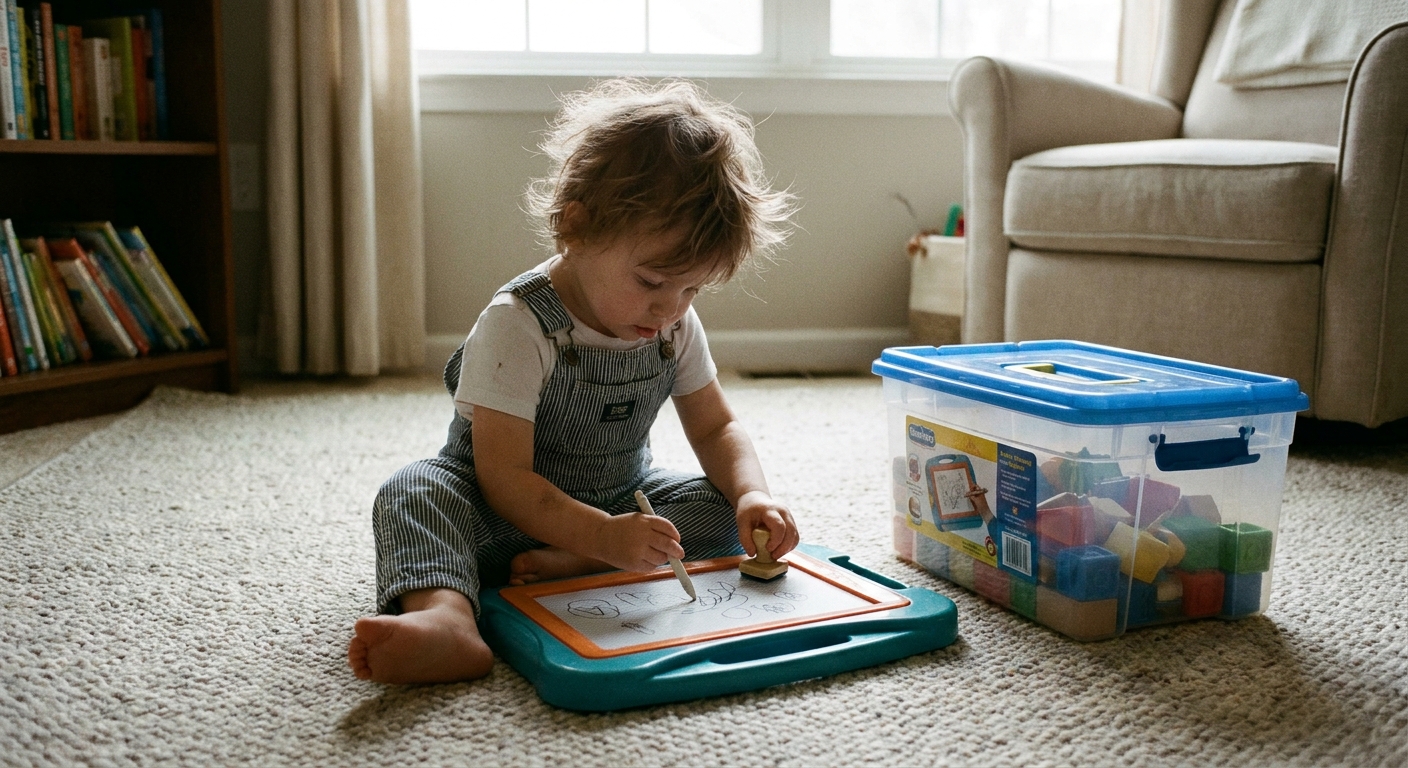
- magnetic drawing board
- matching cards (colors, animals, shapes)
- large tweezers plus big pom poms in a cup
Novel surprise ideas
- mystery bag with a few safe items to pull out and name (spoon, ribbon, large block)
- new notepad plus short crayons
- small pack of painter’s tape for sticking lines on paper or a tray
Reset tool ideas
- sensory bottle (sealed tight)
- soft fidget or textured ball
- visual calm-down cards you talk through together (no printing required, simple drawings on an index card work)
If you want activities that naturally build hand strength and coordination, take a peek at Sensory Bin Tools for Fine Motor Skills.
Shopping-free add-ins (use what you have)
If you want the bin to feel fresh without buying more stuff, these household helpers pull a lot of weight:
- painter’s tape
- sticky notes or index cards
- a muffin tin for sorting
- clothespins for pinching practice
- measuring cups and spoons
- an empty spice jar or small container with a lid (for supervised posting and pouring)
- a chunky makeup brush or paintbrush for “sweeping” small items on a tray
Quiet sensory options that stay contained
Sensory play can be a superstar for independent focus, as long as it is designed for indoors.
No-mess sensory bags
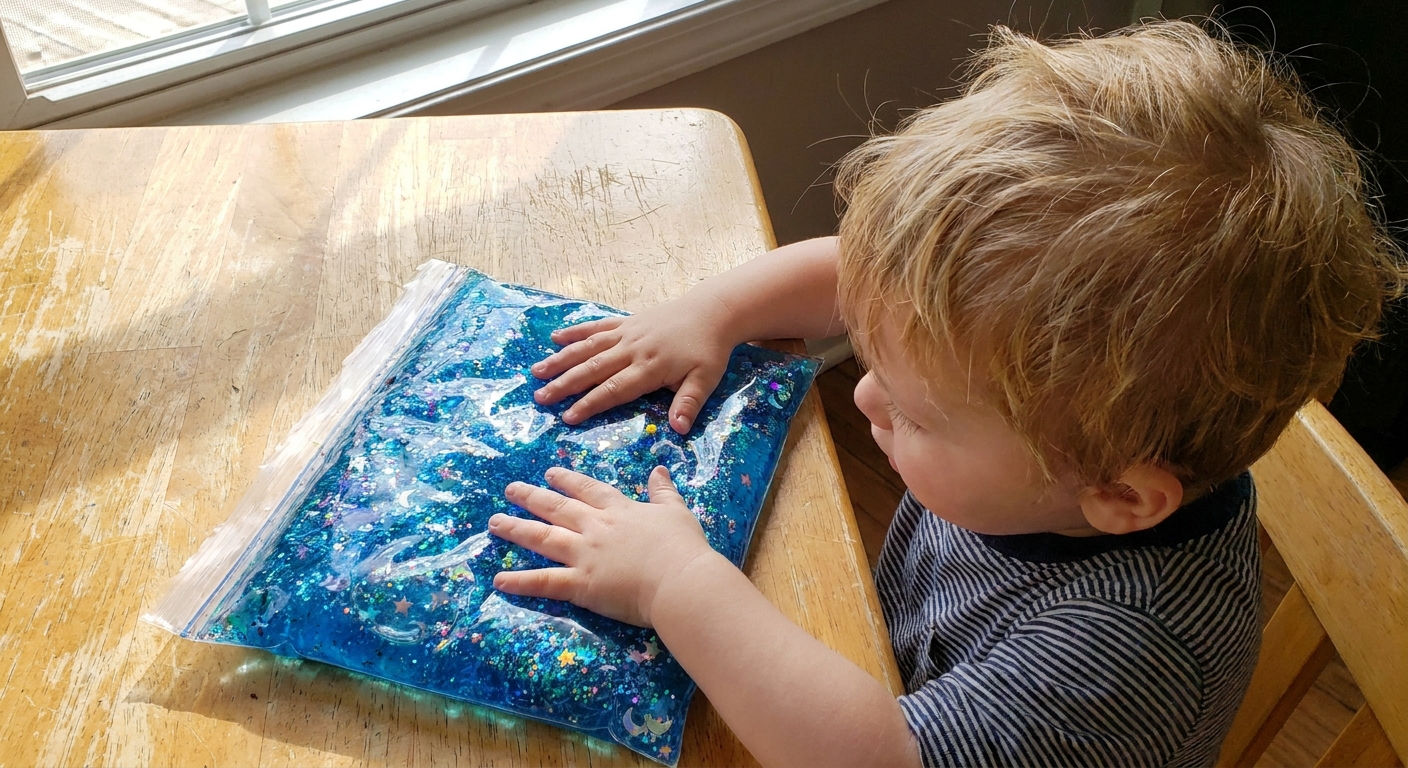
These are perfect for rainy days because they feel sensory without scattered fillers. Use a heavy-duty freezer bag, remove excess air, and reinforce the seal with strong tape. Then place it inside a second bag for backup. Bags can still pop or tear, so use them with close supervision and inspect them each time.
Try a sealed bag with:
- hair gel plus oversized foam shapes
- dish soap plus big pom poms
- water plus large, soft foam pieces
Skip tiny items like buttons or sequins unless you are 100 percent confident they are truly oversized, cannot become a choking hazard if a bag fails, and you are supervising closely. When in doubt, choose soft, big pieces.
Find more ideas in 7 No-Mess Sensory Bags With Household Items.
Taste-safe choices for toddlers who mouth
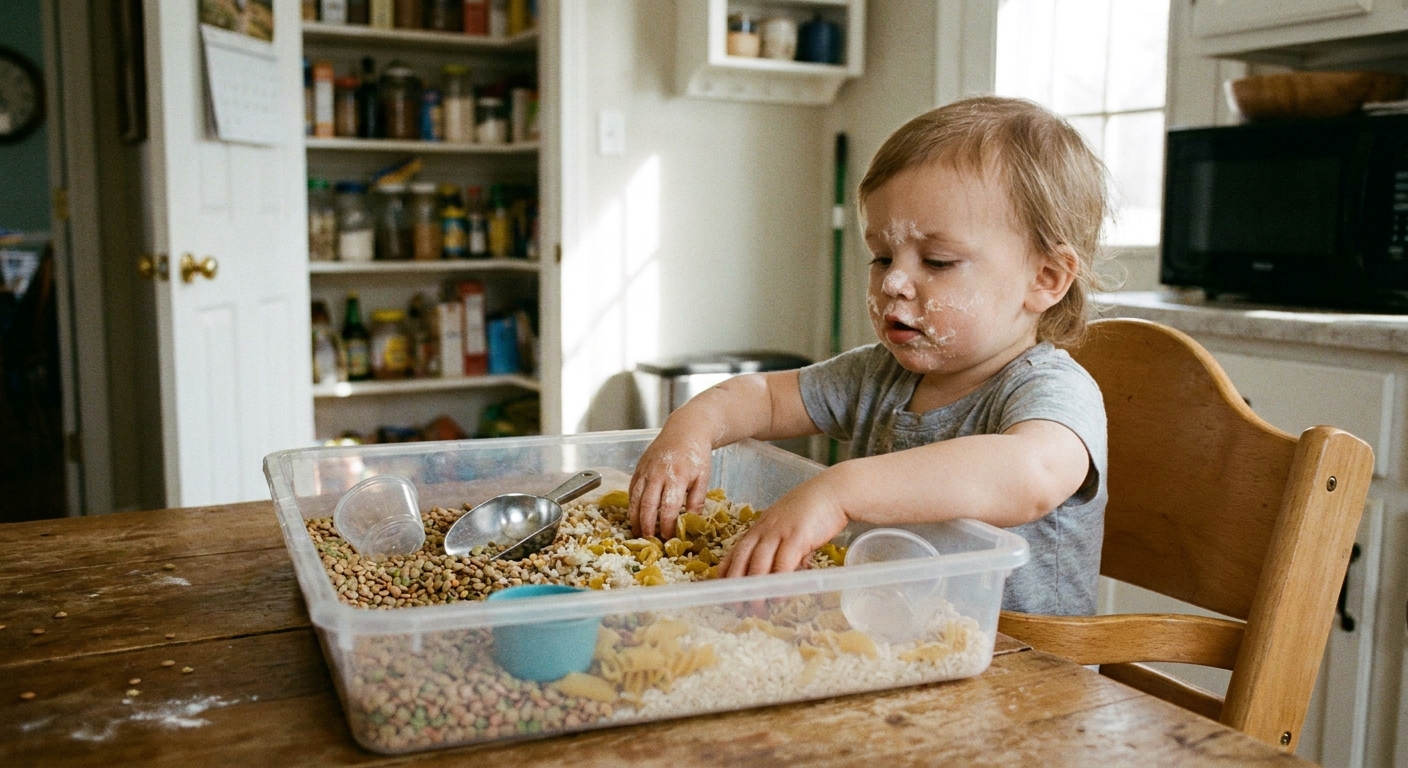
If your toddler still explores with their mouth, skip small parts and choose taste-safe fillers and big tools. This guide is a helpful starting point: 10 Taste-Safe Sensory Bin Fillers for Toddlers Who Mouth Everything.
Mini scoop and pour with built-in limits
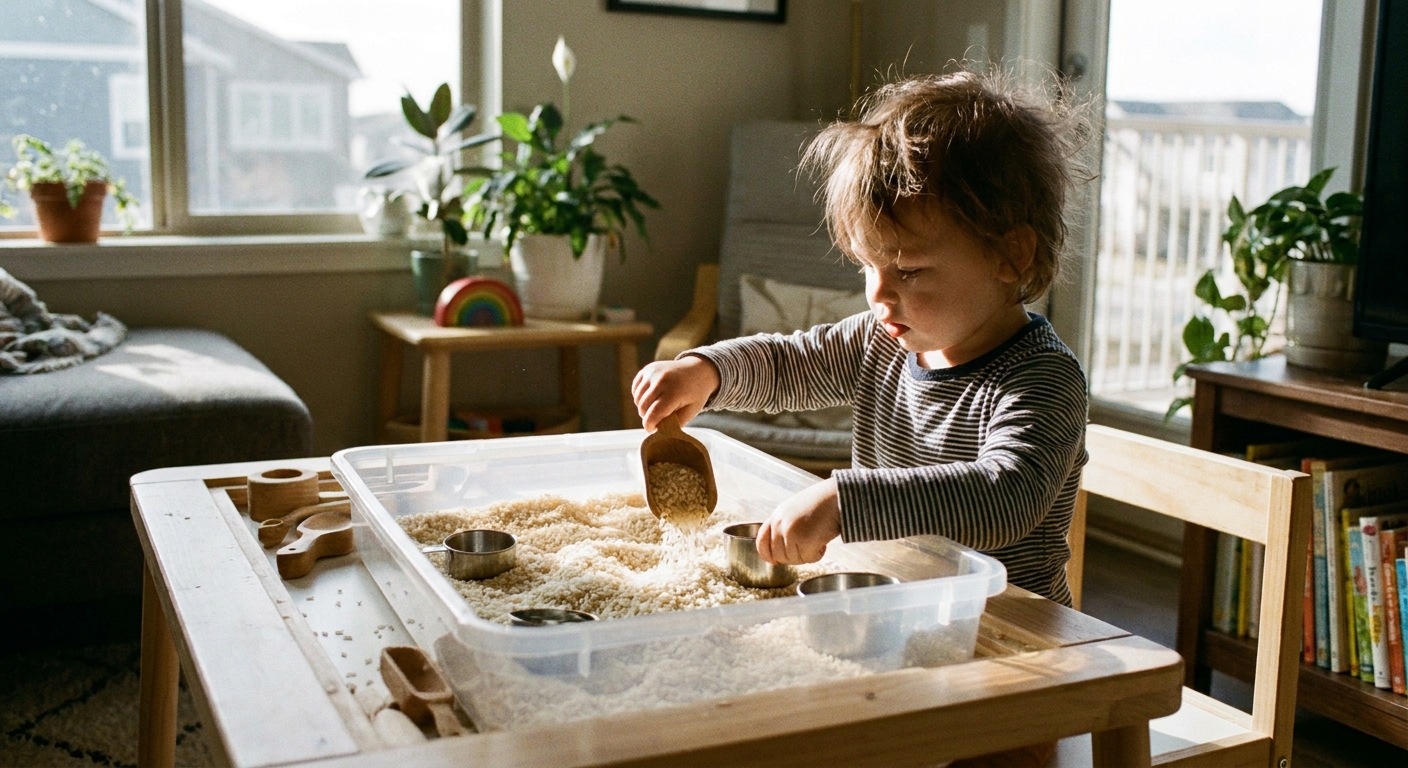
Instead of a full sensory bin, use a small container inside the big bin:
- 1 cup dry filler (like large pasta shapes)
- 1 scoop or spoon
- 2 small cups
Keep it small on purpose. A tiny portion is easier to manage and still feels fun.
Keep it exciting with almost no effort
Use a simple rotation system
Have two mini sets that fit in the same bin. Store the “not in use” set in a separate bag up high. Every 2 to 4 weeks, swap 2 items, not everything.
Make it look different
Toddlers notice tiny changes. Try:
- switching the tray color
- changing the paper (index cards, sticky notes, a small notebook)
- adding a new container (a little box with a lid is instantly interesting)
Hold back one wow item
Keep one activity that only appears sometimes, like:
- water wow style painting book (reusable water pen)
- large dot markers with one sheet of paper
- magnetic tiles in a small quantity
Introduce it for more independent play
This part matters. A quick launch helps your toddler understand the expectations.
- Name it. “This is the Rainy Day Bin. It comes out when we need quiet play.”
- Show the boundary. “Play stays on the tray.”
- Demonstrate one activity in 30 seconds. Then stop and let them take over.
- Set a simple finish line. “When the timer beeps, we put everything back in the bin.”
If your toddler tends to toss fillers or dump everything, this guide can help you tweak the setup: How to Stop Your Toddler from Throwing Sensory Bin Fillers.
Age-friendly picks (quick list)
Younger toddlers (around 1 to 2)
- chunky puzzles
- large stacking cups
- board books
- large pom poms with a cup to drop into (supervised)
- no-mess sensory bag
Older toddlers (around 2 to 3+)
- reusable stickers
- simple matching or memory cards (few pairs)
- lacing beads (large)
- magnetic drawing board
- training scissors with blunt tips plus a strip of paper (paper only, close supervision)
Safety notes
- Choking hazards: Avoid small loose parts for toddlers who still mouth. When in doubt, go bigger and stay close.
- Sensory bags: Use heavy-duty freezer bags, remove extra air, tape the seal, and double-bag. Check for leaks each use. Remember that bags can still pop, so supervise.
- Battery items: Skip button batteries entirely. For any battery-powered toy (even AA or AAA), make sure the compartment is screwed shut and cannot be opened by little hands.
- Supervision: “Independent play” still means an adult is nearby. Choose activities that match your comfort level.
Quick add-ons when the bin needs a boost
Sometimes the bin needs one extra spark. These simple indoor ideas pair nicely:
- Indoor water play (controlled): a dish tub with a towel underneath, plus cups and a spoon. More ideas here: 8 Indoor Water Play Activities That Won’t Ruin Your Floors.
- Big-body breaks: two minutes of jumping, crawling, or cushion climbing can make the next quiet stretch possible. Try these: 9 Indoor Gross Motor Activities for Rainy Day Toddler Energy.
Sick day and cleanup notes
If you are pulling this bin out during sick days, keep it easy to sanitize. Choose wipeable items when you can, wash hands after sensory bags, and consider recycling paper items or sticker sheets that got sneezed on. A quick wipe with a kid-safe cleaner on plastic pieces goes a long way.
Troubleshooting
If your toddler dumps everything
- Reduce choices to 3 activities at a time.
- Use a bin with small inner containers so it is less tempting to pour.
- Offer one dump-allowed item, like a cup of large pom poms to pour into a bowl.
If they bounce between items
- Add one activity with a clear goal: puzzle, matching, posting toy.
- Try a timer they can see, like a simple kitchen timer (adult sets it).
- Swap in a novel surprise more often, even if it is just a new notepad.
If they need you every 20 seconds
- Choose activities with fewer steps and fewer pieces.
- Start with 5 minutes, then build up.
- Use a phrase you repeat: “You keep playing. I’m right here.”
Independent play is a skill that grows. A cozy, predictable bin helps toddlers practice it in tiny, rainy-day steps.
Now scoop, sort, sticker, and scribble away. Let’s dive in and make a wonderful, happy mess together, but the kind that stays mostly in the bin.