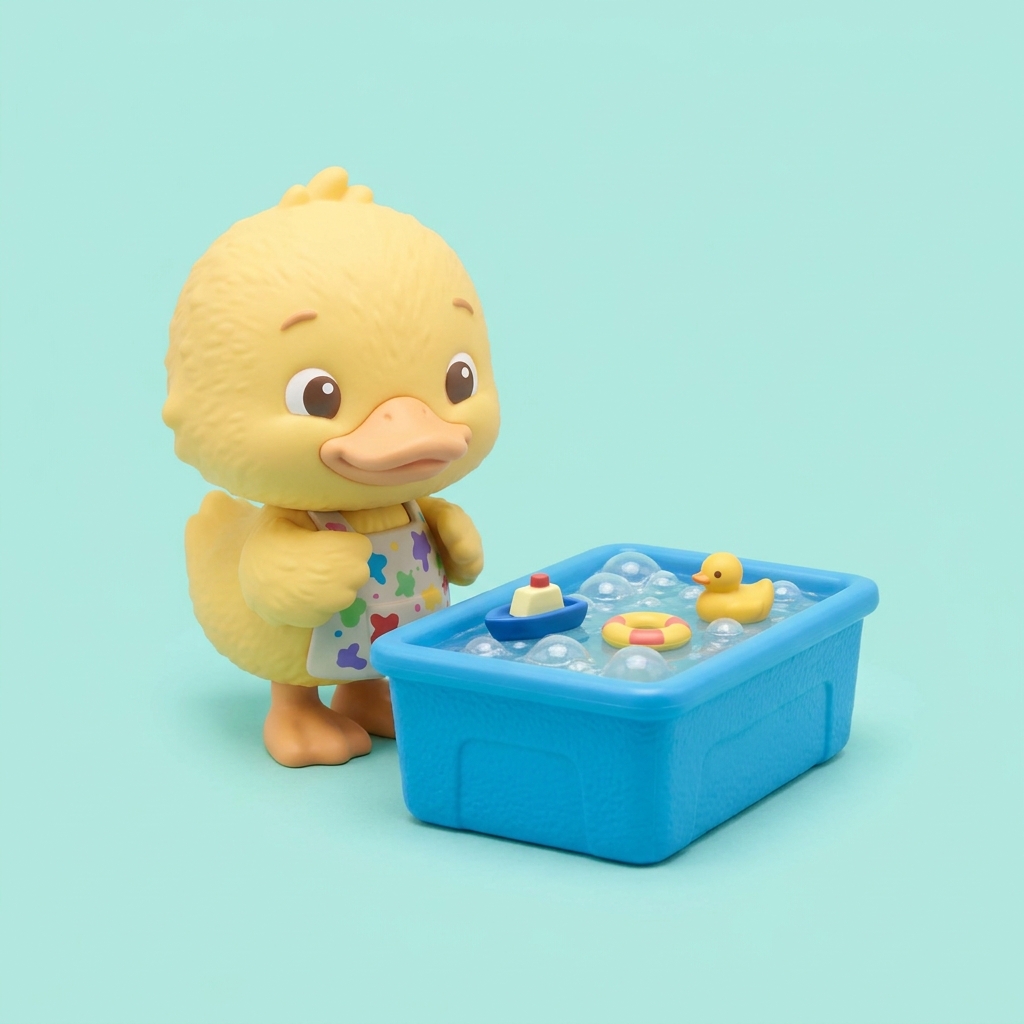
Quack, splash, and breathe easy. Indoor water play can be wonderfully calming for toddlers without turning your home into a waddle-through swamp. The trick is simple: choose activities where the water has a job to do and a boundary it cannot cross.
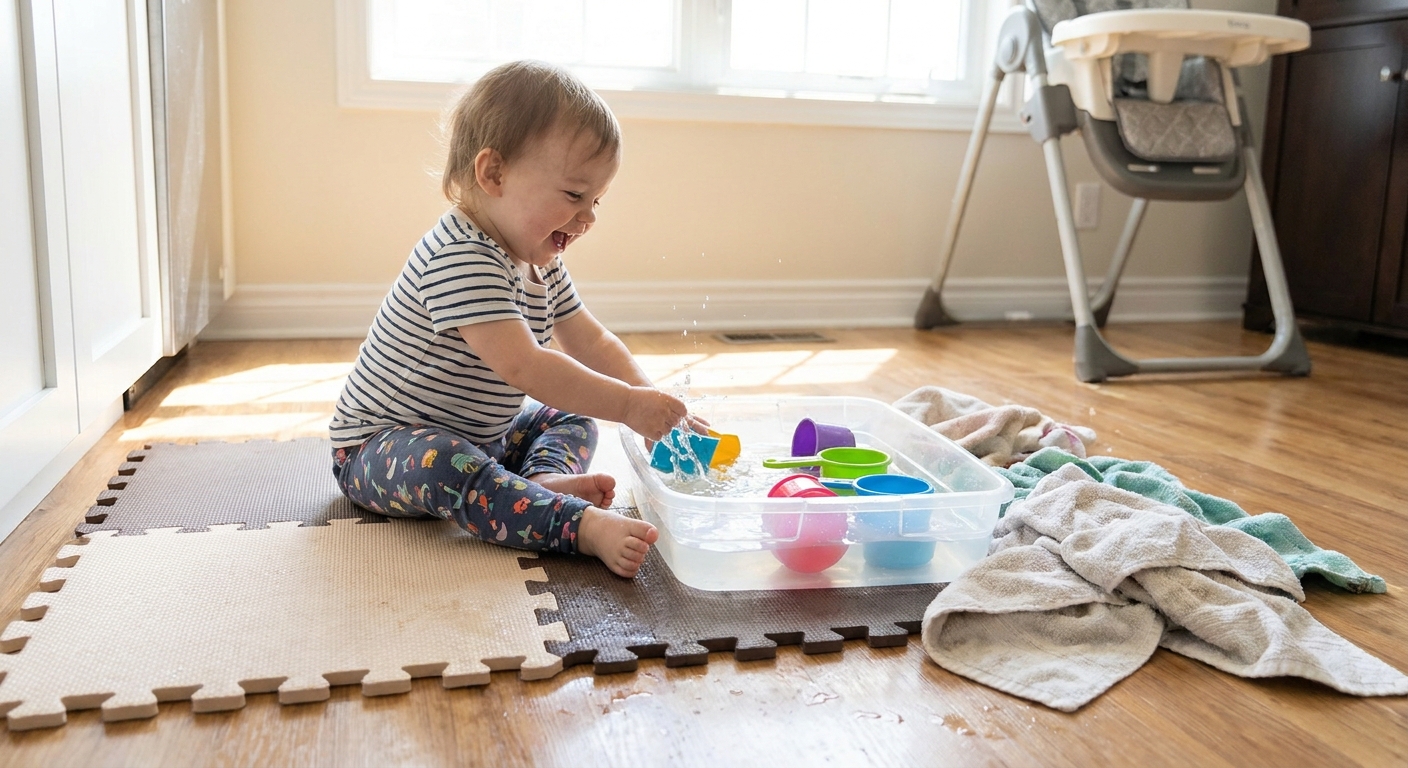
Below are eight cozy, contained water play activities that work beautifully on rainy afternoons, plus a few setup habits that keep floors safe and sane.
Before you splash: quick setup
These tiny steps make a big difference, no matter which activity you choose. A bin or a rimmed tray both work. Use what you already have.
- Pick one splash zone. Bathroom, kitchen, or inside a dry bathtub are the easiest boundaries.
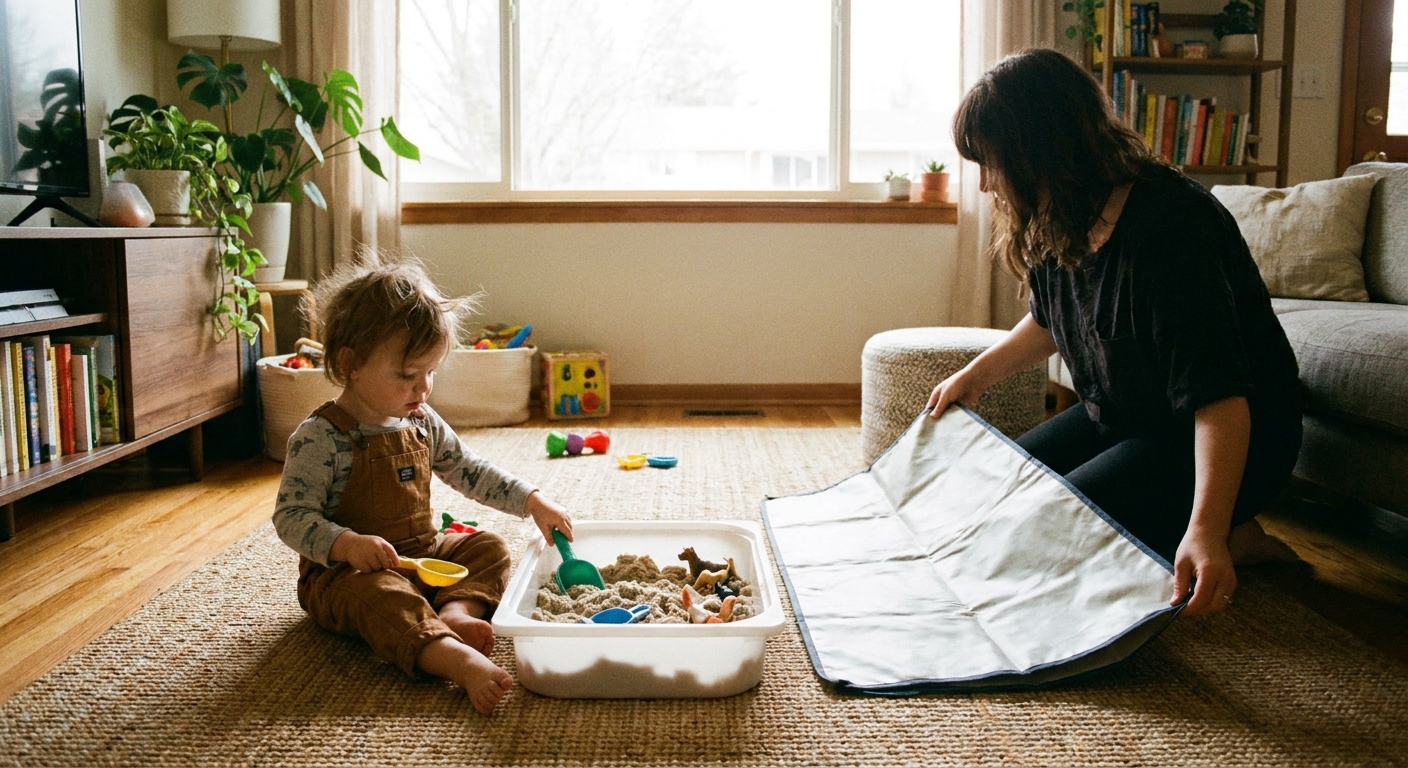
- Use a “catch layer.” A towel, a washable shower curtain liner, or a waterproof mat under the bin helps catch drips.
- Dress for it. Roll sleeves, skip socks, and use play clothes or a smock if you have one.
- Keep the water level low. For toddlers, a shallow layer is plenty for scooping and pouring.
- Offer smaller tools. Measuring cups, turkey basters, small sponges, and toddler-safe droppers encourage precision instead of chaos.
- Stay close. Water play needs hands-on supervision, even with a small amount of water.
If you want more ways to keep play contained in tight spaces, take a peek at Containing Sensory Bin Mess in a Small House.
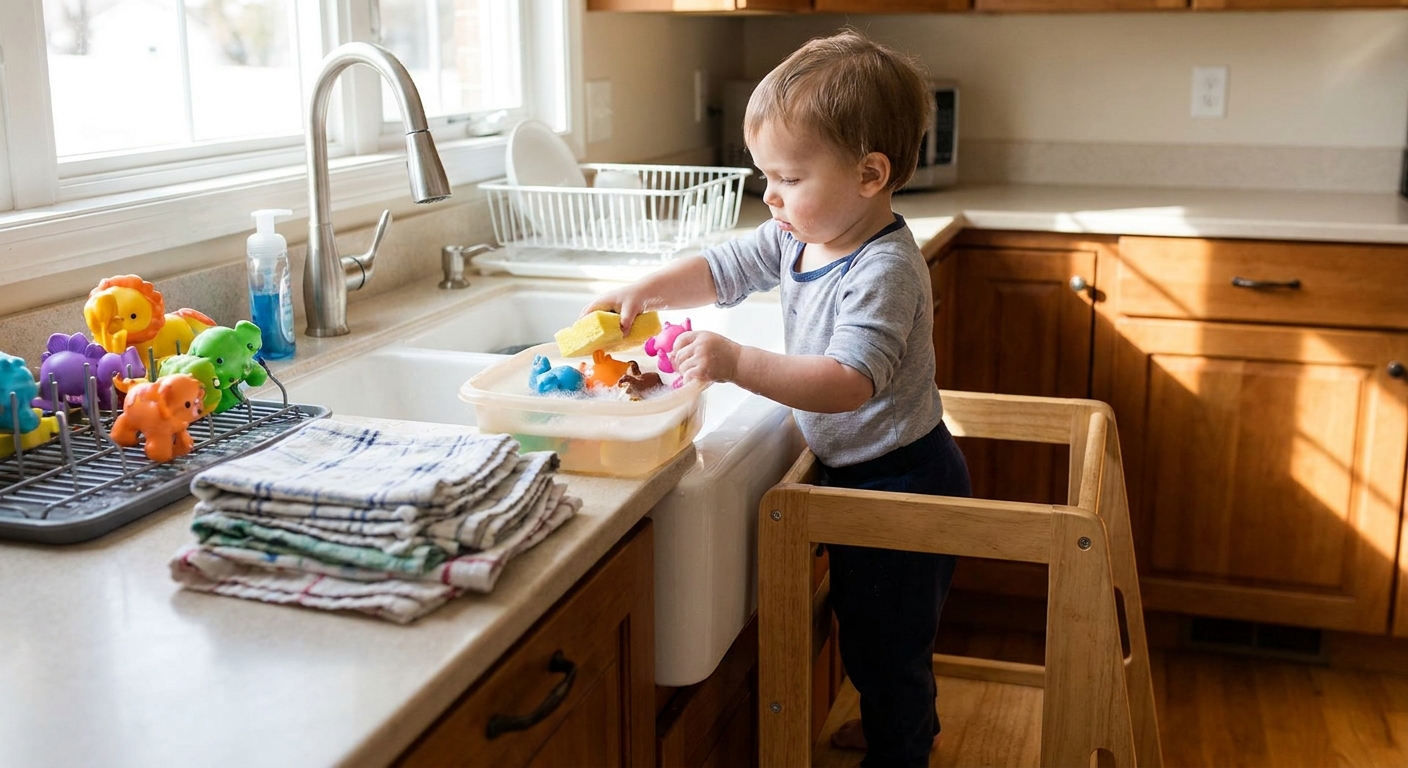
1) Sink washing station
This is a classic for a reason. Toddlers love real-life jobs, and the sink helps keep most splashes in one place. Counter edges and elbows can still send little rivers down to the floor, so towels are your friend.
What you need
- A stool or safe step
- A small tub or bowl inside the sink (optional but extra contained)
- Plastic toys, play dishes, or chunky utensils
- A washcloth or soft sponge
How to do it
- Start with a clean sink or drop a clean tub/basin inside the sink.
- Add a little water to the tub, or plug the sink with just a shallow layer.
- Offer 5 to 10 washable items and a cloth.
- Invite your toddler to “wash,” “rinse,” and “dry.”
Floor-saver tip: Put one towel on the counter edge where little elbows like to drip, and one towel on the floor by the stool.
2) Sponge squeeze transfer
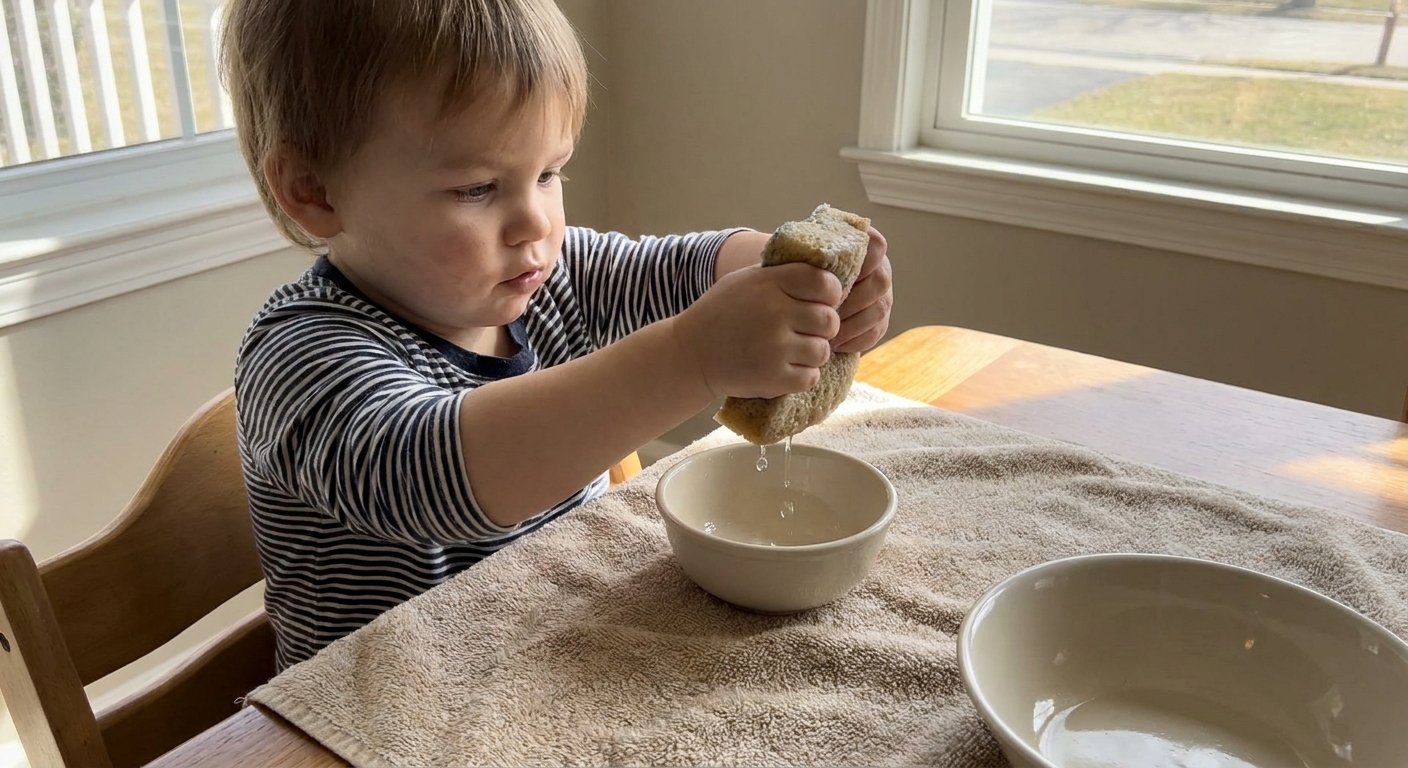
This is water play that feels like magic but stays surprisingly controlled. It can also help build hand strength and coordination for future pencil and scissor use.
What you need
- Two bowls or containers
- One large sponge
- A towel or tray underneath
How to do it
- Fill one bowl with a small amount of water.
- Show how to dip the sponge, lift it, then squeeze into the empty bowl.
- Switch bowls when the “empty” one fills up.
Make it extra fun: Add a few floating pom poms to the water bowl and let your toddler “rescue” them with the sponge.
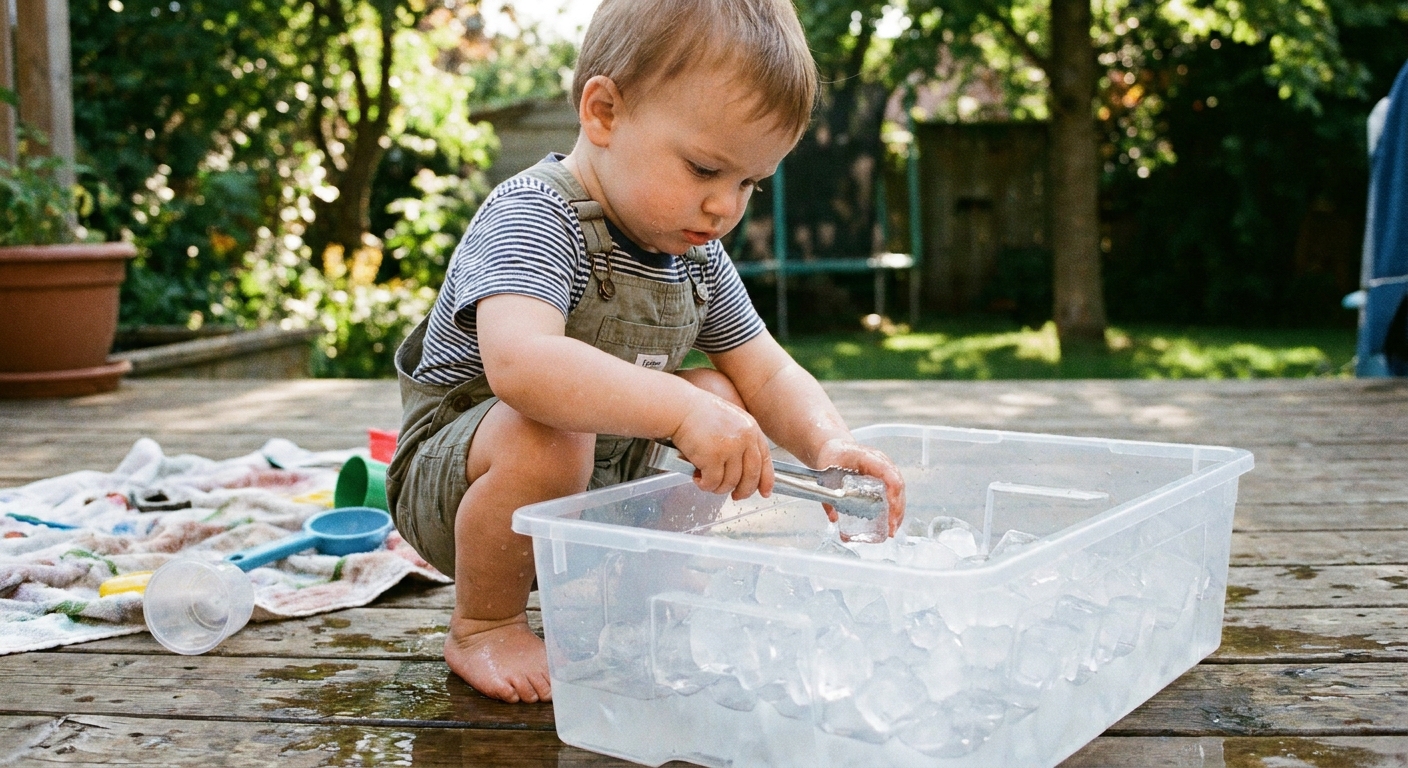
3) Ice cube bath in a bin
Cold, slippery, and exciting, with very little actual water needed. Ice is a big sensory win.
What you need
- A shallow bin or roasting pan
- Ice cubes (plain water is perfect)
- Cups, tongs, or a spoon
How to do it
- Put ice cubes in the bin with just a small splash of water.
- Offer tools for scooping, sorting, and transferring.
- Talk about “cold,” “wet,” “slippery,” and “melting.”
Comfort note: If hands start to look red or your toddler seems bothered by the cold, take a quick warm-up break or switch to plain water play.
Floor-saver tip: Do this inside an empty bathtub or shower if possible. The melt stays contained.
4) Dropper and cup rain lab
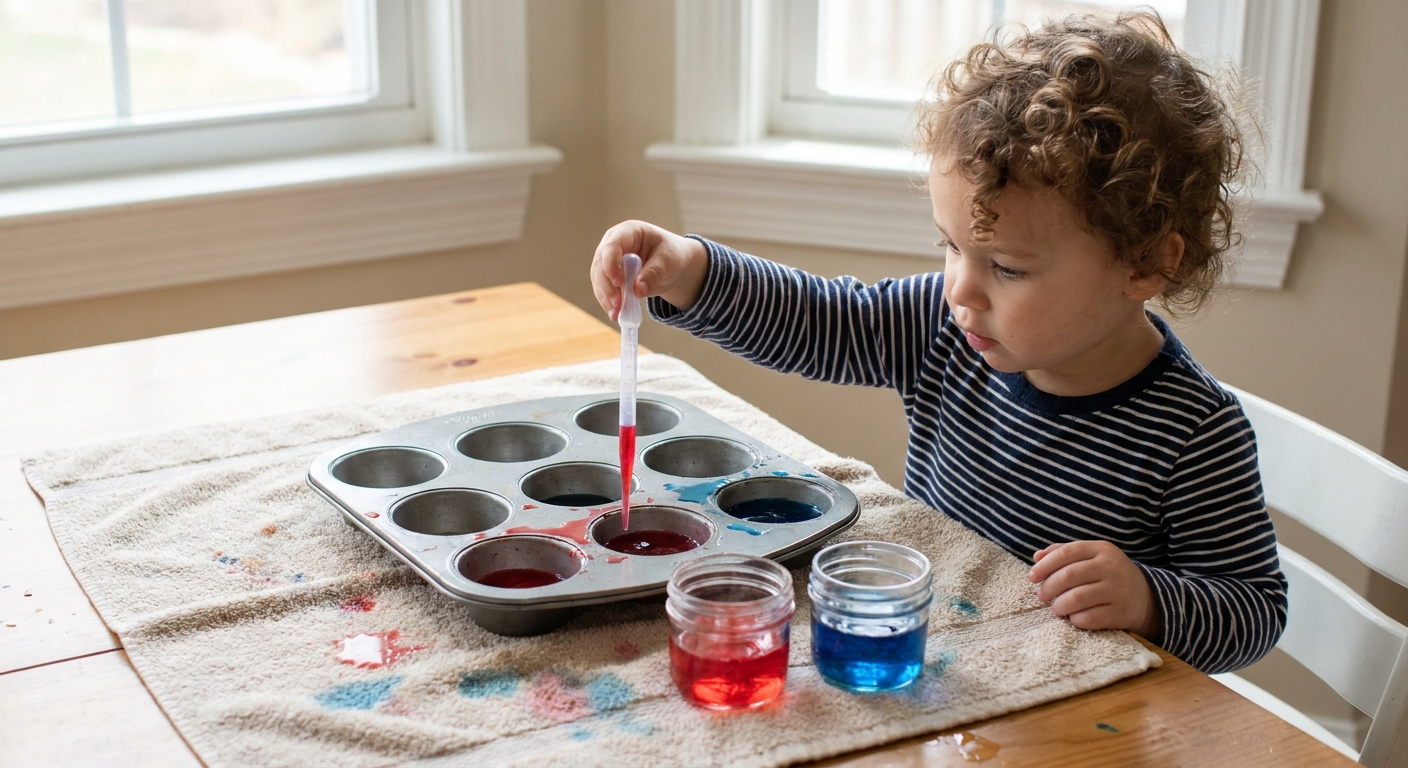
If your toddler loves tiny tools, droppers turn water play into focused, quiet practice.
What you need
- A muffin tin or egg carton
- A cup of water
- A toddler-safe dropper, syringe-style baster, or small spoon
How to do it
- Place the muffin tin on a towel or tray.
- Show how to pick up water and squeeze it into each cup.
- Count drops together or fill each cup “halfway.”
Optional: Add a tiny bit of washable food coloring to the water for a clear “I did it” effect. Use just a drop so it stays easy to wipe up.
5) Water paint on the tub wall
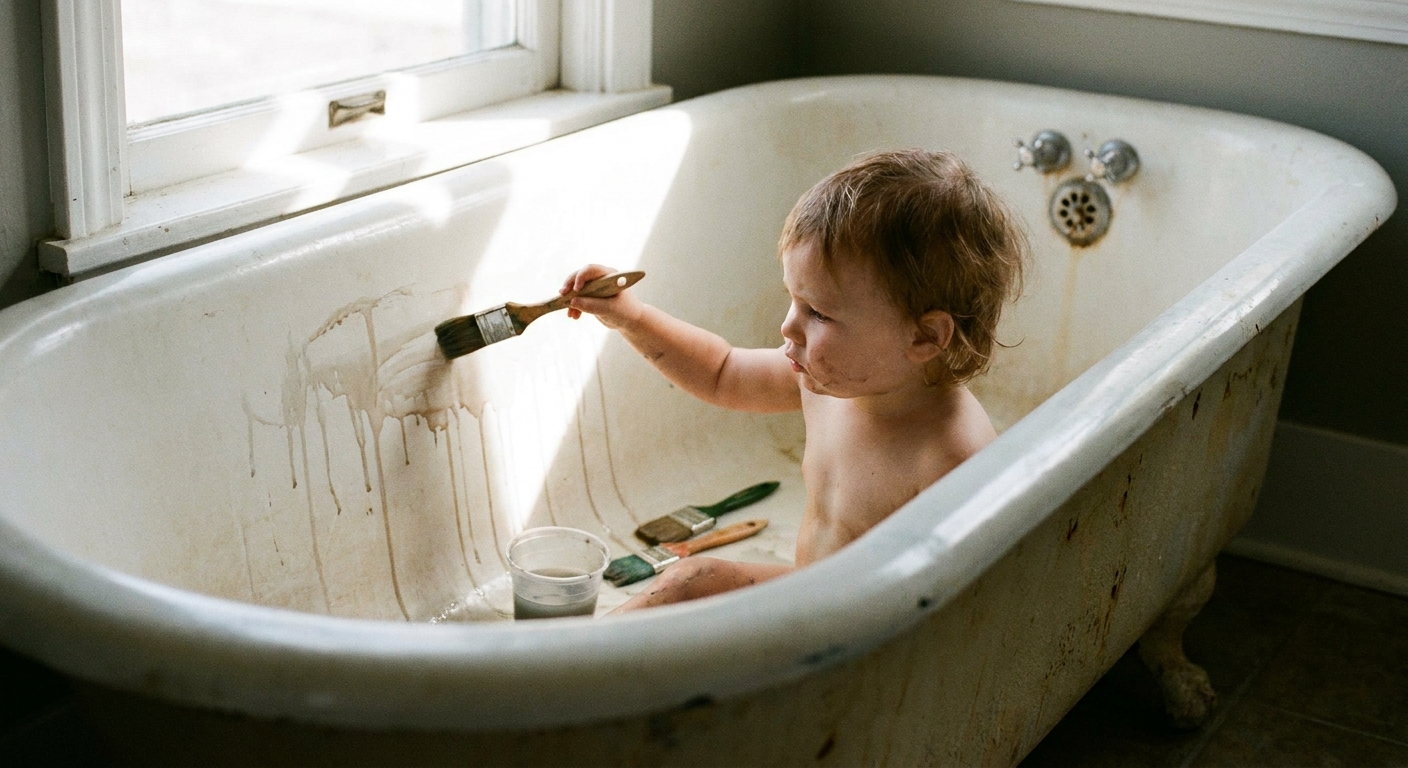
This one feels like painting, but it is just water. It is a favorite for toddlers who want to make big arm movements.
What you need
- A clean paintbrush or foam brush
- A small cup of water
- Bathtub or shower wall
How to do it
- Sit your toddler in an empty tub (dry or during bath time).
- Dip brush in water and “paint” on the wall.
- Watch it disappear as it dries.
Floor-saver tip: Keep the cup low and small, and set it on a washcloth so it does not slide.
6) Mini car wash in a tray
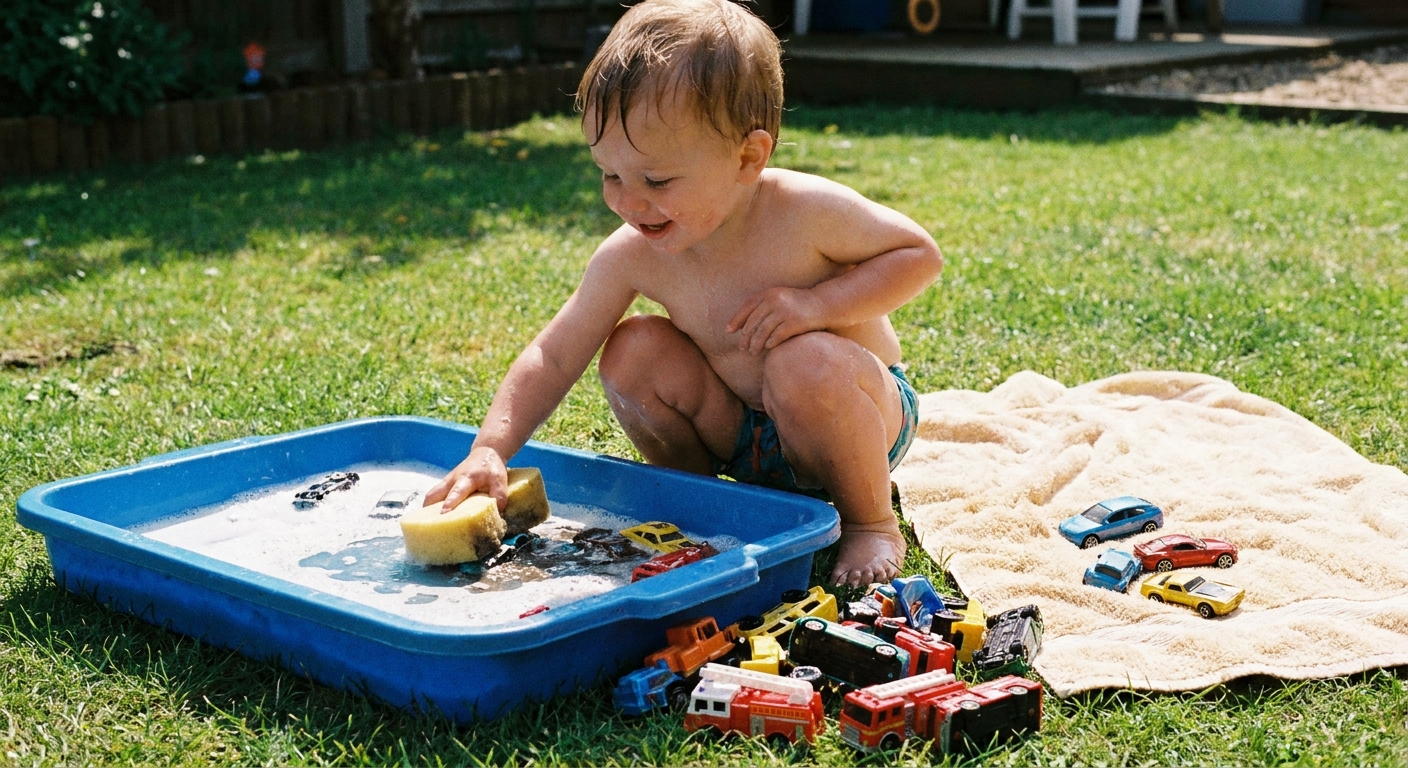
Water plus wheels is a recipe for long play. A tray or bin keeps it from turning into a full-room rinse.
What you need
- A shallow bin, tray, or dishpan
- Toy cars or plastic animals
- A sponge and a small brush (an old toothbrush works)
- A towel for drying
How to do it
- Add a shallow layer of water to the tray.
- Set out a “wash” sponge and a “dry” towel.
- Invite your toddler to scrub, rinse, and park the clean toys on the towel.
Keep it calm: Fewer toys at a time usually means fewer splashes.
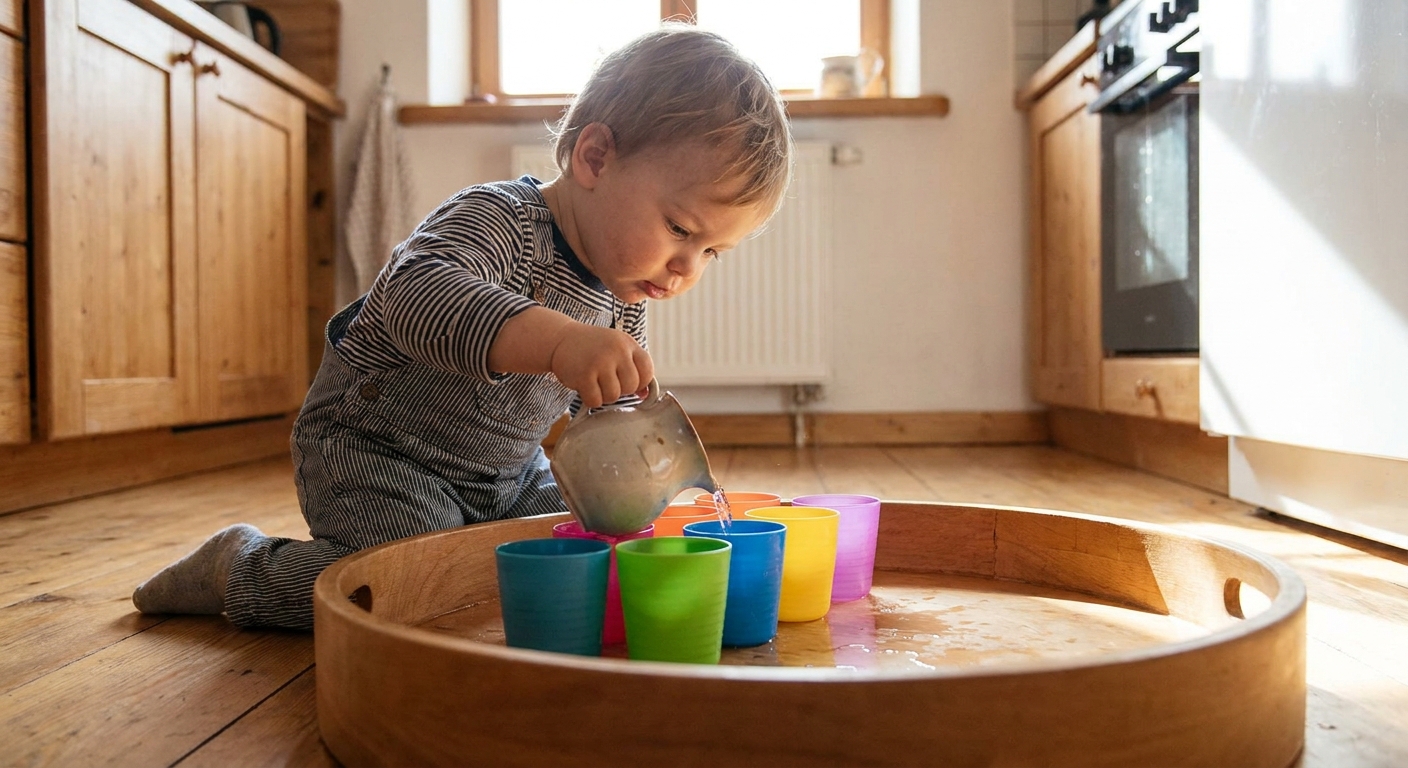
7) Pouring station with cups
Pouring is one of the biggest water-play joys. A simple setup makes it feel “real” without using much water.
What you need
- A large rimmed tray or shallow bin
- A small pitcher or measuring cup
- 2 to 4 small cups or containers
How to do it
- Set everything inside the tray.
- Start with just a little water in the pitcher.
- Demonstrate slow pouring and how to stop when a cup is full.
Floor-saver tip: Choose squat, wide cups that are hard to tip.
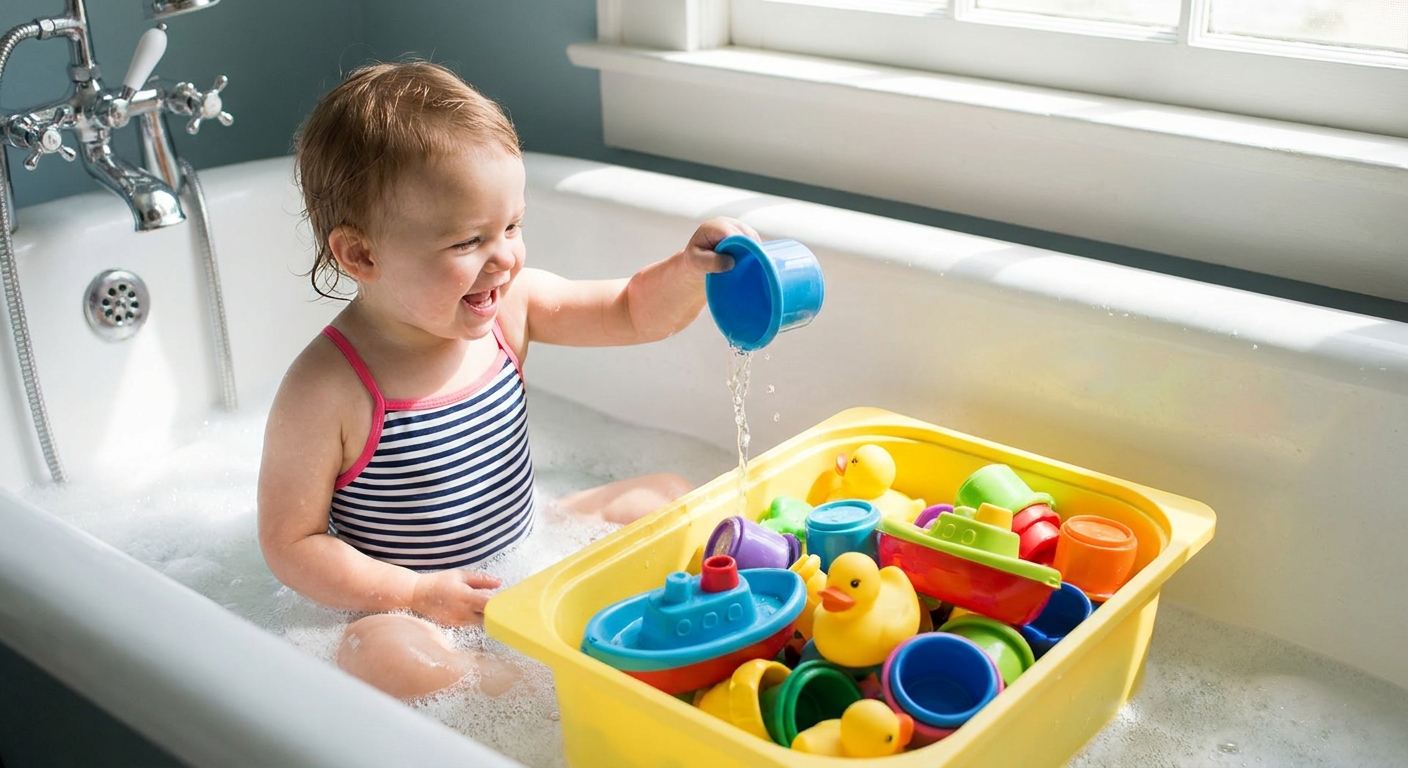
8) Bath time sensory bin
If you want the biggest splash freedom with the least floor stress, bring the activity into the bathtub. The tub is the ultimate “containment bin.”
What you need
- A small bin or basket that fits in the tub
- Water-safe toys
- Tools like cups, ladles, a small strainer, or a funnel
How to do it
- Set the bin in the tub and add tools.
- Keep the water level shallow, like just covering the bottom of the bin, and stay close.
- Use the bin as the “home base” for scooping and pouring.
Want to explore more bins? Visit Sensory Play & Bins and Your First Toddler Sensory Bin for simple ways to set up contained play.
Safety and cleanup notes
- Slipping: Water plus smooth floors can be slick. Keep water play on a towel or mat, and wipe up drips right away.
- Water temp: Lukewarm water is usually the coziest for indoor play. Save cold water for quick ice sessions.
- Choking hazards: Skip tiny items for toddlers who still mouth toys. If mouthing is common right now, stick to larger tools and check out taste-safe sensory bin fillers for safer ideas.
- Mold and damp toys: Let sponges, cloths, and bath toys fully dry after play.
- Keep it short and sweet: Ten to twenty minutes is often plenty, especially for younger toddlers. Follow your child’s cues.
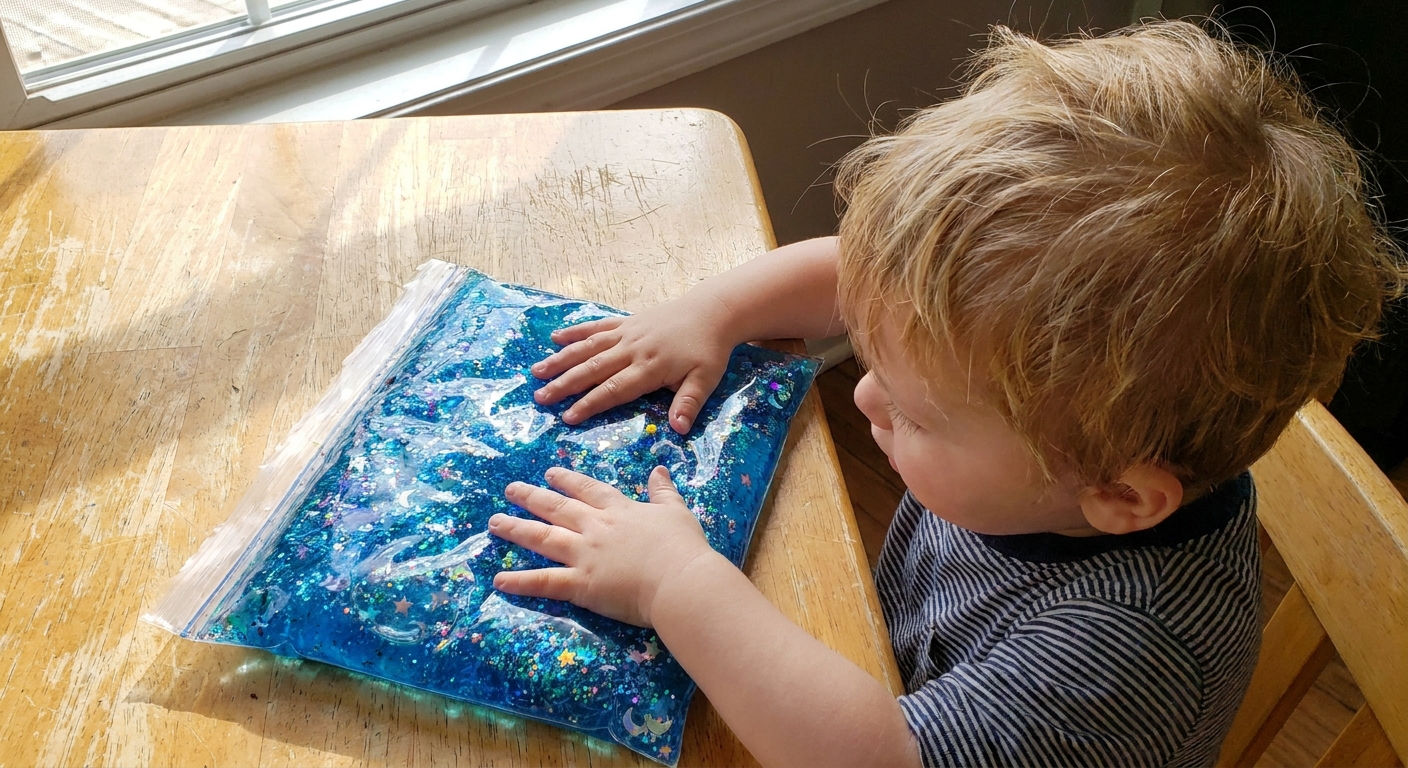
For truly no-spill sensory play on extra busy days, sensory bags can be a cozy alternative. Here are no-mess sensory bags with household items.
Indoor water play works best when it has a boundary, a low water level, and a simple job for little hands to do.
Now, ready to splash without the stress? Waddle on over to your chosen splash zone, lay down that towel, and let the tiny pours begin.