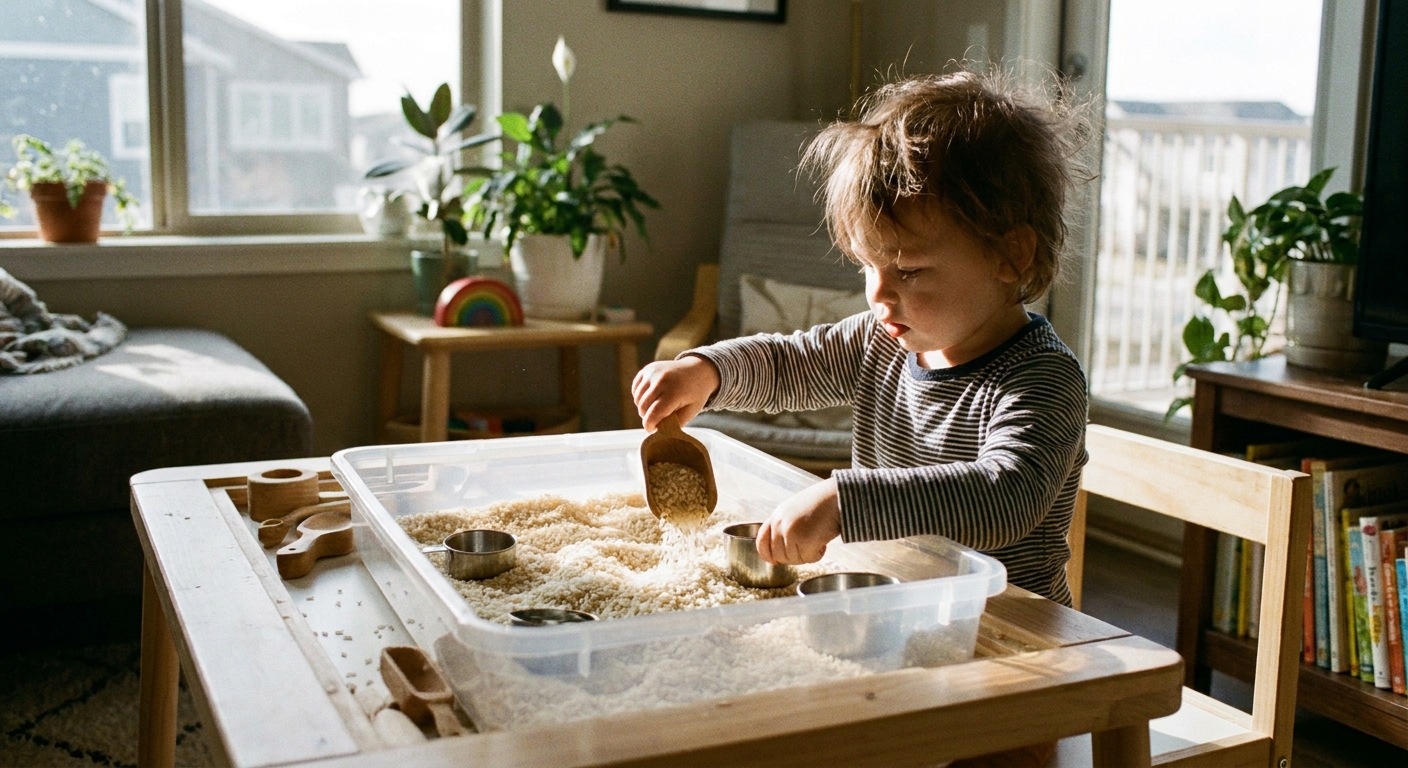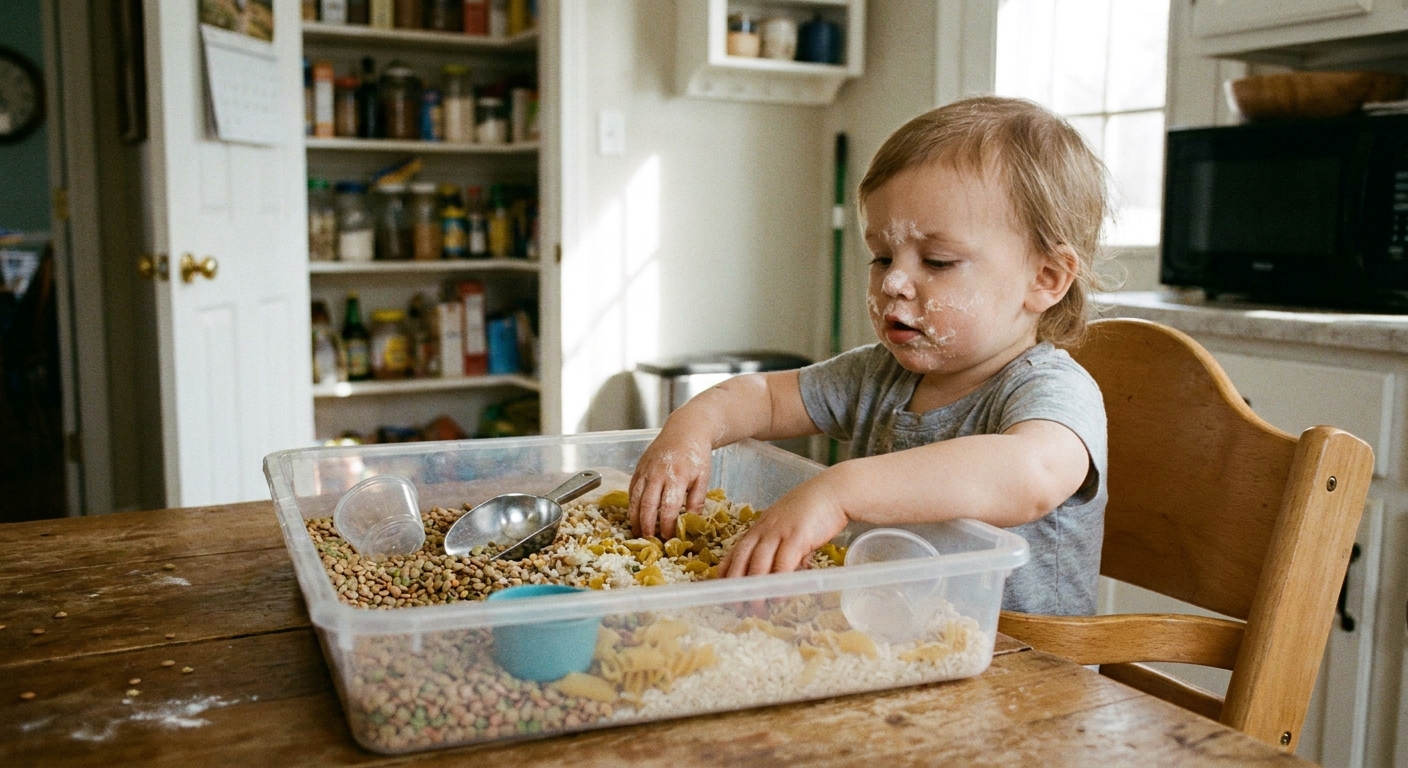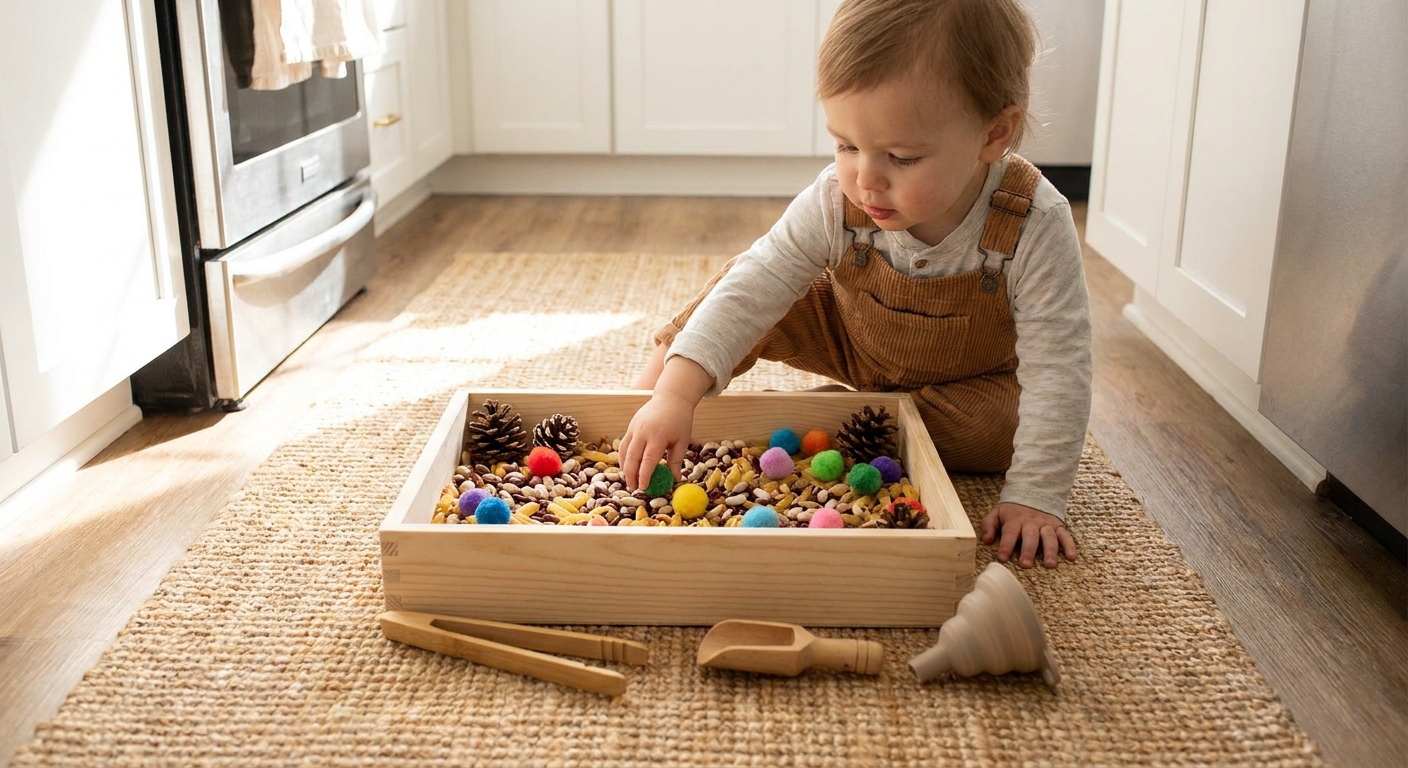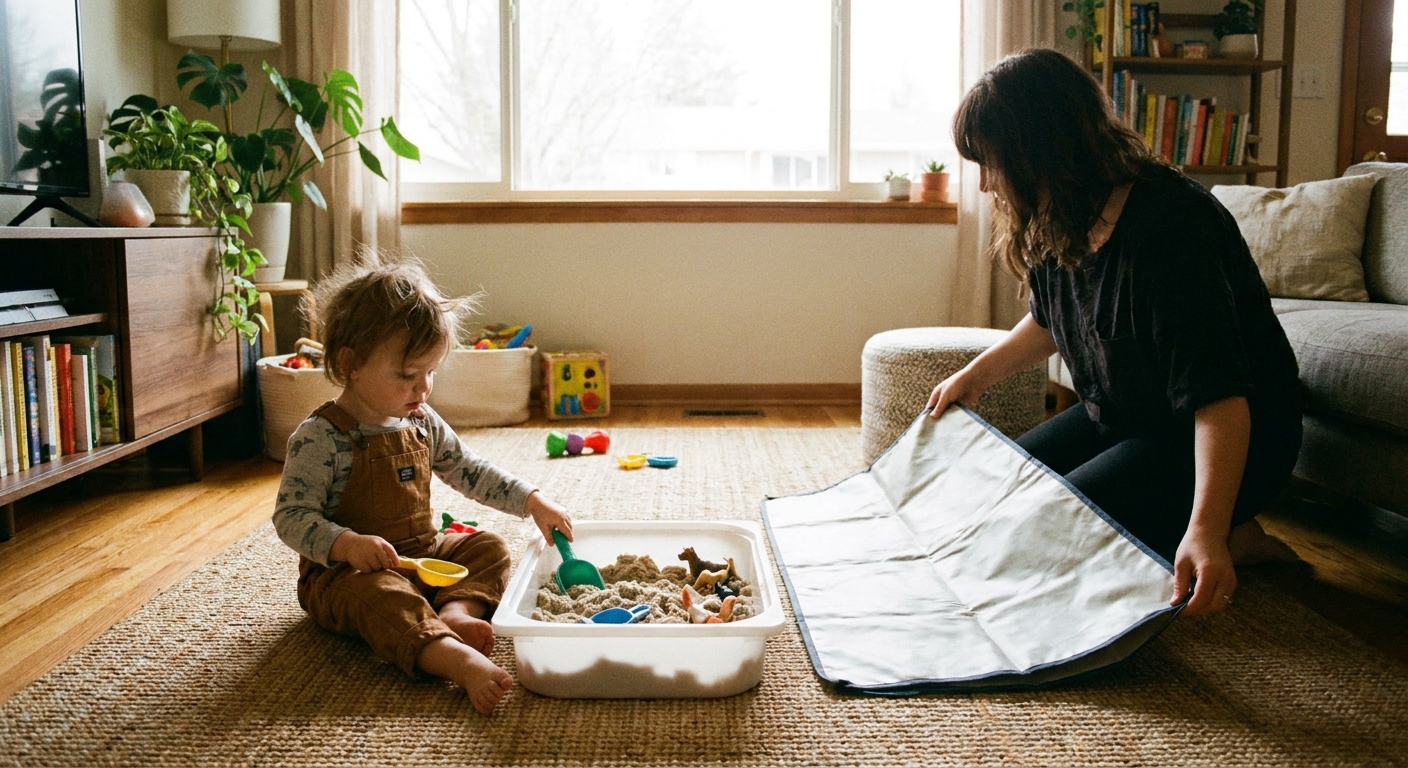
Some toddlers explore the world with their hands. Some with their toes. And some with their whole mouth wide open. If you have a little mouther, you are not alone. Let’s dive in and make a wonderful, happy mess together, with sensory bin fillers that are taste-safe and easy to supervise.
Quick safety notes
Even taste-safe fillers need close supervision. The goal is lower worry, not zero risk. Before playtime, keep these simple guidelines in mind:
- Choose “mushable” textures. If it squishes easily between two fingers, it is generally a better choice than hard, round, or slippery pieces. This quick test is helpful, but it is not a guarantee.
- Avoid small, firm rounds. Dry beans, popcorn kernels, whole grapes, and similar shapes are choking hazards and do not belong in sensory bins for toddlers.
- Size matters. When in doubt, go bigger. Large pasta shapes or thick strips are generally safer than tiny pieces.
- Watch for food allergies. If your child has known allergies or you are unsure, skip that ingredient.
- Keep it fresh. Food-based bins can spoil. Use small amounts and toss after play.
- Pick the right option for your kid. If your toddler is in a heavy-stuffing phase, stick to very soft, smearable fillers like yogurt, applesauce, or mashed potatoes and skip small pieces like oats, rice, and crumbs.
For more playful ideas that fit right into bin time, waddle over to Sensory Play & Bins.
10 taste-safe bin fillers
Each filler below includes a simple setup, what it feels like, and a few toddler-friendly ways to play.
1) Toasted oats
Why it works: Oats are scoopable and easy to pour, and they are generally a lower-risk choice than hard, round fillers. They can still be inhaled or gagged on, so stay close and skip this one if your toddler is likely to shovel handfuls.
- Prep: Spread old-fashioned oats on a baking sheet and toast lightly until fragrant. Cool completely.
- Texture: Dry, light, gently scratchy, pours easily.
- Play ideas: Add measuring cups, a big spoon, muffin liners, and a few sturdy toy animals for “farm feeding.”
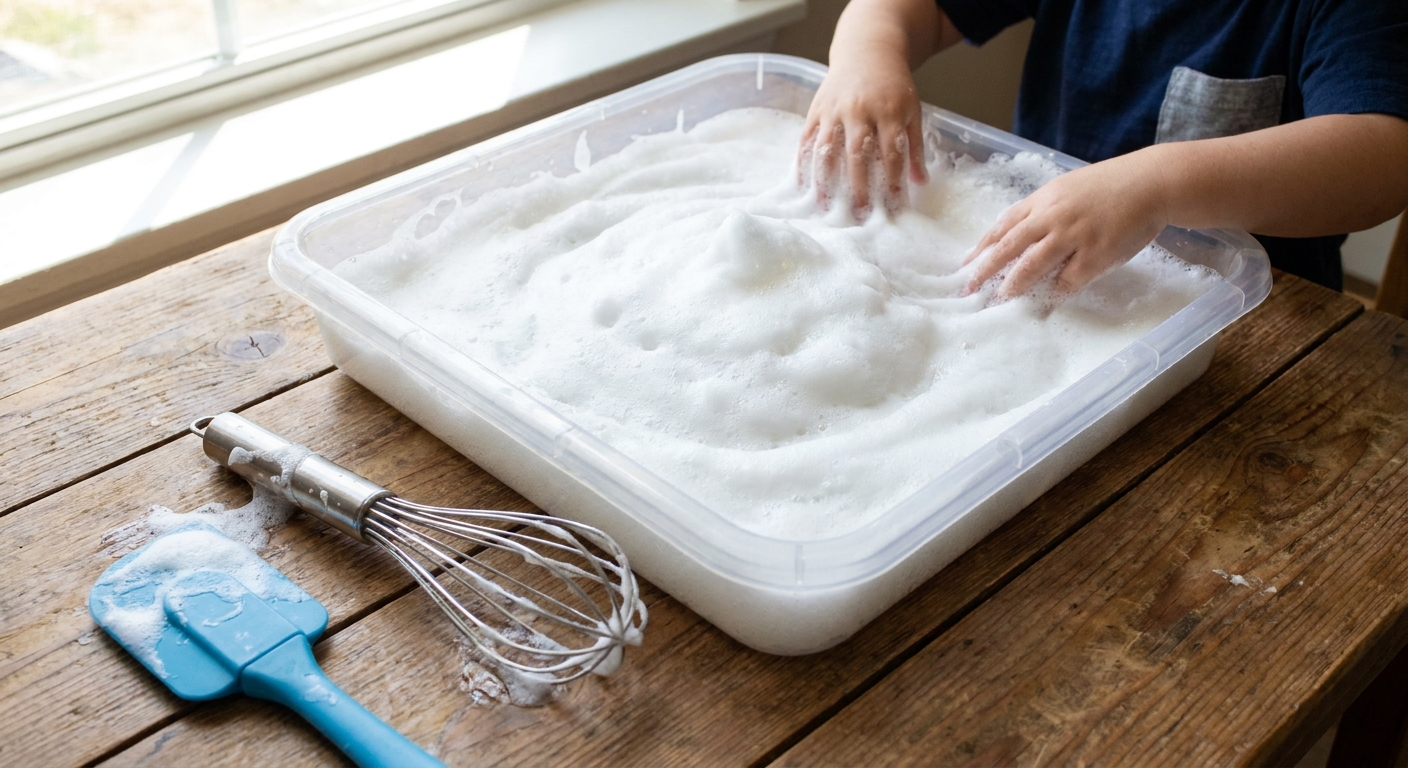
2) Aquafaba foam (chickpea brine)
Why it works: Aquafaba whips into fluffy foam that feels like clouds. It is taste-safe for many kids, but skip if chickpea or legume allergies are a concern. Some kids may get an upset tummy from tasting it, and canned versions can be salty.
- Prep: Use the liquid from a can of chickpeas. Whip with a mixer until foamy. For extra stability, add a tiny squeeze of lemon juice.
- Texture: Airy, bubbly, cool, squishy.
- Play ideas: Offer a whisk, silicone spatula, and a few plastic cups for scooping “foam smoothies.”
3) Cooked pasta (big shapes)
Why it works: Cooked pasta is soft and easy to grab. Choose larger shapes that are less likely to slip deep into the mouth.
- Prep: Cook until very soft. Rinse cool. Toss with a tiny bit of oil to reduce sticking if needed.
- Texture: Smooth, squishy, slippery, fun to squeeze.
- Play ideas: Add tongs, a colander, and a pot for “pasta kitchen.”
4) Cooked rice (sticky style)
Why it works: Cooked rice is softer than dry rice and clumps nicely, which can make it easier to handle. It is still small, so this is best for toddlers who mouth but are not stuffing handfuls. If your child is under 3 and tends to pack their mouth, skip rice.
- Prep: Cook rice until extra soft, using a bit more water than usual. Cool fully.
- Texture: Sticky, clumpy, moldable.
- Play ideas: Press into silicone molds, scoop into cups, or hide chunky toys to “dig and discover.”
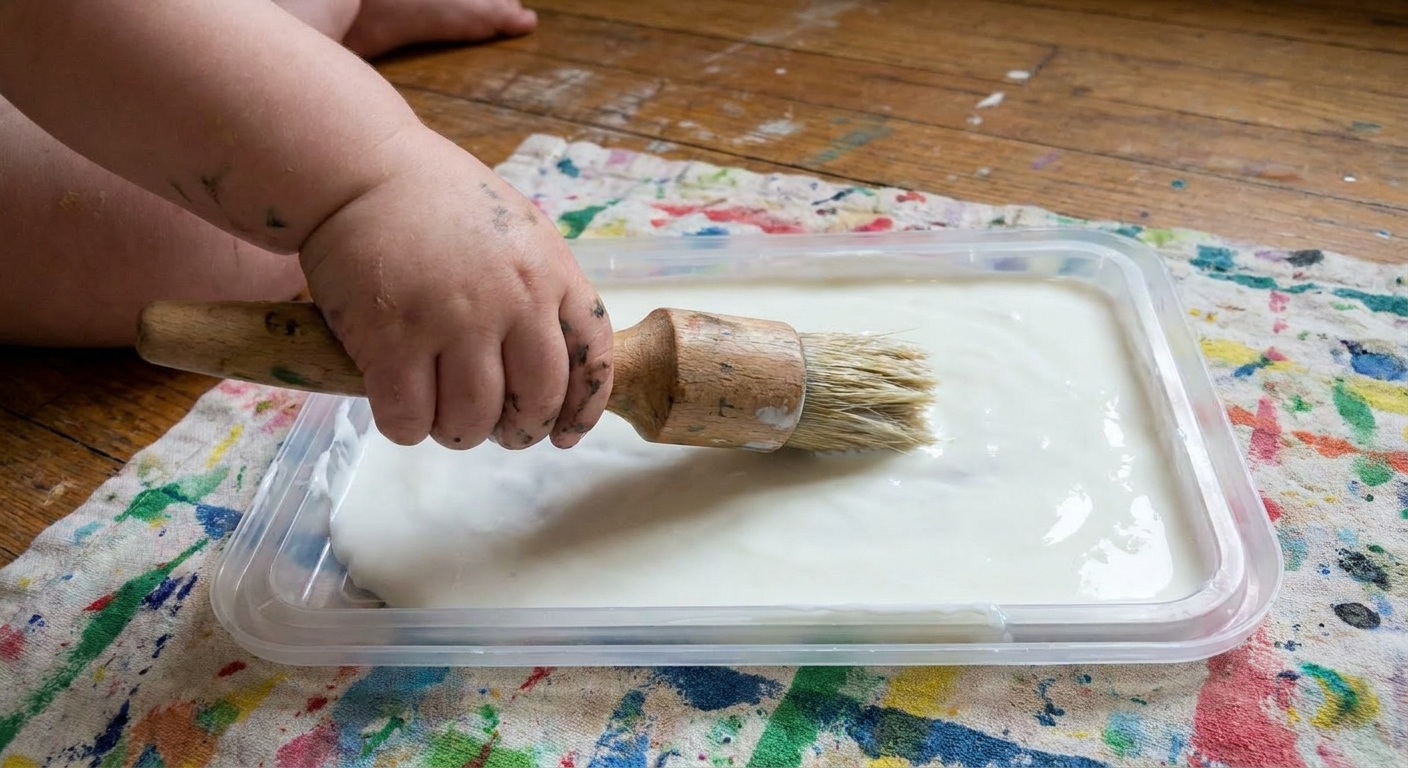
5) Yogurt “paint”
Why it works: If everything ends up in the mouth anyway, yogurt makes a satisfying, taste-safe base for smearing and swirling.
- Prep: Use plain yogurt. Optional: tint with a small amount of fruit puree.
- Texture: Creamy, cool, smooth.
- Play ideas: Spread a thin layer in a tray or bin and offer a spoon, chunky paintbrush, or clean toy cars for “tracks.”
6) Applesauce
Why it works: Applesauce is thick enough for scooping and squishing. It is also an easy one-ingredient option.
- Prep: Pour into a shallow bin. For a thicker feel, choose unsweetened applesauce.
- Texture: Thick, smooth, puree-like.
- Play ideas: Add cinnamon sticks for stirring, or plastic fruit for “apple orchard” pretend play.
7) Mashed potatoes
Why it works: This filler is ultra-mushable and easy on little hands. It is one of the most mouth-friendly textures for toddlers who are still deep in the tasting stage.
- Prep: Make plain mashed potatoes and cool them. Keep seasoning minimal.
- Texture: Soft, fluffy, moldable.
- Play ideas: Provide a potato masher, big spoon, and cups for filling and dumping.
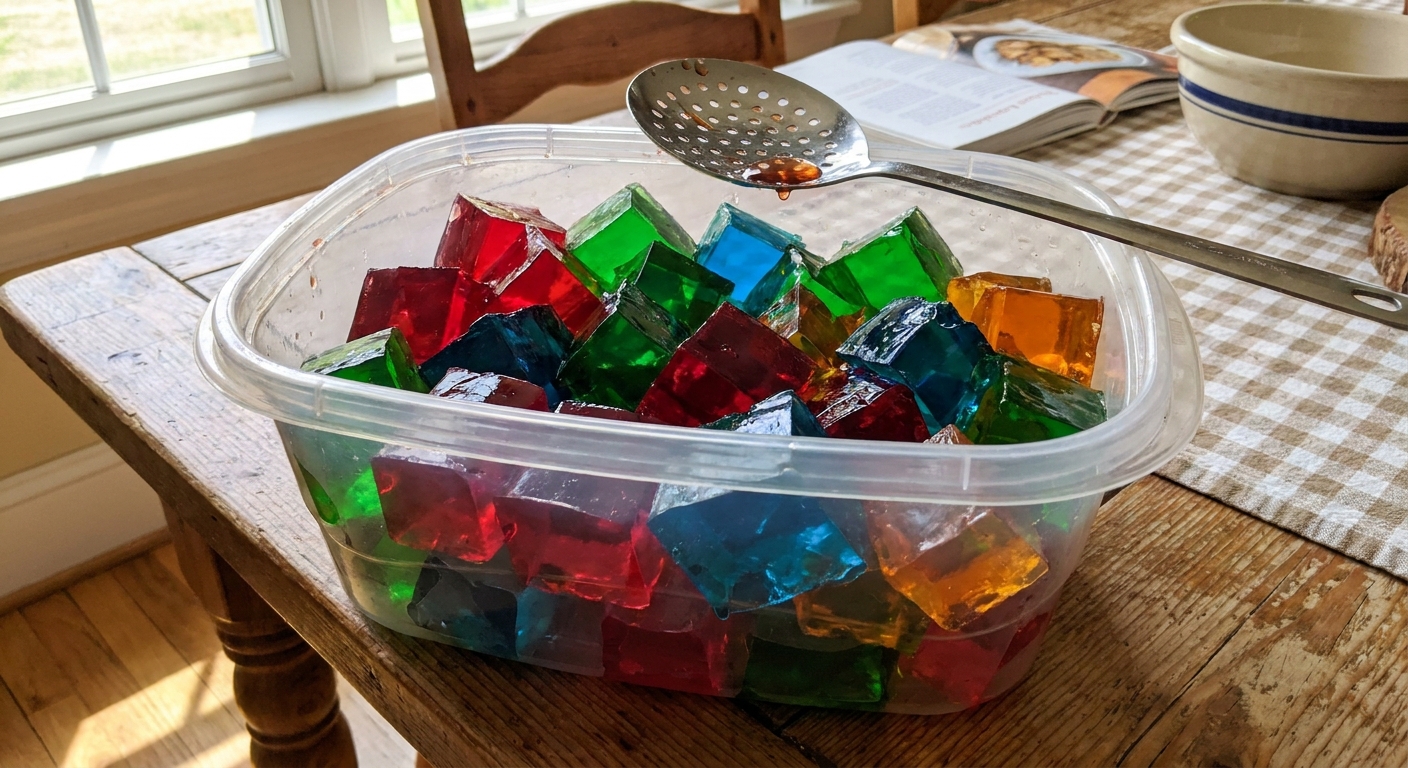
8) Gelatin sensory cubes (soft)
Why it works: Gelatin cubes are wiggly, slippery, and easy to squish. They can be a fun alternative to water beads, which are not safe for toddlers who mouth. Keep cubes large and supervise closely, since slippery pieces can still be a choking risk if kids try to swallow them whole.
- Prep: Prepare gelatin with a bit less water than the package suggests for sturdier cubes. Chill, then cut into large, soft pieces.
- Texture: Jiggly, cool, bouncy.
- Play ideas: Add a slotted spoon and a small bowl for “jiggle fishing.”
9) Soft bread dough (salt-free)
Why it works: A simple flour-and-water dough gives that classic squish and stretch. For mouthing toddlers, keeping it salt-free makes accidental tastes less concerning. Still, it is not meant to be eaten, and raw flour dough should be treated as a play material only. Toss after play.
- Prep: Mix flour with warm water until a soft dough forms. Add a drizzle of oil if it feels sticky.
- Texture: Squishy, stretchy, tearable.
- Play ideas: Offer blunt plastic cutters, a rolling pin, or safe kitchen tools like a silicone spatula.
10) Crushed cereal crumbs
Why it works: Finely crushed cereal becomes a sandy, pourable base that is taste-safe. Choose a cereal that dissolves easily, and skip if your toddler is likely to shovel it by the handful.
- Prep: Place cereal in a bag and crush until it becomes fine crumbs. Pour into the bin.
- Texture: Dry, soft-grainy, pourable.
- Play ideas: Add cookie cutters to press shapes, or hide chunky items to “excavate.”
Toddler-friendly add-ins
When the base is taste-safe, add-ins should still be sturdy and too large to be swallowed. A few easy choices:
- Large scoops and ladles
- Measuring cups and nesting bowls
- Silicone muffin cups
- Large toy animals or chunky plastic figures
- Colanders and strainers (especially with pasta or gelatin)
- Big cookie cutters for pressing into mash or dough
Clean up and storage
- Use a tray under the bin (a baking sheet works) to catch runaway scoops.
- Dress for mess with an old shirt or a smock.
- Small batches win. A thin layer of filler is plenty for toddlers and makes clean up faster.
- Wash hands and tools. Give the bin and tools a good wash after play, and do not serve or eat the play food afterward.
- Food bins are usually one-and-done. For most taste-safe fillers, toss after play instead of saving.
If you need more indoor play ideas for days when going outside is a no-go, peek at Indoor & Rainy Day Play.
FAQ
Are taste-safe bins the same as edible bins?
They overlap, but they are not quite the same. Taste-safe means the material is safer if it is mouthed or licked during play. It does not mean it is intended as a snack, or that choking risk disappears.
What should be avoided for toddlers who mouth everything?
Avoid hard, small fillers that can lodge in the throat or do not dissolve. Common examples include dry beans, popcorn kernels, uncooked rice, small beads, and water beads. Whole grapes are also a choking hazard, and they are best kept out of sensory bins. Skip any filler that becomes a firm round shape in the mouth.
How long can a food-based bin sit out?
Keep sessions short and toss leftovers. Foods like yogurt, applesauce, pasta, and mashed potatoes should not sit out for extended periods. When in doubt, throw it out.
A final waddle
If your toddler mouths everything, sensory play can still be joyful and calm. Pick one taste-safe filler, keep the tools big and simple, and stay close. Little hands get the learning, and everyone gets a bit less worry.
Want more playful learning ideas? Explore Early Learning & Development for activities that build skills through hands-on fun.