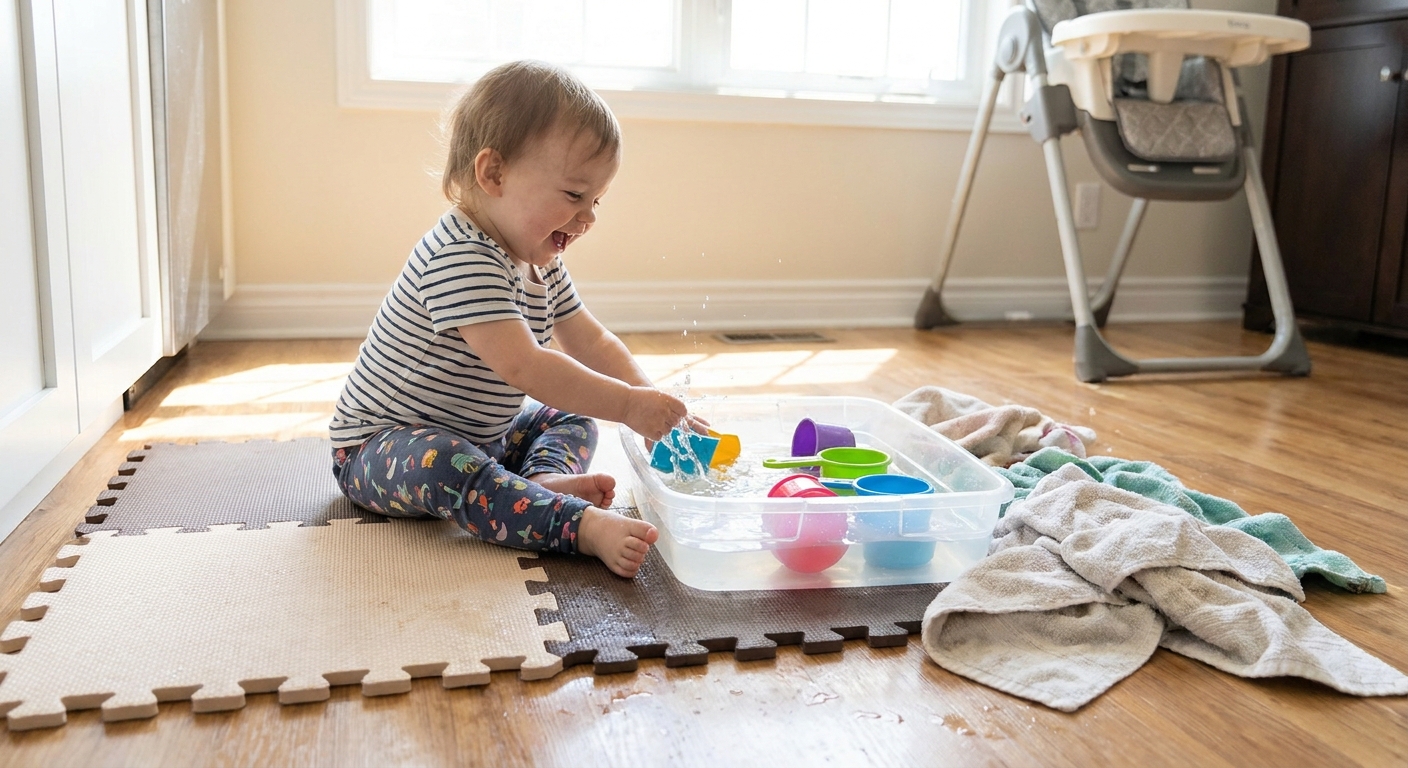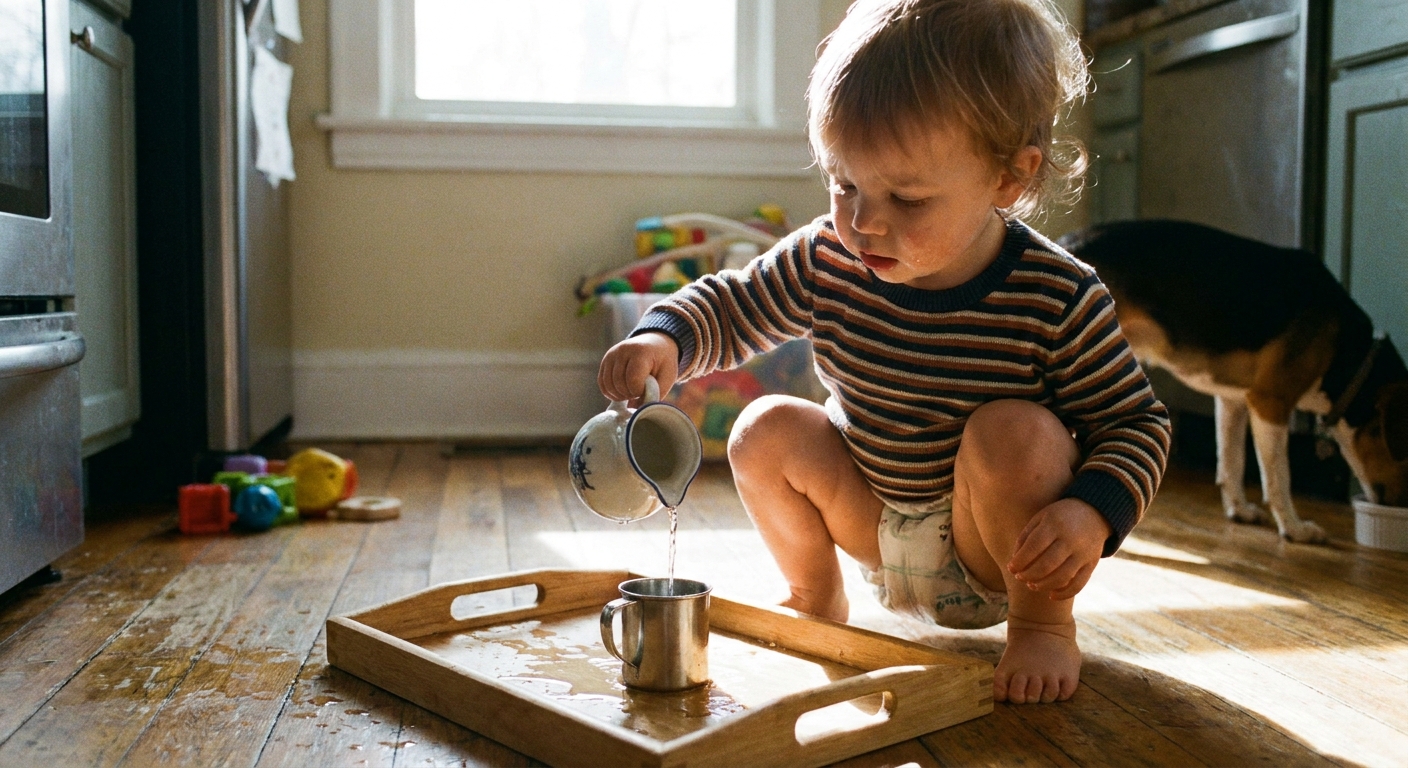
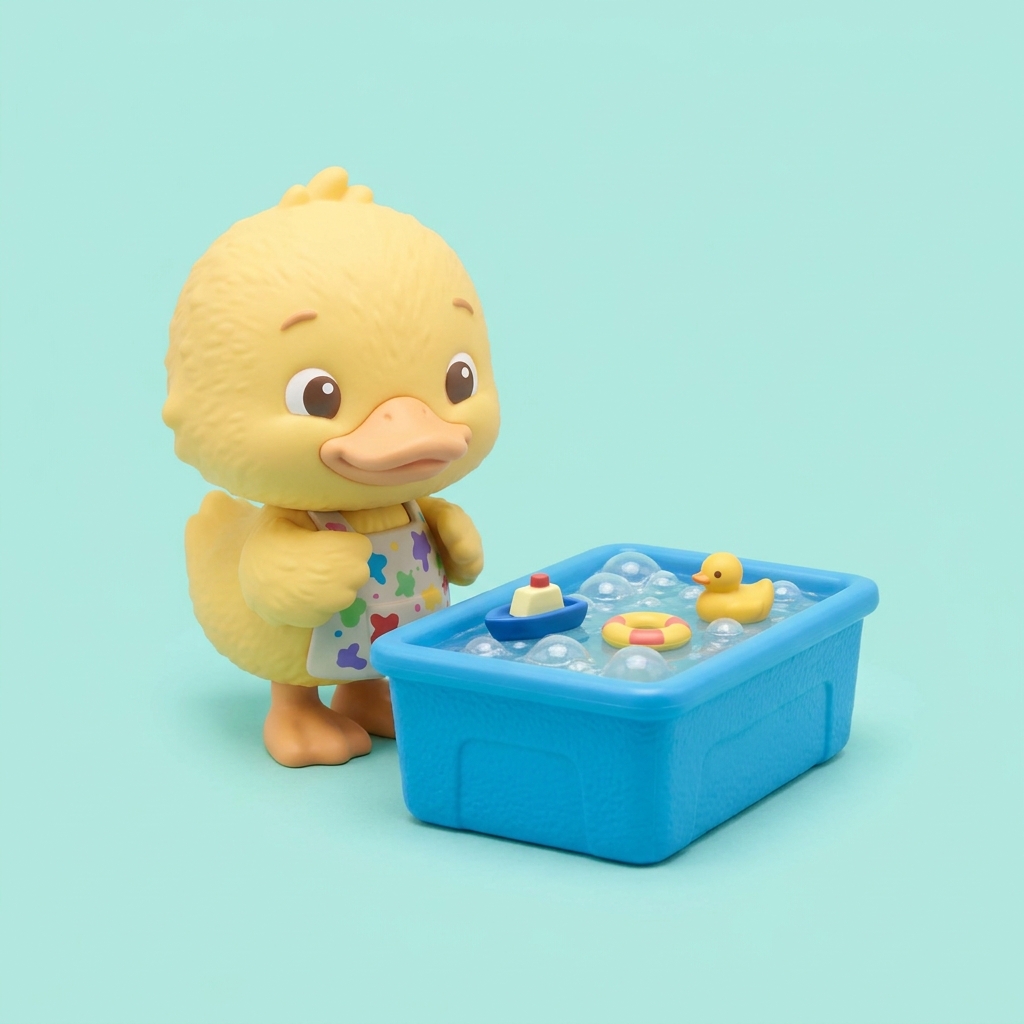
Splish splash, curious ducklings. Sink or float is one of the sweetest first science games because toddlers can see the result right away. No lectures needed. Just water, a few everyday objects, and lots of “What do you notice?”
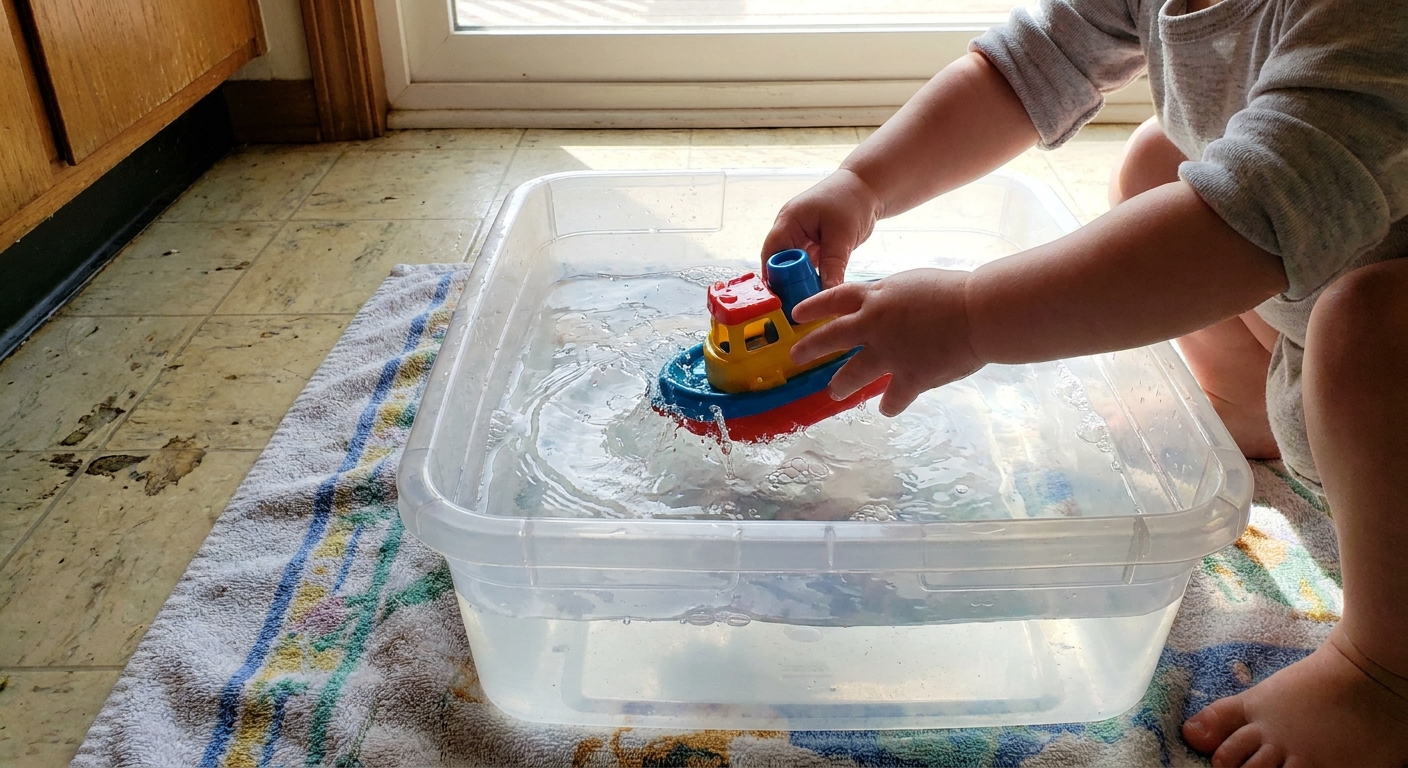
Let’s dive in and make a wonderful, happy mess together, the kind that teaches your toddler how to observe, predict, and talk about what they see. Quick parent tip: use two towels, one under the tub and one for hands.
What toddlers learn
This activity quietly builds big early learning skills:
- Scientific thinking: predict, test, notice, and try again
- Language: new words like “float,” “sink,” “heavy,” “light,” “above,” and “below”
- Math beginnings: sorting into two groups and counting items in each
- Fine motor practice: grasping, dropping, pouring, scooping
- Confidence: your toddler gets to be the “discoverer”
If your little one loves water play, this pairs nicely with more splashy ideas in 8 Indoor Water Play Activities That Won’t Ruin Your Floors.
Simple setup
What you need
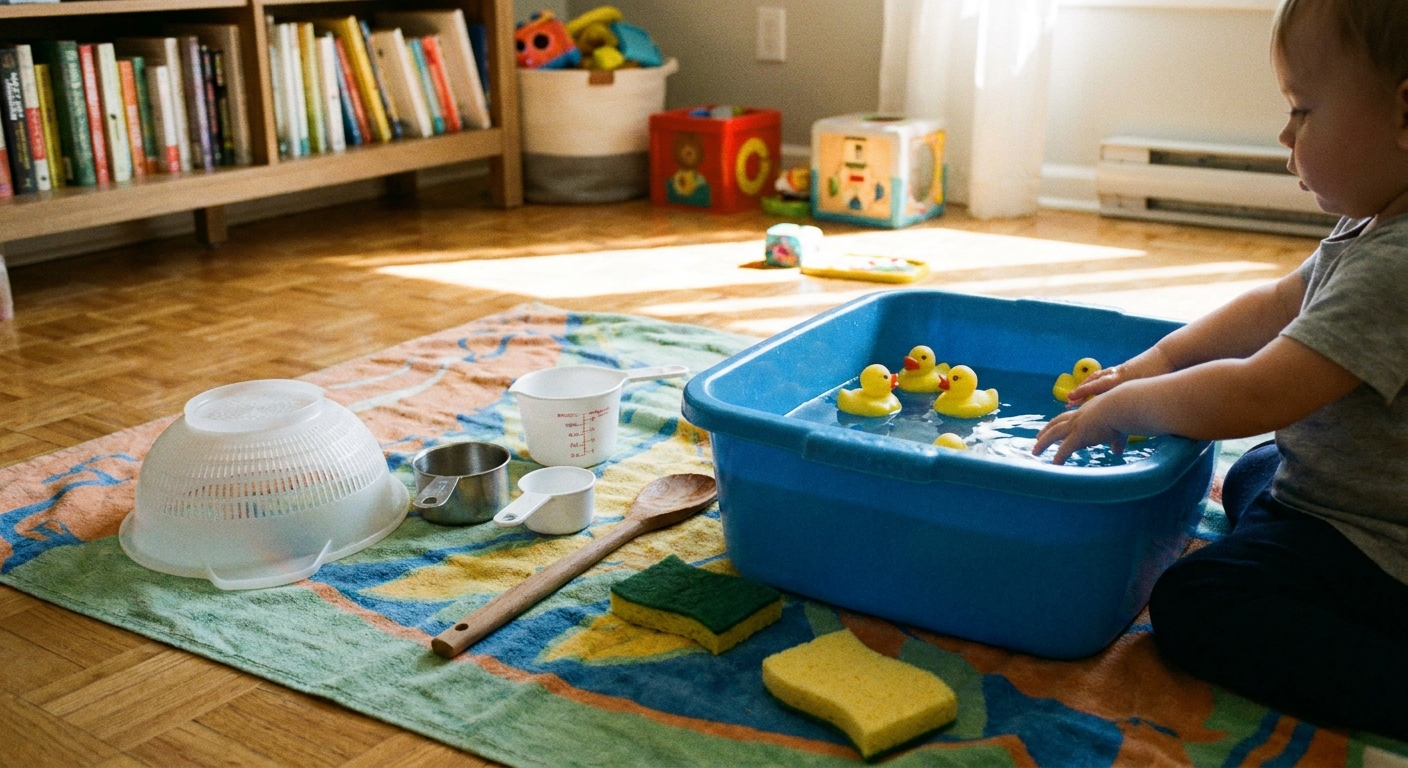
- A shallow tub, dishpan, or large mixing bowl
- Warm water (not hot, just a few inches)
- A towel or bath mat underneath for drips
- 6 to 12 safe household objects
- Optional: a small cup, ladle, or scoop
Where to do it
- Kitchen floor: easy cleanup and less worry about splashes
- Bathtub: the ultimate “mess-friendly” science spot
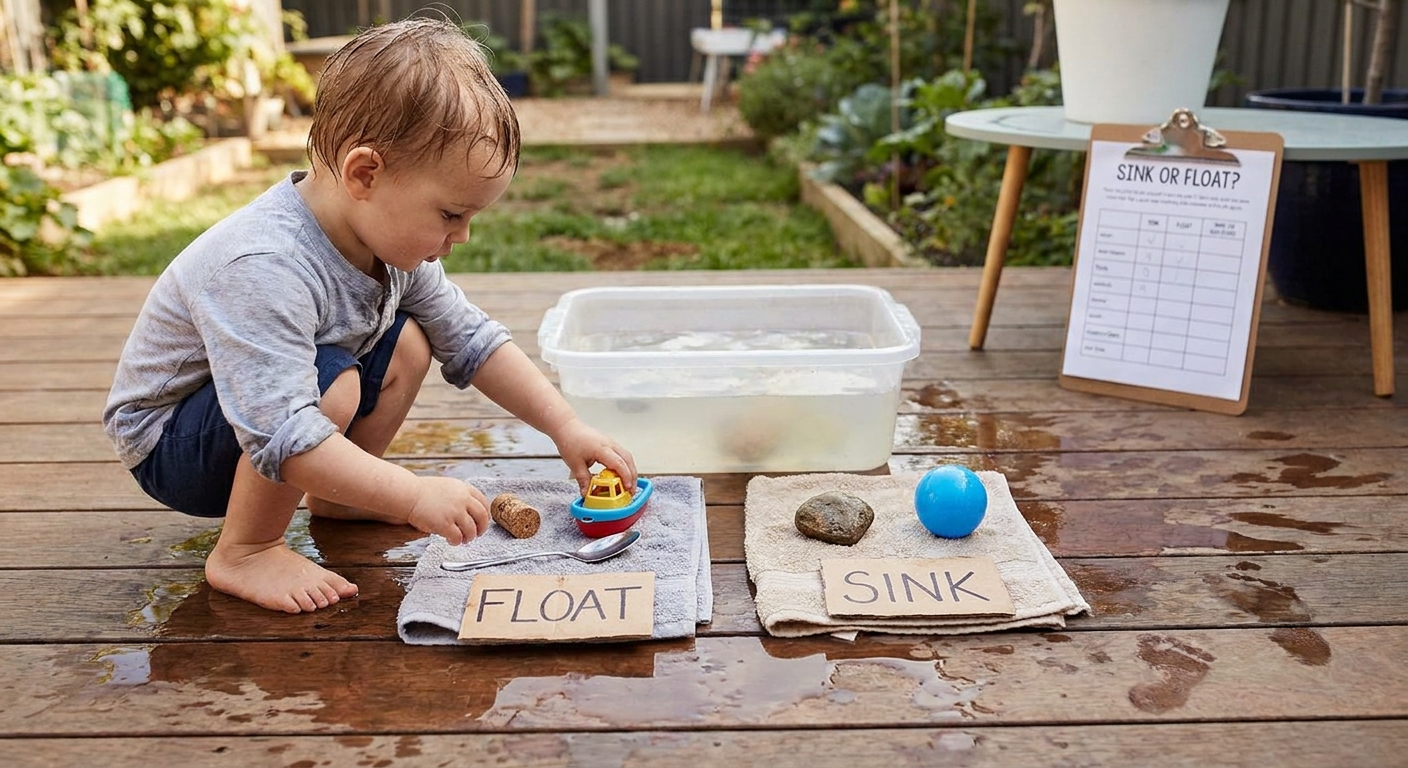
- Outside: if the weather is friendly and your toddler wants to go big
Picking objects
The best sink-or-float objects are safe, big enough not to swallow, and interesting. Mix items that you expect to sink with items you expect to float so your toddler sees both outcomes.
Parent-friendly size rule: skip anything that can fit all the way inside an empty toilet paper roll if your toddler still mouths objects.
Easy floaters
- Plastic spoon (most float, especially lighter ones)
- Dry sponge
- Empty plastic bottle with lid tightly closed
- Cork
- Ping pong ball or plastic ball
- Small piece of foam
Easy sinkers
- Metal spoon
- Key (adult holds and removes after)
- Coin (adult only)
- Small rock
- Standard plastic or resin dice (usually sink, but test yours)
- Fork (adult supervises closely)
Fun surprises
- Sponge: floats dry, can sink once soaked
- Orange or clementine: often floats with peel on and can sink when peeled
- Aluminum foil ball: may float, but changes if you flatten it or press it under
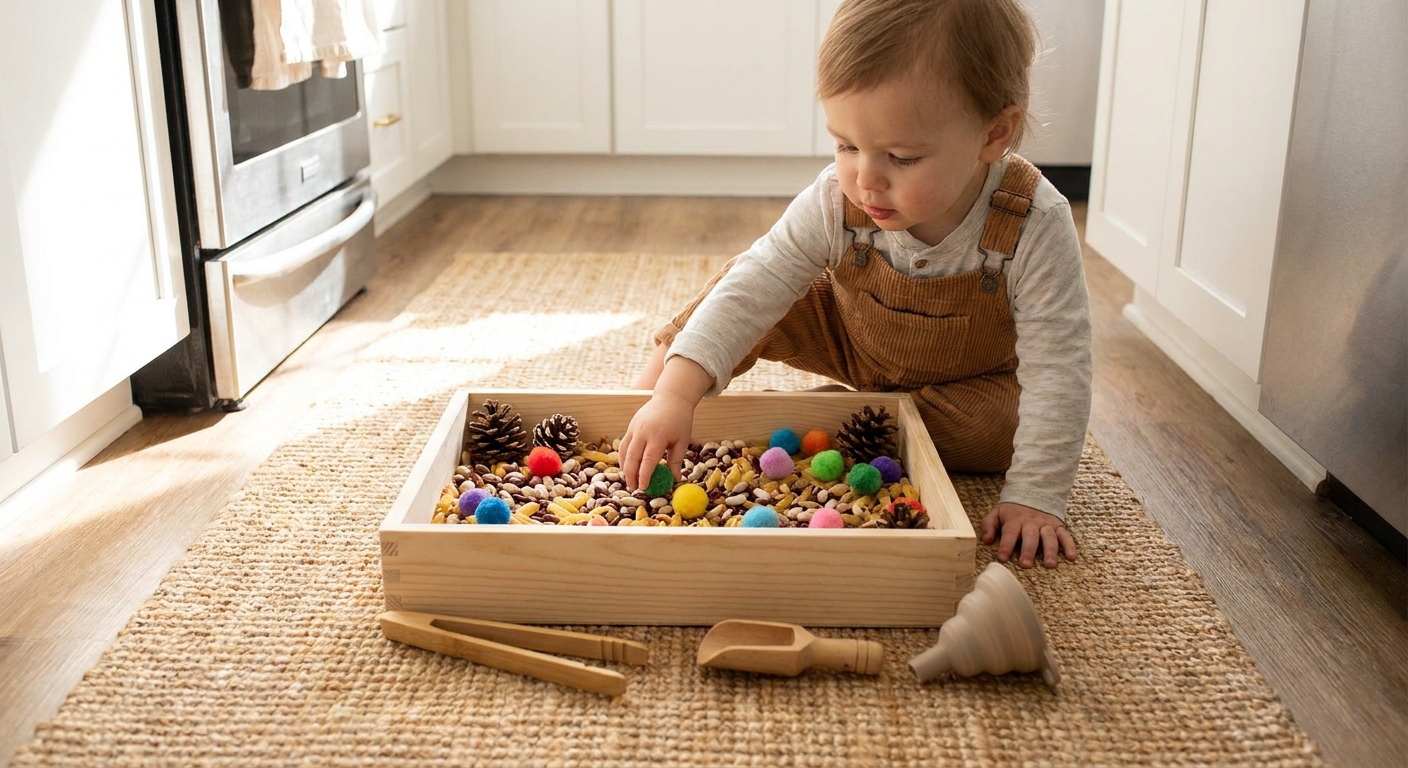
Need ideas from around the house? Peek at 10 Everyday Household Items for Toddler Counting and borrow a few toddler-safe items for your water tub.
How to play
- Pick one object. Let your toddler hold it and look closely.
- Make a prediction. Ask: “Do you think it will sink down or float on top?”
- Test it. Drop it into the water together.
- Observe. Say what happened: “It’s floating. It stayed on top!” or “It sank. It went to the bottom!”
- Repeat. Toddlers love doing the same test again. That is real science practice.
Tip from this duckling host: toddlers do not need to be “right.” Predictions are just brave guesses.
Words to model
Keep the language simple and repeatable. Try these short phrases:
- “On top” and “bottom”
- “It’s floating” and “It’s sinking”
- “Push” and “let go”
- “Wet” and “dry”
- “Heavy” and “light”
- “Same” and “different”
One small grown-up note (you can keep it to yourself): it is not always about heavy versus light. Shape and what is trapped inside can change what happens. That is why testing is so fun.
If your toddler is working on speech and playful imitation, you might also like Action Songs and Fingerplays for Toddler Speech for more low-pressure language fun.
Make it a mini lab
Sort the results
Place floaters on one towel spot and sinkers on another. Then count together:
- “How many float?”
- “How many sink?”
- “Which group has more?”
Change one thing
Pick a single item and change it just a little:
- Sponge: test dry, then squeeze underwater and test again
- Foil: ball shape versus flattened sheet
- Bottle: empty versus filled halfway with water (lid on tight)
Safety notes
- Stay within arm’s reach. Any standing water can be a drowning risk for young children, even small amounts.
- Skip tiny objects if your toddler mouths items.
- Watch for sharp edges and avoid glass.
- Dry the area as you go to prevent slips.
- Use warm water that is not hot, and keep the session short and cozy.
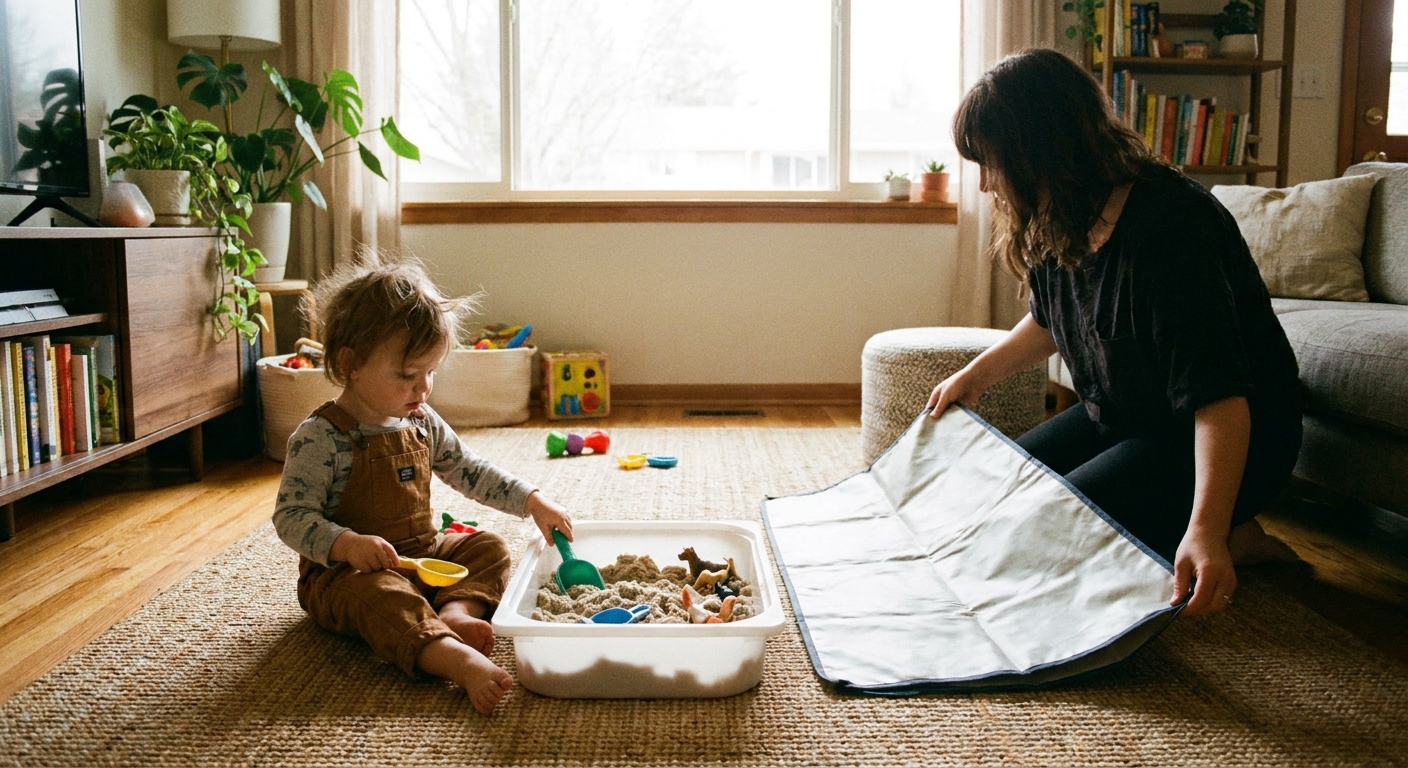
If your toddler loves dumping and flinging, you can also borrow a few gentle containment ideas from Containing Sensory Bin Mess in a Small House.
Quick pivots
If attention starts to wobble, try one of these switches:
- Add tools: a ladle, whisk, turkey baster, or measuring cups
- Go faster: “Ready, set, drop!” with 3 items in a row
- Make it a rescue mission: scoop out the sinkers and “save” them
- End with a splashy cleanup: let your toddler help towel-dry the floor, tub edge, or outdoor table
For more playful mission-style setups, DIY Toy Rescue Missions is full of toddler-friendly ideas.
FAQ
What if my toddler keeps pushing floaters under?
That is excellent exploration. Name it: “You pushed it down. When you let go, it popped back up.” Then try a follow-up: “Can you hold it down for three seconds?”
Do I need to explain why things sink or float?
Nope. For toddlers, the goal is observation and vocabulary. If you want a simple explanation, try: “Some things stay on top, and some go to the bottom. Let’s test and see.”
How long should this take?
Even 5 to 10 minutes counts. End while it still feels fun. You can always come back for round two later.
Wrap-up
Sink or float is early science at its best: hands-on, splashy, and full of curiosity. Set out a small tub, choose a few safe objects, and let your toddler be the brave little researcher.
Happy experimenting, and may your towels be ready.