Let’s dive in and make some joyful noise together! Action songs and fingerplays are one of my favorite ways to help toddlers practice new words without it feeling like practice at all. Tiny hands get busy, bodies wiggle, and those little brains start connecting sounds to meaning.
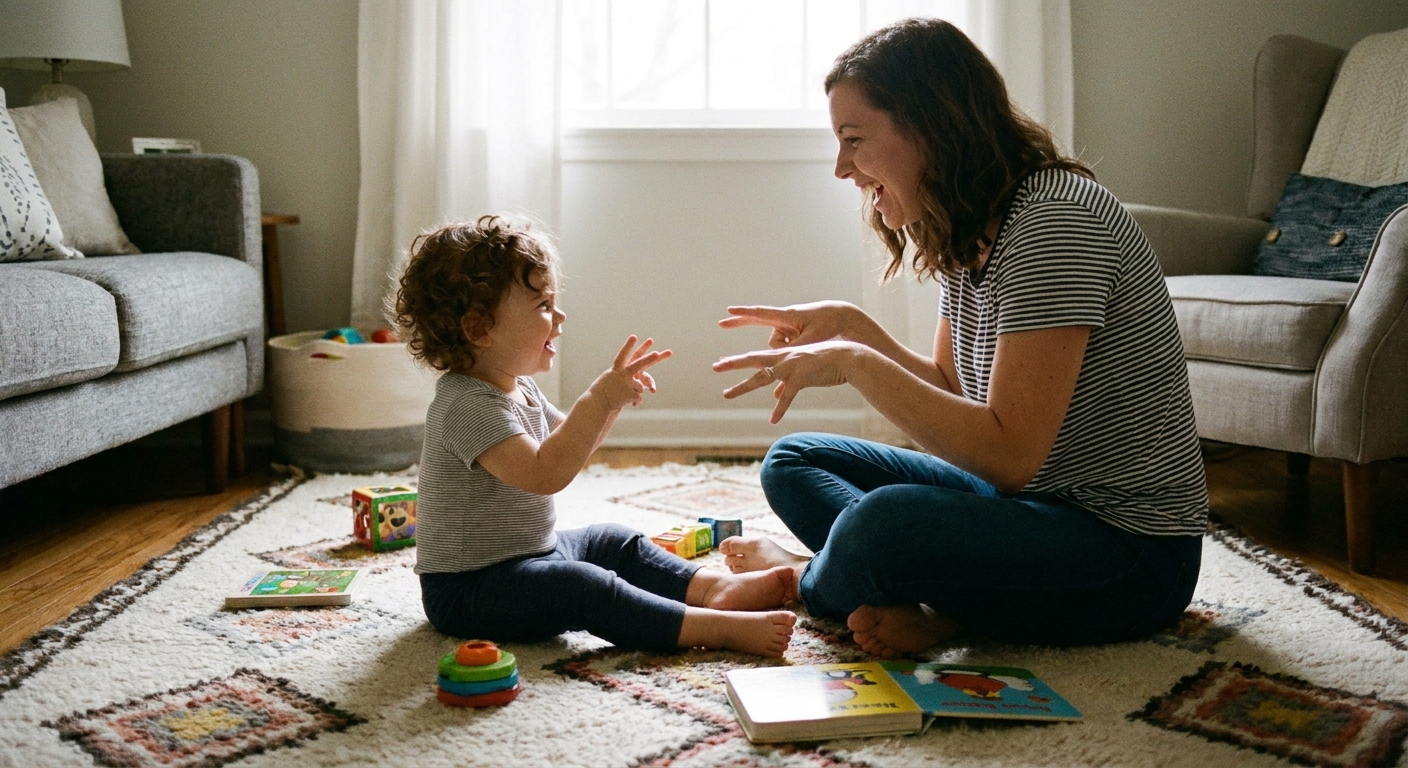
Why action songs help toddler speech
When toddlers sing and move at the same time, they get extra clues for understanding and remembering words. Gestures add a visual, and they can help you naturally slow down and highlight key words so they are easier to notice and copy.
- Repetition helps toddlers predict what comes next, which often supports trying new sounds.
- Gestures give meaning, even before a toddler can say the word clearly.
- Rhythm and rhyme can help toddlers hear syllables and sound patterns.
- Turn-taking shows how conversations work, with pauses to listen and respond.
If you’d like a bigger picture of early skills toddlers build through play, pop over to Early Learning & Development.
Quick start
Keep it slow, short, and repeatable
- Choose songs with 3 to 5 key words that repeat (up, down, clap, stop, go).
- Sing a little slower than usual so toddlers can copy sounds.
- Do the same song daily for a week. Repetition is the secret sauce.
Use a “fill-in-the-blank” pause
Pause right before a fun word and look expectantly. Even if your toddler only makes a sound or does a gesture, it counts.
- “If you’re happy and you know it, clap your… (pause)”
- “Row, row, row your… (pause)”
Offer a choice instead of a quiz
Instead of “What animal is this?” try “Do we do quack quack or moo moo?” Choices support participation without pressure.
8 action songs and fingerplays
Each activity below includes what to do, speech boosts (easy words to emphasize), and simple ways to level it down or up depending on your toddler’s mood.
1) Open Shut Them
What to do: Open and close hands like clams. Add “Give a little clap” and “Put them in your lap.”
- Speech boosts: open, shut, clap, lap
- Try this: Whisper “open”, then shout “SHUT!” to make the contrast clear.
- Make it easier: Do only “open, shut” with the hand motion.
- Make it harder: Add locations: “Open, shut up high” and “Open, shut down low.”
2) Wheels on the Bus (gesture edition)
What to do: Pick just 3 verses and pair each with a big gesture: wheels go round (arm circles), wipers go swish (arms side to side), doors go open, shut (hands open, close).
- Speech boosts: round, swish, open, shut, up, down
- Try this: Pause before the sound effect so your toddler can fill it in: “The wipers on the bus go… (pause)”
- Make it easier: Repeat one favorite verse 3 times in a row.
- Make it harder: Offer choices: “Wipers or doors?” and let your toddler choose the next verse.
3) Itsy Bitsy Spider (two sizes)
What to do: Use fingers to climb up, make rain with fingertips, sweep “out” with hands, then “sun” with big arms overhead. Then do it again with a tiny spider and a big spider.
- Speech boosts: up, down, rain, out, sun, big, tiny
- Try this: Emphasize opposites: up versus down, big versus tiny.
- Make it easier: Do only “up, up, up” and “down, down, down” with motions.
- Make it harder: Add a simple question: “Big spider or tiny spider?”
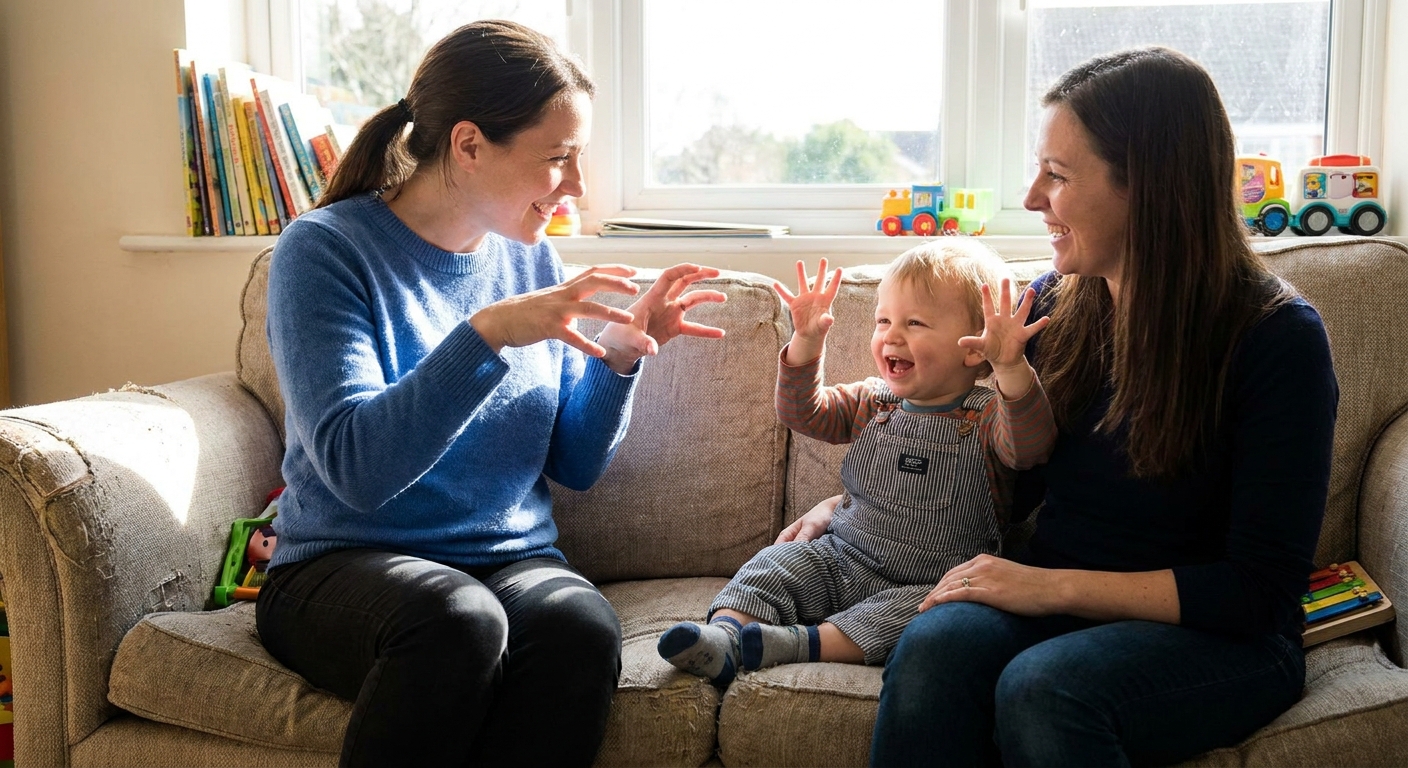
4) Head, Shoulders, Knees, and Toes
What to do: Touch each body part as you sing. Start slow so your toddler can find the body part. Then do one silly faster round.
- Speech boosts: head, shoulders, knees, toes, eyes, ears, mouth, nose
- Try this: Point to your mouth when you sing “mouth.” It can gently draw attention to how our mouths move when we talk.
- Make it easier: Sing only 2 parts: “head” and “to-toes.”
- Make it harder: Give directions: “Touch knees!” then wait for your toddler to respond.
5) If You’re Happy and You Know It
What to do: Do the classic clapping verse. Then let your toddler pick the next action with a gesture or word: stomp, jump, wave, hug.
- Speech boosts: happy, clap, stomp, jump, wave, hug
- Try this: Hold up two choices: “Clap or stomp?” Toddlers can point if they are not ready to say it.
- Make it easier: Stick to one action and repeat.
- Make it harder: Add feelings: “If you’re sleepy and you know it, yawn.”
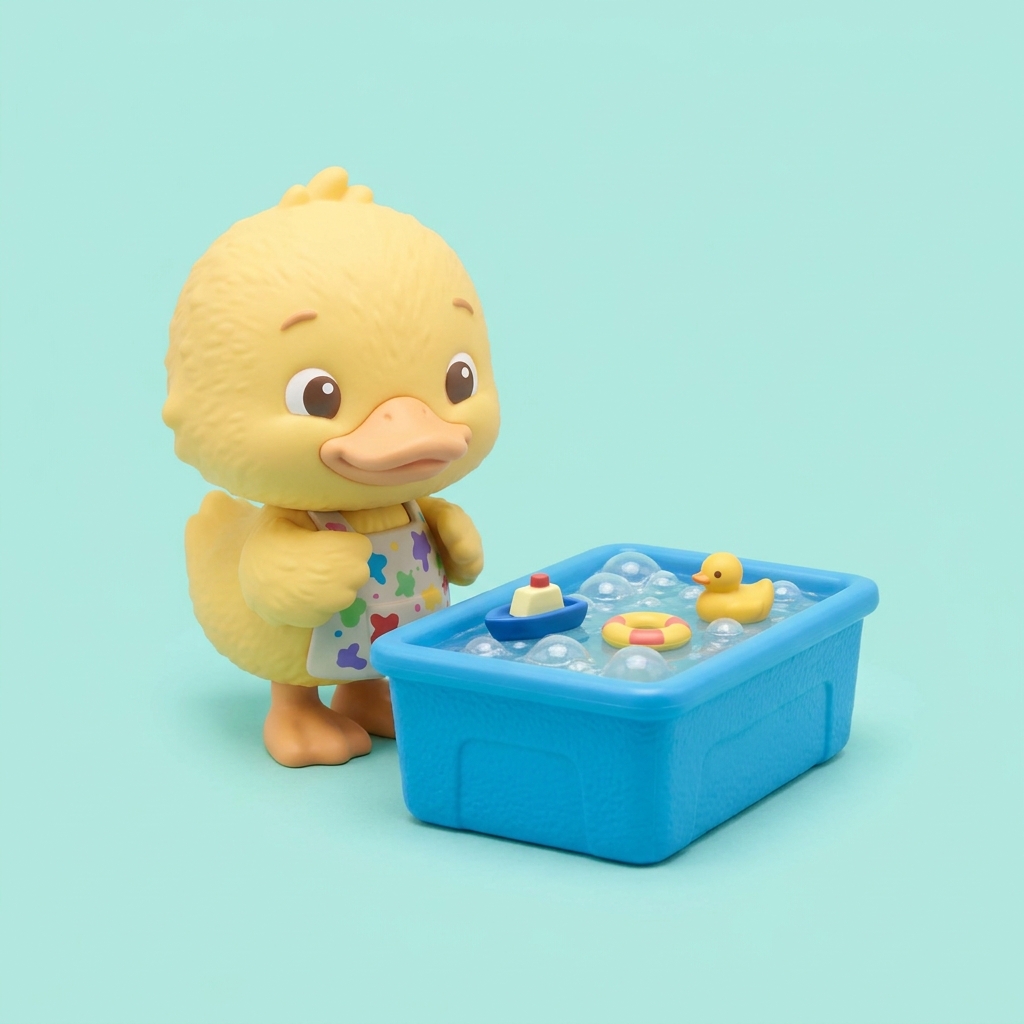
6) Five Little Ducks
What to do: Hold up fingers for each duck. Make a big “quack quack quack” together. Animal sounds like “quack” are often motivating and can be a great first target for toddlers who are just starting to try speech sounds.
- Speech boosts: quack, go, back, down, mama
- Try this: Pause before “quack quack quack” and wait. Even a smile or breath-in can be the start of participation.
- Make it easier: Use just 2 or 3 ducks instead of five.
- Make it harder: Add locations: “Over the hill” and point.
7) Zoom, Zoom, Zoom
What to do: Sit facing each other and do gentle bounces on “Zoom” and a slow lean back on “blast off.” Keep movements calm and predictable.
- Speech boosts: zoom, up, ready, set, go, blast
- Try this: Whisper “ready”, whisper “set”, then pause and let your toddler try “go!”
- Make it easier: Do only “Ready, set… go!” with a fun hand motion.
- Make it harder: Add choices: “Fast zoom or slow zoom?”
8) Pat-a-Cake
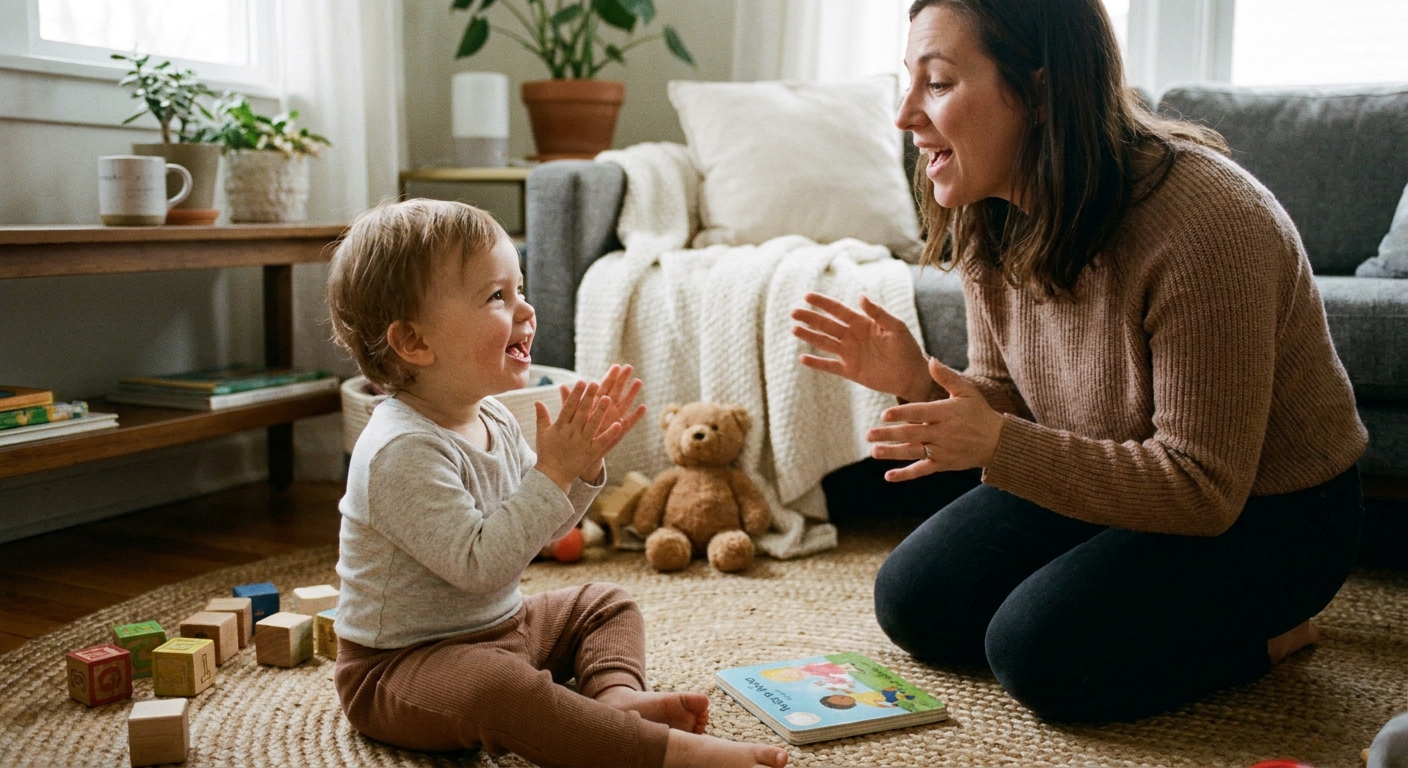
What to do: Clap hands together or clap your hands to your toddler’s hands. Say the rhyme and slow down for the last part.
- Speech boosts: pat, cake, clap, bake, baby
- Try this: Instead of adding a name, add your toddler’s favorite thing: “Pat-a-cake… for bananas!” or “for trucks!”
- Make it easier: Do a simple chant: “Pat, pat, pat” with claps.
- Make it harder: Add pretend play: “Roll it” (roll hands), “pat it,” “bake it” (hands in “ovens”).
Fit songs into real life
Action songs work best when they pop up during the day, not only at “sit down and learn” time.
- Diaper changes: Sing “Open Shut Them” to keep hands busy.
- Handwashing: Pick one short verse and repeat until rinse time.
- Car seat moments: Use “Ready, set, go” pauses to turn waiting into turn-taking.
- Bath time: Try a gesture song, then follow up with splashy play. For more water-safe indoor ideas, see 8 Indoor Water Play Activities That Won’t Ruin Your Floors.
Tips by speech stage
If your toddler is not talking yet
- Focus on gestures and sound effects (quack, beep, swish).
- Celebrate eye contact, smiles, and copying motions as communication.
- Use one or two key words per song: “up” and “down” is plenty.
If your toddler uses single words
- Pause for a single word: “go,” “more,” “clap.”
- Offer choices: “Stomp or jump?”
- Repeat their attempt clearly: “Ga! Yes, go!”
If your toddler is starting short phrases
- Model 2 to 3 word combos: “More ducks!” “Big spider!” “Go bus!”
- Add one playful detail: “Fast bus!” “Sleepy baby!”
- Let your toddler lead by choosing the next verse.
Multilingual families
Sing in any language you use at home. The same tools still work: repetition, gestures, and short, catchy phrases. You can even do one verse in each language if that feels natural for your family.
Safety and comfort
- Keep movements gentle, especially with bouncing games. If your toddler seems unsure, switch to hand motions only.
- Watch for sensory preferences. Some toddlers love loud songs, and others prefer a soft voice.
- Stop while it is still fun. A short happy ending builds enthusiasm for next time.
Pair songs with play
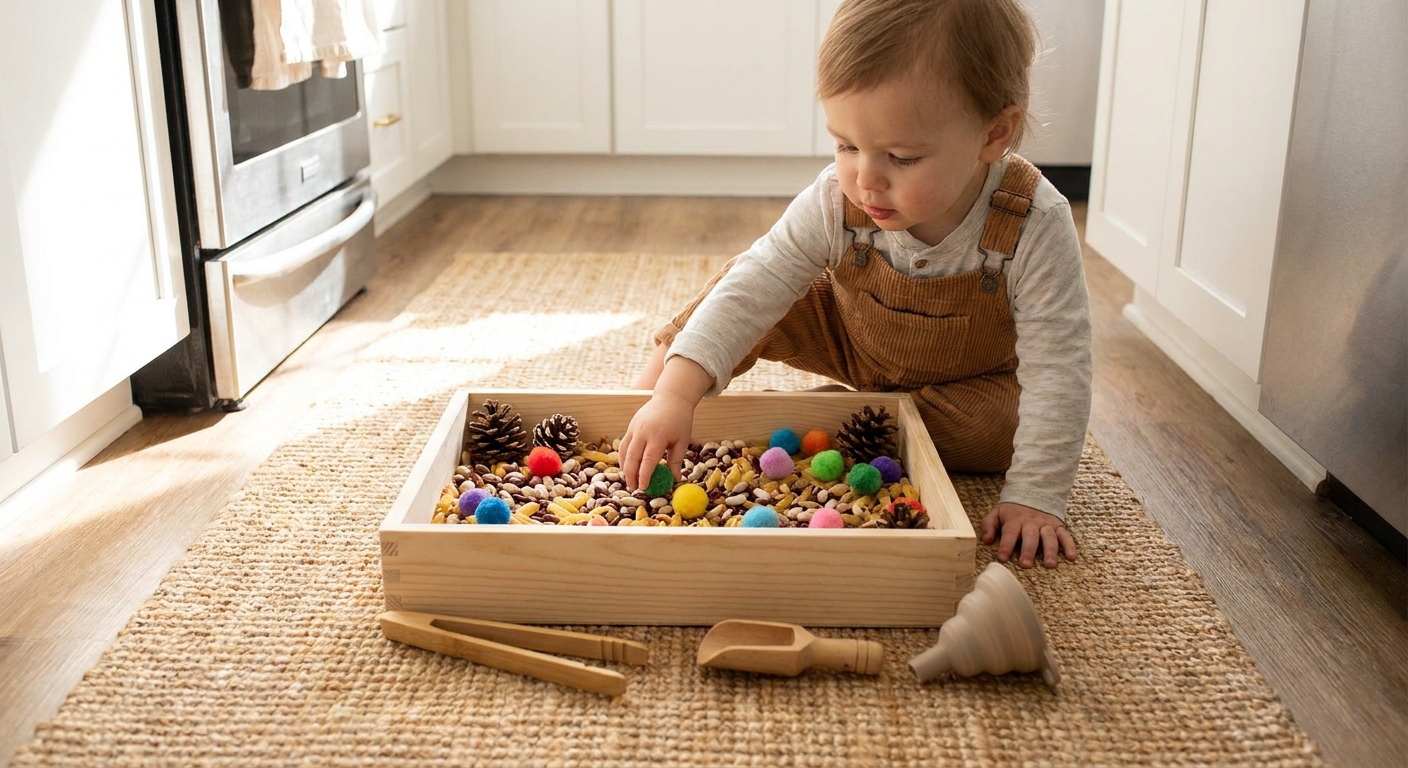
After a song, toddlers often want to keep the theme going. That is a perfect moment to slide into hands-on play that invites more words like scoop, pour, in, out, more, and stop.
- Set up a quick bin using pantry staples from 15 Last-Minute Sensory Bins From Pantry Staples.
- Try low-mess squeezing and squishing with 7 No-Mess Sensory Bags With Household Items.
- If you are new to bins, start simple with Your First Toddler Sensory Bin.
If you are concerned
Songs can be a wonderful way to invite communication, but they are not a test, and they are not a cure-all. If you are worried about your toddler’s speech or understanding, trust your gut and talk with your pediatrician. You can also ask about a speech-language evaluation, especially if your child stops using skills they had before, does not respond to sounds or their name, or you feel like communication is getting harder instead of easier.
FAQ
How long should we do action songs?
Two to five minutes is plenty. Toddlers learn from tiny repeats throughout the day.
What if my toddler will not copy the gestures?
That is okay. Keep doing the gestures yourself and leave space for watching. Many toddlers join in after they have seen the routine a few times.
Do I have to sing well?
Nope. Clear, slow words and fun gestures matter much more than perfect singing.
What are good first words to target?
Action words and simple opposites are toddler gold: go, stop, up, down, open, shut, more, again, clap, jump.