Let’s dive in and make a wonderful, happy mess together! Sponge stamping is one of those magical toddler art wins: easy to grip, quick to set up, and full of satisfying squish. With washable paint and a few kitchen sponges, little hands can stamp again and again while building fine motor control.
Best for ages: around 18 months to 4 years (with close supervision). Keep an eye on sponge bits and paint, especially for toddlers who still mouth materials.
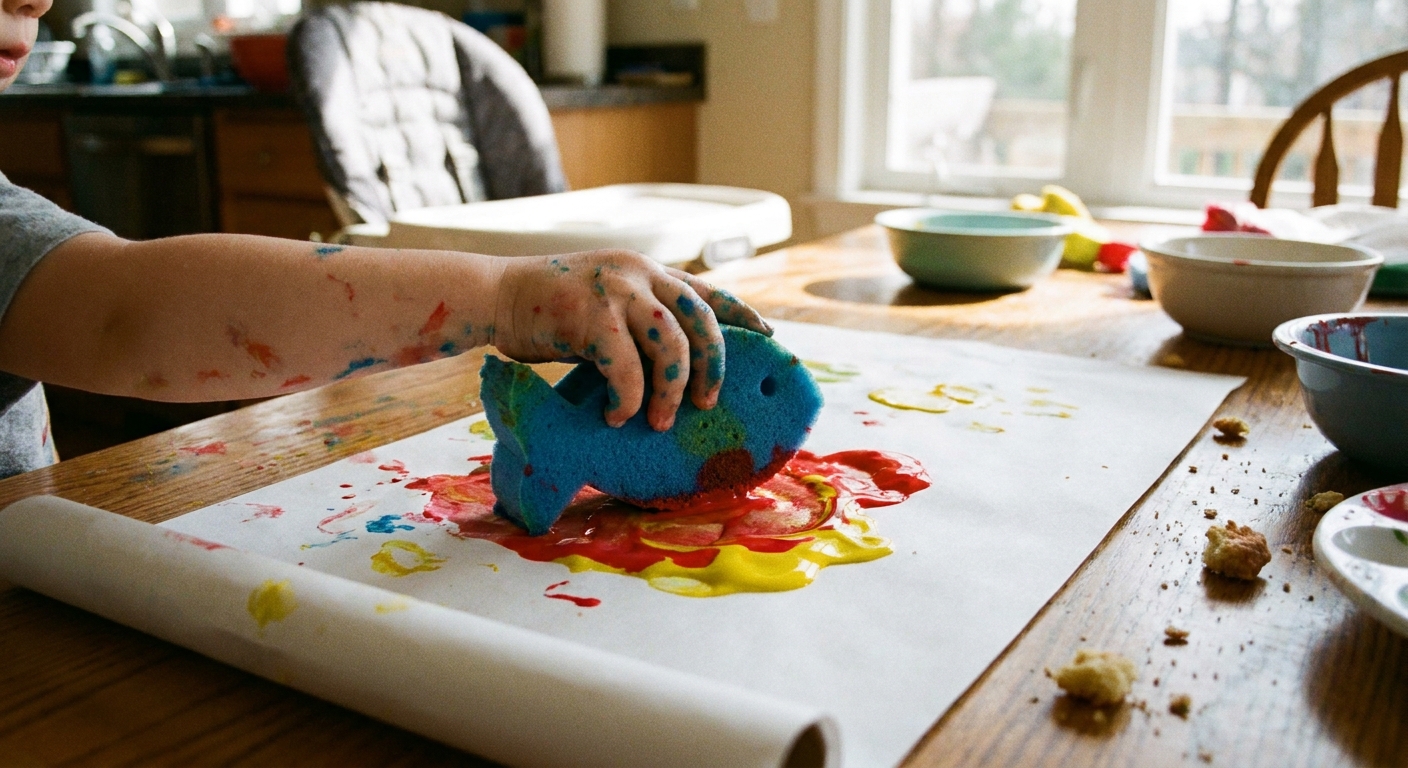
Quick setup (so the fun starts fast)
- Paper: thick paper, cardstock, paper grocery bag cut flat, or the back of wrapping paper.
- Paint: washable tempera is best for toddlers. If you use acrylic, choose a washable, non-toxic kids’ acrylic and test it on a small spot first since some paints can stain fabric or porous surfaces.
- Paint trays: paper plates, muffin tins, or clean, shallow plastic lids.
- Sponge stamps: cut-up kitchen sponges.
- Optional tools: clothespins (turn a sponge into tongs), cookie cutters (as stamping frames), dot stickers (resist art).
Puddle tip: Put the paper on a sheet pan, a plastic tablecloth, or inside a shallow cardboard box lid to help keep stamps and paint contained. If sensory mess is tricky in your space, the ideas in Containing Sensory Bin Mess in a Small House work for art time too.
Quick cleanup note: Wipe paint plates and the table right away (especially if you are working on unfinished wood), then do a quick soap-and-water wash on hands and forearms.
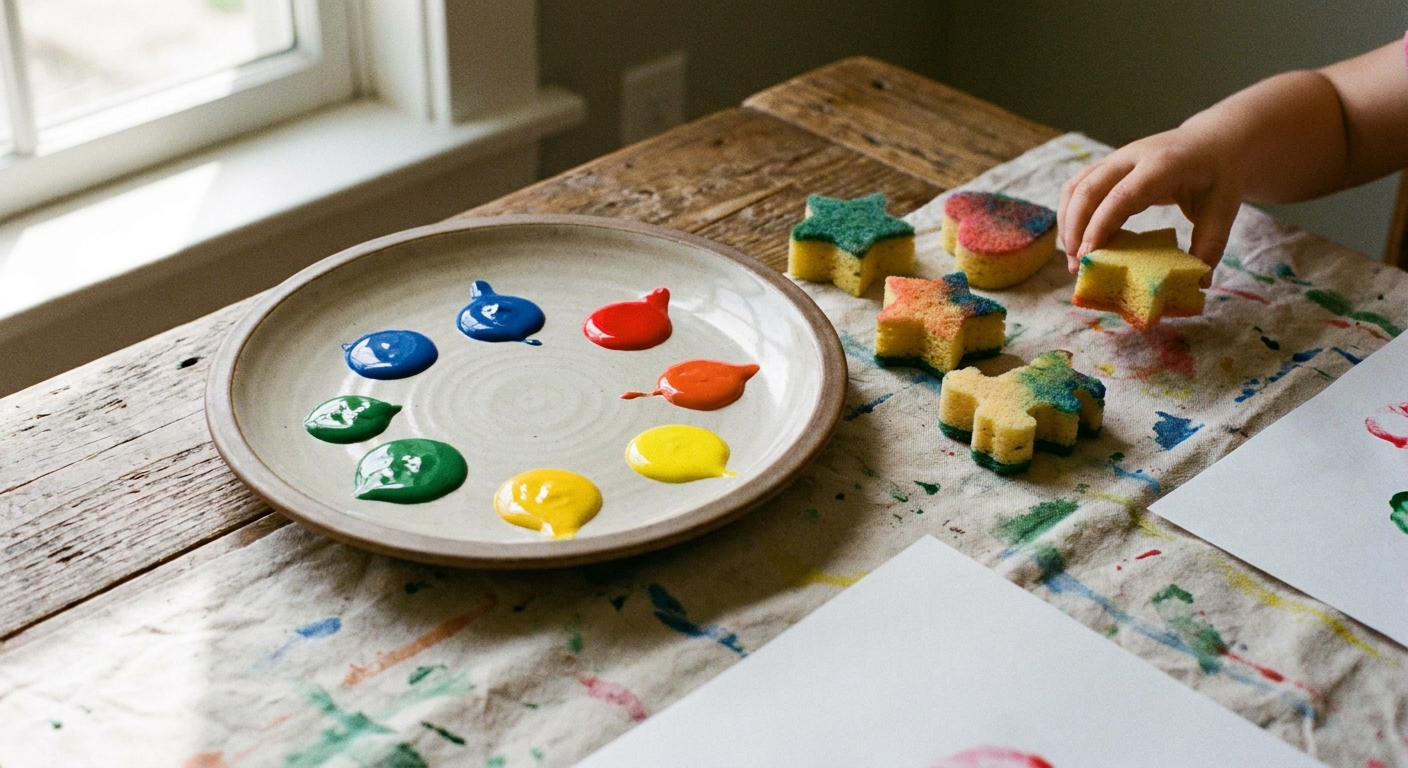
How to cut toddler-friendly sponge stamps
Skip tiny, fiddly shapes. Toddlers do best with chunky stamps that have a clear outline and lots of surface area.
- Choose the right sponge: a basic rectangular kitchen sponge is perfect.
- Cut big shapes: aim for shapes about the size of a toddler palm.
- Make a handle: leave part of the sponge uncut as a grip, or pinch the sponge in a clothespin.
- Dry test first: press onto paper without paint to see if the shape prints clearly.
Adult step: Sponge cutting should be done by a grown-up using scissors.
10 easy sponge stamping crafts
Each idea below uses the same basic routine: dip, stamp, lift, repeat. Keep paint puddles small and offer just 2 or 3 colors at once for calmer stamping.
1) Rainbow dot parade
Sponge shape: circle or rounded blob
How: Put 3 to 5 paint colors in separate puddles. Invite your toddler to stamp dots across the page in any order. For an extra fine-motor boost, try stamping inside a simple line you draw (a road, a stripe, a big bubble).
- Skill sprinkle: hand strength and control with repeated press and lift.
2) Garden flowers
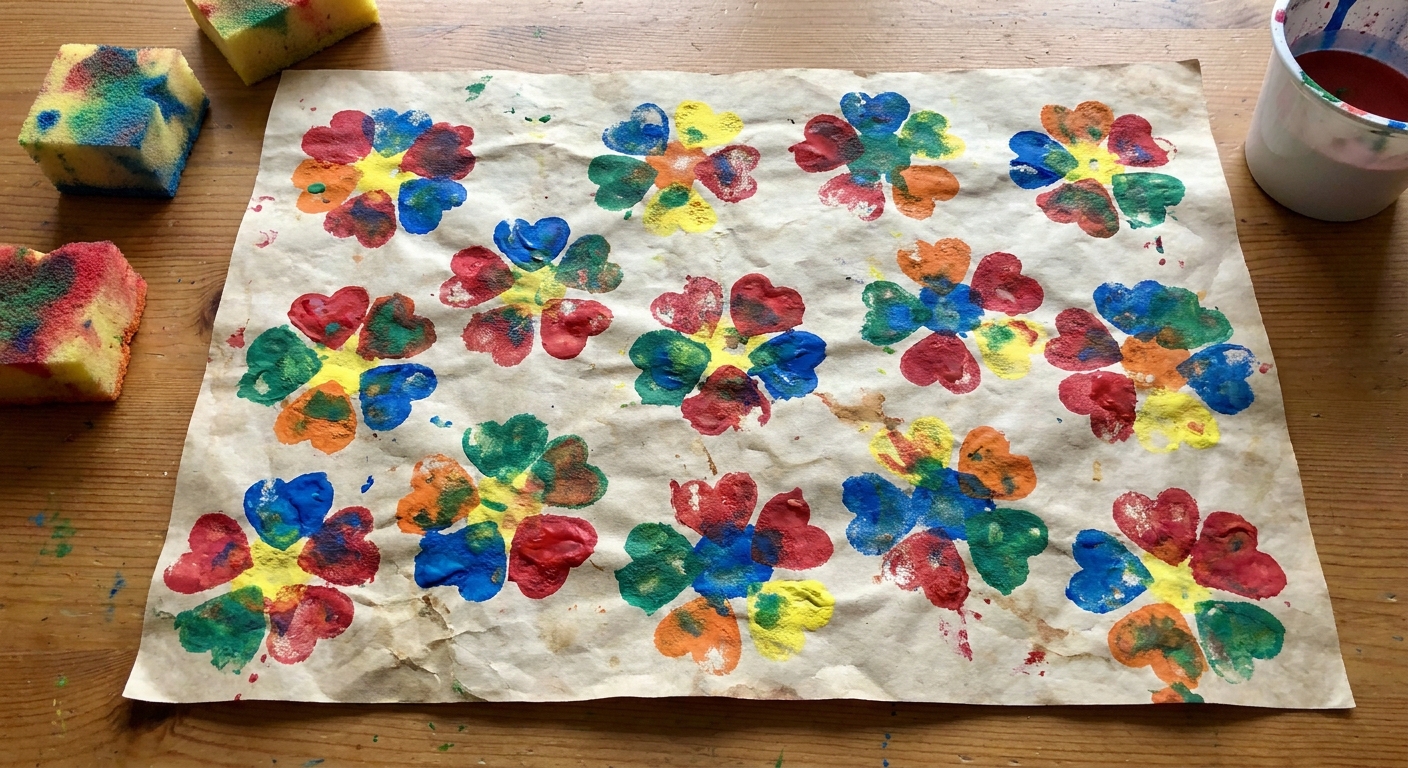
Sponge shape: heart or oval (petals)
How: Stamp 4 or 5 petals in a circle, then add a center with a fingertip dot or a small sponge square. A grown-up can draw stems and leaves, or your toddler can stamp leaves with a long oval.
3) Bubble texture ocean
Sponge shape: small squares
How: Use blues and greens. Stamp lots of overlapping squares to get a bumpy, bubbly texture effect (like bubble wrap, but toddler-friendly). Add a simple fish outline afterward, or keep it abstract and sensory.
- Make it easier: pre-cut several square stamps so your toddler can swap colors without rinsing.
4) Apple tree stamping
Sponge shape: small circles (apples) plus one big cloud (tree top)
How: Stamp a big green tree top, then add red and yellow apples. A grown-up can draw a trunk, or stamp a rectangle trunk with brown paint.
5) Shape splash (circles, triangles, squares)
Sponge shape: basic shapes
How: Stamp repeating rows of shapes. Call out names and colors as you go. This is a gentle early learning boost that still feels like play.
If your toddler enjoys color and sorting activities, waddle over to 5 Simple Sensory Bins for Color Recognition and Sorting for more easy practice.
6) Tire tracks and roads
Sponge shape: thin rectangle, long strip, or a rectangle with little snips for “treads”
How: Stamp long lines to make roads, then add stamped “tire tracks” across them. Toddlers love the repeatable pattern. Add a few toy cars to drive on the dry page afterward.
7) Dinosaur footprints
Sponge shape: three-toed footprint (simple, chunky toes)
How: Stamp footprint trails across the paper. Make two colors for “two different dinos.” For language play, try “big steps” and “tiny steps” stamping patterns.
8) Heart card (fast and sweet)
Sponge shape: heart
How: Fold paper in half to make a card. Stamp hearts all over the front. Inside, a grown-up can write a message. Toddlers can add one more heart “signature stamp” inside.
- Low-mess option: use one color and one stamp.
9) Sticker resist stamps
Sponge shape: any, especially circles
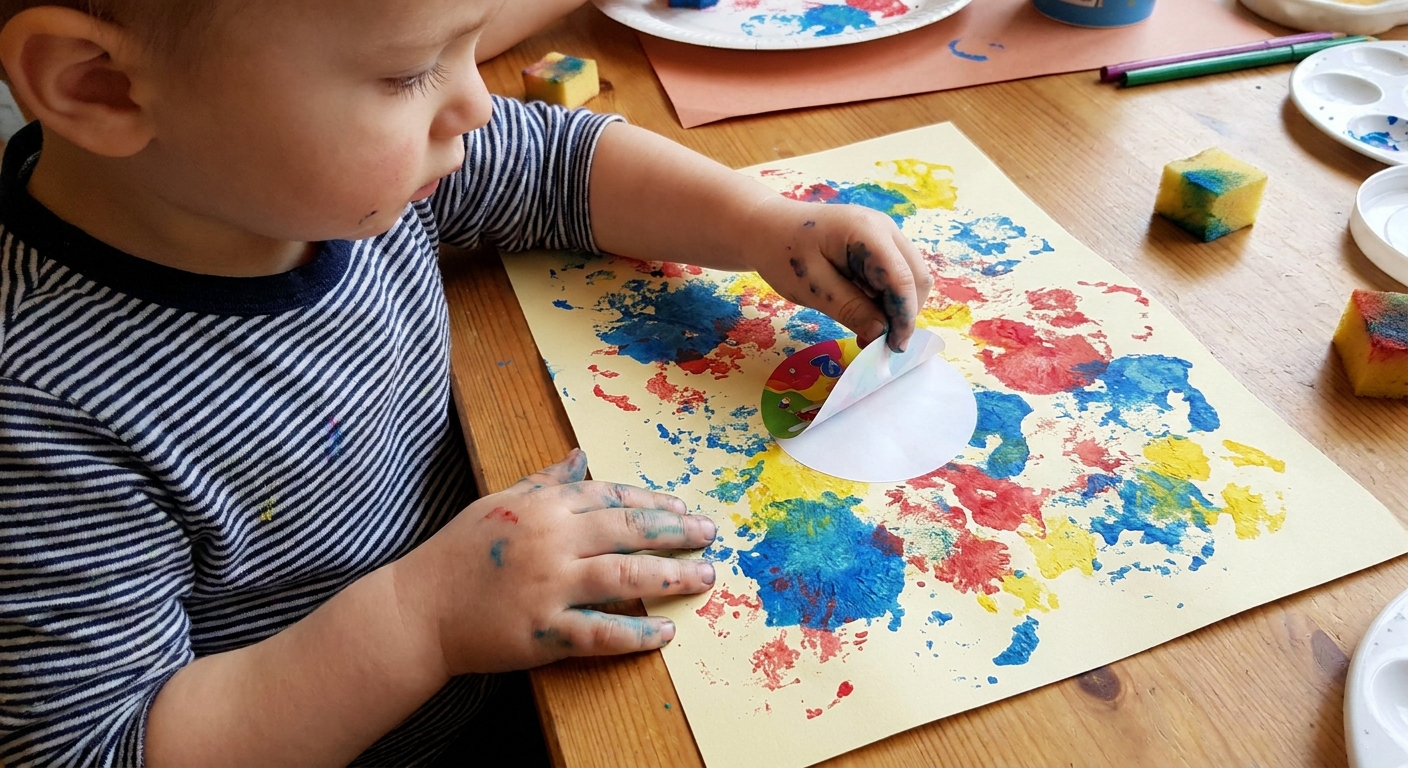
How: Place dot stickers (or any stickers) on paper first. Stamp right over them. When paint dries, peel stickers to reveal clean white spots underneath.
Want more pincer-grasp practice? Pair this with Sticker Activities for a Stronger Pincer Grasp.
10) Weather stamps (clouds, rain, and sunshine)
Sponge shape: cloud, raindrop, circle (sun)
How: Stamp gray clouds at the top, blue raindrops underneath, then a bright sun in a corner. Toddlers can choose “sunny” or “rainy” and stamp their own forecast.
If your day is extra drizzly, these pair nicely with 5 Washable Window Art Activities for Rainy Days.
Fine-motor boosts (without making it harder)
- Use a clothespin handle: Clamp the sponge in a clothespin to encourage a more refined pinch or tripod-like grip.
- Stamp targets: Draw big circles or boxes for your toddler to stamp inside.
- One stamp, two hands: If pressing is tough, let your toddler place the stamp and you help with a gentle press on top.
- Short rounds: Set a timer for 5 to 10 minutes. End while it’s still fun.
Simple ways to keep it low mess
- Less paint, more stamping: small puddles are plenty. Refill when needed.
- Offer 2 colors: fewer colors means less accidental brown.
- Wet wipe station: put wipes or a damp washcloth next to the paper.
- Shirt protection: a smock or an old T-shirt helps everyone relax.
- Drying spot: slide finished art onto a protected counter space out of reach, or place it on a stable surface toddlers cannot access. A sheet pan works well as a portable drying tray.
For toddlers who love to toss things when excitement zooms up, the calming ideas in How to Stop Your Toddler From Throwing Sensory Bin Fillers can translate well to art tools too.
Safety notes for toddlers
- Supervision: art supplies can be tempting to taste, especially paint and sponge pieces.
- Choking risk: avoid tiny sponge bits and discard torn pieces right away.
- Skin: choose washable, non-toxic kids’ paint and wash hands after play.
- Eyes: remind little ones that paint stays on paper, not on faces.
FAQ
What kind of paint works best for sponge stamping?
Washable tempera is a favorite for toddler stamping because it spreads easily and cleans up with soap and water. If you use acrylic paint, choose a washable, non-toxic kids’ acrylic and test on a small spot first since acrylics can be harder to remove from fabric and some surfaces.
Can sponges be rinsed and reused?
Yes. Rinse sponges right after stamping, squeeze out water, and let them dry completely. If a sponge starts crumbling or holding old paint, it is time to toss it.
How do you keep stamps from sliding around?
Use thicker paint (not watery), blot extra paint on the plate edge, and stamp straight down with a slow lift. If paper moves, tape it to the table or use a sheet pan as a stamping tray.
One last happy splash
Sponge stamps are a toddler art secret weapon: big grip, satisfying squish, and beautiful results without fancy supplies. Pick one idea, set out two colors, and let your little artist stamp their heart out.