Big toddler feelings can hit like a splash. One minute everything is fine, and the next minute the world feels way too loud, too fast, and too much. Calming sensory bottles are a gentle, hands-on tool that gives little eyes something soothing to track while their body slows down.
Let’s make a simple, contained kind of sensory “mess” together, with all the sparkle safely sealed inside.
What a calming sensory bottle does
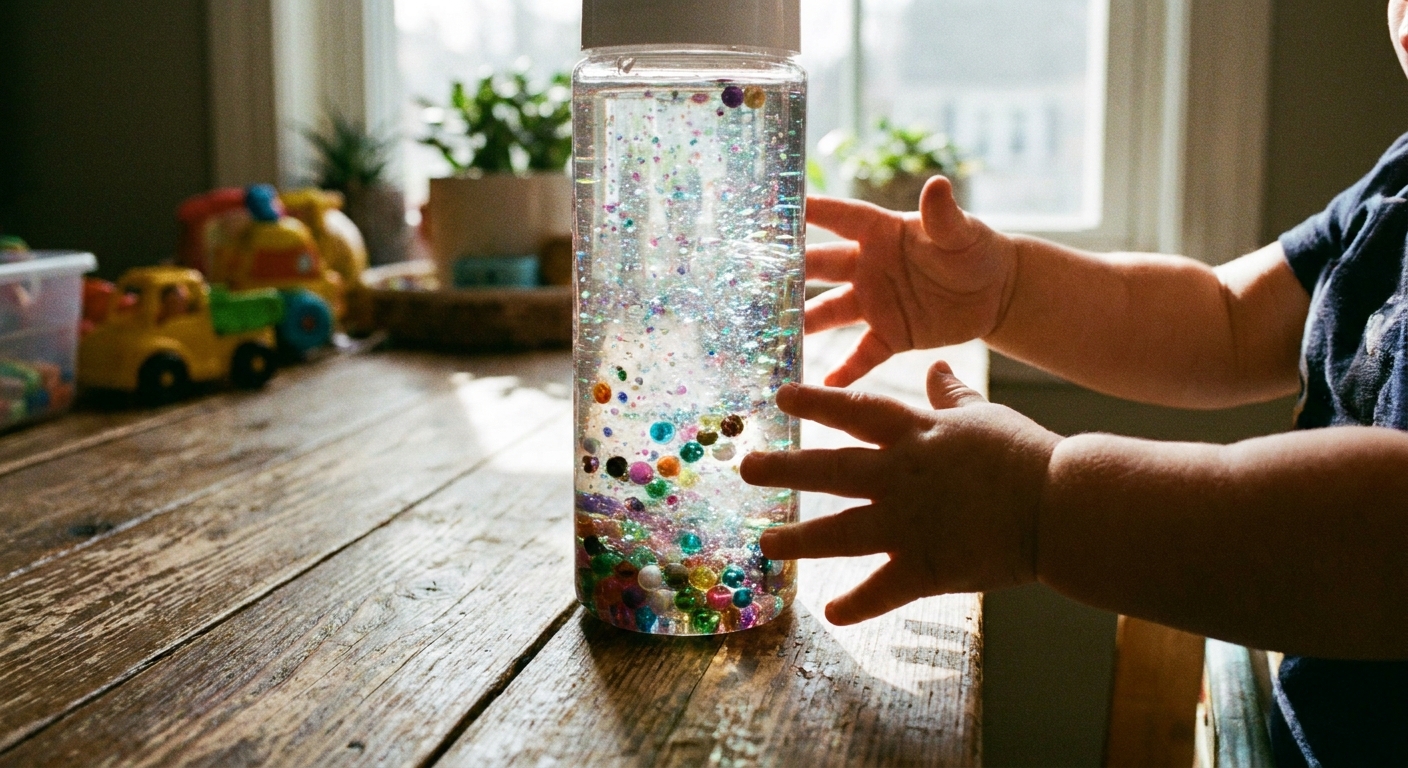
A calming sensory bottle is a sealed, clear container filled with slow-moving, visually interesting materials. When a toddler shakes, flips, or rolls it, the contents swirl and then gradually settle.
- Visual tracking: Watching glitter or beads drift down can be calming for some toddlers.
- Simple cause and effect: Shake, swirl, settle. That predictability can feel comforting.
- A pause button: It gives hands something to hold while feelings cool down.
It is not a magic switch that stops every tantrum. Think of it as one helpful tool in a calming toolbox.
Best bottle choices for toddlers
For toddler safety, choose a container that is tough, lightweight, and hard to crack.
- Sturdy plastic bottle: A clear plastic water bottle, sports drink bottle, or sensory-style bottle with thick sides.
- Size: 8 to 16 oz is usually easy for small hands to hold.
- Lid style: A screw-top lid is easiest to seal securely.
Avoid glass for toddler calming bottles. Even a small drop can become a big hazard.
Supplies (pick your combo)
There are lots of ways to build a calming bottle. Start simple, then add extras once you know what your toddler enjoys watching.
Basic supplies
- Clear plastic bottle with lid
- Warm water
- Clear glue or glycerin (for slow movement)
- Glitter (fine glitter moves more smoothly than chunky glitter)
- Small add-ins: sequins, plastic beads, pony beads, buttons, or waterproof confetti
- Optional: a drop or two of food coloring
- Strong waterproof glue to seal the lid (see sealing tips below)
- Funnel or rolled paper funnel
Quick note on clear glue: Some clear glues stay beautifully transparent and some turn cloudy or separate. If you are trying a new glue, test a small amount in a cup of water first so you know how it behaves.
Safety note about small pieces
Anything that fits through a toddler’s mouth is a choking hazard if the bottle opens. Sensory bottles must be adult-assembled and permanently sealed, and they should be used with supervision.
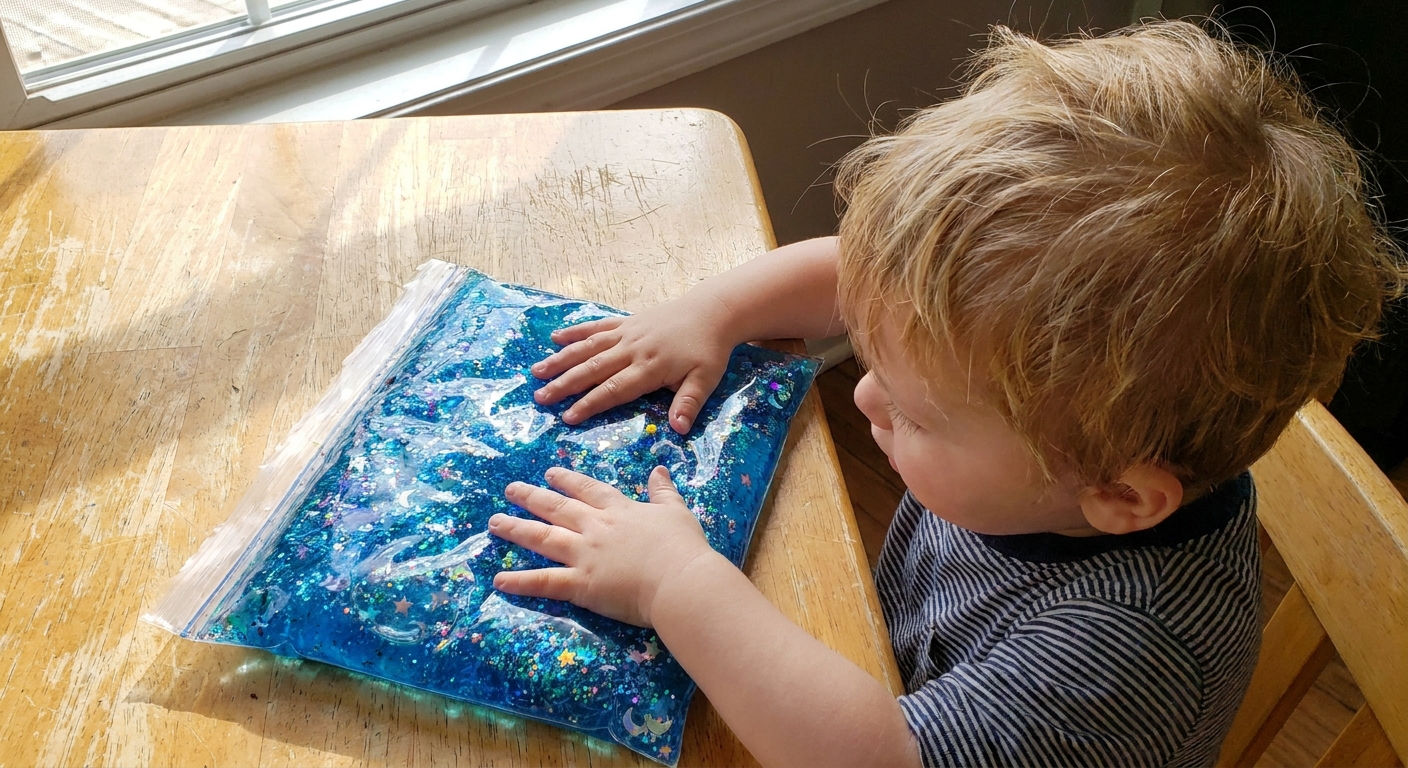
If your toddler is in a heavy mouthing phase, consider starting with a safer alternative like no-mess sensory bags while you build the habit of gentle hands.
Step-by-step: glitter bottle
This is the go-to starter bottle: sparkly, slow, and soothing.
- Clean the bottle. Wash and dry it completely so everything stays clear.
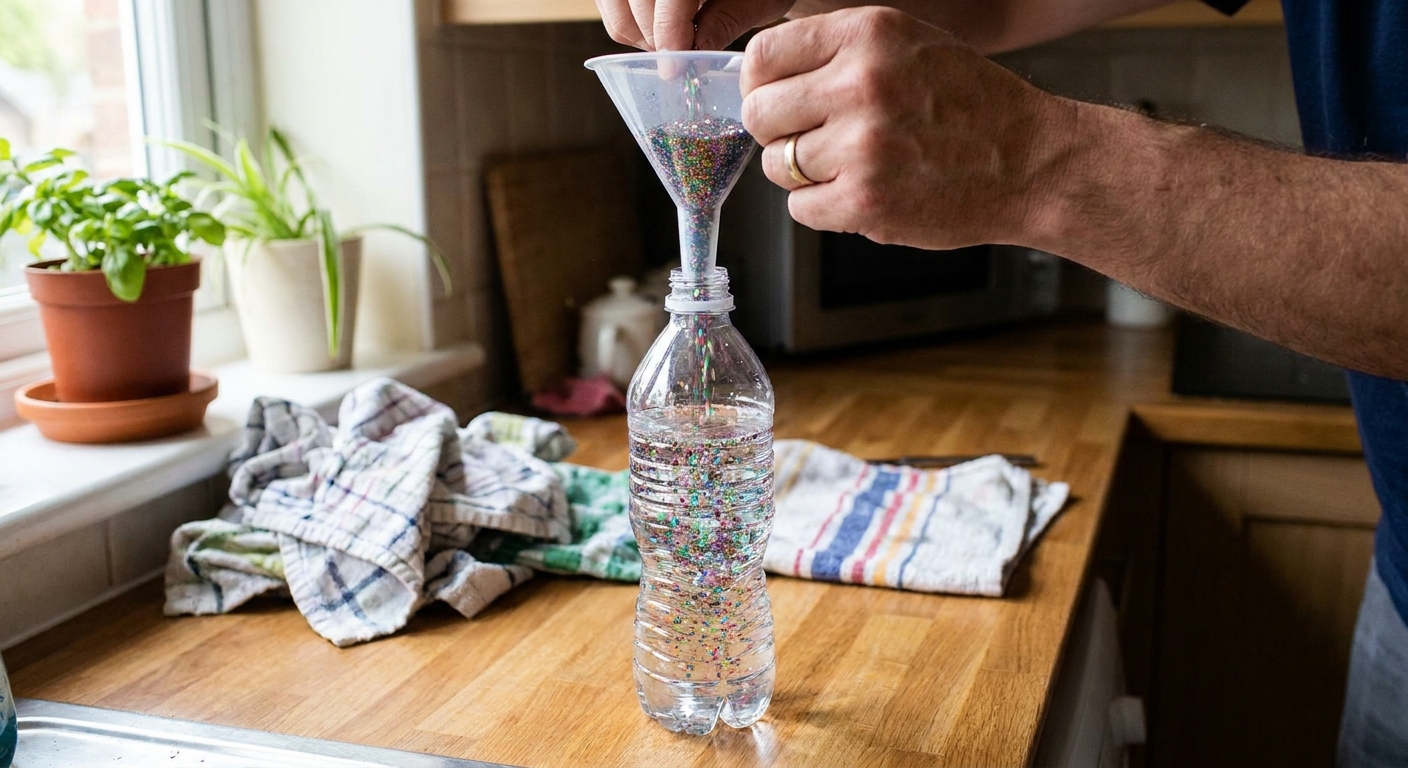
- Add glitter and mix-ins. Use a funnel. Start small. You can always add more sparkle later.
- Add warm water. Fill about 2/3 full.
- Add clear glue or glycerin. Add 1 to 3 tablespoons to start, then top off with water. More glue or glycerin means slower drifting.
- Optional color. Add 1 to 2 drops of food coloring for a soft tint.
- Top off. Add water until the bottle is nearly full, leaving a little space at the top so it can move when shaken.
- Test the flow. Close the lid tightly and flip it over. If it settles too fast, add more glue or glycerin. If it feels too thick, add a little more water.
- Seal the lid. Dry the outside of the lid area. Remove the lid, add waterproof glue around the inside rim, screw it on tightly, then glue around the outside seam for extra security. Let it cure completely out of reach.
Tip: Many families like a bottle that takes roughly 30 to 90 seconds to settle after a big shake. Slow enough to watch, not so slow that it feels stuck.
Sealing tips (read this)
“Waterproof glue” can mean a few different things. What matters most is that the adhesive bonds well to plastic, dries hard, and does not peel or soften with warmth.
- Look for: a strong plastic bond, fully cured before play, and a seal that cannot be picked off.
- Avoid relying on hot glue alone: it can loosen if the bottle gets warm or is dropped a lot.
- Extra security: If your bottle has a tamper ring or extra cap piece, keep it on. A second layer of adhesive around the outside seam adds peace of mind.
3 bottle variations toddlers love
1) Ocean swirl bottle
This one is all about slow waves.
- Water
- A splash of clear glue or glycerin
- A few drops of blue or teal food coloring
- Optional: a pinch of glitter
- Optional: a few waterproof beads like “bubbles”
To make it feel like waves, keep the add-ins minimal so the movement stays smooth.
2) Rainbow calm-down bottle
Choose beads or sequins in a few clear color groups and keep the liquid mostly clear. This makes it easier for toddlers to notice colors while they watch everything drift.
If your toddler loves sorting and matching, pair this with simple color play from sensory bins for color recognition and sorting.
3) “I Spy” settle bottle
Use a thicker liquid so objects drift slowly, then hunt for items as they settle.
- Water + clear glue or glycerin
- Small objects: buttons, foam shapes, tiny plastic animals (larger ones that will not wedge into the neck)
- Optional glitter
Keep it uncluttered. Too many items can make it visually busy instead of calming.
How to use bottles for big feelings
Sensory bottles work best when they are introduced before a full storm, then brought out again in the moment.
Practice when your toddler is calm
- Show how to shake, then watch it settle.
- Use simple words: “Shake, then breathe. Watch it fall.”
- Practice gentle hands: roll it, tip it, hold it on your lap.
In the middle of a meltdown
- Offer, do not force. Place it nearby: “Your calm bottle is here.”
- Make it easy to see. Dim the lights a bit if possible, or sit near a window.
- Co-regulate with a tiny script. Try: “Let’s watch it together. Up, swirl, and down.”
- Use it like a short timer. “We can watch until the glitter reaches the bottom.”
After the calm
When your toddler is steady again, that is the moment to teach. Name the feeling, then name the tool.
Example: “That was a big mad. Your body got help when we watched the bottle settle.”
Where to keep them
Put sensory bottles where big feelings tend to happen.
- In a low cabinet in the kitchen or living room
- In a small “calm corner” basket
- Near books and soft seating
- In the car for tough transitions (only if it can be safely supervised)
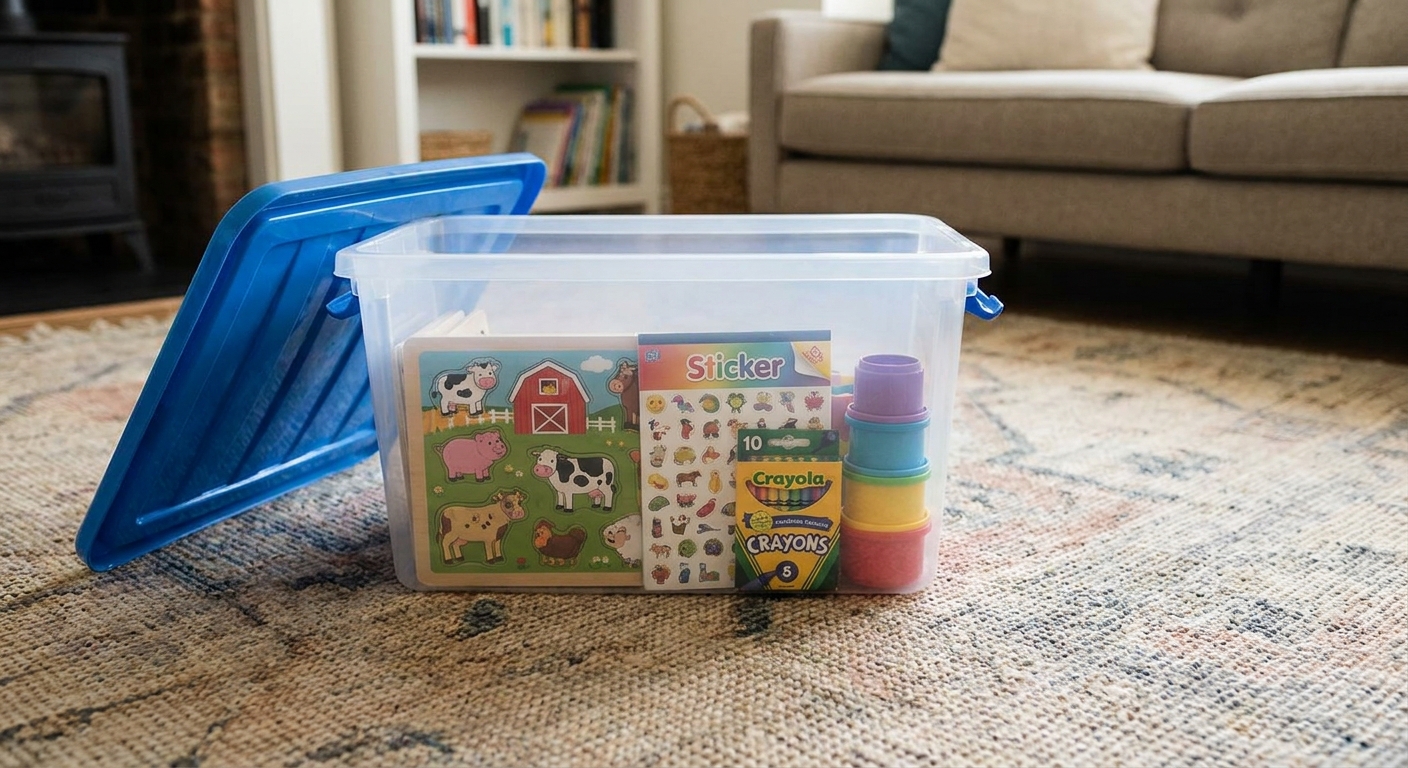
If you already have an independent play setup, a calming bottle fits nicely alongside an emergency rainy day bin as a quiet reset option.
Safety checklist
- Seal the lid permanently with an adhesive that bonds to plastic, and let it cure fully.
- Supervise use. Sensory bottles are tools, not teethers.
- Check for leaks before each use, especially if the bottle has been dropped.
- Skip breakable containers like glass.
- Choose age-appropriate fillers. If a lid could ever come loose, small parts become dangerous fast.
Cleaning and replacing
Most sealed sensory bottles are not meant to be reopened and washed. Once it’s sealed, think of it as a closed tool.
- Replace it if you see leaks, cracks, a loose lid, cloudiness you cannot fix, or anything that looks like growth inside.
- Avoid organic fillers (food, pasta, rice, beans) in calming bottles with water. They can spoil over time if moisture gets in.
- If it leaks: clean up promptly, keep your toddler away from the liquid and any loose pieces, and retire the bottle.
Troubleshooting
My glitter clumps
- Try finer glitter.
- Add more liquid and shake well.
- Some chunky glitter is more likely to clump or stick. A little is okay, but too much can make the bottle frustrating instead of calming.
Everything settles too fast
- Add more clear glue or glycerin to thicken the liquid.
- Use warm water to help it mix more smoothly.
The bottle looks cloudy
- Too much glue can make it hazy. Add water a little at a time and re-test.
- Rinse the bottle well before starting so soap residue does not cloud the liquid.
- If it stays cloudy, try a different clear glue next time. Some formulas just do that.
Glitter sticks to the sides
- Try a little more water so the mixture is not overly thick.
- Tap and roll the bottle gently instead of shaking hard. Some bottles get a bit of static cling.
- If it still bugs you, use less glitter and choose finer glitter next time.
My toddler throws it
That happens. Big feelings often come with big body movements.
- Try using it while sitting together on the floor.
- Offer it earlier, before the peak.
- Use fewer stimulating add-ins so it feels more settling.
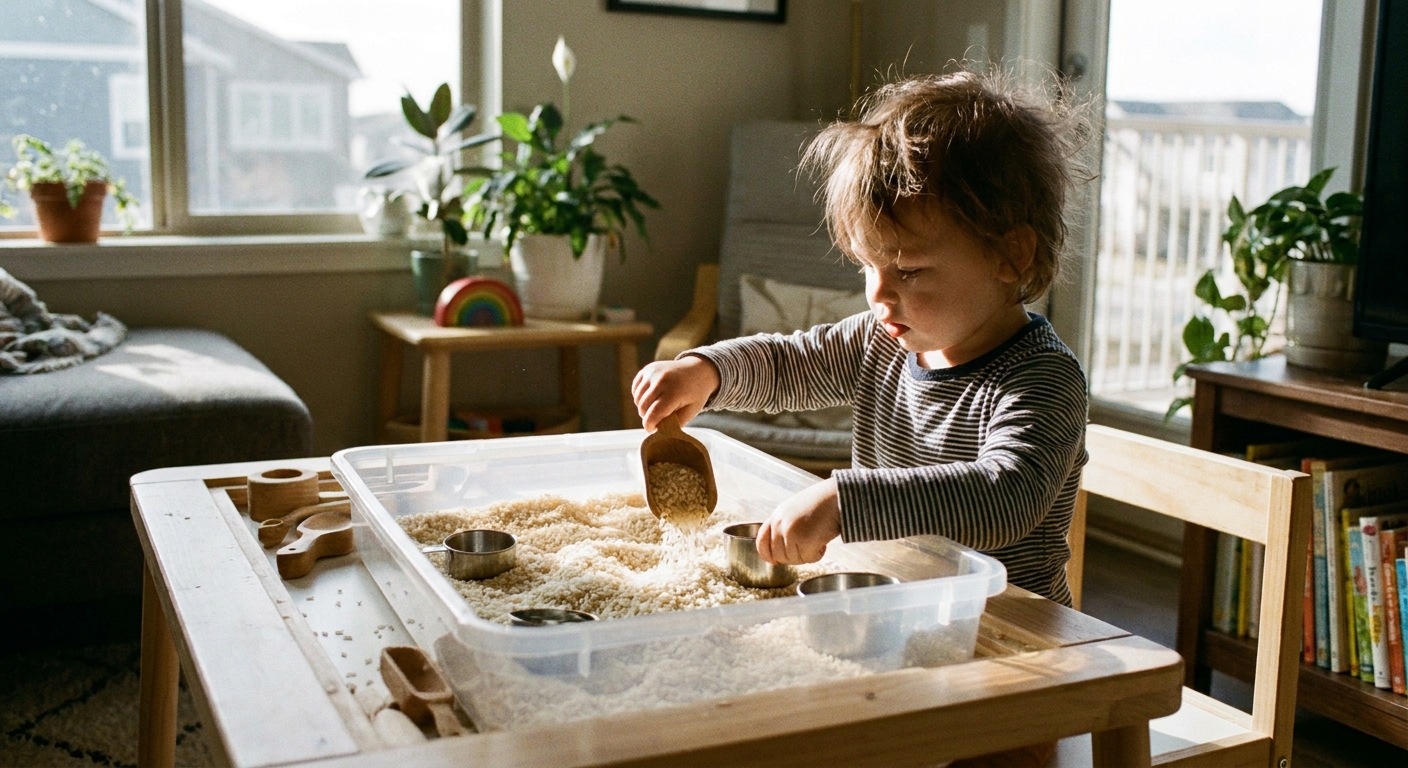
For more help with tossy hands during sensory play, these tips can support you: how to stop your toddler from throwing sensory bin fillers.
Simple add-ons to pair with it
Sensory bottles are often more effective when they come with another calming input.
- Slow breaths: “Smell the flower, blow the feather.”
- Wall pushes: push hands into the wall for 10 seconds
- Cozy corner: pillows and a blanket for deep pressure comfort
- Quiet song: a short fingerplay can help reset attention. Try a few from action songs and fingerplays for toddler speech and keep the rhythm slow.
FAQ
What age can toddlers use calming sensory bottles?
Many families introduce them in the toddler years, but the key is safe construction, supervision, and a bottle that is sturdy enough for little hands.
Is glycerin safe for sensory bottles?
Vegetable glycerin is commonly used to thicken sensory bottle liquid. The biggest concern is making sure the bottle is sealed so nothing leaks out. If a leak happens, clean it up promptly, keep it out of reach, and replace the bottle. Even common household ingredients can irritate skin or eyes if they get splashed around.
Can I use baby oil?
Oil and water bottles can look beautiful, but oil can leak and make floors slippery if the bottle ever cracks or the lid loosens. Oil can also be hard to fully clean and may not play nicely with every plastic over time. For toddler calming bottles, a water + clear glue or glycerin mix is usually simpler and less slippery.
How long do sensory bottles last?
With a good seal and a sturdy container, they can last a long time. Replace the bottle if you notice leaks, cracks, cloudiness you cannot fix, or a lid that no longer feels secure.
A gentle reminder
When toddlers melt down, they are not giving anyone a hard time. They are having a hard time. Calming sensory bottles give you a simple, soothing way to offer support while their bodies learn how to settle.
Take a breath with them, and let the glitter drift down.