Let’s dive in and make a wonderful, happy mess together!
Ramps and ball drops are pure toddler magic: drop, roll, zoom, bonk, and ta da, something happens. That simple “I did that!” moment is cause-and-effect learning in action. With a few household materials like paper towel tubes and cardboard, you can set up gravity games that build early logic, problem-solving, and even a bit of beginner physics.
Quick safety notes (worth a tiny waddle pause)
- Supervision matters. Small balls and little loose pieces can be choking hazards. As a practical rule of thumb, avoid anything small enough to fit through an empty toilet paper roll, especially for toddlers who still mouth toys.
- Choose toddler-safe balls. Think big, lightweight, and squishy: foam balls, soft fabric “scarf” balls, chunky toddler balls, or a large wiffle-style ball. Save tiny balls (and pom poms) for older toddlers with close supervision.
- Secure your build. Use painter’s tape or masking tape so tubes and ramps do not slip.
- Taping to walls: be kind to paint. Test tape in a hidden spot first, avoid freshly painted walls, and keep wall setups low. Check often that nothing can peel off and fall on your toddler.
- Mind the landing zone. Aim ramps toward a wall, couch, or a box “catcher” to keep balls from becoming runaway rolling buddies.
- Skip heavy objects. Use lightweight balls and chunky cars, not marbles or metal balls.
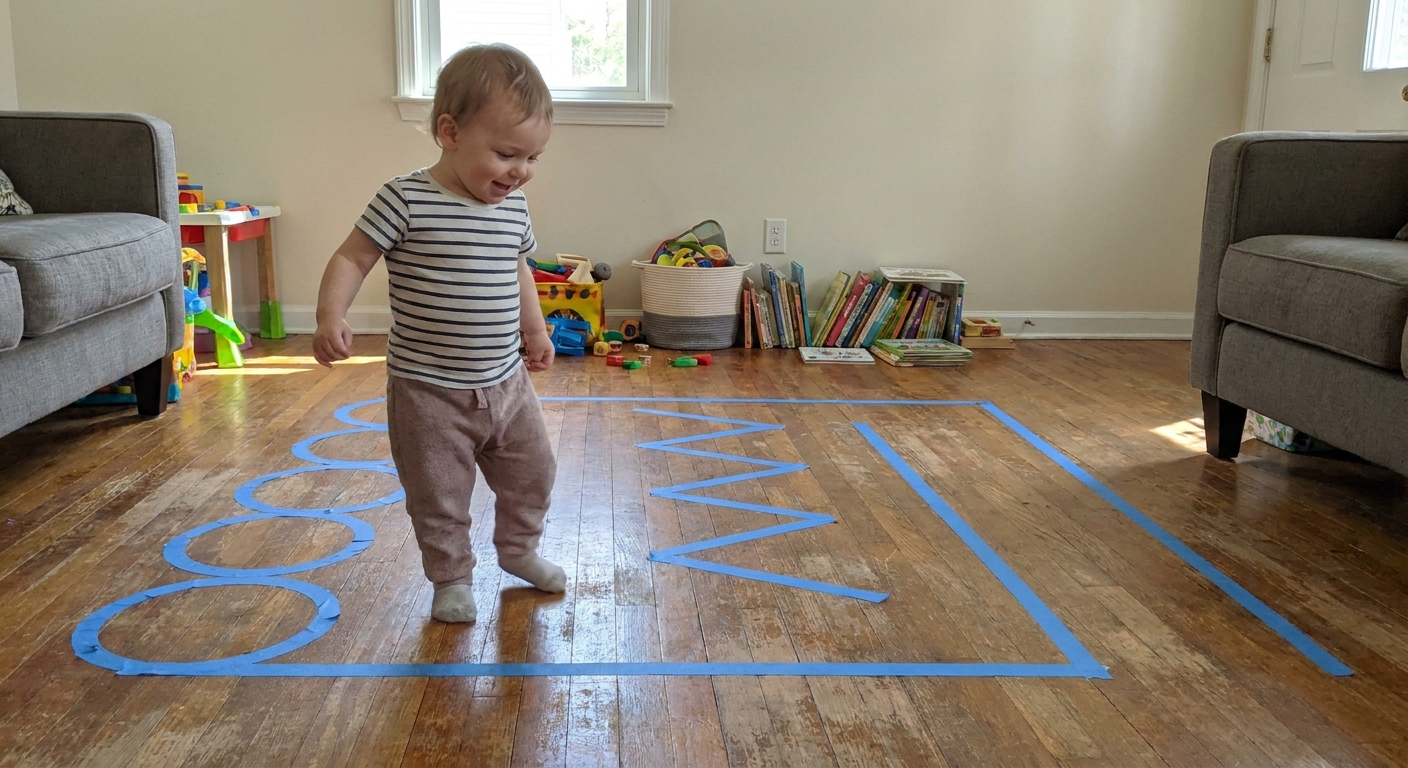
If you need more ideas for tape-friendly indoor play, peek at 10 Painter’s Tape Floor Games for Toddlers.
Materials that make ramps easy
Mix and match from what you already have:
- Paper towel tubes and toilet paper tubes
- Cardboard from a delivery box or cereal box
- Painter’s tape or masking tape
- Soft, toddler-safe balls in different sizes
- Toy cars (chunky toddler size)
- Plastic cups or small boxes for targets
- Books or couch cushions to change ramp height
- Optional: a muffin tin, a colander, a shoebox lid
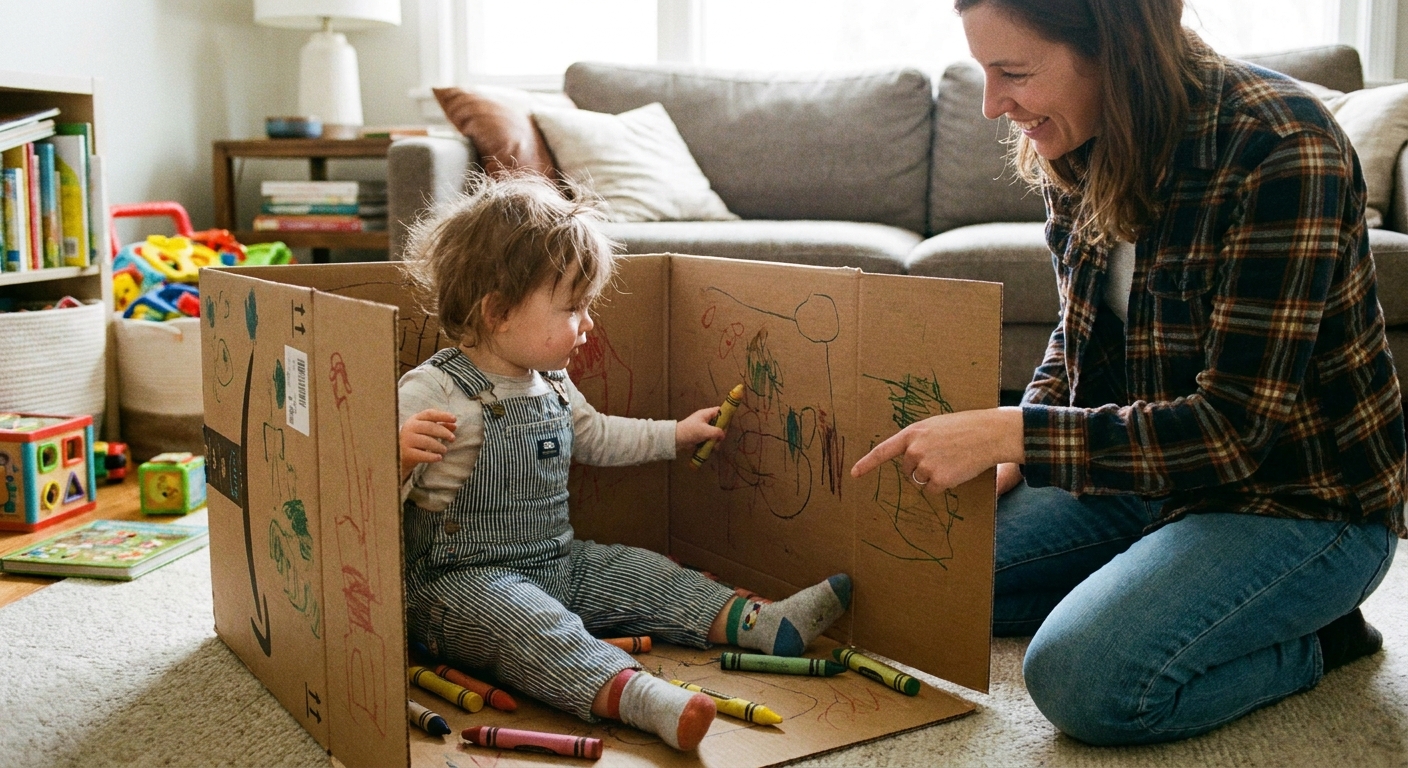
Cardboard box season is always in style. For more ways to use it, waddle over to Cardboard Box Play: 12 Delivery Box Ideas for Toddlers.
How to build a simple toddler ramp (in 2 minutes)
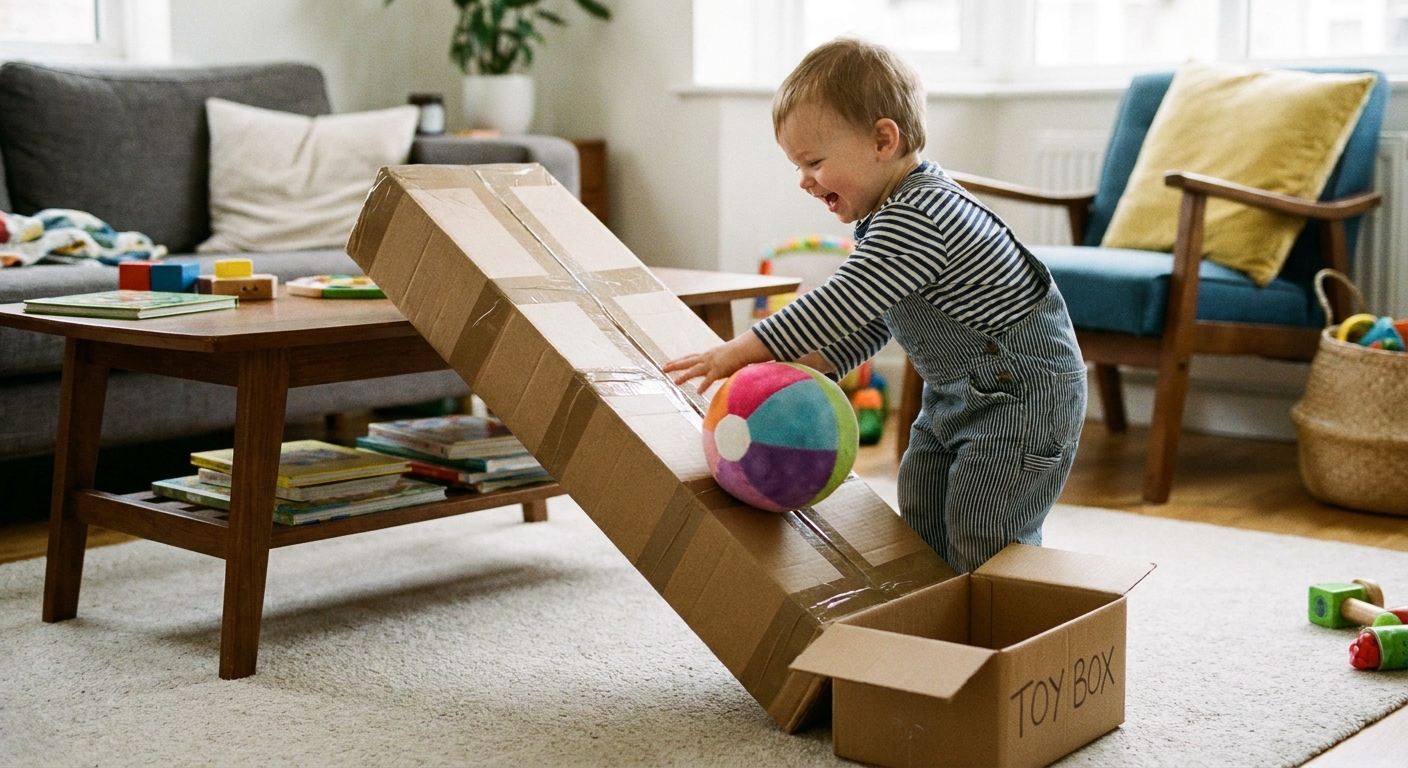
- Choose the ramp: a piece of cardboard about as long as your toddler’s arm span is plenty.
- Create height: prop one end on a stack of books, a shoebox, or a couch cushion.
- Add side rails: fold up the edges of the cardboard or tape on strips of cardboard so the ball stays on track.
- Make a catcher: place a box or laundry basket at the bottom to stop the ball.
7 easy cause-and-effect activities with homemade ramps and ball drops
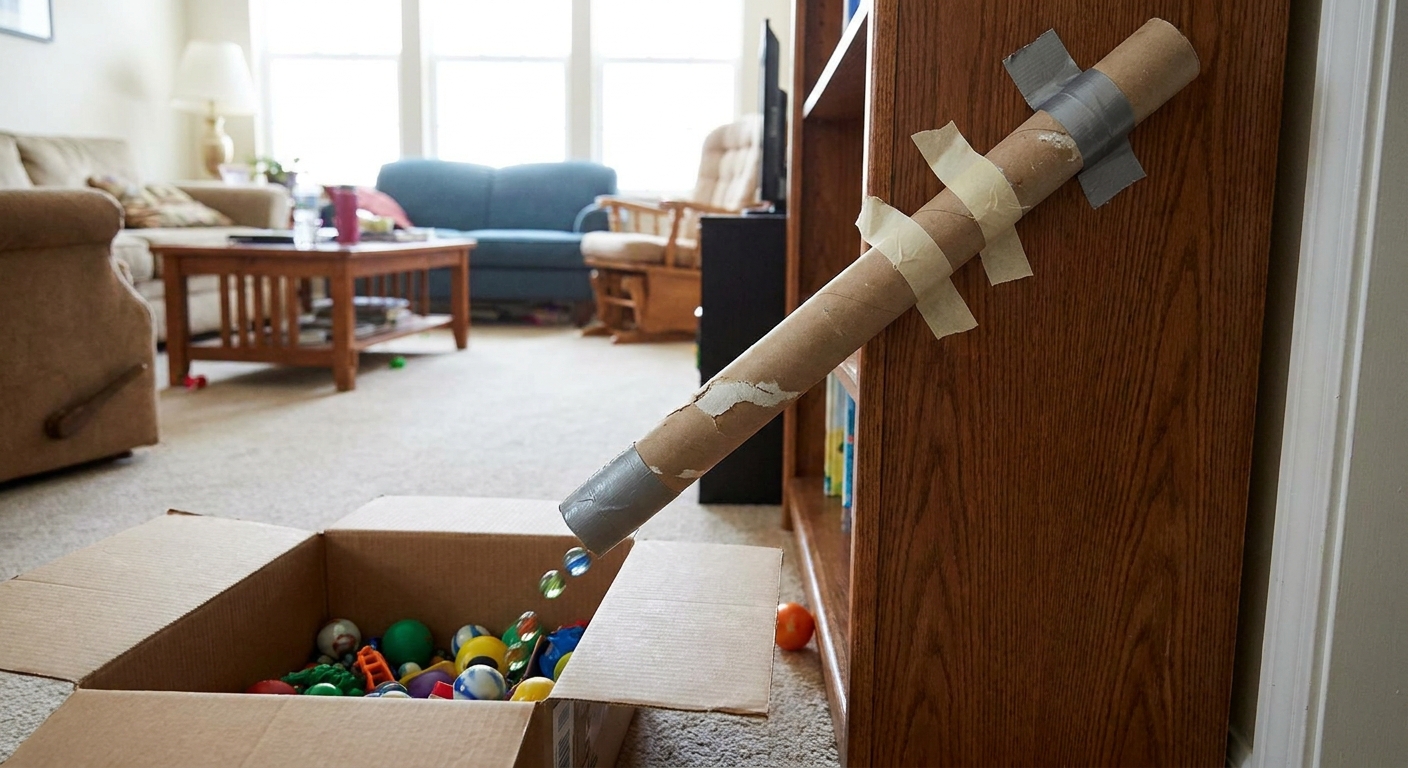
1) The basic ball drop: tube into a box
What to do: Tape a paper towel tube to a chair, shelf, or a large cardboard panel so it slopes down into a box.
- Cause-and-effect focus: “When I drop the ball in, it comes out the bottom.”
- Make it richer: Try different balls. Which one is faster? Which one gets stuck?
- Toddler talk: “In… out!” “Ready… set… go!”
2) Switch track: choose left or right
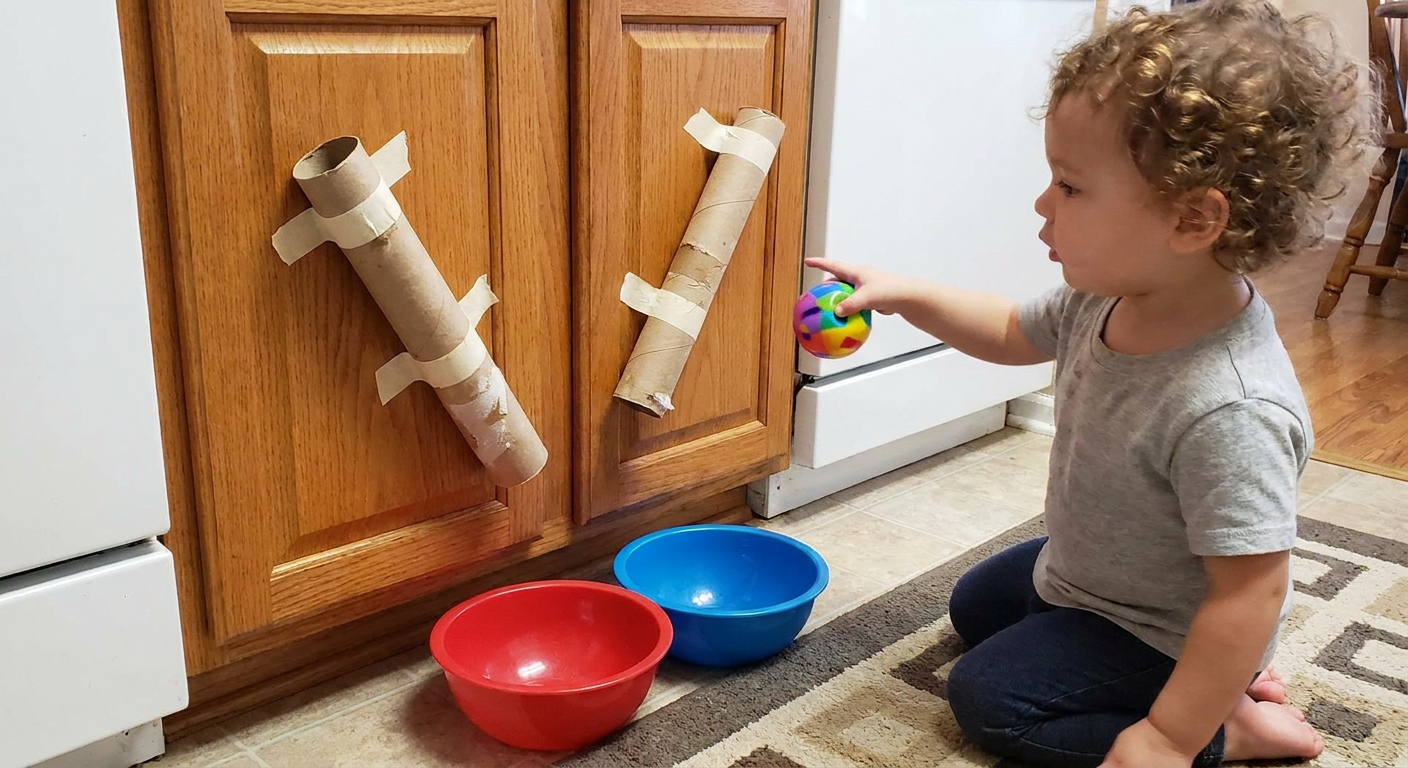
What to do: Tape two separate tubes side-by-side, each aimed at its own catcher (two bowls, or two boxes). Let your toddler choose which tube to use each time.
- Cause-and-effect focus: Choice and prediction. “If I pick this side, it lands here.”
- Add a twist: Put a stuffed animal in each catcher. “Feed the duck” versus “feed the bear.”
3) Knock-down tower: roll to topple
What to do: Set up a short ramp and place a small stack of paper cups or lightweight blocks at the bottom. Roll a ball down to knock them over.
- Cause-and-effect focus: Force and impact. “Ball hits cups, cups fall.”
- Level up: Move the tower farther away or raise the ramp higher.
- Fine-motor bonus: Stacking cups is great hand control practice.
4) Color target roll: aim for the right cup
What to do: Place 3 to 5 cups at the bottom of a ramp. If you have different cup colors, call out a color. If not, use household objects as targets (spoon cup, sock cup, block cup).
- Cause-and-effect focus: “If I aim this way, it goes into that cup.”
- Early learning tie-in: Color recognition and listening skills.
For more easy color play ideas, visit 5 Simple Sensory Bins for Color Recognition and Sorting.
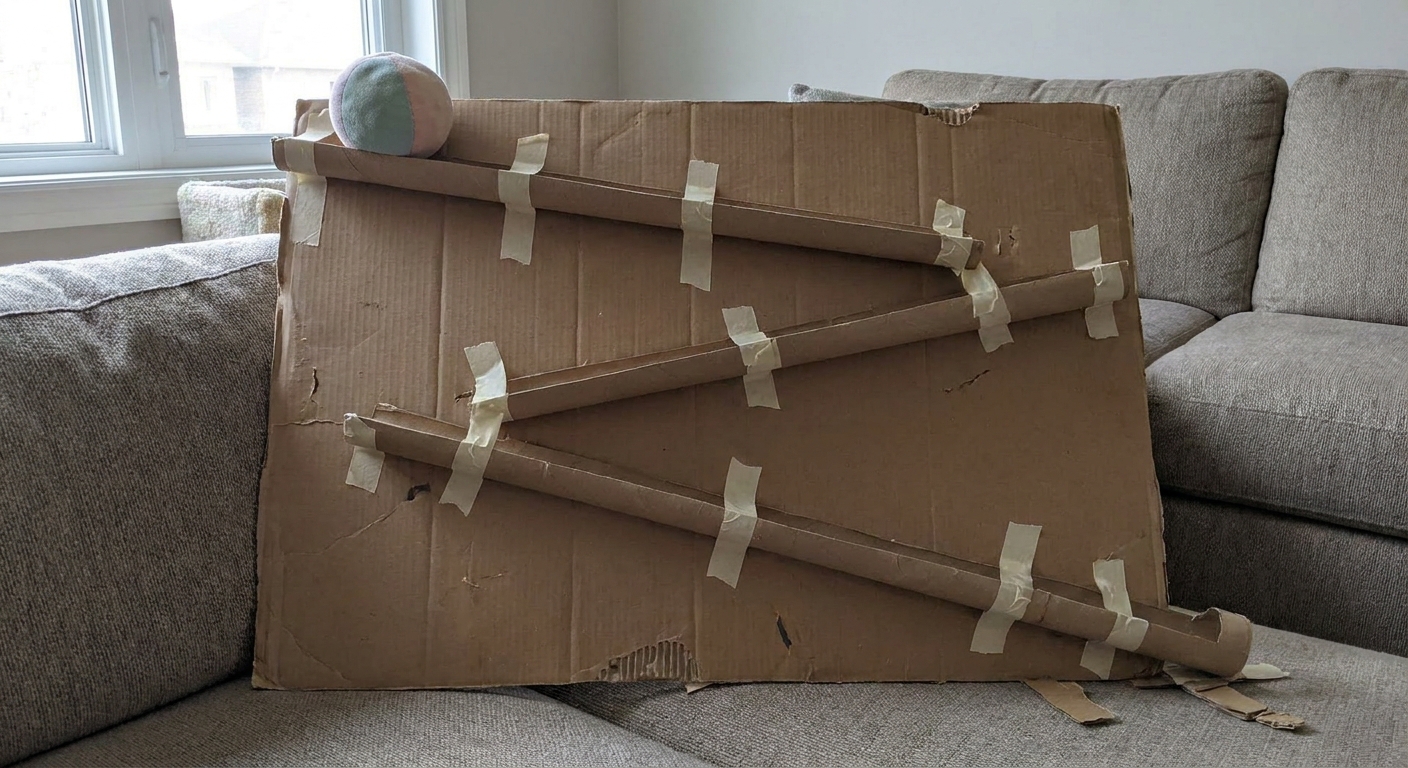
5) The zigzag wall run: tape tubes in steps
What to do: Tape several toilet paper tubes cut in half (so they form little open channels) in a zigzag down a wall or a large cardboard panel. Drop a ball at the top and watch it travel step-by-step.
- Cause-and-effect focus: Sequencing. “It goes here, then here, then here.”
- Build logic: If the ball falls off, adjust the angle or add a side rail.
- Keep it toddler-friendly: Set it up low, and check often that tape and tubes are still secure.
6) Sound surprise: land in noisy, quiet, and soft spots
What to do: Create three landing zones at the bottom of a ramp:
- A metal bowl (loud clang)
- A plastic container (medium thump)
- A laundry basket with a towel (quiet soft landing)
- Cause-and-effect focus: “Where it lands changes the sound.”
- Language boost: Loud, quiet, clang, thump, soft.
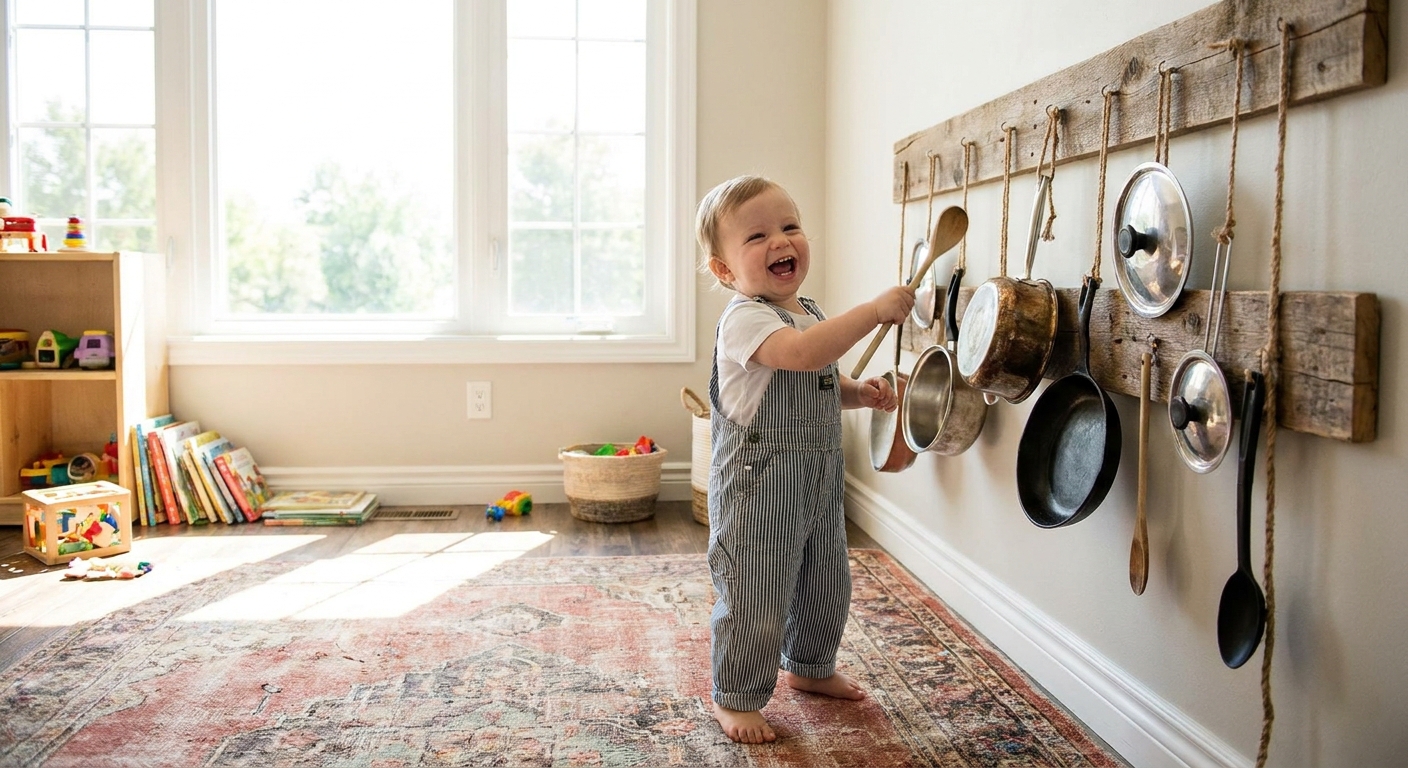
If your toddler loves sound play, you might also like DIY Sensory Sound Wall With Kitchen Utensils.
7) The “trap door” drop: ball disappears, then reappears
What to do: Cut a hole in the lid of a shoebox (adult-only step with scissors or a box cutter), then tape a tube from the hole down into the box. Cut a second hole on the side of the box as an “exit.” Drop the ball in the tube so it vanishes, then retrieve it from the exit.
- Safety note: After cutting, tape over any rough or sharp cardboard edges so little hands cannot get scratched.
- Cause-and-effect focus: Object permanence and simple problem-solving. “It’s inside. How do I get it out?”
- Extra fun: Use a flashlight to peek inside the box.
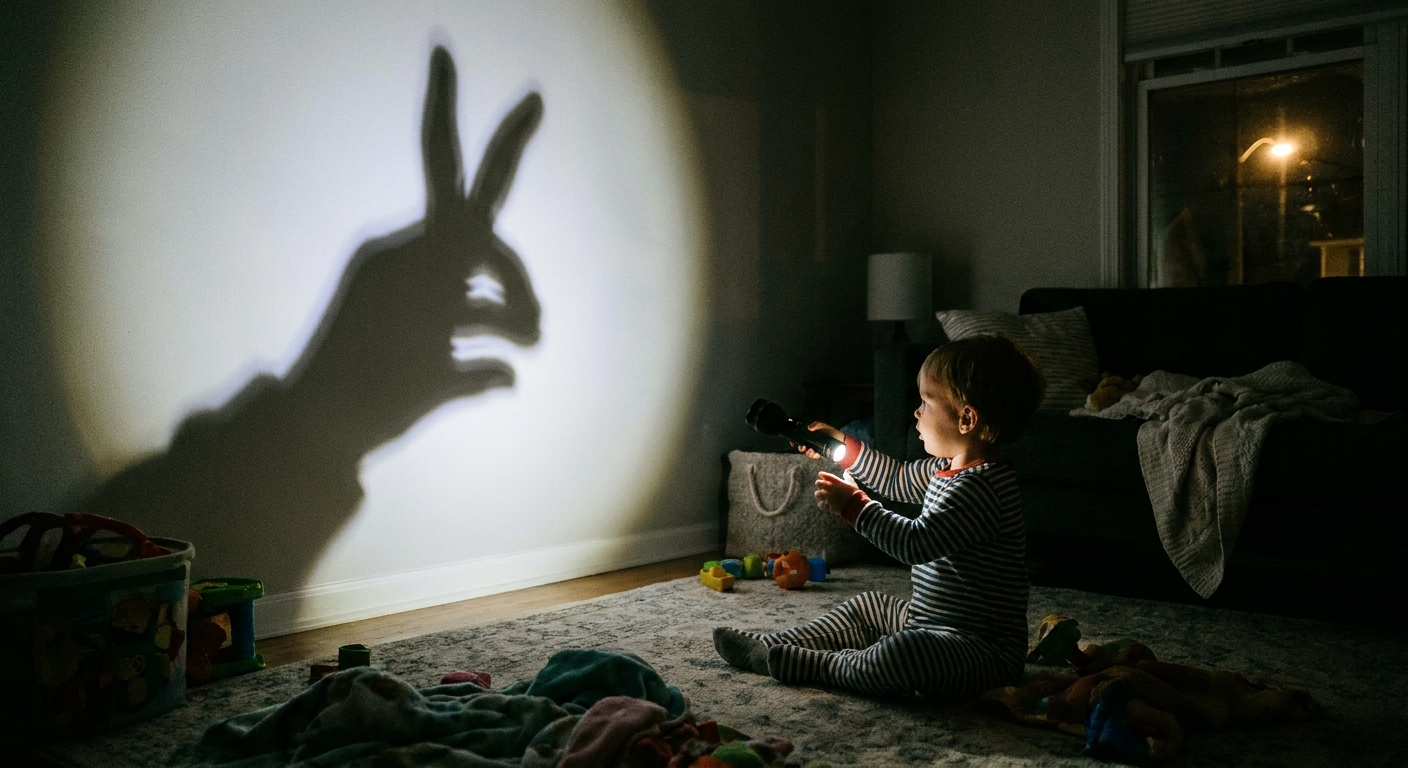
For more simple light play, visit Indoor Flashlight Play: 5 Easy Shadow Games.
Easy ways to adjust difficulty by age
Younger toddlers (around 1 to 2)
- Use one short tube and a big, easy-to-grab ball.
- Keep the ramp low and gentle.
- Skip small items like pom poms for toddlers who mouth toys.
- Focus on simple words: in, out, go, stop, again.
Older toddlers (around 2 to 3+)
- Add choices (two tracks, multiple targets).
- Invite predictions: fast or slow? far or near?
- Introduce simple questions: “What will happen if we make it higher?”
Troubleshooting: when the ball run gets stuck
- Ball stops halfway: Increase the angle, or switch to a smoother, sturdier pathway. Paper towel tubes are often stiff and slick inside, so balls move through more easily than loosely folded cardboard channels.
- Ball falls off the ramp: Add side rails with folded cardboard or tape on “bumpers.”
- Tube keeps sliding: Use longer strips of tape and anchor the tube to a heavier surface like a box or chair leg.
- Too much chasing: Add a catcher box, play in a hallway, or use a pillow as a simple “bumper” at the end of the ramp.
And if your toddler loves to toss the balls instead of roll them, you are not alone. These tips can help: How to Stop Your Toddler From Throwing Sensory Bin Fillers.
What toddlers learn from ramps and ball drops
- Cause and effect: actions create results
- Early physics: gravity, speed, force, and slope
- Logic and prediction: “If I change this, then that changes too”
- Language: fast, slow, higher, lower, in, out, again
- Motor skills: grasping, releasing, aiming, and tracking with the eyes
These are big-building-block skills for early learning, wrapped up in a simple game that feels like pure play.
Little wrap-up
Homemade ramps and ball drops are one of the easiest ways to turn everyday cardboard and tubes into a brain-building adventure. Start simple, follow your toddler’s curiosity, and tweak one tiny thing at a time.
Now… ready, set, roll. Let’s make a wonderful, happy mess together!