Quack hello, busy grown-ups. If a delivery box just landed on your doorstep, you are holding a rainy day treasure chest. Cardboard boxes are lightweight, easy to shape, and wonderfully open-ended, which means toddlers can climb, scribble, hide, pretend, and giggle without needing a pile of fancy supplies.
Let’s dive in and make a wonderful, happy mess together!
Before you start: safety and setup
Cardboard play is simple, but a 60-second check makes it much smoother and safer.
Fast safety checklist
- Remove staples, plastic straps, and tape clumps that could scratch or wrap around fingers.
- Skip boxes with strong smells or visible stains. If you feel unsure about a box, recycle it.
- Trim sharp corners and flatten pointy flaps.
- Choose toddler-safe decorating tools like washable crayons, washable markers, dot paint, and stickers.
- Supervise climbing and keep box play away from stairs.
- No standing or jumping in boxes, especially if the box is tall or wobbly.
Handy “box kit” supplies
- Painter’s tape or masking tape
- Adult scissors kept out of reach
- Child safety scissors only with close supervision (and only if your child is ready)
- A box cutter, used only when your child is fully out of reach, then put away immediately
- Washable crayons or markers
- Stickers, paper scraps, or scrap wrapping paper
- A blanket or towel for the floor
If your toddler still mouths things a lot, consider steering toward activities that use big pieces like paper balls, fabric scraps, or chunky crayons, and save tiny add-ons for later. Taste-safe sensory ideas live here: 10 taste-safe sensory bin fillers for toddlers who mouth everything.
12 ways to upcycle delivery boxes
Pick one idea, set a simple boundary like “tape stays with the grown-up,” and let your toddler’s imagination do the heavy lifting.
1) Classic crawl tunnel
Best for: wiggly bodies, gross motor play, indoor zoomies
Do this: Open both ends of a long box. If the box is short, tape two boxes together end to end. Add a blanket at the exit for a soft landing.
Make it extra fun: Add short crepe-paper fringes taped flat along the top edge for a “tickly” effect. Skip long ribbons or streamers, and remove any decorations right away if your toddler starts mouthing.
2) Coloring cave
Best for: quiet time, scribble practice, cozy sensory break
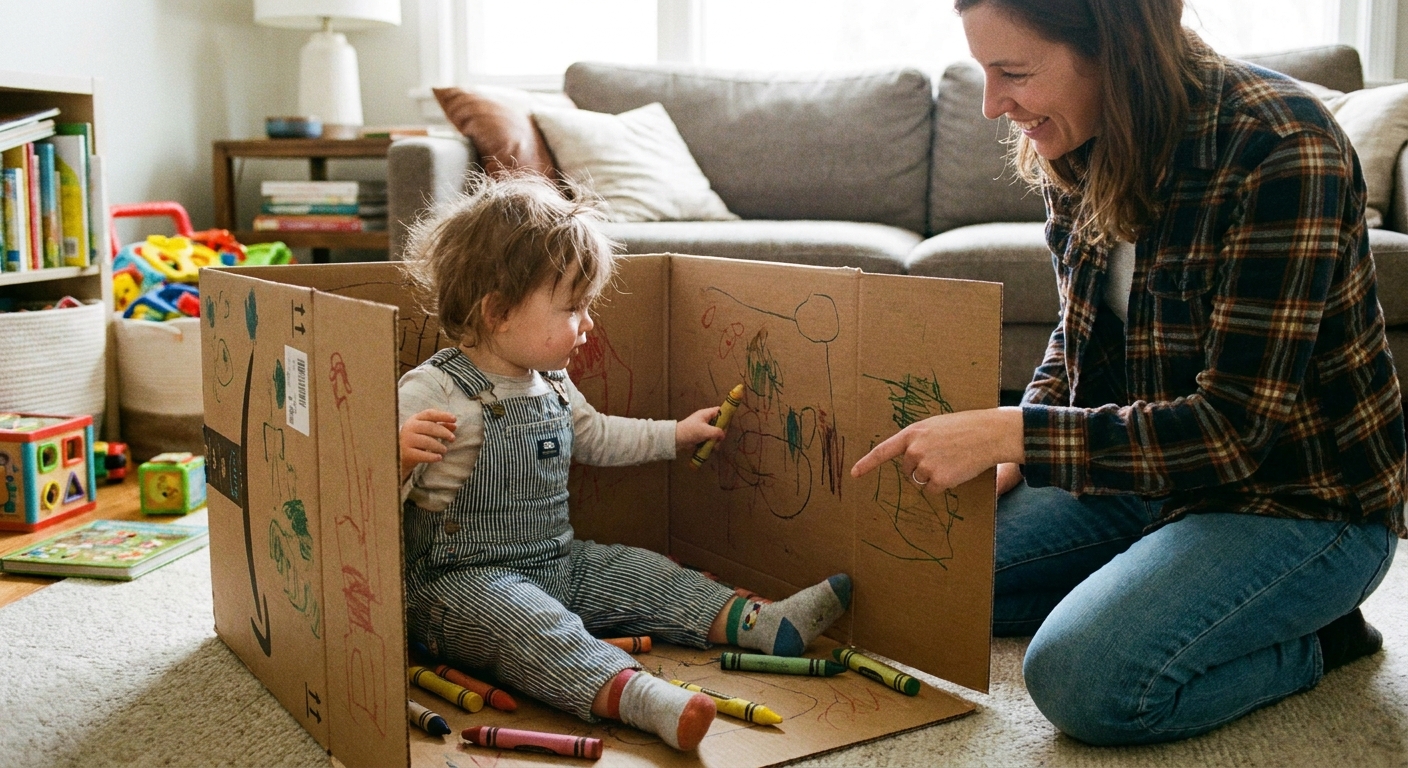
Do this: Turn a large box on its side. Cut a door shape (adults only). Put paper inside for drawing, or let them color the walls with washable crayons.
Tip: If marker mess is stressful, stick with crayons and add a towel underneath.
3) Peekaboo window house
Best for: social play, language building, silly games
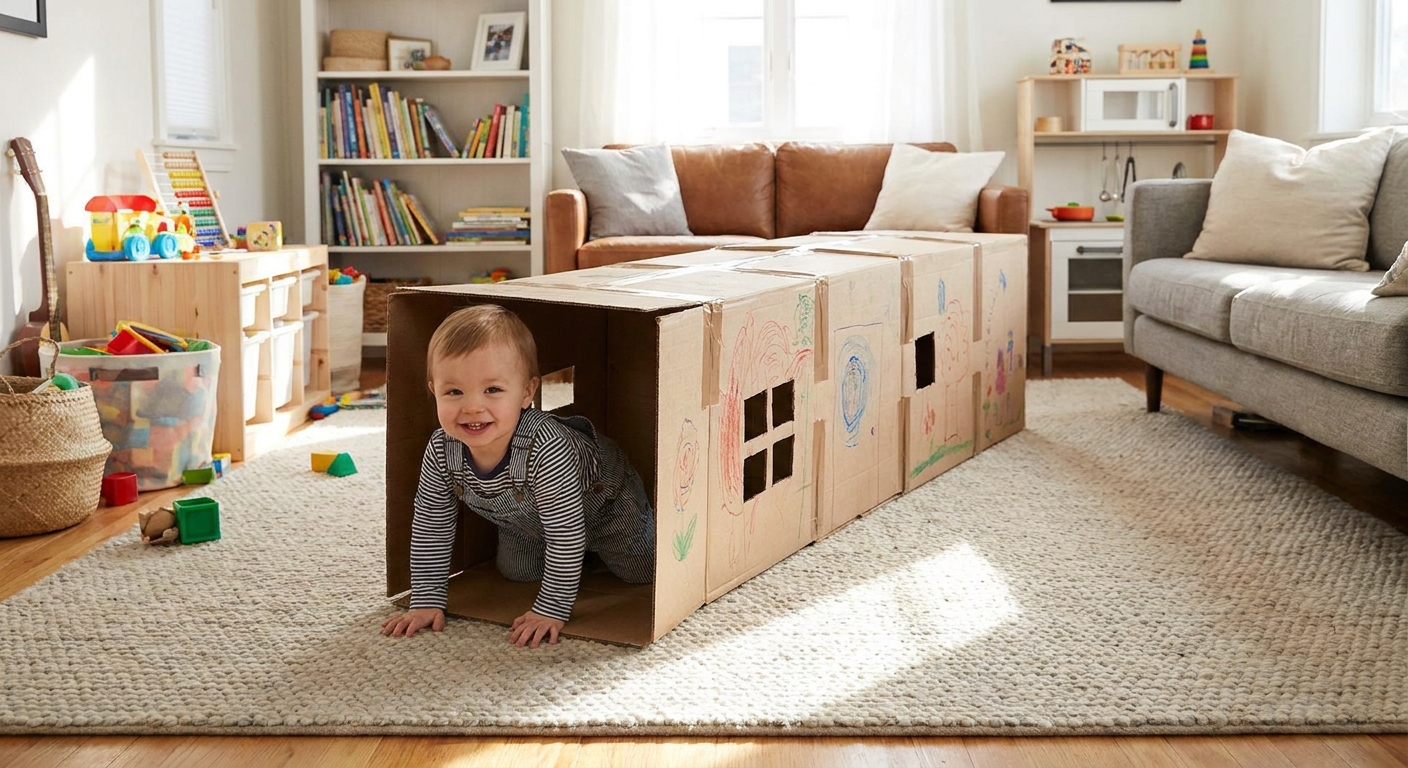
Do this: Cut two to four “windows” at toddler height. Keep the cutout flaps attached on one side to make shutters.
Try saying: “Knock knock,” “Open the window,” “Who lives here today?”
4) Pretend car or bus
Best for: dramatic play, turn-taking, sound play
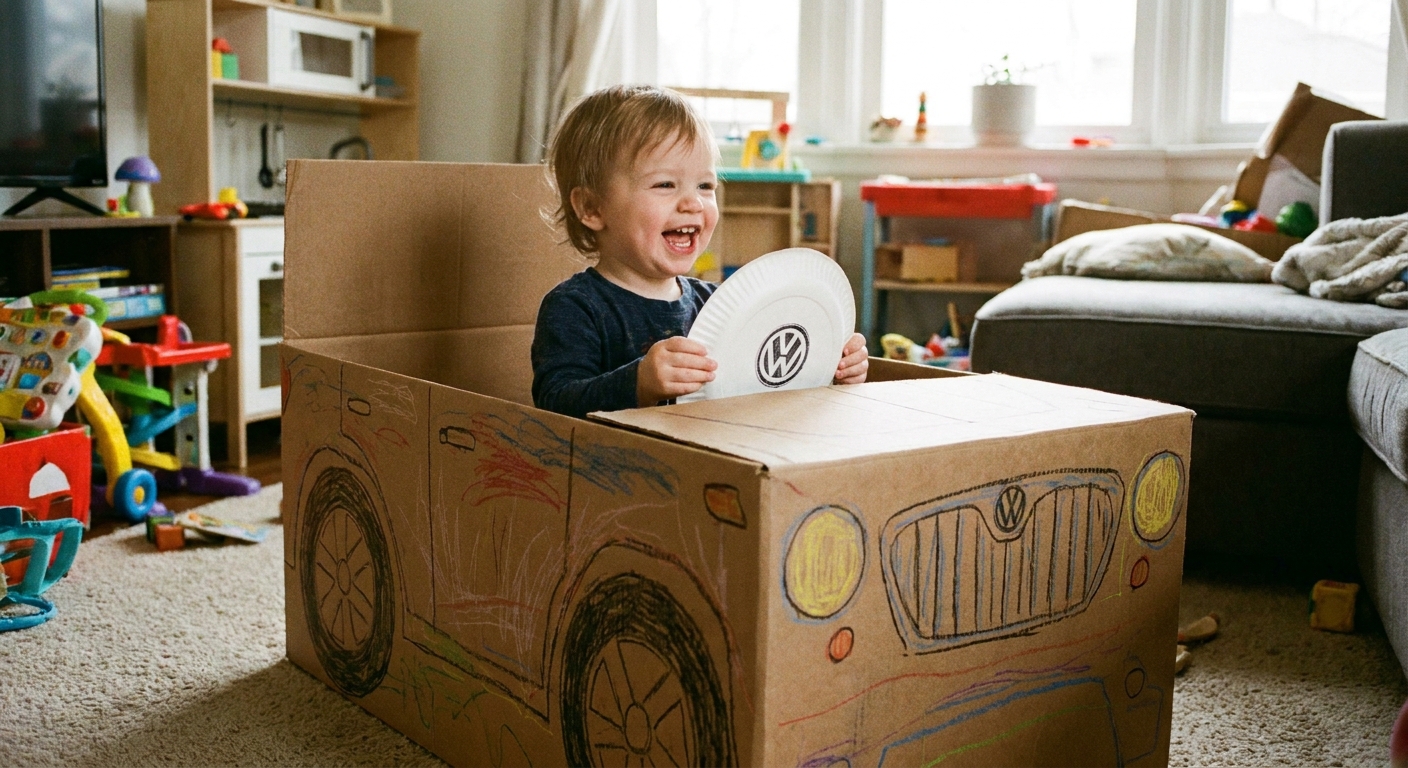
Do this: Cut a big opening on top so they can sit inside. Draw circles for wheels. Tape on a paper plate “steering wheel.”
Extend it: Add a scarf as a pretend seat belt, but never wrap, tie, or secure anything around a child’s body or neck.
5) Mailbox and letter drop
Best for: posting practice, fine motor skills, early matching
Do this: Cut a slot in the top. Use junk mail envelopes, greeting cards, or cardstock rectangles as “letters.”
Level up: Draw one color dot on each letter and matching dots around the slot for simple color matching.
6) Shape sorter box
Best for: problem-solving, hand-eye coordination
Do this: Cut a circle, square, and triangle in the lid. Offer large, toddler-safe “shapes” to drop in, like foam bath shapes, crumpled paper balls, or balled-up socks.
Keep it toddler-friendly: Make holes generous so success comes quickly.
7) Ball ramp and drop
Best for: cause and effect, repeated play
Do this: Cut a hole near the top side. Inside the box, tape a strip of cardboard at an angle as a ramp leading to a bottom opening. Roll soft balls or balled-up socks in and watch them pop out.
Mess-saver: Put the bottom opening into a laundry basket to “catch” everything.
8) Stuff and pull “tissue box”
Best for: toddlers who love emptying, sensory seekers
Do this: Cut a wide oval on top like a giant tissue box. Offer fabric scraps, scarves, or dish towels to stuff in and pull out.
Alternative: If you want a no-mess sensory feel, try sensory bags too: 7 no-mess sensory bags with household items.
9) Cardboard “ice cream” shop
Best for: pretend play, social skills, counting
Do this: Cut a serving window. Make “scoops” from crumpled paper wrapped in scrap paper, coffee filters, or tissue paper. Use a cup or bowl for serving.
Say and play: “One scoop or two?” “What flavor today?” “Here you go, thank you!”
10) Sticker “car wash” tunnel
Best for: fine motor skills, sensory input without water
Do this: Make a tunnel. Stick painter’s tape strips across the entrance like hanging “wash brushes.” Add big stickers inside for them to find and peel.
Note: Keep tape away from hair and supervise closely. If your child starts wrapping tape around fingers, switch to stickers only.
11) Box building blocks
Best for: stacking, knocking down, engineering play
Do this: Cut small shipping boxes down into chunky “blocks.” Tape flaps shut so they hold their shape. Stack into towers, then enjoy the toddler-approved crash.
Containment tip: Build on a blanket so pieces stay in one “play zone.” More small-space tips live here: Containing sensory bin mess in a small house.
12) Road, parking lot, and delivery station
Best for: vehicle lovers, open-ended play
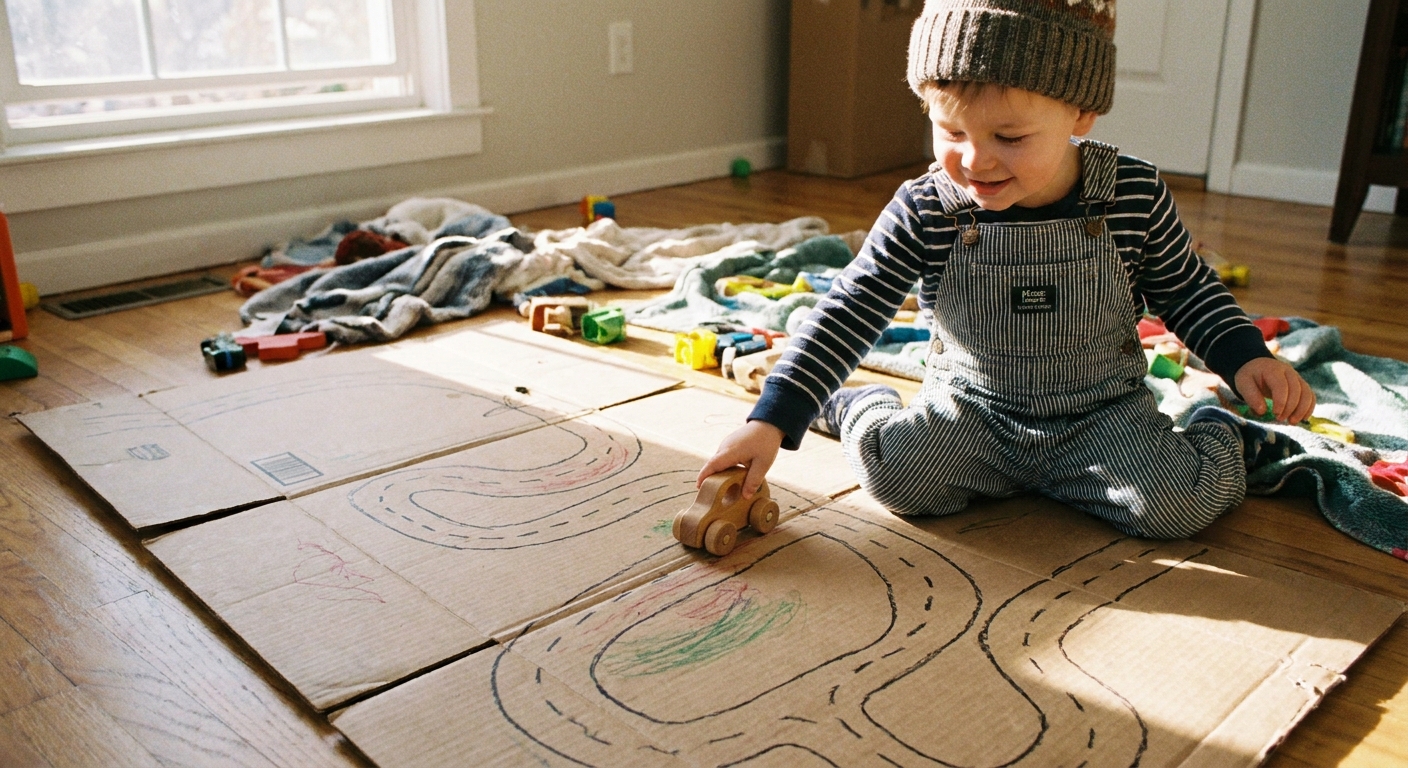
Do this: Flatten a big box into a cardboard “mat.” Draw roads with thick markers. Add a few taped-on “buildings” made from smaller boxes.
Easy add-on: Use masking tape on the floor to extend the roads beyond the cardboard.
Make it last
- Swap the role: today it is a cave, tomorrow it is a rocket, next week it is a pet vet.
- Change the tools: crayons one day, stickers the next, then a flashlight for shadow play.
- Add a timer routine: “We play, then we fold it up” can help toddlers transition without a big crash landing.
- Rotate two boxes: keep one hidden away so it feels new again.
Cleanup and storage
Quick cleanup tricks
- Shake scraps into the box, then carry the box to the trash.
- Use one “decorating tray” for crayons and stickers so supplies do not wander.
- If little pieces appear, do a fast floor check before naps and bedtime.
Storage ideas
- Flat-pack: slice one seam, flatten, and slide behind a couch or under a bed.
- Keep a play box: store crayons, tape, and stickers inside the box itself and close it up between play sessions.
When to retire the box: If it gets soggy, starts shedding lots of bits, rips into small pieces, or ends up with heavy tape buildup, it is time to recycle and start fresh.
Box play FAQ
What age is cardboard box play best for?
Many toddlers enjoy it from around 18 months through preschool, with close supervision and simpler builds for younger toddlers. If a child is still mouthing cardboard or tape, choose activities with fewer add-ons and stay nearby.
How do you cut cardboard safely?
Adults can pre-cut before playtime using a box cutter on a stable surface, with the child well out of reach. Fold back flaps and trim jagged edges. Cover rough spots with painter’s tape.
What if my toddler throws cardboard pieces everywhere?
Try setting a clear boundary like “cardboard stays on the blanket,” offer a safe throwing alternative (soft balls into a laundry basket), and keep pieces large so they are easier to manage. For more throwing help, waddle over here: How to stop your toddler from throwing sensory bin fillers.
Can box play support early learning?
Yes. Posting, stacking, coloring, and pretend play all support early skills like fine motor control, language, problem-solving, and turn-taking. If you want more learning-focused play ideas, explore Early Learning & Development.
More rainy day fun
If you are building an indoor play plan for stormy afternoons, you might also like the ideas in Indoor & Rainy Day Play. Keep it simple, keep it safe, and let that cardboard box become whatever your toddler dreams up next.